

Where Do Crawfish Live? A Southeast Habitat Guide
Where Do Crawfish Live? A Southeast Habitat Guide
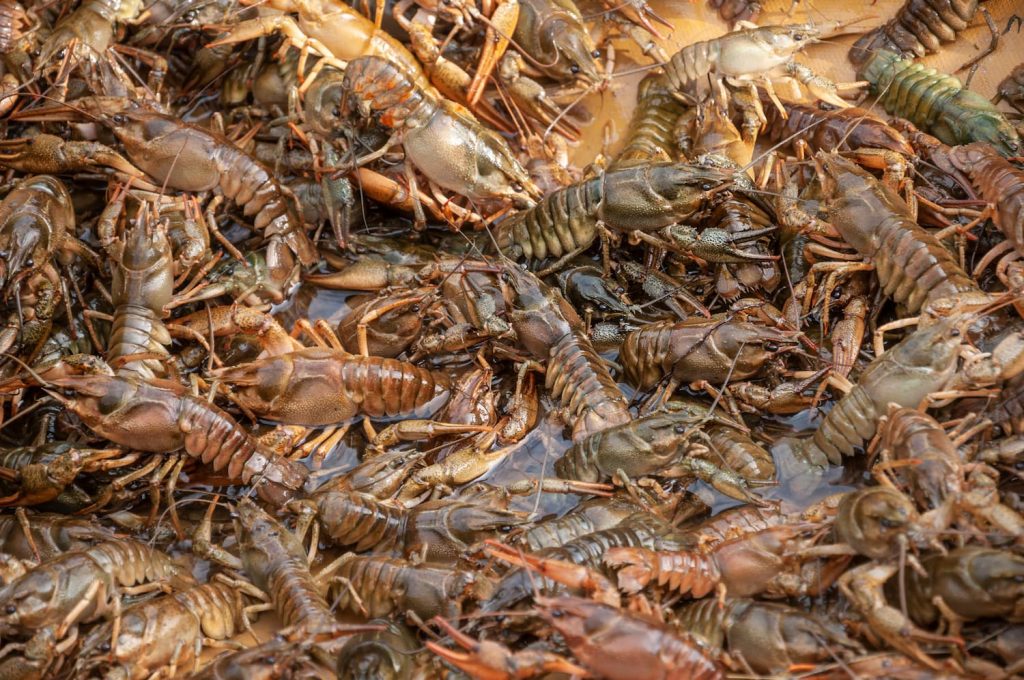
Table of Contents
Few freshwater creatures are as recognizable, or as delicious, as the crawfish. They scuttle along the bottoms of ponds, burrow into muddy banks, and turn up everywhere from roadside ditches to the heart of the Everglades. If you own a pond or lake in the Southeast, you almost certainly have them, whether you have noticed them or not.
So where do crawfish live, exactly? And what does their presence tell you about the health of your water? This guide covers crawfish habitat, lifespan, diet, predators, and behavior, with a special focus on Florida and the broader Southeast.
Crayfish vs Crawfish: Are They the Same Thing?
Before we go further, let’s clear up the question almost everyone asks. Crayfish vs crawfish: what’s the difference? The short answer is that there is none, biologically speaking. They are the same animal, and the name you use mostly depends on where you grew up.
As multiple language references explain, “crayfish,” “crawfish,” and “crawdad” all refer to the same freshwater crustacean. Regional usage breaks down roughly like this:
- Crawfish dominates in the South, especially Louisiana and the Gulf states.
- Crayfish is preferred in the North, New England, and most scientific writing.
- Crawdad shows up across the Midwest, Appalachia, and parts of the West.
You may also hear “mudbug,” “freshwater lobster,” or in Australia “yabby.” They all describe the same lobster-like creature. For this article we will mostly use “crawfish,” but everything applies equally no matter what you call them.
Where Do Crawfish Live? Habitats Across the Southeast
Crawfish are remarkably adaptable, which is the main reason they are so widespread. They are found on every continent except Antarctica and Africa, and they thrive across the Southeast in an enormous range of freshwater habitats.
In general, crawfish live in:
- Ponds and lakes, especially around shallow, vegetated edges
- Slow streams, rivers, and creeks
- Swamps, marshes, and wetlands
- Drainage ditches and canals
- Seasonal floodplains that periodically dry out
The common thread is fresh water with places to hide. Crawfish are prey for a long list of animals, so they need cover: rocks, submerged vegetation, leaf litter, woody debris, and the burrows they dig themselves. A pond with healthy shoreline structure will almost always support more crawfish than a bare, steep-sided one.
Florida Crawfish Habitats: A Closer Look
Florida crawfish habitats are some of the most productive in the country. The state is home to many species, but one of the most abundant is the Everglades crayfish (Procambarus alleni), sometimes called the Florida crayfish or blue crayfish.
According to the USGS species profile, Procambarus alleni inhabits a wide range of ephemeral and permanent wetlands, including prairie marshes, floodplains, roadside ditches, and small streams. Its preferred habitat is still or very sluggish freshwater, or shallow zones that periodically dry out during seasonal droughts.
A few things make Florida crawfish especially interesting:
- They tolerate poor conditions. Stagnant, warm, low-oxygen water that would stress many species is no problem for them.
- They handle some salt. The USGS notes Procambarus alleni has been collected from waters with salinity as high as 18 parts per thousand, which is unusual for a freshwater animal.
- They survive the dry season by burrowing, waiting out drought underground until the rains return.
This adaptability is why crawfish are found in nearly every freshwater body in the state, including residential and community ponds.
Can Crawfish Survive Out of Water?
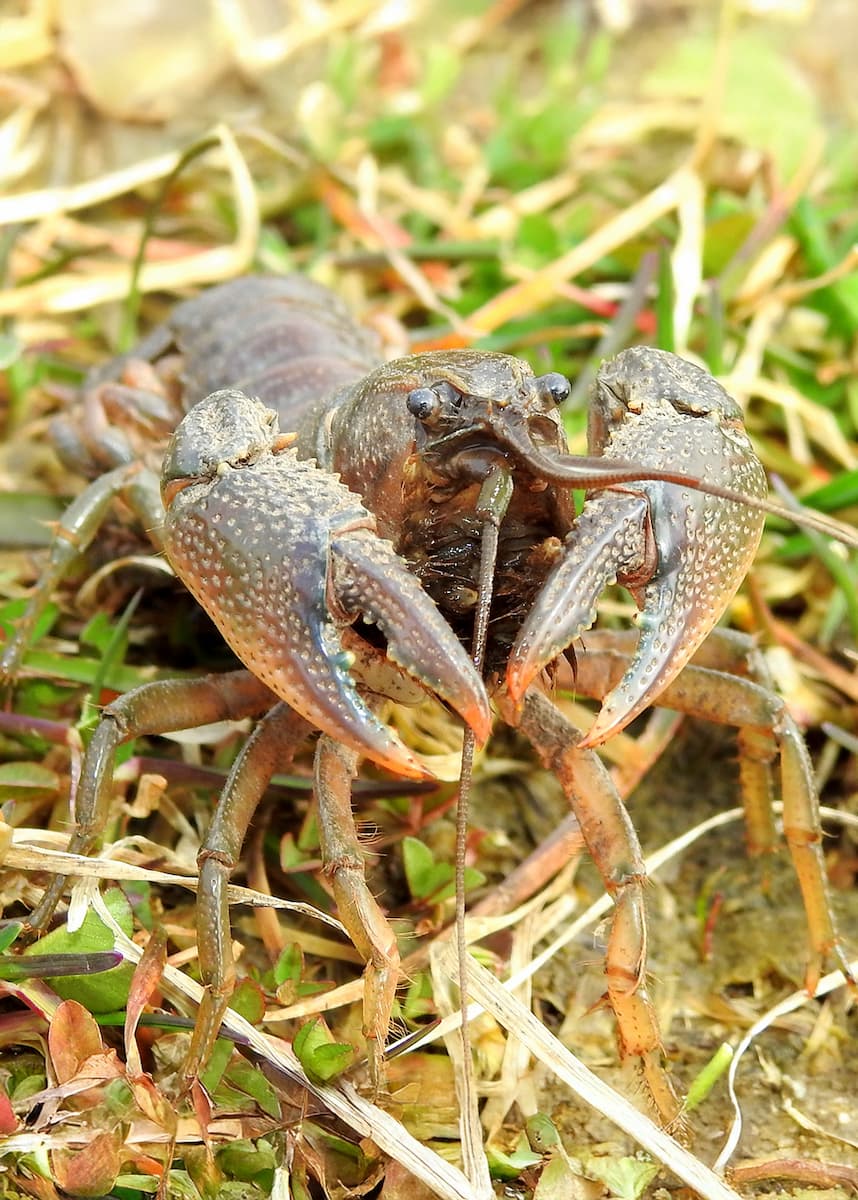
This is one of the most common questions, and the answer surprises people. Can crawfish survive out of water? Yes, at least for a while, and longer than you might expect.
Crawfish breathe through gills, like fish, but their gills are tucked into a moist chamber beneath their shell. As long as those gills stay damp, crawfish can extract oxygen from the air. This is why you sometimes find them traveling across wet grass after a heavy rain, or burrowed into mud far from open water.
The keys to their out-of-water survival are:
- Moisture: Damp gills can keep working. Dried-out gills cannot.
- Humidity and shade: Cool, humid conditions extend survival. Hot, dry sun shortens it dramatically.
- Burrowing: Many species dig burrows down to the water table, creating the moist refuge they need to wait out dry spells.
So while a crawfish is not going to stroll around your yard indefinitely, it can survive hours to even days out of open water under the right damp conditions. That burrowing ability is also why crawfish can reappear in a pond that completely dried up and refilled.
How Long Can a Crawfish Live?
So how long can a crawfish live? It depends heavily on the species.
For the common pond and ditch species across the Southeast, including the Florida crayfish, a typical lifespan is around two to five years. Many smaller species live only a year or two, completing their entire life cycle in a single wet season.
A few factors influence crawfish lifespan:
- Species: Small, fast-reproducing species live shorter lives than larger ones.
- Predation: In the wild, most crawfish are eaten long before old age.
- Conditions: Stable water, good cover, and abundant food extend life.
Interestingly, some specialized cave-dwelling crawfish are believed to live for decades, with one Florida-area cave species estimated to reach up to 40 years. Those are rare exceptions adapted to cool, stable, predator-free underground waters. The crawfish in your backyard pond live fast and reproduce quickly, which is exactly why their populations bounce back so well.
Maintain Crawfish Habitats in Your Pond
Crawfish habitats in the southeast need to be carefully managed to prevent over-predation and maintain water conditions
Pond Conditions for Crawfish: What They Need to Thrive
If you want a healthy crawfish population, or you are trying to understand why yours is booming or crashing, it helps to know the ideal pond conditions for crawfish.
Crawfish do best with:
- Shallow, vegetated zones. Littoral areas with plants give them food and cover.
- Structure to hide in. Rocks, logs, leaf litter, and soft banks for burrowing.
- Decent water quality. While crawfish tolerate poor conditions better than most, chronically low oxygen and heavy pollution still hurt them.
- A food supply. They are omnivores and need a mix of plant material, detritus, and small animal prey.
- Soft banks for burrowing. Earthen shorelines let them dig the burrows they use to breed and survive drought.
Here is the useful part for pond owners: crawfish are considered an indicator species. A thriving crawfish population usually signals a reasonably healthy, productive pond. A sudden disappearance can be an early warning that something, often water quality or oxygen, has changed for the worse.
What Eats Crawfish? The Pond Food Web
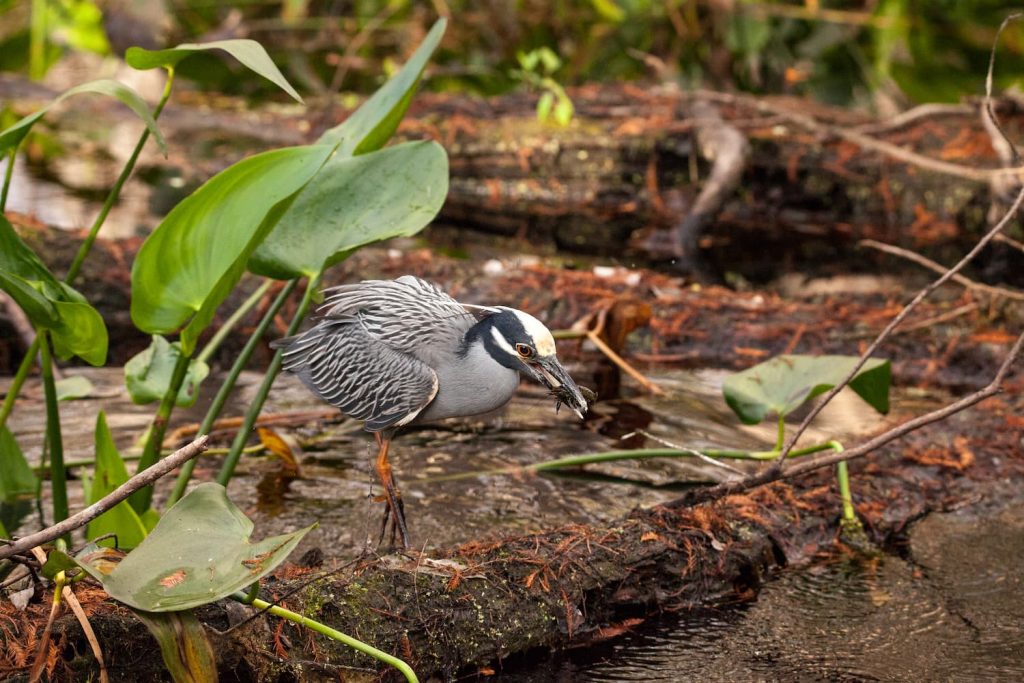
Crawfish sit near the center of the freshwater food web, which is a big part of why they matter so much ecologically. So what eats crawfish? Almost everything bigger than they are.
Their predators include:
- Fish such as largemouth bass, warmouth, and other sunfish
- Wading birds like the white ibis, glossy ibis, herons, and egrets
- Reptiles and amphibians including water snakes, swamp snakes, alligators, and large frogs like the pig frog
- Mammals such as raccoons and otters
- Other crawfish, since they are opportunistic and will eat their own kind
Research on Florida wetlands documents that crayfish are major prey items for fish, wading birds, snakes, and frogs throughout the Everglades and similar systems. This is why crawfish reproduce so prolifically. Heavy predation is simply part of their life strategy.
For pond owners, this connection is important. A good crawfish population helps feed the bass you want to catch and the wading birds you love to watch. Manage your pond for healthy crawfish, and you are supporting the whole ecosystem above them.
How to Catch Crawfish in Florida Waterbodies
Curious about how to catch crawfish in Florida waterbodies? It is one of the simplest and most kid-friendly outdoor activities around, and you do not need fancy gear.
Common approaches include:
- Baited traps. Wire mesh traps baited with fish heads, chicken, or other scraps, left overnight in shallow water, are the most reliable method for catching numbers.
- Hand lines. Tie a piece of bait to a string, lower it in, and slowly lift when a crawfish grabs on, scooping it with a net.
- Dip nets. Simply netting along vegetated shallows, especially at night with a flashlight, can be surprisingly effective.
- By hand. Carefully turning over rocks and debris in shallow water and grabbing crawfish behind the claws is the classic creek-kid method.
A few practical notes. Crawfish are most active at dawn, dusk, and after dark. They are drawn to fresh bait. And always check current Florida Fish and Wildlife Conservation Commission rules before harvesting, since regulations on methods, bag limits, and locations can apply, especially in conservation areas and on private versus public water.
Crawfish and Pond Management With Pond Guru
A healthy crawfish population is one of many signs of a well-balanced pond, but achieving that balance does not happen by accident. Water quality, shoreline vegetation, oxygen levels, fish populations, and habitat structure all work together, and crawfish are woven through the middle of it.
That is where Pond Guru comes in. Whether you want a pond that supports thriving fish and wildlife, or you are simply trying to understand why your water looks or behaves the way it does, professional pond and lake management makes the difference.
Pond Guru helps homeowners, HOAs, and property managers across Florida with:
- Water quality monitoring and improvement
- Shoreline and habitat management
- Algae and aquatic weed control
- Aeration and overall ecosystem balance
Every pond is different, so the right plan starts with seeing yours firsthand.
Schedule a Site Visit With Pond Guru
Crawfish are a window into the health of your entire pond. If you want to understand what is living in your water and how to keep it thriving, the best first step is a professional assessment.
Contact Pond Guru to schedule a site visit. A specialist will evaluate your pond or lake, assess its habitat and water quality, and help you build a plan that supports a healthy, beautiful, balanced ecosystem, crawfish and all.
Frequently Asked Questions
Crawfish live in fresh water across the Southeast and beyond, including ponds, lakes, streams, swamps, marshes, ditches, and seasonal floodplains. They need places to hide, such as vegetation, rocks, and burrows.
Yes. Crayfish, crawfish, and crawdad are regional names for the same freshwater crustacean. "Crawfish" is most common in the South, "crayfish" in the North and in science, and "crawdad" across parts of the Midwest and West.
Yes, for a time. As long as their gills stay moist, crawfish can breathe air. They often travel over wet ground after rain and burrow into mud to survive dry periods.
Most common pond species live about two to five years. Some small species live only a year, while rare cave-dwelling crawfish may live for decades.
Many animals, including bass and other fish, wading birds like ibis and herons, water snakes, alligators, frogs, raccoons, otters, and even other crawfish.
Pond Guru provides water quality monitoring, habitat and shoreline management, algae and weed control, and aeration to keep your pond healthy and balanced. Schedule a site visit to get a plan tailored to your water.
Ready to Schedule a Visit ?
Have questions about your pond or lake? Our experts are ready to help you take the next step.
Latest Article
Popular Post

Why Keeping Culverts Clear of Debris Matters for Stormwater Systems
Table of Contents A culvert is one of those…
Table of Contents
Few freshwater creatures are as recognizable, or as delicious, as the crawfish. They scuttle along the bottoms of ponds, burrow into muddy banks, and turn up everywhere from roadside ditches to the heart of the Everglades. If you own a pond or lake in the Southeast, you almost certainly have them, whether you have noticed them or not.
So where do crawfish live, exactly? And what does their presence tell you about the health of your water? This guide covers crawfish habitat, lifespan, diet, predators, and behavior, with a special focus on Florida and the broader Southeast.
Crayfish vs Crawfish: Are They the Same Thing?
Before we go further, let’s clear up the question almost everyone asks. Crayfish vs crawfish: what’s the difference? The short answer is that there is none, biologically speaking. They are the same animal, and the name you use mostly depends on where you grew up.
As multiple language references explain, “crayfish,” “crawfish,” and “crawdad” all refer to the same freshwater crustacean. Regional usage breaks down roughly like this:
- Crawfish dominates in the South, especially Louisiana and the Gulf states.
- Crayfish is preferred in the North, New England, and most scientific writing.
- Crawdad shows up across the Midwest, Appalachia, and parts of the West.
You may also hear “mudbug,” “freshwater lobster,” or in Australia “yabby.” They all describe the same lobster-like creature. For this article we will mostly use “crawfish,” but everything applies equally no matter what you call them.
Where Do Crawfish Live? Habitats Across the Southeast
Crawfish are remarkably adaptable, which is the main reason they are so widespread. They are found on every continent except Antarctica and Africa, and they thrive across the Southeast in an enormous range of freshwater habitats.
In general, crawfish live in:
- Ponds and lakes, especially around shallow, vegetated edges
- Slow streams, rivers, and creeks
- Swamps, marshes, and wetlands
- Drainage ditches and canals
- Seasonal floodplains that periodically dry out
The common thread is fresh water with places to hide. Crawfish are prey for a long list of animals, so they need cover: rocks, submerged vegetation, leaf litter, woody debris, and the burrows they dig themselves. A pond with healthy shoreline structure will almost always support more crawfish than a bare, steep-sided one.
Florida Crawfish Habitats: A Closer Look
Florida crawfish habitats are some of the most productive in the country. The state is home to many species, but one of the most abundant is the Everglades crayfish (Procambarus alleni), sometimes called the Florida crayfish or blue crayfish.
According to the USGS species profile, Procambarus alleni inhabits a wide range of ephemeral and permanent wetlands, including prairie marshes, floodplains, roadside ditches, and small streams. Its preferred habitat is still or very sluggish freshwater, or shallow zones that periodically dry out during seasonal droughts.
A few things make Florida crawfish especially interesting:
- They tolerate poor conditions. Stagnant, warm, low-oxygen water that would stress many species is no problem for them.
- They handle some salt. The USGS notes Procambarus alleni has been collected from waters with salinity as high as 18 parts per thousand, which is unusual for a freshwater animal.
- They survive the dry season by burrowing, waiting out drought underground until the rains return.
This adaptability is why crawfish are found in nearly every freshwater body in the state, including residential and community ponds.
Can Crawfish Survive Out of Water?
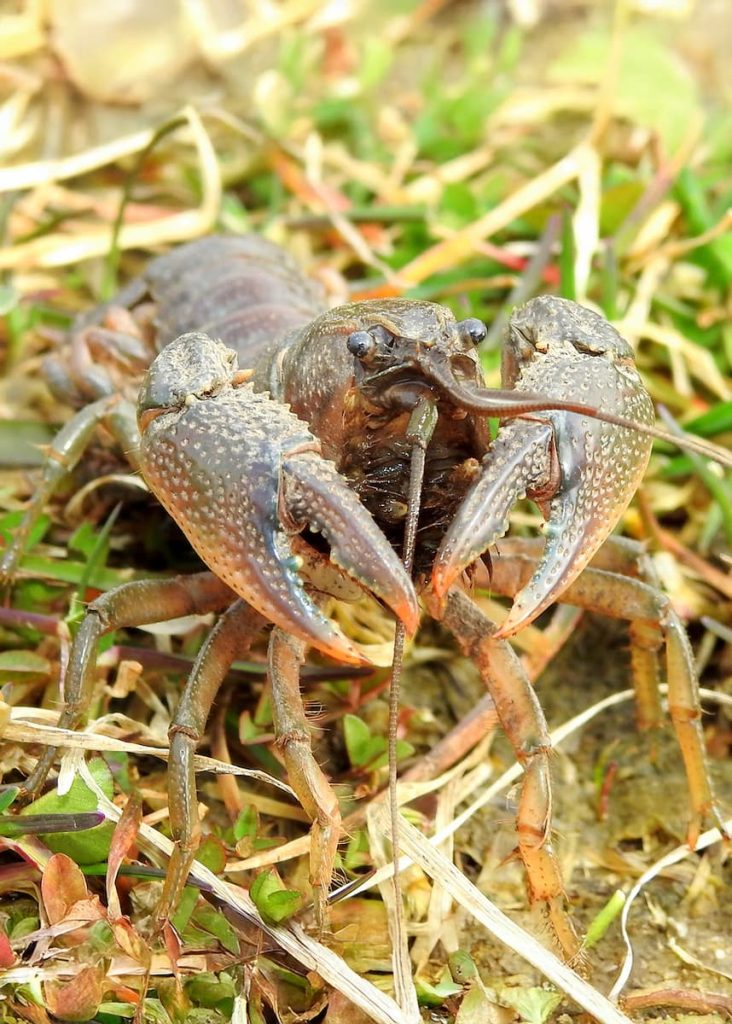
This is one of the most common questions, and the answer surprises people. Can crawfish survive out of water? Yes, at least for a while, and longer than you might expect.
Crawfish breathe through gills, like fish, but their gills are tucked into a moist chamber beneath their shell. As long as those gills stay damp, crawfish can extract oxygen from the air. This is why you sometimes find them traveling across wet grass after a heavy rain, or burrowed into mud far from open water.
The keys to their out-of-water survival are:
- Moisture: Damp gills can keep working. Dried-out gills cannot.
- Humidity and shade: Cool, humid conditions extend survival. Hot, dry sun shortens it dramatically.
- Burrowing: Many species dig burrows down to the water table, creating the moist refuge they need to wait out dry spells.
So while a crawfish is not going to stroll around your yard indefinitely, it can survive hours to even days out of open water under the right damp conditions. That burrowing ability is also why crawfish can reappear in a pond that completely dried up and refilled.
How Long Can a Crawfish Live?
So how long can a crawfish live? It depends heavily on the species.
For the common pond and ditch species across the Southeast, including the Florida crayfish, a typical lifespan is around two to five years. Many smaller species live only a year or two, completing their entire life cycle in a single wet season.
A few factors influence crawfish lifespan:
- Species: Small, fast-reproducing species live shorter lives than larger ones.
- Predation: In the wild, most crawfish are eaten long before old age.
- Conditions: Stable water, good cover, and abundant food extend life.
Interestingly, some specialized cave-dwelling crawfish are believed to live for decades, with one Florida-area cave species estimated to reach up to 40 years. Those are rare exceptions adapted to cool, stable, predator-free underground waters. The crawfish in your backyard pond live fast and reproduce quickly, which is exactly why their populations bounce back so well.
Maintain Crawfish Habitats in Your Pond
Crawfish habitats in the southeast need to be carefully managed to prevent over-predation and maintain water conditions
Pond Conditions for Crawfish: What They Need to Thrive
If you want a healthy crawfish population, or you are trying to understand why yours is booming or crashing, it helps to know the ideal pond conditions for crawfish.
Crawfish do best with:
- Shallow, vegetated zones. Littoral areas with plants give them food and cover.
- Structure to hide in. Rocks, logs, leaf litter, and soft banks for burrowing.
- Decent water quality. While crawfish tolerate poor conditions better than most, chronically low oxygen and heavy pollution still hurt them.
- A food supply. They are omnivores and need a mix of plant material, detritus, and small animal prey.
- Soft banks for burrowing. Earthen shorelines let them dig the burrows they use to breed and survive drought.
Here is the useful part for pond owners: crawfish are considered an indicator species. A thriving crawfish population usually signals a reasonably healthy, productive pond. A sudden disappearance can be an early warning that something, often water quality or oxygen, has changed for the worse.
What Eats Crawfish? The Pond Food Web
Crawfish sit near the center of the freshwater food web, which is a big part of why they matter so much ecologically. So what eats crawfish? Almost everything bigger than they are.
Their predators include:
- Fish such as largemouth bass, warmouth, and other sunfish
- Wading birds like the white ibis, glossy ibis, herons, and egrets
- Reptiles and amphibians including water snakes, swamp snakes, alligators, and large frogs like the pig frog
- Mammals such as raccoons and otters
- Other crawfish, since they are opportunistic and will eat their own kind
Research on Florida wetlands documents that crayfish are major prey items for fish, wading birds, snakes, and frogs throughout the Everglades and similar systems. This is why crawfish reproduce so prolifically. Heavy predation is simply part of their life strategy.
For pond owners, this connection is important. A good crawfish population helps feed the bass you want to catch and the wading birds you love to watch. Manage your pond for healthy crawfish, and you are supporting the whole ecosystem above them.
How to Catch Crawfish in Florida Waterbodies
Curious about how to catch crawfish in Florida waterbodies? It is one of the simplest and most kid-friendly outdoor activities around, and you do not need fancy gear.
Common approaches include:
- Baited traps. Wire mesh traps baited with fish heads, chicken, or other scraps, left overnight in shallow water, are the most reliable method for catching numbers.
- Hand lines. Tie a piece of bait to a string, lower it in, and slowly lift when a crawfish grabs on, scooping it with a net.
- Dip nets. Simply netting along vegetated shallows, especially at night with a flashlight, can be surprisingly effective.
- By hand. Carefully turning over rocks and debris in shallow water and grabbing crawfish behind the claws is the classic creek-kid method.
A few practical notes. Crawfish are most active at dawn, dusk, and after dark. They are drawn to fresh bait. And always check current Florida Fish and Wildlife Conservation Commission rules before harvesting, since regulations on methods, bag limits, and locations can apply, especially in conservation areas and on private versus public water.
Crawfish and Pond Management With Pond Guru
A healthy crawfish population is one of many signs of a well-balanced pond, but achieving that balance does not happen by accident. Water quality, shoreline vegetation, oxygen levels, fish populations, and habitat structure all work together, and crawfish are woven through the middle of it.
That is where Pond Guru comes in. Whether you want a pond that supports thriving fish and wildlife, or you are simply trying to understand why your water looks or behaves the way it does, professional pond and lake management makes the difference.
Pond Guru helps homeowners, HOAs, and property managers across Florida with:
- Water quality monitoring and improvement
- Shoreline and habitat management
- Algae and aquatic weed control
- Aeration and overall ecosystem balance
Every pond is different, so the right plan starts with seeing yours firsthand.
Schedule a Site Visit With Pond Guru
Crawfish are a window into the health of your entire pond. If you want to understand what is living in your water and how to keep it thriving, the best first step is a professional assessment.
Contact Pond Guru to schedule a site visit. A specialist will evaluate your pond or lake, assess its habitat and water quality, and help you build a plan that supports a healthy, beautiful, balanced ecosystem, crawfish and all.
Frequently Asked Questions
Crawfish live in fresh water across the Southeast and beyond, including ponds, lakes, streams, swamps, marshes, ditches, and seasonal floodplains. They need places to hide, such as vegetation, rocks, and burrows.
Yes. Crayfish, crawfish, and crawdad are regional names for the same freshwater crustacean. "Crawfish" is most common in the South, "crayfish" in the North and in science, and "crawdad" across parts of the Midwest and West.
Yes, for a time. As long as their gills stay moist, crawfish can breathe air. They often travel over wet ground after rain and burrow into mud to survive dry periods.
Most common pond species live about two to five years. Some small species live only a year, while rare cave-dwelling crawfish may live for decades.
Many animals, including bass and other fish, wading birds like ibis and herons, water snakes, alligators, frogs, raccoons, otters, and even other crawfish.
Pond Guru provides water quality monitoring, habitat and shoreline management, algae and weed control, and aeration to keep your pond healthy and balanced. Schedule a site visit to get a plan tailored to your water.
Ready to Schedule a Visit ?
Have questions about your pond or lake? Our experts are ready to help you take the next step.
Latest Article
Popular Post
Why Keeping Culverts Clear of Debris Matters for Stormwater Systems
Table of Contents A culvert is one of those…