

Dragonfly Larvae: The Underwater Predators Living in Your Pond
Dragonfly Larvae: The Underwater Predators Living in Your Pond
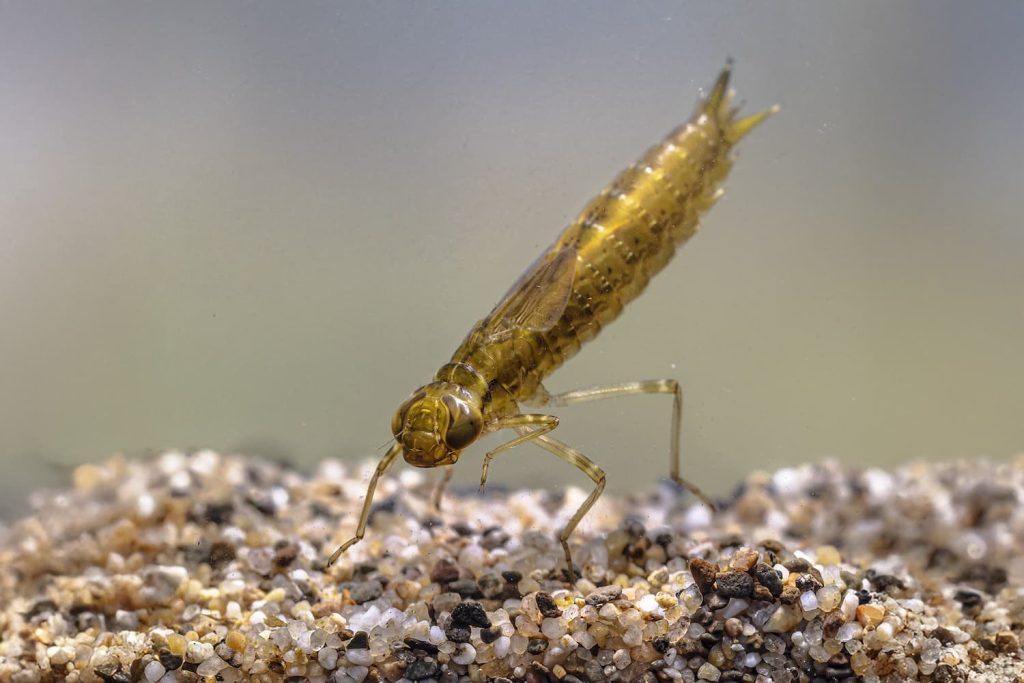
Table of Contents
Before a dragonfly ever takes to the air, it spends the majority of its life underwater as a larva, a stocky, armored, endlessly hungry predator hunting through the shallows of your pond. Most people never see this stage, but it is where dragonflies spend nearly all of their lives, and it is one of the best things that can happen to a pond.
Dragonfly larvae are voracious eaters of mosquito larvae, they are a recognized sign of clean water, and their presence says a great deal about the health of a waterbody. This guide explains what dragonfly larvae are, what they eat, how long they live underwater, and what they reveal about your pond.
Dragonfly larvae, also called nymphs or naiads, are the aquatic juvenile stage of dragonflies. They live underwater for months to several years, hunting mosquito larvae, other insects, tadpoles, and small fish with a rapid extendable jaw. Their presence generally indicates clean, healthy, well-oxygenated water.
Key Takeaways
- Dragonfly larvae are the underwater stage of a dragonfly, also called nymphs or naiads, and they spend the majority of the insect’s life submerged.
- They are elite mosquito predators, eating mosquito larvae underwater and helping control populations before the mosquitoes ever fly.
- They live underwater for months to five years, depending on species and climate, molting many times as they grow.
- They signal clean water. Dragonfly larvae are sensitive to pollution and low oxygen, so their presence is a good sign.
- A healthy pond attracts them naturally, which means good water quality and native plants are the way to encourage them.
What Are Dragonfly Larvae?
Dragonfly larvae, also called nymphs or naiads, are the immature aquatic stage of dragonflies. After eggs hatch in or near water, the larvae live and hunt underwater, growing through a series of molts. They are wingless, stocky, and well camouflaged, and they spend far longer in this stage than they do as adults.
Understanding the larva means understanding that the flying adult is really the brief final chapter of a mostly underwater life.
Dragonflies undergo what biologists call incomplete metamorphosis, meaning there is no pupal stage like a butterfly’s. According to the Missouri Department of Conservation, most of a dragonfly’s life is spent as a nymph, with some species living up to five years underwater before becoming adults, and both the larvae and adults are important predators of mosquitoes, midges, and other small insects.
Physically, the larvae are built for ambush. They have stocky, armored bodies, large heads with powerful jaws, and excellent vision. Their length ranges from about a quarter inch to two and a half inches depending on species and age. They are usually drab brown or green, which camouflages them against the pond bottom and submerged plants where they wait for prey.

What Do Dragonfly Larvae Eat?
Dragonfly larvae are carnivorous predators that eat mosquito larvae, other aquatic insects, tadpoles, small fish, and even other dragonfly larvae. They ambush prey using a unique extendable lower jaw, called a labium, that shoots out to grab victims. Their diet grows to include larger prey as they molt and increase in size.
The feeding mechanism alone makes them remarkable, and it is central to why they matter for a pond.
As the Missouri Department of Conservation describes it, dragonfly larvae are lie-in-wait predators that rest quietly on the substrate or on submerged plants, and their jaws can flash out like clawed arms to snatch up insects and even small fish that happen by. That extendable labium is a genuinely unusual piece of anatomy, functioning almost like a spring-loaded trap.
Their typical prey includes:
- Mosquito larvae, the most relevant item for anyone who dislikes mosquitoes.
- Other aquatic insects, including the larvae of midges and other flies.
- Tadpoles and small fish, taken by larger, more mature nymphs.
- Other dragonfly and damselfly larvae, since they are opportunistic and even cannibalistic.
This predatory appetite is why a pond full of dragonfly larvae tends to be a pond with fewer mosquitoes, a benefit explored more below.
How Long Do Dragonfly Larvae Live Underwater?

Dragonfly larvae live underwater from a few months to as long as five years, depending on the species, climate, and food supply. During this time they molt repeatedly, typically 8 to 17 times, growing larger with each molt. This aquatic stage is by far the longest part of a dragonfly’s life, dwarfing its few weeks as a flying adult.
The timeline surprises most people, because we only ever see the brief, showy adult phase.
Sources consistently place the larval stage at anywhere from a couple of months in some small, fast-developing species to as long as five years in larger species or colder climates. Warmer water speeds development, colder water slows it, and abundant prey allows faster growth. Across all of them, the pattern holds: the underwater stage is the main event, and the flying adult typically lives only a few weeks to a couple of months.
Several factors influence the length of the larval stage:
- Species, with larger dragonflies generally taking longer.
- Climate and water temperature, since cold slows metabolism and growth.
- Food supply, where abundant prey allows earlier emergence.
- Water quality, as poor oxygen or pollution can stunt or kill larvae.
Throughout this period, the larva molts many times, shedding its exoskeleton to grow, with wing pads becoming more visible in later stages.
How Do Dragonfly Larvae Breathe and Move?
Dragonfly larvae breathe through gills located inside the rectum, drawing water in and expelling it. This same mechanism doubles as jet propulsion: by forcefully expelling water, the larva can shoot forward to escape predators or ambush prey. It is one of the more unusual respiratory and movement systems in the insect world.
This is the fact that fascinates most people once they learn it, and it is entirely accurate.
Because they spend their lives underwater, dragonfly larvae cannot rely on the air-breathing systems of adult insects. Instead, they have gills inside the rectum, and they move water in and out to extract oxygen. When threatened or hunting, they expel that water forcefully, propelling themselves forward in a quick burst. It is genuinely a form of biological jet propulsion.
When a larva finally nears maturity, it stops feeding, moves toward the shallows, and climbs up a plant stem, rock, or other surface at the water’s edge. There, in its final molt, the adult dragonfly emerges from the split larval skin. The empty shed skin left behind is called an exuvia, and finding these clinging to pondside plants is a reliable sign that dragonflies are successfully completing their life cycle in your water.
Manage Dragonfly Habitat In Your Pond
Managing littoral zone plants can help create a healthy habitat for dragonflies. Dragonflies can reduce mosquito populations in our lake.
Do Dragonfly Larvae Really Control Mosquitoes?
Yes, dragonfly larvae are effective mosquito predators, especially underwater where they eat mosquito larvae before they can mature into biting adults. Adult dragonflies also hunt flying mosquitoes. While dragonflies alone will not eliminate a mosquito problem, a healthy population meaningfully reduces mosquitoes as part of natural biological control.
This is the practical payoff that makes dragonfly larvae so valuable, and it is worth being accurate about rather than overstating.
The mosquito control happens at two stages. Underwater, dragonfly larvae prey on mosquito larvae, killing them before they ever become flying adults. In the air, adult dragonflies are agile hunters that catch flying insects, including mosquitoes, with a high success rate. Together, the two stages attack the mosquito population from both directions.
An honest caveat matters here. Dragonflies are a genuine and valuable part of natural mosquito control, but they are not a standalone solution that will clear an infestation on their own. Mosquito management works best as a combination of factors: predators like dragonflies, healthy water that does not stagnate, mosquito-eating fish, and eliminating standing water where mosquitoes breed. Dragonflies are a powerful ally within that system rather than a magic fix.
The most effective way to get their benefit is not to buy larvae, but to make your pond a place where dragonflies naturally want to live and breed, which comes down to water quality and habitat.

What Do Dragonfly Larvae Say About Your Pond's Health?
The presence of dragonfly larvae is generally a sign of a healthy pond. Like mayfly and caddisfly larvae, dragonfly nymphs are sensitive to pollution and low oxygen, so a thriving population indicates good water quality. A pond that supports dragonfly larvae is usually a balanced, well-oxygenated ecosystem.
This is where dragonfly larvae become genuinely useful to a pond owner or community manager: they are a free, living indicator of water quality.
Aquatic insects are widely used by scientists as bioindicators because many are sensitive to pollution and declining oxygen. Dragonfly larvae are part of this group. While they are somewhat more tolerant than the most sensitive species like mayfly larvae, a healthy and diverse population of dragonfly nymphs points to a pond that is functioning well, with the oxygen, prey base, and habitat they need to thrive.
The reverse is also informative. If a pond that should support dragonfly larvae has few or none, it can be worth investigating conditions like oxygen levels, pollution, or a lack of suitable habitat through pond water quality testing. The insects point you toward the question; testing gives you the answer.
How Can You Attract More Dragonflies to Your Pond?
You attract dragonflies by giving them what their larvae need: clean, well-oxygenated water, native aquatic and shoreline plants for egg-laying and emergence, some sunlight, and a pond free of excessive pollution. Since dragonflies lay their eggs in water, a healthy pond naturally becomes a dragonfly nursery over time.
The best way to enjoy more dragonflies, and the mosquito control they provide, is to make your pond attractive to them for breeding.
The key ingredients:
- Clean, healthy water. Since larvae are sensitive to pollution and low oxygen, good water quality is the foundation. Aeration and nutrient management both help.
- Native aquatic and shoreline plants. Dragonflies lay eggs on and near submerged and emergent vegetation, and larvae use plants as hunting perches and emergence surfaces. Establishing a planted zone through littoral zone management directly supports them.
- Emergent structures. Reeds, stems, and other vertical surfaces at the water’s edge give mature larvae a place to climb out and emerge.
- Sunlight. Dragonflies are sun-loving insects, so at least some open, sunny water is helpful.
- A balanced ecosystem. A pond managed for overall health through wildlife management naturally supports the food web dragonfly larvae depend on.
Notice that every one of these is simply a feature of a healthy, well-managed pond. You do not attract dragonflies with gimmicks; you attract them by having good water and good habitat, which benefits the entire pond at the same time.
Schedule a Site Visit With Pond Guru
Dragonfly larvae are a quiet vote of confidence in a pond. When they thrive, it usually means the water is clean, oxygenated, and well vegetated, the same conditions that make a pond beautiful, balanced, and low maintenance. When they are absent, it can be a clue that something underneath needs attention.
Pond Guru works with HOA boards, property managers, and homeowners across Florida to test water quality, establish native aquatic plantings, and manage ponds in ways that support healthy wildlife, including the dragonflies that help keep mosquitoes in check.
Because every pond is different, the process starts with an on-site evaluation. To make your pond a healthier place for beneficial wildlife, schedule a site visit with Pond Guru and a specialist will assess conditions and recommend a plan.

Frequently Asked Questions
Dragonfly larvae, also called nymphs or naiads, are the aquatic juvenile stage of dragonflies. They live and hunt underwater for months to several years, growing through repeated molts before emerging as flying adults. Wingless and well camouflaged, they spend far more of the dragonfly's life underwater than in the air.
Dragonfly larvae are carnivorous and eat mosquito larvae, other aquatic insects, tadpoles, small fish, and even other dragonfly larvae. They ambush prey using an extendable lower jaw called a labium that shoots out to grab it. Their prey grows larger as the larvae molt and increase in size.
From a few months to as long as five years, depending on species, climate, and food supply. Warmer water and abundant prey speed development, while colder water slows it. This underwater larval stage is the longest part of a dragonfly's life, far exceeding its few weeks as a flying adult.
Not meaningfully. Larger dragonfly larvae can deliver a small pinch with their mouthparts if handled, but they cannot sting and are harmless to people. They are predators of small aquatic creatures, not a threat to humans. It is still best to observe them without handling them.
Yes. Dragonfly larvae eat mosquito larvae and other pests, provide food for fish and birds, and indicate good water quality since they are sensitive to pollution and low oxygen. A pond that supports a healthy population of dragonfly larvae is generally a balanced, well-oxygenated ecosystem.
Ready to Schedule a Visit ?
Have questions about your pond or lake? Our experts are ready to help you take the next step.
Latest Article
Popular Post

Why Keeping Culverts Clear of Debris Matters for Stormwater Systems
Table of Contents A culvert is one of those…
Table of Contents
Before a dragonfly ever takes to the air, it spends the majority of its life underwater as a larva, a stocky, armored, endlessly hungry predator hunting through the shallows of your pond. Most people never see this stage, but it is where dragonflies spend nearly all of their lives, and it is one of the best things that can happen to a pond.
Dragonfly larvae are voracious eaters of mosquito larvae, they are a recognized sign of clean water, and their presence says a great deal about the health of a waterbody. This guide explains what dragonfly larvae are, what they eat, how long they live underwater, and what they reveal about your pond.
Dragonfly larvae, also called nymphs or naiads, are the aquatic juvenile stage of dragonflies. They live underwater for months to several years, hunting mosquito larvae, other insects, tadpoles, and small fish with a rapid extendable jaw. Their presence generally indicates clean, healthy, well-oxygenated water.
Key Takeaways
- Dragonfly larvae are the underwater stage of a dragonfly, also called nymphs or naiads, and they spend the majority of the insect’s life submerged.
- They are elite mosquito predators, eating mosquito larvae underwater and helping control populations before the mosquitoes ever fly.
- They live underwater for months to five years, depending on species and climate, molting many times as they grow.
- They signal clean water. Dragonfly larvae are sensitive to pollution and low oxygen, so their presence is a good sign.
- A healthy pond attracts them naturally, which means good water quality and native plants are the way to encourage them.
What Are Dragonfly Larvae?
Dragonfly larvae, also called nymphs or naiads, are the immature aquatic stage of dragonflies. After eggs hatch in or near water, the larvae live and hunt underwater, growing through a series of molts. They are wingless, stocky, and well camouflaged, and they spend far longer in this stage than they do as adults.
Understanding the larva means understanding that the flying adult is really the brief final chapter of a mostly underwater life.
Dragonflies undergo what biologists call incomplete metamorphosis, meaning there is no pupal stage like a butterfly’s. According to the Missouri Department of Conservation, most of a dragonfly’s life is spent as a nymph, with some species living up to five years underwater before becoming adults, and both the larvae and adults are important predators of mosquitoes, midges, and other small insects.
Physically, the larvae are built for ambush. They have stocky, armored bodies, large heads with powerful jaws, and excellent vision. Their length ranges from about a quarter inch to two and a half inches depending on species and age. They are usually drab brown or green, which camouflages them against the pond bottom and submerged plants where they wait for prey.
What Do Dragonfly Larvae Eat?
Dragonfly larvae are carnivorous predators that eat mosquito larvae, other aquatic insects, tadpoles, small fish, and even other dragonfly larvae. They ambush prey using a unique extendable lower jaw, called a labium, that shoots out to grab victims. Their diet grows to include larger prey as they molt and increase in size.
The feeding mechanism alone makes them remarkable, and it is central to why they matter for a pond.
As the Missouri Department of Conservation describes it, dragonfly larvae are lie-in-wait predators that rest quietly on the substrate or on submerged plants, and their jaws can flash out like clawed arms to snatch up insects and even small fish that happen by. That extendable labium is a genuinely unusual piece of anatomy, functioning almost like a spring-loaded trap.
Their typical prey includes:
- Mosquito larvae, the most relevant item for anyone who dislikes mosquitoes.
- Other aquatic insects, including the larvae of midges and other flies.
- Tadpoles and small fish, taken by larger, more mature nymphs.
- Other dragonfly and damselfly larvae, since they are opportunistic and even cannibalistic.
This predatory appetite is why a pond full of dragonfly larvae tends to be a pond with fewer mosquitoes, a benefit explored more below.
How Long Do Dragonfly Larvae Live Underwater?

Dragonfly larvae live underwater from a few months to as long as five years, depending on the species, climate, and food supply. During this time they molt repeatedly, typically 8 to 17 times, growing larger with each molt. This aquatic stage is by far the longest part of a dragonfly’s life, dwarfing its few weeks as a flying adult.
The timeline surprises most people, because we only ever see the brief, showy adult phase.
Sources consistently place the larval stage at anywhere from a couple of months in some small, fast-developing species to as long as five years in larger species or colder climates. Warmer water speeds development, colder water slows it, and abundant prey allows faster growth. Across all of them, the pattern holds: the underwater stage is the main event, and the flying adult typically lives only a few weeks to a couple of months.
Several factors influence the length of the larval stage:
- Species, with larger dragonflies generally taking longer.
- Climate and water temperature, since cold slows metabolism and growth.
- Food supply, where abundant prey allows earlier emergence.
- Water quality, as poor oxygen or pollution can stunt or kill larvae.
Throughout this period, the larva molts many times, shedding its exoskeleton to grow, with wing pads becoming more visible in later stages.
How Do Dragonfly Larvae Breathe and Move?
Dragonfly larvae breathe through gills located inside the rectum, drawing water in and expelling it. This same mechanism doubles as jet propulsion: by forcefully expelling water, the larva can shoot forward to escape predators or ambush prey. It is one of the more unusual respiratory and movement systems in the insect world.
This is the fact that fascinates most people once they learn it, and it is entirely accurate.
Because they spend their lives underwater, dragonfly larvae cannot rely on the air-breathing systems of adult insects. Instead, they have gills inside the rectum, and they move water in and out to extract oxygen. When threatened or hunting, they expel that water forcefully, propelling themselves forward in a quick burst. It is genuinely a form of biological jet propulsion.
When a larva finally nears maturity, it stops feeding, moves toward the shallows, and climbs up a plant stem, rock, or other surface at the water’s edge. There, in its final molt, the adult dragonfly emerges from the split larval skin. The empty shed skin left behind is called an exuvia, and finding these clinging to pondside plants is a reliable sign that dragonflies are successfully completing their life cycle in your water.
Manage Dragonfly Habitat In Your Pond
Managing littoral zone plants can help create a healthy habitat for dragonflies. Dragonflies can reduce mosquito populations in our lake.
Do Dragonfly Larvae Really Control Mosquitoes?
Yes, dragonfly larvae are effective mosquito predators, especially underwater where they eat mosquito larvae before they can mature into biting adults. Adult dragonflies also hunt flying mosquitoes. While dragonflies alone will not eliminate a mosquito problem, a healthy population meaningfully reduces mosquitoes as part of natural biological control.
This is the practical payoff that makes dragonfly larvae so valuable, and it is worth being accurate about rather than overstating.
The mosquito control happens at two stages. Underwater, dragonfly larvae prey on mosquito larvae, killing them before they ever become flying adults. In the air, adult dragonflies are agile hunters that catch flying insects, including mosquitoes, with a high success rate. Together, the two stages attack the mosquito population from both directions.
An honest caveat matters here. Dragonflies are a genuine and valuable part of natural mosquito control, but they are not a standalone solution that will clear an infestation on their own. Mosquito management works best as a combination of factors: predators like dragonflies, healthy water that does not stagnate, mosquito-eating fish, and eliminating standing water where mosquitoes breed. Dragonflies are a powerful ally within that system rather than a magic fix.
The most effective way to get their benefit is not to buy larvae, but to make your pond a place where dragonflies naturally want to live and breed, which comes down to water quality and habitat.
What Do Dragonfly Larvae Say About Your Pond's Health?
The presence of dragonfly larvae is generally a sign of a healthy pond. Like mayfly and caddisfly larvae, dragonfly nymphs are sensitive to pollution and low oxygen, so a thriving population indicates good water quality. A pond that supports dragonfly larvae is usually a balanced, well-oxygenated ecosystem.
This is where dragonfly larvae become genuinely useful to a pond owner or community manager: they are a free, living indicator of water quality.
Aquatic insects are widely used by scientists as bioindicators because many are sensitive to pollution and declining oxygen. Dragonfly larvae are part of this group. While they are somewhat more tolerant than the most sensitive species like mayfly larvae, a healthy and diverse population of dragonfly nymphs points to a pond that is functioning well, with the oxygen, prey base, and habitat they need to thrive.
The reverse is also informative. If a pond that should support dragonfly larvae has few or none, it can be worth investigating conditions like oxygen levels, pollution, or a lack of suitable habitat through pond water quality testing. The insects point you toward the question; testing gives you the answer.
How Can You Attract More Dragonflies to Your Pond?
You attract dragonflies by giving them what their larvae need: clean, well-oxygenated water, native aquatic and shoreline plants for egg-laying and emergence, some sunlight, and a pond free of excessive pollution. Since dragonflies lay their eggs in water, a healthy pond naturally becomes a dragonfly nursery over time.
The best way to enjoy more dragonflies, and the mosquito control they provide, is to make your pond attractive to them for breeding.
The key ingredients:
- Clean, healthy water. Since larvae are sensitive to pollution and low oxygen, good water quality is the foundation. Aeration and nutrient management both help.
- Native aquatic and shoreline plants. Dragonflies lay eggs on and near submerged and emergent vegetation, and larvae use plants as hunting perches and emergence surfaces. Establishing a planted zone through littoral zone management directly supports them.
- Emergent structures. Reeds, stems, and other vertical surfaces at the water’s edge give mature larvae a place to climb out and emerge.
- Sunlight. Dragonflies are sun-loving insects, so at least some open, sunny water is helpful.
- A balanced ecosystem. A pond managed for overall health through wildlife management naturally supports the food web dragonfly larvae depend on.
Notice that every one of these is simply a feature of a healthy, well-managed pond. You do not attract dragonflies with gimmicks; you attract them by having good water and good habitat, which benefits the entire pond at the same time.
Schedule a Site Visit With Pond Guru

Dragonfly larvae are a quiet vote of confidence in a pond. When they thrive, it usually means the water is clean, oxygenated, and well vegetated, the same conditions that make a pond beautiful, balanced, and low maintenance. When they are absent, it can be a clue that something underneath needs attention.
Pond Guru works with HOA boards, property managers, and homeowners across Florida to test water quality, establish native aquatic plantings, and manage ponds in ways that support healthy wildlife, including the dragonflies that help keep mosquitoes in check.
Because every pond is different, the process starts with an on-site evaluation. To make your pond a healthier place for beneficial wildlife, schedule a site visit with Pond Guru and a specialist will assess conditions and recommend a plan.
Frequently Asked Questions
Dragonfly larvae, also called nymphs or naiads, are the aquatic juvenile stage of dragonflies. They live and hunt underwater for months to several years, growing through repeated molts before emerging as flying adults. Wingless and well camouflaged, they spend far more of the dragonfly's life underwater than in the air.
Dragonfly larvae are carnivorous and eat mosquito larvae, other aquatic insects, tadpoles, small fish, and even other dragonfly larvae. They ambush prey using an extendable lower jaw called a labium that shoots out to grab it. Their prey grows larger as the larvae molt and increase in size.
From a few months to as long as five years, depending on species, climate, and food supply. Warmer water and abundant prey speed development, while colder water slows it. This underwater larval stage is the longest part of a dragonfly's life, far exceeding its few weeks as a flying adult.
Not meaningfully. Larger dragonfly larvae can deliver a small pinch with their mouthparts if handled, but they cannot sting and are harmless to people. They are predators of small aquatic creatures, not a threat to humans. It is still best to observe them without handling them.
Yes. Dragonfly larvae eat mosquito larvae and other pests, provide food for fish and birds, and indicate good water quality since they are sensitive to pollution and low oxygen. A pond that supports a healthy population of dragonfly larvae is generally a balanced, well-oxygenated ecosystem.
Ready to Schedule a Visit ?
Have questions about your pond or lake? Our experts are ready to help you take the next step.
Latest Article
Popular Post
Why Keeping Culverts Clear of Debris Matters for Stormwater Systems
Table of Contents A culvert is one of those…