

How to Get Rid of Midges in Your Lake
How to Get Rid of Midges in Your Lake
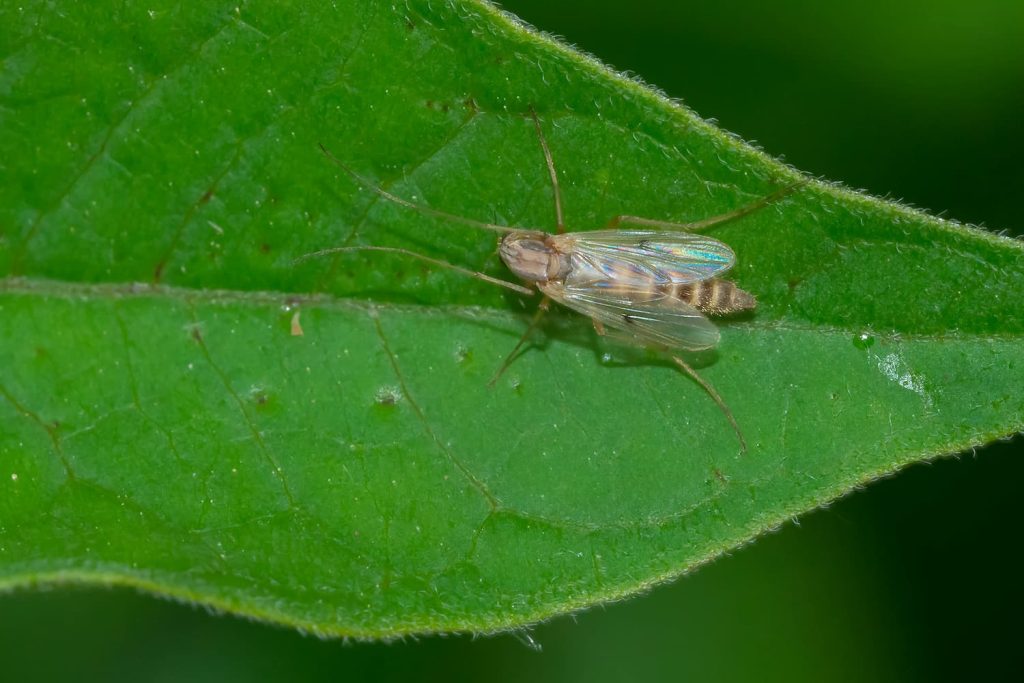
Midges can quickly become one of the most frustrating pond and lake nuisances on a property. They gather near lights, collect on walls and screens, and make patios, docks, and shoreline areas harder to enjoy. In Florida, warm weather, shoreline moisture, and nutrient rich water can make the problem worse.
The good news is that a midge problem usually points to conditions that can be improved. The real solution is not just spraying adults. It is understanding what midges are, why they are gathering around the pond, and what changes will reduce them over time.
This guide explains how to get rid of midges, how they differ from mosquitoes and gnats, what no-see-ums have to do with biting midges, and how Pond Guru can help identify the conditions driving the problem.
What Midges Are
Midges are tiny flies that develop around water. Some bite and some do not. Around ponds and lakes, the swarms most owners notice are often non-biting aquatic midges. These are the insects that collect near lights and gather on structures after emerging from the water.
Biting midges are different. These are the insects often connected with no-see-ums. They are smaller, harder to spot, and more likely to be the source of painful bites.
In practical pond terms, there are two broad problems:
- non-biting midge swarms around the lake
- biting midges around the shoreline, yard, or house
That distinction matters because the best way to reduce aquatic midges is different from the best way to reduce no-see-ums.
Why Midges Build Up
A midge problem usually starts in the pond itself. Many aquatic midges develop in bottom sediment, organic muck, and nutrient rich areas where algae and decaying plant material build up.
That means midge pressure is often tied to:
- excess nutrients
- shoreline runoff
- algae growth
- organic debris
- stagnant edge conditions
- thick bottom muck
In other words, the answer to how to get rid of midges is often tied to water quality and shoreline management more than a simple insect treatment.
When those conditions stay in place, adult swarms usually keep coming back.
Midge vs Mosquito
The midge vs mosquito comparison causes a lot of confusion around ponds. At a distance, the insects can look similar. The difference is in their behavior and the way they affect the property.
A mosquito is more directly associated with biting and disease concern. Many pond midges, especially the large swarms near lights, do not bite at all.
A simple way to think about it is this:
- mosquitoes are known for biting and breeding in standing water
- non-biting midges are often linked to bottom organic buildup
- biting midges are a separate problem connected to no-see-ums
The gnat vs mosquito comparison also adds confusion, since some owners describe any tiny flying insect around the lake as a gnat. In reality, a pond can have mosquitoes, midges, and gnat-like insects at the same time, but they are not all managed the same way.
No-See-Ums and Biting Midges
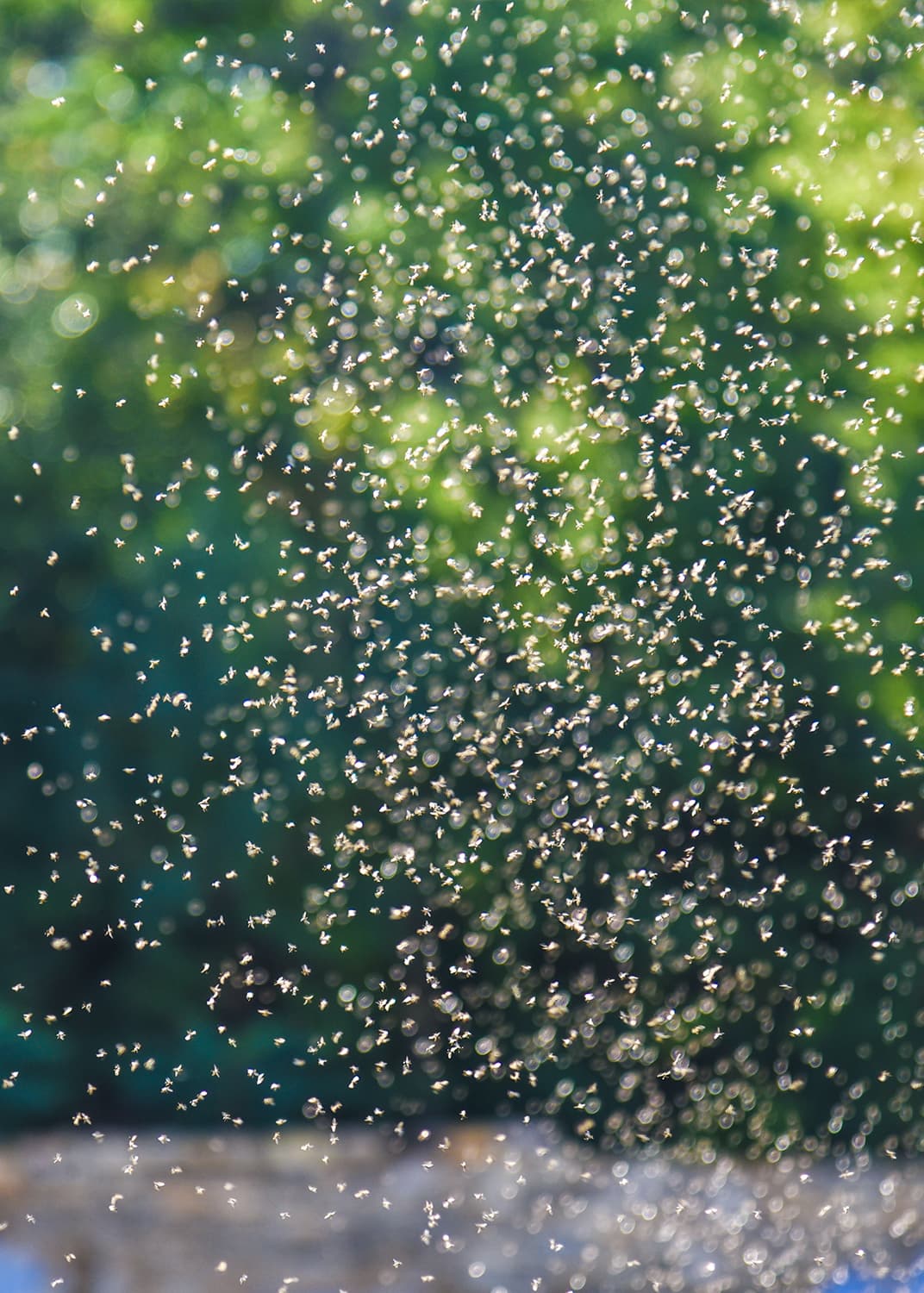
The phrase how to get rid of no see um bugs usually refers to biting midges, not the larger non-biting swarms seen around lake lights.
Biting midges are more likely to be noticed:
- along damp shoreline edges
- in humid evening conditions
- around patios and lanais
- near entryways and screens
- in areas with low air movement
This is also where biting midges in the house becomes an issue. They may gather around doors, windows, and lights and then move indoors if screening is weak or entry points are open.
For biting midges, personal protection matters more. A midge repellent or midge mosquito repellent may help reduce bites, especially in the evening. Products marketed under names like highland midge repellent fall more into personal use than pond treatment.
That is why a pond management plan and a personal bite prevention plan are often two separate parts of the solution.
Signs Around the Pond
A midge problem usually leaves a pattern around the property.
Common signs include:
- clouds of insects near lights
- tiny insects resting on walls, docks, and screens
- repeated swarms at dusk
- increased insect pressure near algae rich coves
- more activity around low circulation shoreline areas
- complaints that look like a “tiny green mosquito” problem
The tiny green mosquito description is common because some midges are pale or greenish and can resemble very small mosquitoes when clustered on exterior surfaces.
If the problem returns to the same zones again and again, the shoreline and pond conditions in that area usually need attention.
Get Rid of Midges From Your Lake
Treating midges at the source is the key to proper insect control. Schedule a site visit today!
How to Get Rid of Midges
The best answer to how to get rid of midges is long term habitat correction paired with targeted nuisance reduction.
A stronger lake management plan usually includes:
- reducing nutrient runoff
- managing algae before die off adds more organic material
- improving circulation in stagnant zones
- reducing shoreline muck where practical
- adjusting lighting near the water
- reducing damp organic debris near structures
For non-biting aquatic swarms, aquatic midges control depends heavily on improving the pond environment. That is where midge fly control becomes less about spraying adults and more about reducing the conditions that support larvae.
For biting midges, the strategy shifts more toward:
- airflow from fans
- improved screening
- reducing damp edge habitat
- using a practical midge repellent
The word midging is sometimes used casually to describe periods of heavy midge activity, but from a management standpoint, the real focus should stay on shoreline conditions, nutrient load, and emergence pressure.
Midge Control in Your Pond
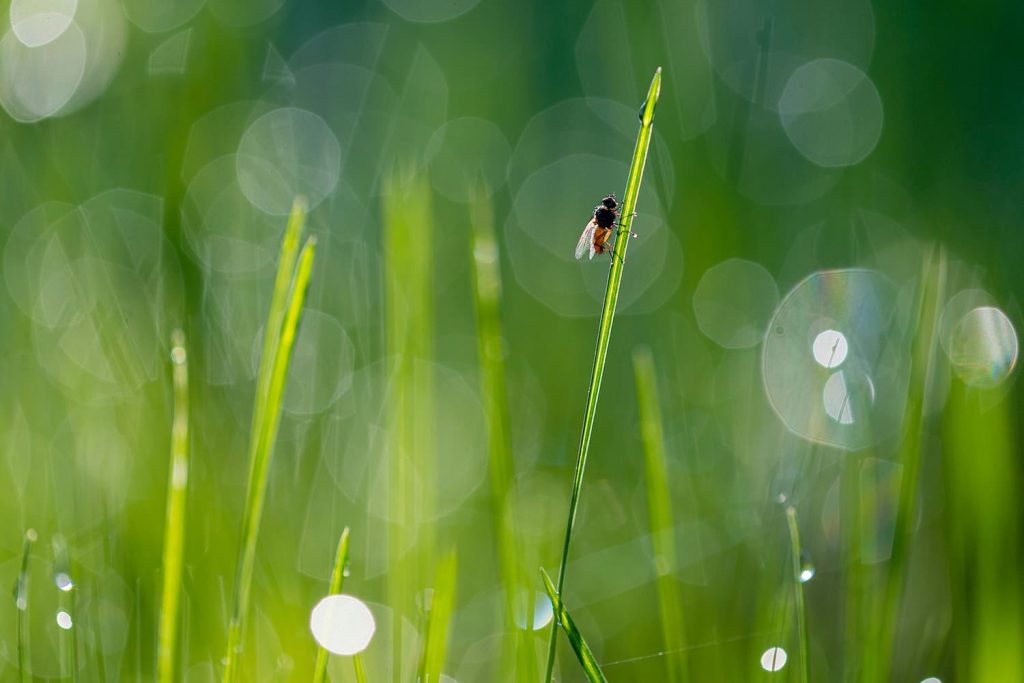
Pond Guru helps property owners determine whether the issue is a bottom driven aquatic midge problem, a biting midge problem, or a combination of both.
A site visit can help assess:
- muck buildup
- algae pressure
- shoreline moisture
- stagnant edge conditions
- lighting placement near the water
- whether the pond is supporting repeated midge emergence
This makes it easier to build a practical plan based on the actual source of the problem rather than relying on repeated short term sprays.
Frequently Asked Questions
The best long term approach is to reduce the habitat supporting them. That usually means improving pond conditions, reducing nutrient buildup, managing algae, and limiting stagnant shoreline areas where aquatic midges thrive.
A mosquito is more directly associated with biting and disease concern. Many pond midges do not bite at all. Some biting midges, often tied to no-see-ums, are a separate problem and need a different control approach than non-biting aquatic swarms.
No-see-ums are biting midges, and the most useful steps usually include better screening, stronger airflow, reduced damp shoreline debris, and an effective midge repellent for personal protection.
Midges in Florida are often tied to warm weather, nutrient rich water, shoreline moisture, algae, and bottom organic buildup. Those conditions support repeated emergence if the pond is not managed well.
Pond Guru can inspect shoreline conditions, muck, algae pressure, and pond balance to determine what is driving the midge problem and what changes will give the best long term results.
Ready to Schedule a Visit ?
Have questions about your pond or lake? Our experts are ready to help you take the next step.
Latest Article
Popular Post

Pennywort: From Lawn Weed to Pond Invader
Table of Contents Most Floridians know pennywort as dollarweed,…
Midges can quickly become one of the most frustrating pond and lake nuisances on a property. They gather near lights, collect on walls and screens, and make patios, docks, and shoreline areas harder to enjoy. In Florida, warm weather, shoreline moisture, and nutrient rich water can make the problem worse.
The good news is that a midge problem usually points to conditions that can be improved. The real solution is not just spraying adults. It is understanding what midges are, why they are gathering around the pond, and what changes will reduce them over time.
This guide explains how to get rid of midges, how they differ from mosquitoes and gnats, what no-see-ums have to do with biting midges, and how Pond Guru can help identify the conditions driving the problem.
What Midges Are
Midges are tiny flies that develop around water. Some bite and some do not. Around ponds and lakes, the swarms most owners notice are often non-biting aquatic midges. These are the insects that collect near lights and gather on structures after emerging from the water.
Biting midges are different. These are the insects often connected with no-see-ums. They are smaller, harder to spot, and more likely to be the source of painful bites.
In practical pond terms, there are two broad problems:
- non-biting midge swarms around the lake
- biting midges around the shoreline, yard, or house
That distinction matters because the best way to reduce aquatic midges is different from the best way to reduce no-see-ums.
Why Midges Build Up
A midge problem usually starts in the pond itself. Many aquatic midges develop in bottom sediment, organic muck, and nutrient rich areas where algae and decaying plant material build up.
That means midge pressure is often tied to:
- excess nutrients
- shoreline runoff
- algae growth
- organic debris
- stagnant edge conditions
- thick bottom muck
In other words, the answer to how to get rid of midges is often tied to water quality and shoreline management more than a simple insect treatment.
When those conditions stay in place, adult swarms usually keep coming back.
Midge vs Mosquito
The midge vs mosquito comparison causes a lot of confusion around ponds. At a distance, the insects can look similar. The difference is in their behavior and the way they affect the property.
A mosquito is more directly associated with biting and disease concern. Many pond midges, especially the large swarms near lights, do not bite at all.
A simple way to think about it is this:
- mosquitoes are known for biting and breeding in standing water
- non-biting midges are often linked to bottom organic buildup
- biting midges are a separate problem connected to no-see-ums
The gnat vs mosquito comparison also adds confusion, since some owners describe any tiny flying insect around the lake as a gnat. In reality, a pond can have mosquitoes, midges, and gnat-like insects at the same time, but they are not all managed the same way.
No-See-Ums and Biting Midges
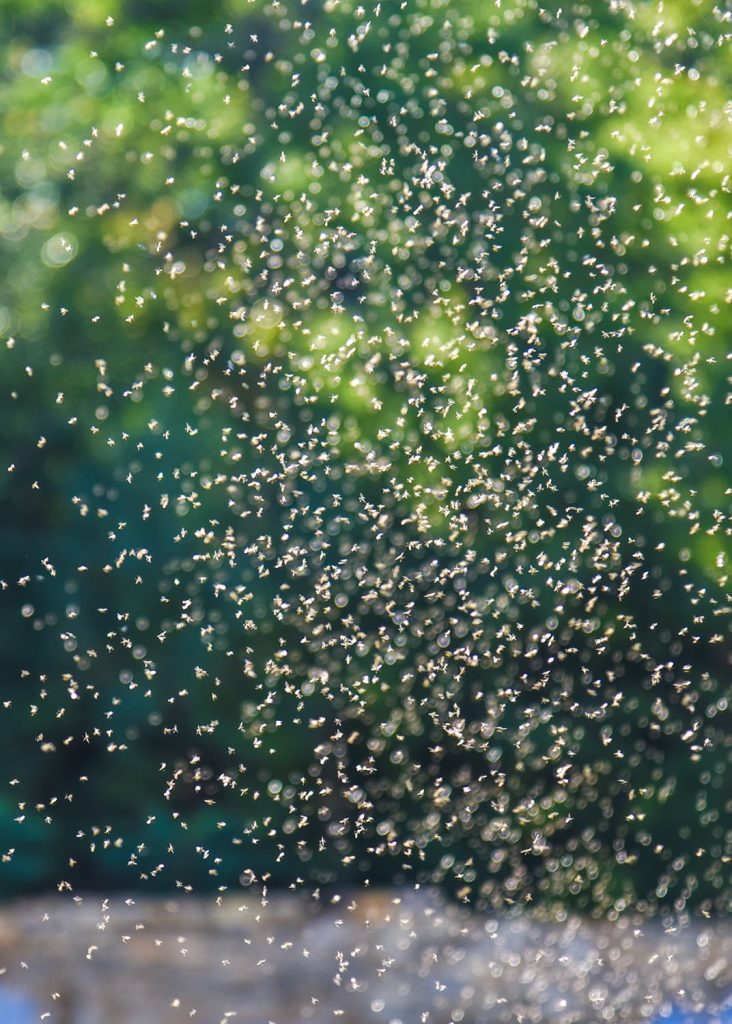
The phrase how to get rid of no see um bugs usually refers to biting midges, not the larger non-biting swarms seen around lake lights.
Biting midges are more likely to be noticed:
- along damp shoreline edges
- in humid evening conditions
- around patios and lanais
- near entryways and screens
- in areas with low air movement
This is also where biting midges in the house becomes an issue. They may gather around doors, windows, and lights and then move indoors if screening is weak or entry points are open.
For biting midges, personal protection matters more. A midge repellent or midge mosquito repellent may help reduce bites, especially in the evening. Products marketed under names like highland midge repellent fall more into personal use than pond treatment.
That is why a pond management plan and a personal bite prevention plan are often two separate parts of the solution.
Signs Around the Pond
A midge problem usually leaves a pattern around the property.
Common signs include:
- clouds of insects near lights
- tiny insects resting on walls, docks, and screens
- repeated swarms at dusk
- increased insect pressure near algae rich coves
- more activity around low circulation shoreline areas
- complaints that look like a “tiny green mosquito” problem
The tiny green mosquito description is common because some midges are pale or greenish and can resemble very small mosquitoes when clustered on exterior surfaces.
If the problem returns to the same zones again and again, the shoreline and pond conditions in that area usually need attention.
Get Rid of Midges From Your Lake
Treating midges at the source is the key to proper insect control. Schedule a site visit today!
How to Get Rid of Midges
The best answer to how to get rid of midges is long term habitat correction paired with targeted nuisance reduction.
A stronger lake management plan usually includes:
- reducing nutrient runoff
- managing algae before die off adds more organic material
- improving circulation in stagnant zones
- reducing shoreline muck where practical
- adjusting lighting near the water
- reducing damp organic debris near structures
For non-biting aquatic swarms, aquatic midges control depends heavily on improving the pond environment. That is where midge fly control becomes less about spraying adults and more about reducing the conditions that support larvae.
For biting midges, the strategy shifts more toward:
- airflow from fans
- improved screening
- reducing damp edge habitat
- using a practical midge repellent
The word midging is sometimes used casually to describe periods of heavy midge activity, but from a management standpoint, the real focus should stay on shoreline conditions, nutrient load, and emergence pressure.
Midge Control in Your Pond
Pond Guru helps property owners determine whether the issue is a bottom driven aquatic midge problem, a biting midge problem, or a combination of both.
A site visit can help assess:
- muck buildup
- algae pressure
- shoreline moisture
- stagnant edge conditions
- lighting placement near the water
- whether the pond is supporting repeated midge emergence
This makes it easier to build a practical plan based on the actual source of the problem rather than relying on repeated short term sprays.
Frequently Asked Questions
The best long term approach is to reduce the habitat supporting them. That usually means improving pond conditions, reducing nutrient buildup, managing algae, and limiting stagnant shoreline areas where aquatic midges thrive.
A mosquito is more directly associated with biting and disease concern. Many pond midges do not bite at all. Some biting midges, often tied to no-see-ums, are a separate problem and need a different control approach than non-biting aquatic swarms.
No-see-ums are biting midges, and the most useful steps usually include better screening, stronger airflow, reduced damp shoreline debris, and an effective midge repellent for personal protection.
Midges in Florida are often tied to warm weather, nutrient rich water, shoreline moisture, algae, and bottom organic buildup. Those conditions support repeated emergence if the pond is not managed well.
Pond Guru can inspect shoreline conditions, muck, algae pressure, and pond balance to determine what is driving the midge problem and what changes will give the best long term results.
Ready to Schedule a Visit ?
Have questions about your pond or lake? Our experts are ready to help you take the next step.
Latest Article
Popular Post
Pennywort: From Lawn Weed to Pond Invader
Table of Contents Most Floridians know pennywort as dollarweed,…