

How Long Do Mosquitoes Live? Prevention Guide
How Long Do Mosquitoes Live? Prevention Guide
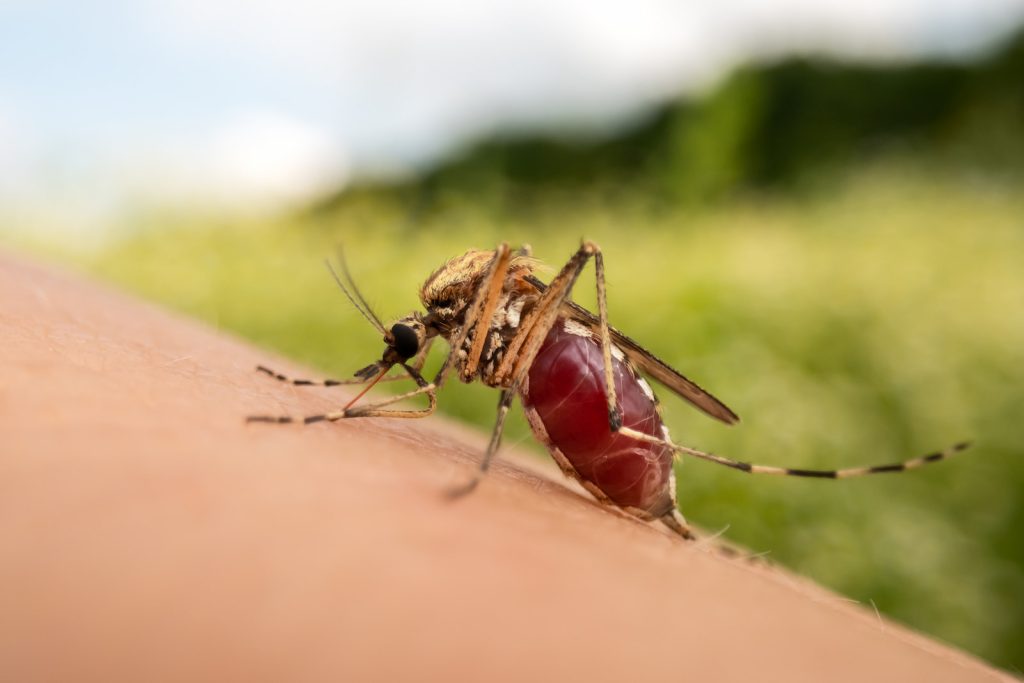
Mosquito activity around a pond is more than a seasonal nuisance. It is a direct indicator of water conditions. Understanding how long mosquitos live, helps pond owners recognize how quickly populations can grow and why proper pond management is essential for prevention.
This guide explains how long a mosquito lives, outlines the life expectancy of a mosquito, details mosquito eggs in water and water mosquito larvae development, and clarifies environmental factors such as what temp do mosquitoes die and how long do mosquitoes live indoors. The goal is to provide pond owners with practical knowledge to reduce breeding conditions and protect water quality.
How Long Do Mosquitos Live?
The average lifespan depends on species, temperature, humidity, and environmental conditions.
On average:
- Male mosquitoes live approximately 5 to 7 days
- Female mosquitoes live 2 to 4 weeks
- In warm, humid environments, females may survive up to a month
The life expectancy of a mosquito is significantly longer for females because they require time to feed and lay multiple batches of eggs. Each female can lay 100 to 300 eggs at a time and repeat that cycle several times during her life.
Even though mosquito lives may seem short, the reproduction rate allows populations to expand rapidly if breeding sites are available.
The Life Expectancy of a Mosquito: From Mosquito Eggs in Water to Adult
The life expectancy of a mosquito is tied directly to its four stage lifecycle:
- Egg
- Larva
- Pupa
- Adult
The first three stages occur entirely in water, which makes ponds one of the most common breeding environments.
Mosquito Eggs in Water
Female mosquitoes lay eggs in water or along damp edges that later flood. Some species lay eggs individually, while others deposit them in floating clusters called rafts.
Under warm conditions, mosquito eggs in water hatch within 24 to 48 hours. Still water, poor circulation, and nutrient buildup significantly increase egg survival rates.
Water Mosquito Larvae
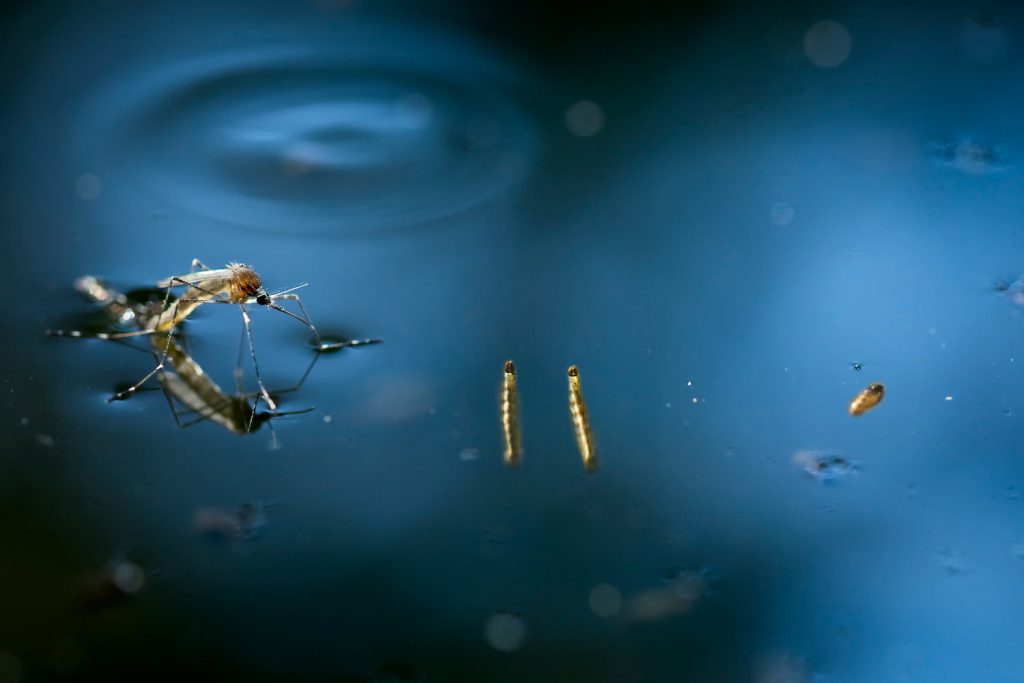
After hatching, eggs become water mosquito larvae. These larvae remain near the surface and are commonly referred to as wigglers.
Water mosquito larvae:
- Feed on algae and organic debris
- Breathe at the surface
- Develop rapidly in warm temperatures
- Mature within 4 to 7 days in ideal conditions
The presence of water mosquito larvae is a strong indication of stagnant or imbalanced pond water.
Pupal Stage to Adult Mosquito
After the larval stage, mosquitoes enter the pupal stage, which lasts approximately 2 to 3 days. The adult mosquito then emerges from the water surface.
From mosquito eggs in water to flying adult, development can take as little as 7 to 10 days in warm climates.
This accelerated lifecycle explains why untreated ponds can produce large mosquito populations in a short time.
Do Mosquitoes Die After They Bite?
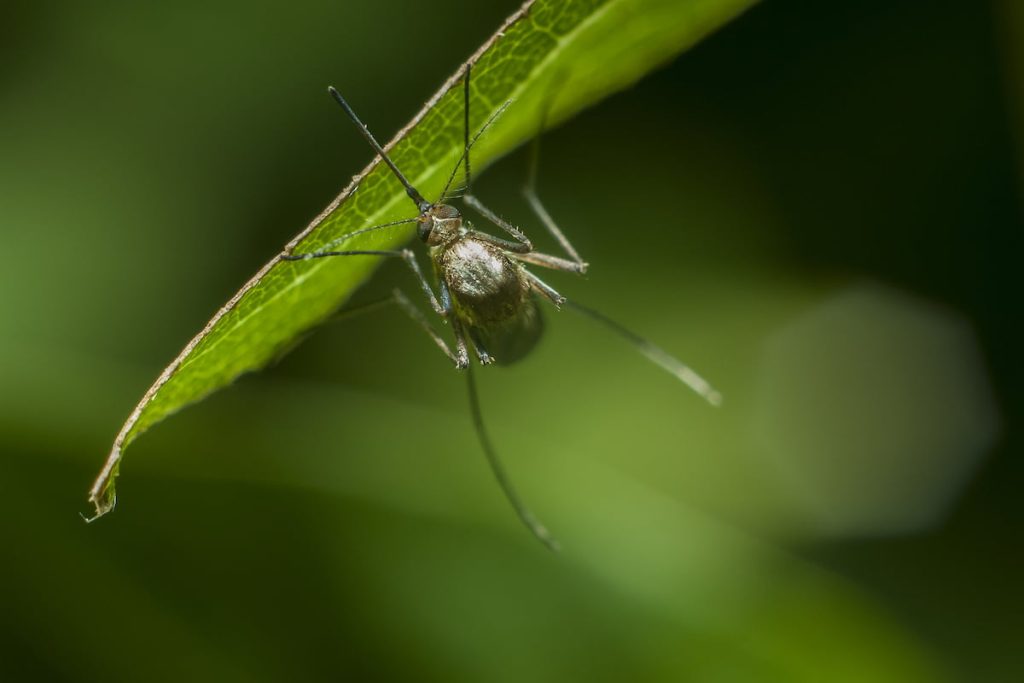
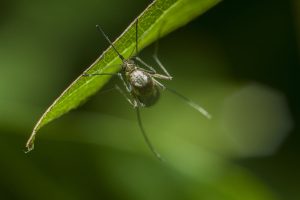
Mosquitoes do not die after biting.
Female mosquitoes require blood to develop eggs. After feeding, they rest, lay eggs, and repeat the cycle multiple times throughout their lifespan. A single female can bite several times and lay multiple egg batches during her life expectancy.
Addressing only adult mosquitoes does not interrupt this reproductive cycle. Controlling breeding conditions remains the most effective strategy.
How Long Do Mosquitoes Live Indoors?
How long mosquitoes live indoors depends on environmental conditions.
Indoors, mosquitoes may survive:
- 2 to 3 weeks in warm, humid areas
- Longer in undisturbed spaces such as garages or basements
- Through colder months if protected from freezing temperatures
Indoor mosquito presence typically indicates a nearby outdoor breeding source. Ponds with poor circulation, shoreline overgrowth, or stagnant edges often contribute to indoor mosquito activity.
Outsmart Mosquitos in Your Pond
Learn how mosquitoes behave in order to control them properly. Schedule with your local Pond Guru
What Do Mosquitoes Eat?
Understanding what mosquitoes eat provides insight into why nutrient rich ponds encourage breeding.
Male mosquitoes feed primarily on nectar and plant sugars. Female mosquitoes feed on nectar but also require blood to produce eggs.
During the larval stage, water mosquito larvae feed on:
- Algae
- Microorganisms
- Organic debris
- Decaying plant matter
Excess nutrients in ponds increase algae growth and organic buildup, providing a consistent food source for larvae.
At What Temp Do Mosquitoes Die?
Temperature plays a significant role in mosquito survival.
General temperature thresholds include:
- Activity slows below 50 degrees Fahrenheit
- Many adults die near freezing temperatures
- Prolonged exposure below 32 degrees Fahrenheit is lethal for most adults
- Some eggs can survive winter and hatch in spring
In warmer regions, mosquito activity may continue for much of the year. Consistent pond management is critical during extended warm seasons.
How High Do Mosquitoes Fly?
Most mosquitoes remain close to their breeding site.
Typical flight patterns show:
- Most species fly within 25 feet of the ground
- Many remain within several hundred feet of where they hatched
- Some species can travel farther when wind assisted
If mosquito activity is noticeable around a pond, the breeding source is usually local.
Why Ponds Become Mosquito Breeding Grounds
Mosquitoes thrive in ponds with:
- Stagnant water
- Low oxygen levels
- Excess nutrients
- Overgrown shoreline vegetation
- Poor circulation
Balanced ponds with proper aeration and biological support are significantly less attractive for egg laying. Improving water movement disrupts mosquito eggs in water and reduces survival rates of water mosquito larvae.
How Pond Guru Prevents Mosquito Problems
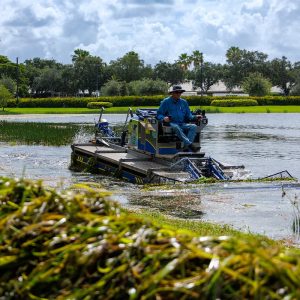
Mosquito outbreaks are often a symptom of broader water quality issues. Pond Guru addresses the root cause rather than temporary surface treatments.
Our approach includes:
- On site pond evaluations
- Aeration and circulation improvements
- Nutrient reduction strategies
- Algae and organic debris management
- Long term ecosystem balance planning
By improving overall pond health, mosquito breeding conditions decline naturally.
Why Choose Pond Guru for Mosquito Prevention?
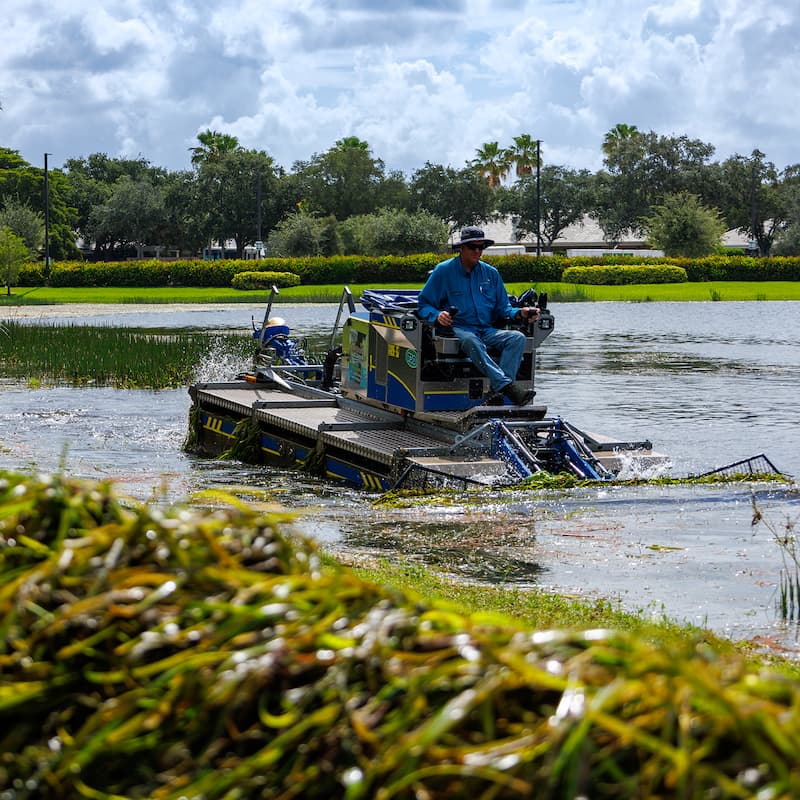
Mosquito control requires more than spraying adults. It requires understanding how long mosquitos live, how quickly mosquito eggs in water develop, and how water mosquito larvae thrive in imbalanced systems.
Pond Guru provides:
- Professional site inspections
- Customized treatment plans
- Environmentally responsible applications
- Ongoing management strategies
Whether managing a residential pond, HOA water feature, or commercial property, Pond Guru delivers long term solutions.
Schedule your free site visit with Pond Guru today. Our experts will evaluate your pond, identify breeding risks, and provide a customized strategy to reduce mosquito activity and restore water balance.
Frequently Asked Questions
Male mosquitoes typically live 5 to 7 days, while females live 2 to 4 weeks depending on environmental conditions. Warm temperatures and high humidity extend lifespan.
No. Female mosquitoes bite multiple times throughout their life to produce eggs.
Mosquitoes may live several weeks indoors if the environment is warm and humid. Eliminating nearby breeding sites is essential for long term control.
Most adult mosquitoes die after prolonged exposure to freezing temperatures, although some eggs can survive winter conditions.
Pond Guru improves circulation, reduces nutrients, and restores biological balance to prevent mosquito eggs in water from developing into adult populations. Contact Pond Guru to schedule a free professional evaluation.
Ready to Schedule a Visit ?
Have questions about your pond or lake? Our experts are ready to help you take the next step.
Latest Article
Popular Post

Saltwater Intrusion in Florida Community Lakes: Causes and Testing
Table of Contents A community lake that has looked…
Mosquito activity around a pond is more than a seasonal nuisance. It is a direct indicator of water conditions. Understanding how long mosquitos live, helps pond owners recognize how quickly populations can grow and why proper pond management is essential for prevention.
This guide explains how long a mosquito lives, outlines the life expectancy of a mosquito, details mosquito eggs in water and water mosquito larvae development, and clarifies environmental factors such as what temp do mosquitoes die and how long do mosquitoes live indoors. The goal is to provide pond owners with practical knowledge to reduce breeding conditions and protect water quality.
How Long Do Mosquitos Live?
The average lifespan depends on species, temperature, humidity, and environmental conditions.
On average:
- Male mosquitoes live approximately 5 to 7 days
- Female mosquitoes live 2 to 4 weeks
- In warm, humid environments, females may survive up to a month
The life expectancy of a mosquito is significantly longer for females because they require time to feed and lay multiple batches of eggs. Each female can lay 100 to 300 eggs at a time and repeat that cycle several times during her life.
Even though mosquito lives may seem short, the reproduction rate allows populations to expand rapidly if breeding sites are available.
The Life Expectancy of a Mosquito: From Mosquito Eggs in Water to Adult
The life expectancy of a mosquito is tied directly to its four stage lifecycle:
- Egg
- Larva
- Pupa
- Adult
The first three stages occur entirely in water, which makes ponds one of the most common breeding environments.
Mosquito Eggs in Water
Female mosquitoes lay eggs in water or along damp edges that later flood. Some species lay eggs individually, while others deposit them in floating clusters called rafts.
Under warm conditions, mosquito eggs in water hatch within 24 to 48 hours. Still water, poor circulation, and nutrient buildup significantly increase egg survival rates.
Water Mosquito Larvae
After hatching, eggs become water mosquito larvae. These larvae remain near the surface and are commonly referred to as wigglers.
Water mosquito larvae:
- Feed on algae and organic debris
- Breathe at the surface
- Develop rapidly in warm temperatures
- Mature within 4 to 7 days in ideal conditions
The presence of water mosquito larvae is a strong indication of stagnant or imbalanced pond water.
Pupal Stage to Adult Mosquito
After the larval stage, mosquitoes enter the pupal stage, which lasts approximately 2 to 3 days. The adult mosquito then emerges from the water surface.
From mosquito eggs in water to flying adult, development can take as little as 7 to 10 days in warm climates.
This accelerated lifecycle explains why untreated ponds can produce large mosquito populations in a short time.
Do Mosquitoes Die After They Bite?
Mosquitoes do not die after biting.
Female mosquitoes require blood to develop eggs. After feeding, they rest, lay eggs, and repeat the cycle multiple times throughout their lifespan. A single female can bite several times and lay multiple egg batches during her life expectancy.
Addressing only adult mosquitoes does not interrupt this reproductive cycle. Controlling breeding conditions remains the most effective strategy.
How Long Do Mosquitoes Live Indoors?
How long mosquitoes live indoors depends on environmental conditions.
Indoors, mosquitoes may survive:
- 2 to 3 weeks in warm, humid areas
- Longer in undisturbed spaces such as garages or basements
- Through colder months if protected from freezing temperatures
Indoor mosquito presence typically indicates a nearby outdoor breeding source. Ponds with poor circulation, shoreline overgrowth, or stagnant edges often contribute to indoor mosquito activity.
Outsmart Mosquitos in Your Pond
Learn how mosquitoes behave in order to control them properly. Schedule with your local Pond Guru
What Do Mosquitoes Eat?
Understanding what mosquitoes eat provides insight into why nutrient rich ponds encourage breeding.
Male mosquitoes feed primarily on nectar and plant sugars. Female mosquitoes feed on nectar but also require blood to produce eggs.
During the larval stage, water mosquito larvae feed on:
- Algae
- Microorganisms
- Organic debris
- Decaying plant matter
Excess nutrients in ponds increase algae growth and organic buildup, providing a consistent food source for larvae.
At What Temp Do Mosquitoes Die?
Temperature plays a significant role in mosquito survival.
General temperature thresholds include:
- Activity slows below 50 degrees Fahrenheit
- Many adults die near freezing temperatures
- Prolonged exposure below 32 degrees Fahrenheit is lethal for most adults
- Some eggs can survive winter and hatch in spring
In warmer regions, mosquito activity may continue for much of the year. Consistent pond management is critical during extended warm seasons.
How High Do Mosquitoes Fly?
Most mosquitoes remain close to their breeding site.
Typical flight patterns show:
- Most species fly within 25 feet of the ground
- Many remain within several hundred feet of where they hatched
- Some species can travel farther when wind assisted
If mosquito activity is noticeable around a pond, the breeding source is usually local.
Why Ponds Become Mosquito Breeding Grounds
Mosquitoes thrive in ponds with:
- Stagnant water
- Low oxygen levels
- Excess nutrients
- Overgrown shoreline vegetation
- Poor circulation
Balanced ponds with proper aeration and biological support are significantly less attractive for egg laying. Improving water movement disrupts mosquito eggs in water and reduces survival rates of water mosquito larvae.
How Pond Guru Prevents Mosquito Problems
Mosquitoes do not die after biting.
Female mosquitoes require blood to develop eggs. After feeding, they rest, lay eggs, and repeat the cycle multiple times throughout their lifespan. A single female can bite several times and lay multiple egg batches during her life expectancy.
Addressing only adult mosquitoes does not interrupt this reproductive cycle. Controlling breeding conditions remains the most effective strategy.
Why Choose Pond Guru for Mosquito Prevention?
Mosquito control requires more than spraying adults. It requires understanding how long mosquitos live, how quickly mosquito eggs in water develop, and how water mosquito larvae thrive in imbalanced systems.
Pond Guru provides:
- Professional site inspections
- Customized treatment plans
- Environmentally responsible applications
- Ongoing management strategies
Whether managing a residential pond, HOA water feature, or commercial property, Pond Guru delivers long term solutions.
Schedule your free site visit with Pond Guru today. Our experts will evaluate your pond, identify breeding risks, and provide a customized strategy to reduce mosquito activity and restore water balance.
Frequently Asked Questions
Male mosquitoes typically live 5 to 7 days, while females live 2 to 4 weeks depending on environmental conditions. Warm temperatures and high humidity extend lifespan.
No. Female mosquitoes bite multiple times throughout their life to produce eggs.
Mosquitoes may live several weeks indoors if the environment is warm and humid. Eliminating nearby breeding sites is essential for long term control.
Most adult mosquitoes die after prolonged exposure to freezing temperatures, although some eggs can survive winter conditions.
Pond Guru improves circulation, reduces nutrients, and restores biological balance to prevent mosquito eggs in water from developing into adult populations. Contact Pond Guru to schedule a free professional evaluation.
Ready to Schedule a Visit ?
Have questions about your pond or lake? Our experts are ready to help you take the next step.
Latest Article
Popular Post
Saltwater Intrusion in Florida Community Lakes: Causes and Testing
Table of Contents A community lake that has looked…