

What Is Guppy Grass? (Southern Naiad)
What Is Guppy Grass? (Southern Naiad)
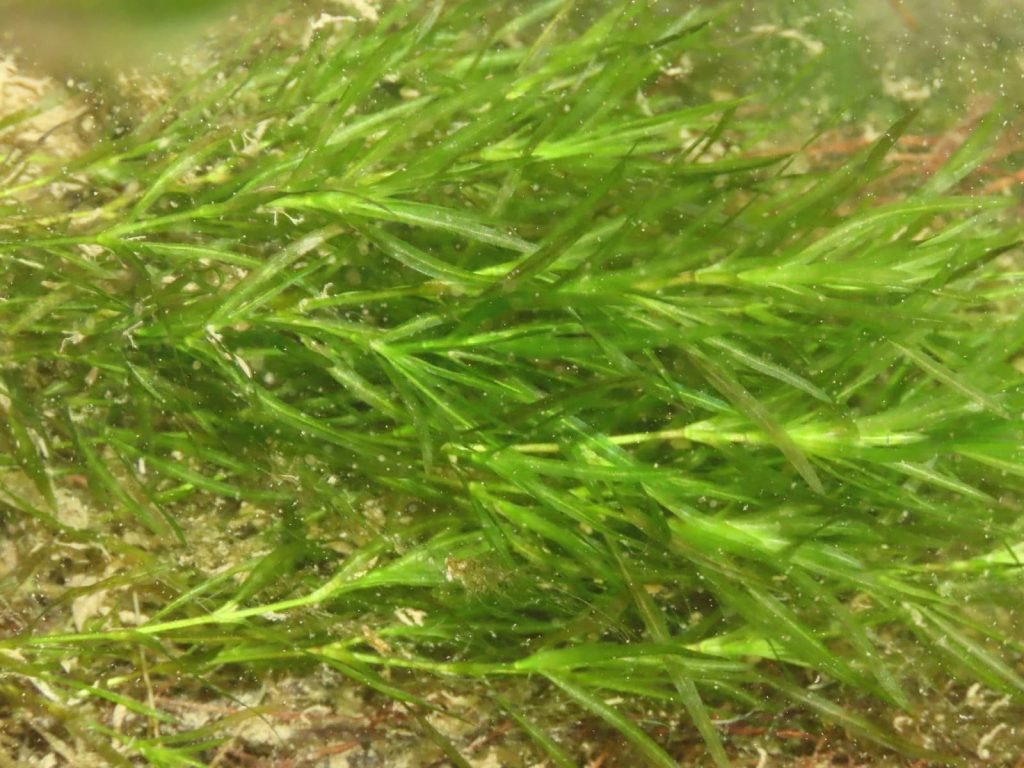
If you own a koi pond or live on a property with a freshwater pond or lake, you’ve probably come across the name guppy grass at some point. Aquarium hobbyists swear by it. Pond owners are sometimes surprised to find it growing on its own in their water. Some people praise it as a low-maintenance oxygenator, while others curse it for forming dense mats.
So which is it? The honest answer is “both.” Guppy grass is one of those plants that can be a wonderful addition to the right setup and a nuisance in the wrong one. This guide explains what guppy grass actually is, where it grows, what it gets confused with, and when it’s worth bringing in a professional like Pond Guru to help manage it.
What Is Guppy Grass? (Najas Guadalupensis)
Guppy grass is the common name for Najas guadalupensis, a submerged aquatic plant native to North and South America. According to the UF/IFAS Center for Aquatic and Invasive Plants, it is also called southern naiad, southern waternymph, naja grass, and bushy pondweed depending on the region and reference.
A few quick facts:
- It is a true flowering plant, not an algae.
- It lives entirely underwater, with flexible, branching stems.
- It is native across much of the U.S., including Florida.
- It can root in soft sediment or grow as a free-floating mat.
Aquarium hobbyists adopted it long ago as a beginner-friendly oxygenating plant, which is how it picked up the friendly nickname “guppy grass.” But the same plant has been growing wild in American ponds and lakes since long before any aquarium existed.
Naja Grass: A Quick Botanical Profile
If you want to be a little more precise, here is the science. Texas A&M’s AquaPlant resource and the Mississippi State University Extension Service both describe naja grass in clear, consistent terms.
Key identification features include:
- Leaves: Narrow, about one inch long and less than one-sixteenth of an inch wide. The leaf margins have tiny teeth visible with magnification.
- Arrangement: Opposite on the stem, sometimes in whorls of three.
- Color: Deep green, sometimes turning slightly purplish.
- Stems: Long, branching, often reaching several feet, very brittle.
- Habitat: Springs, fresh and brackish lakes, ponds, and canals.
The USGS Plant ID database classifies it as an obligate wetland species, which means you will find it in water, not on land. It is an annual or short-lived perennial, depending on climate.
How to Identify Guppy Grass in Ponds
When you scoop a handful out of your pond or fish it off your skimmer, look for these clues:
- Stems are bushy and brittle, breaking apart easily in your hand.
- Leaves are narrow and short, much shorter than most look-alikes.
- The plant has no obvious flowers or seed heads (any flowers are tiny and easy to miss).
- It does not have whorls of five to seven leaves like hydrilla.
A simple test: if you pull a stem through your fingers and it falls apart almost immediately into a pile of fine green threads, you are very likely dealing with guppy grass.
Does Guppy Grass Grow in Ponds?

Yes, and the answer to “does guppy grass grow in ponds” is the source of much of the confusion among Florida property owners. Guppy grass is one of the most common native submerged plants in American freshwater. UF/IFAS notes that southern naiad (the same plant) is widely distributed throughout the United States and parts of Canada and is found in springs, lakes, ponds, and canals, where it sometimes forms mats.
In other words, you do not need to plant guppy grass for it to appear. Birds, especially ducks, eat the seeds and carry them between water bodies. Once it shows up, it can establish quickly in the right conditions:
- Shallow, sunlit water
- Soft, nutrient-rich sediment
- Slow or still flow
If your community retention pond, ranch pond, or backyard lake checks those boxes, there is a decent chance guppy grass is already growing in it whether you planted it or not.
Guppy Grass in Ponds: Benefits and Drawbacks
So is guppy grass in ponds a good thing or a bad thing? It depends on the pond and the amount.
The benefits side is real:
- Oxygenation: Like other submerged plants, it produces oxygen through photosynthesis during the day.
- Cover for young fish: The bushy stems are ideal hiding places for fry and small invertebrates.
- Wildlife food: Ducks and other waterfowl eat the seeds and vegetation. Texas A&M notes that southern naiad is considered a primary food source for many duck species.
- Water quality: By taking up nutrients, it can help reduce algae blooms in nutrient-rich water.
The drawbacks show up when conditions are right for runaway growth:
- Dense mats can interfere with swimming, fishing, and boating.
- Decaying mats can pull dissolved oxygen out of the water, stressing fish.
- Overgrowth can crowd out other native species.
- Mechanical removal is complicated because the stems are so brittle and fragments can re-grow.
The line between “nice native oxygenator” and “a problem to manage” is usually drawn by the size of the pond, the amount of sun, the depth of the water, and how nutrient-rich the system is.
Keep Southern Naiad Under Control
Pond Guru can prevent aquatic plants like southern naiad from taking over your pond.
Guppy Grass for Koi Ponds: Why Hobbyists Love It
This is where the friendly nickname comes from. Guppy grass for koi ponds and aquariums has been a hobbyist favorite for decades. The plant grows quickly, tolerates a wide range of water conditions, and provides shelter for fry, shrimp, and timid fish.
Common reasons koi keepers add it to their ponds:
- It does not require a substrate. It can float, attach loosely to rocks, or be tucked into a planting pocket.
- It tolerates hard, alkaline water, which describes a lot of koi ponds.
- It pulls excess nutrients out of the water column, which can help keep your pond cleaner between mechanical cleanings.
- The fine, bushy leaves give baby koi and other small fish a safe place to hide from predators and adult fish.
A few practical tips if you are using it in a koi pond:
- Add it in moderation. A small handful is enough to start. It can easily double in a week or two.
- Plan to trim regularly. Like any oxygenator, it can quickly take over.
- Keep an eye on water flow around skimmers and pumps. Broken fragments can clog filters.
Koi keepers tend to love it for the same reasons natural pond managers sometimes worry about it. It grows fast, spreads easily, and does not give up territory once established.

Plants Commonly Confused With Guppy Grass
This is where many homeowners get into trouble. Several other submerged plants look similar to guppy grass at a glance, and a few of them are far more aggressive or even illegal to possess.
Mississippi State Extension specifically notes that southern naiad (guppy grass) is often confused with:
- Sago pondweed (Stuckenia pectinata), which has alternate leaves, not opposite, and longer leaves that often run several inches.
- Bushy or leafy pondweed (Potamogeton foliosus), which also has longer leaves.
- Widgeon grass (Ruppia maritima), which tolerates more salt and has slightly different leaf structure.
And then there are two even more important look-alikes:
- Hydrilla (Hydrilla verticillata), a federally listed noxious weed. Cornell Cooperative Extension explains that hydrilla typically has leaves in whorls of four to five (sometimes more) with sharply toothed margins, while native Elodea has leaves in whorls of three with smooth edges. Guppy grass has leaves arranged oppositely or in whorls of three, not five to seven.
- Elodea (Elodea canadensis or related species), a native that is easy to confuse with guppy grass at first glance but has slightly wider, smoother leaves.
If you cannot tell which one you have, it matters. Hydrilla is illegal to possess and transport in Florida and many other states, and a proper identification protects you from accidentally spreading a regulated species.
When Naja Grass Becomes a Problem in Natural Ponds
A little guppy grass in your koi pond is generally a good thing. A pond surface covered in dense submerged mats is not. Here are some signs that naja grass has tipped from helpful to problematic:
- You see thick, tangled green mats just below the water surface across large areas.
- Water clarity is dropping because of decaying plant material.
- Fish are gasping at the surface in the early morning, suggesting low dissolved oxygen.
- Your skimmer or pump is constantly clogging with fine green debris.
- Floating mats are washing up along the shoreline.
If your pond is showing these symptoms, a professional assessment is the smart move. Treating the wrong species, or treating at the wrong time of year, can damage native plants and stress fish.
Pond Cleaning and Pond Management With Pond Guru
Once guppy grass (or any other submerged plant) starts taking over, the work shifts from prevention to active management. That is where professional pond cleaning and pond management matter most.
A good plan typically combines several tools:
- Accurate plant identification to rule out hydrilla and other look-alikes.
- Mechanical removal or harvesting where appropriate, taking care not to leave fragments that can regrow.
- Targeted treatments for the specific species and density of growth.
- Nutrient management to address the runoff and inputs feeding excessive growth.
- Ongoing monitoring so small problems get caught before they become big ones.
Pond Guru specializes in this kind of layered, ecologically informed approach. Every pond is different, so the right plan for your situation depends on the size of the water body, the species present, the surrounding land use, and your goals. The right first step is a site visit.
Schedule a Site Visit With Pond Guru
If you are staring at a pond full of green stems and you are not sure if it is guppy grass, hydrilla, or something else, the smartest move is to bring in someone who can tell you for certain and put a plan together.
Contact Pond Guru to schedule your site visit and find out what is growing in your pond, what to keep, what to remove, and how to keep your water clean and beautiful long term. Whether it is a koi pond in your backyard or a large community lake, the right pond cleaning and pond management plan starts with knowing exactly what you are dealing with.
Frequently Asked Questions
Guppy grass is the common name for Najas guadalupensis, a native submerged freshwater plant also known as naja grass, southern naiad, or southern waternymph. It is popular in aquariums and koi ponds and also grows wild in many natural ponds and lakes.
Yes. Guppy grass is a native species that grows throughout much of North America. It can appear in your pond without being planted, often arriving via waterfowl that eat and disperse the seeds.
Yes. Guppy grass is widely used in koi ponds and aquariums. It provides oxygen, shelter for young fish, and helps absorb excess nutrients. Keep it trimmed so it does not take over.
Guppy grass is most often confused with hydrilla, elodea, sago pondweed, leafy pondweed, and widgeon grass. Correct identification matters, especially because hydrilla is a regulated invasive species.
If submerged plants are forming dense mats, water clarity is dropping, fish are stressed, or you cannot identify what is growing in your pond, schedule a site visit. Pond Guru offers pond cleaning and pond management services tailored to your water body and goals.
Ready to Schedule a Visit ?
Have questions about your pond or lake? Our experts are ready to help you take the next step.
Latest Article
Popular Post

Why Keeping Culverts Clear of Debris Matters for Stormwater Systems
Table of Contents A culvert is one of those…
If you own a koi pond or live on a property with a freshwater pond or lake, you’ve probably come across the name guppy grass at some point. Aquarium hobbyists swear by it. Pond owners are sometimes surprised to find it growing on its own in their water. Some people praise it as a low-maintenance oxygenator, while others curse it for forming dense mats.
So which is it? The honest answer is “both.” Guppy grass is one of those plants that can be a wonderful addition to the right setup and a nuisance in the wrong one. This guide explains what guppy grass actually is, where it grows, what it gets confused with, and when it’s worth bringing in a professional like Pond Guru to help manage it.
What Is Guppy Grass? (Najas Guadalupensis)
Guppy grass is the common name for Najas guadalupensis, a submerged aquatic plant native to North and South America. According to the UF/IFAS Center for Aquatic and Invasive Plants, it is also called southern naiad, southern waternymph, naja grass, and bushy pondweed depending on the region and reference.
A few quick facts:
- It is a true flowering plant, not an algae.
- It lives entirely underwater, with flexible, branching stems.
- It is native across much of the U.S., including Florida.
- It can root in soft sediment or grow as a free-floating mat.
Aquarium hobbyists adopted it long ago as a beginner-friendly oxygenating plant, which is how it picked up the friendly nickname “guppy grass.” But the same plant has been growing wild in American ponds and lakes since long before any aquarium existed.
Naja Grass: A Quick Botanical Profile
If you want to be a little more precise, here is the science. Texas A&M’s AquaPlant resource and the Mississippi State University Extension Service both describe naja grass in clear, consistent terms.
Key identification features include:
- Leaves: Narrow, about one inch long and less than one-sixteenth of an inch wide. The leaf margins have tiny teeth visible with magnification.
- Arrangement: Opposite on the stem, sometimes in whorls of three.
- Color: Deep green, sometimes turning slightly purplish.
- Stems: Long, branching, often reaching several feet, very brittle.
- Habitat: Springs, fresh and brackish lakes, ponds, and canals.
The USGS Plant ID database classifies it as an obligate wetland species, which means you will find it in water, not on land. It is an annual or short-lived perennial, depending on climate.
How to Identify Guppy Grass in Ponds
When you scoop a handful out of your pond or fish it off your skimmer, look for these clues:
- Stems are bushy and brittle, breaking apart easily in your hand.
- Leaves are narrow and short, much shorter than most look-alikes.
- The plant has no obvious flowers or seed heads (any flowers are tiny and easy to miss).
- It does not have whorls of five to seven leaves like hydrilla.
A simple test: if you pull a stem through your fingers and it falls apart almost immediately into a pile of fine green threads, you are very likely dealing with guppy grass.
Does Guppy Grass Grow in Ponds?

Yes, and the answer to “does guppy grass grow in ponds” is the source of much of the confusion among Florida property owners. Guppy grass is one of the most common native submerged plants in American freshwater. UF/IFAS notes that southern naiad (the same plant) is widely distributed throughout the United States and parts of Canada and is found in springs, lakes, ponds, and canals, where it sometimes forms mats.
In other words, you do not need to plant guppy grass for it to appear. Birds, especially ducks, eat the seeds and carry them between water bodies. Once it shows up, it can establish quickly in the right conditions:
- Shallow, sunlit water
- Soft, nutrient-rich sediment
- Slow or still flow
If your community retention pond, ranch pond, or backyard lake checks those boxes, there is a decent chance guppy grass is already growing in it whether you planted it or not.
Guppy Grass in Ponds: Benefits and Drawbacks
So is guppy grass in ponds a good thing or a bad thing? It depends on the pond and the amount.
The benefits side is real:
- Oxygenation: Like other submerged plants, it produces oxygen through photosynthesis during the day.
- Cover for young fish: The bushy stems are ideal hiding places for fry and small invertebrates.
- Wildlife food: Ducks and other waterfowl eat the seeds and vegetation. Texas A&M notes that southern naiad is considered a primary food source for many duck species.
- Water quality: By taking up nutrients, it can help reduce algae blooms in nutrient-rich water.
The drawbacks show up when conditions are right for runaway growth:
- Dense mats can interfere with swimming, fishing, and boating.
- Decaying mats can pull dissolved oxygen out of the water, stressing fish.
- Overgrowth can crowd out other native species.
- Mechanical removal is complicated because the stems are so brittle and fragments can re-grow.
The line between “nice native oxygenator” and “a problem to manage” is usually drawn by the size of the pond, the amount of sun, the depth of the water, and how nutrient-rich the system is.
Keep Southern Naiad Under Control
Pond Guru can prevent aquatic plants like southern naiad from taking over your pond.
Guppy Grass for Koi Ponds: Why Hobbyists Love It
This is where the friendly nickname comes from. Guppy grass for koi ponds and aquariums has been a hobbyist favorite for decades. The plant grows quickly, tolerates a wide range of water conditions, and provides shelter for fry, shrimp, and timid fish.
Common reasons koi keepers add it to their ponds:
- It does not require a substrate. It can float, attach loosely to rocks, or be tucked into a planting pocket.
- It tolerates hard, alkaline water, which describes a lot of koi ponds.
- It pulls excess nutrients out of the water column, which can help keep your pond cleaner between mechanical cleanings.
- The fine, bushy leaves give baby koi and other small fish a safe place to hide from predators and adult fish.
A few practical tips if you are using it in a koi pond:
- Add it in moderation. A small handful is enough to start. It can easily double in a week or two.
- Plan to trim regularly. Like any oxygenator, it can quickly take over.
- Keep an eye on water flow around skimmers and pumps. Broken fragments can clog filters.
Koi keepers tend to love it for the same reasons natural pond managers sometimes worry about it. It grows fast, spreads easily, and does not give up territory once established.
Plants Commonly Confused With Guppy Grass
This is where many homeowners get into trouble. Several other submerged plants look similar to guppy grass at a glance, and a few of them are far more aggressive or even illegal to possess.
Mississippi State Extension specifically notes that southern naiad (guppy grass) is often confused with:
- Sago pondweed (Stuckenia pectinata), which has alternate leaves, not opposite, and longer leaves that often run several inches.
- Bushy or leafy pondweed (Potamogeton foliosus), which also has longer leaves.
- Widgeon grass (Ruppia maritima), which tolerates more salt and has slightly different leaf structure.
And then there are two even more important look-alikes:
- Hydrilla (Hydrilla verticillata), a federally listed noxious weed. Cornell Cooperative Extension explains that hydrilla typically has leaves in whorls of four to five (sometimes more) with sharply toothed margins, while native Elodea has leaves in whorls of three with smooth edges. Guppy grass has leaves arranged oppositely or in whorls of three, not five to seven.
- Elodea (Elodea canadensis or related species), a native that is easy to confuse with guppy grass at first glance but has slightly wider, smoother leaves.
If you cannot tell which one you have, it matters. Hydrilla is illegal to possess and transport in Florida and many other states, and a proper identification protects you from accidentally spreading a regulated species.
When Naja Grass Becomes a Problem in Natural Ponds
A little guppy grass in your koi pond is generally a good thing. A pond surface covered in dense submerged mats is not. Here are some signs that naja grass has tipped from helpful to problematic:
- You see thick, tangled green mats just below the water surface across large areas.
- Water clarity is dropping because of decaying plant material.
- Fish are gasping at the surface in the early morning, suggesting low dissolved oxygen.
- Your skimmer or pump is constantly clogging with fine green debris.
- Floating mats are washing up along the shoreline.
If your pond is showing these symptoms, a professional assessment is the smart move. Treating the wrong species, or treating at the wrong time of year, can damage native plants and stress fish.
Pond Cleaning and Pond Management With Pond Guru
Here is a twist that catches many Florida residents off guard. The Little Blue Heron (Egretta caerulea) is a slate blue bird as an adult, but it is bright white as a juvenile. Young Little Blue Herons are sometimes mistaken for Snowy Egrets or small Great Egrets.
A few clues help with identification:
- Juvenile Little Blue Herons have a pale, two-tone bill with a dark tip, not a fully black or yellow bill.
- Their legs are dull greenish-yellow, not black or bright yellow.
- As they molt into adult plumage, they go through a patchy “calico” phase that is unmistakable.
Including this species in your shortlist of common white birds in Florida helps you avoid one of the most frequent ID mistakes around freshwater ponds.
Schedule a Site Visit With Pond Guru
If you are staring at a pond full of green stems and you are not sure if it is guppy grass, hydrilla, or something else, the smartest move is to bring in someone who can tell you for certain and put a plan together.
Contact Pond Guru to schedule your site visit and find out what is growing in your pond, what to keep, what to remove, and how to keep your water clean and beautiful long term. Whether it is a koi pond in your backyard or a large community lake, the right pond cleaning and pond management plan starts with knowing exactly what you are dealing with.
Frequently Asked Questions
Guppy grass is the common name for Najas guadalupensis, a native submerged freshwater plant also known as naja grass, southern naiad, or southern waternymph. It is popular in aquariums and koi ponds and also grows wild in many natural ponds and lakes.
Yes. Guppy grass is a native species that grows throughout much of North America. It can appear in your pond without being planted, often arriving via waterfowl that eat and disperse the seeds.
Yes. Guppy grass is widely used in koi ponds and aquariums. It provides oxygen, shelter for young fish, and helps absorb excess nutrients. Keep it trimmed so it does not take over.
Guppy grass is most often confused with hydrilla, elodea, sago pondweed, leafy pondweed, and widgeon grass. Correct identification matters, especially because hydrilla is a regulated invasive species.
If submerged plants are forming dense mats, water clarity is dropping, fish are stressed, or you cannot identify what is growing in your pond, schedule a site visit. Pond Guru offers pond cleaning and pond management services tailored to your water body and goals.
Ready to Schedule a Visit ?
Have questions about your pond or lake? Our experts are ready to help you take the next step.
Latest Article
Popular Post
Why Keeping Culverts Clear of Debris Matters for Stormwater Systems
Table of Contents A culvert is one of those…