

Types of Koi Fish: Colors, Patterns, and Varieties
Types of Koi Fish: Colors, Patterns, and Varieties
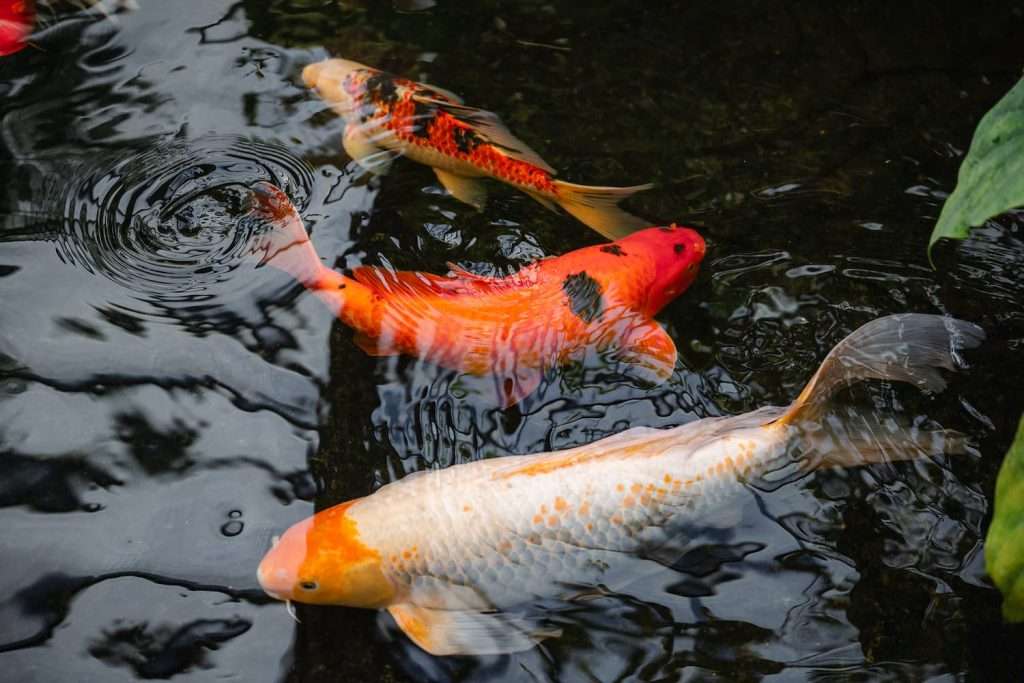
Koi are among the most admired ornamental fish kept in ponds. Their color, movement, and pattern variety make them a centerpiece in private water gardens, estate ponds, and managed ornamental landscapes. For homeowners, HOA board members, golf course teams, and property managers, understanding the different types of koi fish helps with pond planning, fish selection, and long term care.
This guide explains the most recognized types of koi fish, how koi varieties are classified, what different colors and patterns mean, and how to identify the most common koi names. It also covers what koi look like, how many types of koi fish are there, and how Pond Guru helps support healthy koi ponds.
What Are the Different Types of Koi Fish
The phrase types of koi fish refers to the major ornamental classifications developed through selective breeding. Koi are a domesticated form of carp, which is why terms like types of koi carp, different types of koi carp, and koi species are often used when discussing them.
Koi are typically classified by:
- Base color
- Pattern placement
- Scale type
- Metallic or nonmetallic appearance
- Overall body shape
There are many different types of koi fish recognized by breeders and hobbyists. Some sources group koi into broad families, while others break them into highly specific koi varieties. For most pond owners, learning the most common types of koi provides a strong foundation for identification and care.
What Does a Koi Fish Look Like
Koi have a long, streamlined body with visible barbels near the mouth. Their body shape is similar to carp, but their colors and koi fish patterns are much more developed and visually striking.
When people search for what koi fish look like, they are usually trying to distinguish koi from goldfish or standard carp.
Typical koi features include:
- Elongated body shape
- Distinct barbels near the mouth
- Large visible scales in most varieties
- Strong, graceful swimming posture
- Bold or delicate color patterns depending on the variety
Healthy koi also tend to have a smooth body line, balanced fins, and clean, vivid coloration when kept in good pond conditions.
Types of Koi and How Koi Varieties Are Classified
There are many types of koi, but most koi varieties are grouped into named classes based on color and pattern. These koi names are widely used in ornamental pond care and koi breeding.
Some of the most recognized kinds of koi include:
- Kohaku
- Taisho Sanke
- Showa
- Ogon
- Utsuri
- Bekko
- Asagi
- Shusui
- Koromo
- Goshiki
- Kujaku
- Tancho
These different types of koi fish vary in base color, markings, and overall appearance. Learning the main classifications makes it easier to understand koi fish types and select fish that create visual balance in a pond.
Kohaku: One of the Most Popular Types of Koi Fish
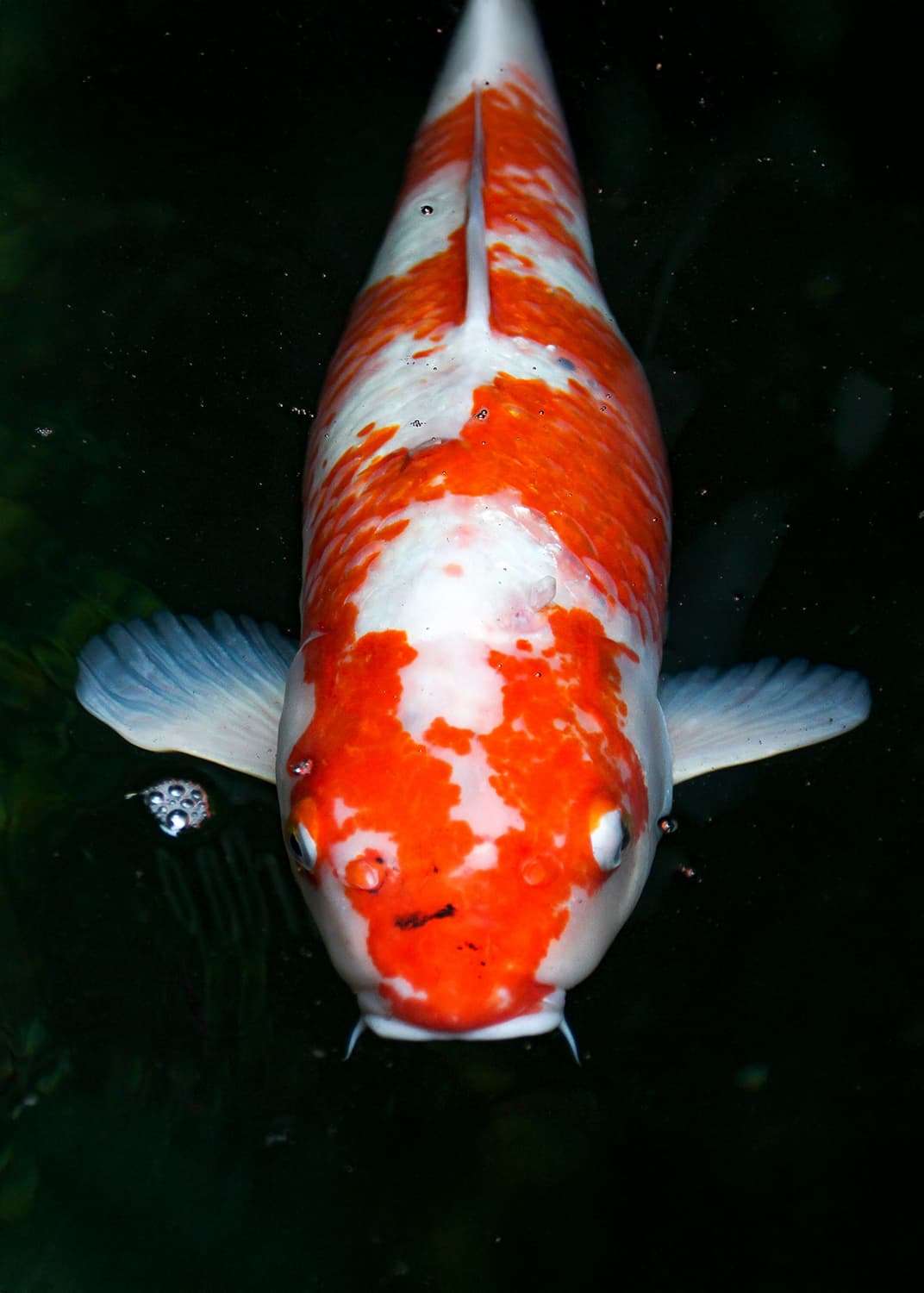
Kohaku is one of the most recognized types of koi fish and one of the easiest varieties for pond owners to identify. A Kohaku is a white koi fish with red markings and no black patterning.
The beauty of Kohaku comes from the contrast between the bright white base and the rich red pattern. Clean edges and balanced placement are highly valued in this variety.
Key Kohaku features include:
- White body
- Red pattern only
- No black markings
- Clear and balanced koi patterns
Kohaku are often considered a classic starting point for anyone learning about different types of koi.
Taisho Sanke and Showa: Different Types of Koi with Three Colors
Taisho Sanke and Showa are among the best known different types of koi fish because both display three colors. Even though they may look similar at first glance, their color structure is different.
Taisho Sanke
A Taisho Sanke typically has:
- White base
- Red markings
- Black accents
The black markings on a Sanke usually appear as smaller accent areas on the body and generally do not dominate the head.
Showa
A Showa typically has:
- Black base
- Red pattern
- White pattern
Showa koi usually appear bolder and darker because black is a foundational body color rather than an accent.
These koi varieties are highly appreciated because their koi fish patterns can be dramatic and visually unique.
Stock Your Pond With Koi Fish
Want to build a koi pond or add koi fish to your home pond? Pond Guru can help stock your pond today!
White Koi Fish, Yellow Koi Fish, and Other Solid Color Koi
Not every koi has a complex multicolor pattern. Some of the most striking koi varieties are solid colored or nearly solid in appearance.
White Koi Fish
A white koi fish creates strong contrast in darker pond water. White koi are often valued for their clean, elegant appearance and visibility.
Yellow Koi Fish and Yellow Koi Carp
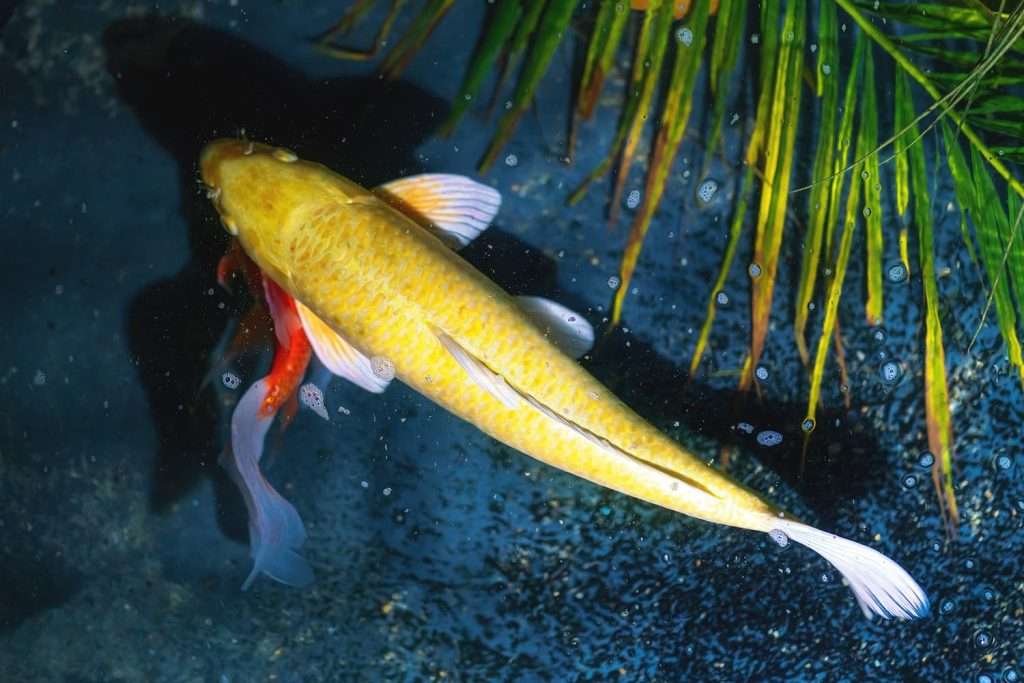
A yellow koi fish, sometimes called yellow koi carp in broader search terms, is commonly seen in Yamabuki Ogon varieties. These fish are bright, highly visible, and especially attractive in ornamental ponds.
Orange Carp and Orange Toned Koi
The phrase orange carp is often used casually to describe koi with strong orange coloration. Many of these fall into Ogon or patterned koi groups depending on metallic sheen and body markings.
These solid or near solid koi can add brightness and visual contrast to a mixed pond population.
Ogon Koi: Metallic Koi Varieties with Strong Visibility
Ogon koi are metallic koi varieties known for their bright reflective appearance. They are often easy to spot from a distance, which makes them popular in larger ornamental ponds.
Popular Ogon types include:
- Platinum Ogon, often seen as a metallic white koi fish
- Yamabuki Ogon, a vivid yellow koi fish
- Orenji Ogon, a metallic orange koi
These kinds of koi work well in ponds where visual impact matters. Their metallic finish helps them reflect light and remain noticeable even in deeper water.
Utsuri and Bekko: Bold Koi Patterns with Black Contrast
Utsuri and Bekko are known for bold contrast and striking koi patterns.
Utsuri
Utsuri koi have a black base with another strong color layered over it. Common forms include white, red, or yellow over black.
Bekko
Bekko koi generally have a lighter base color with black markings placed across the body.
These varieties are especially popular with pond owners who enjoy bold, graphic koi fish patterns that stand out clearly in the water.
Asagi, Shusui, and Gray Koi Fish Tones
Asagi and Shusui are among the most distinctive types of koi because they combine softer tones with unique scale appearance.
Asagi
Asagi koi usually feature:
- Blue gray or gray koi fish tones on the back
- Red or orange along the sides and fins
- A net like scale pattern
Shusui
Shusui are related to Asagi but are doitsu, meaning they have reduced scaling. They often show a line of scales along the top of the back with clean side coloration.
People searching for gray koi fish or koi brown are sometimes looking at Asagi style fish, especially when the tones appear more muted than brighter red, white, or yellow koi.
Koi Patterns, Koi Fish Patterns, and Colors of Koi
Koi patterns are one of the defining features that make these fish so appealing. Even fish within the same variety can look very different based on the distribution of color.
Important pattern features include:
- Markings across the head
- Balance from front to back
- Clean separation between colors
- Large blocks versus smaller accents
- Symmetry or artistic asymmetry
Those without knowledge of species or varieties are usually trying to understand how koi are visually identified.
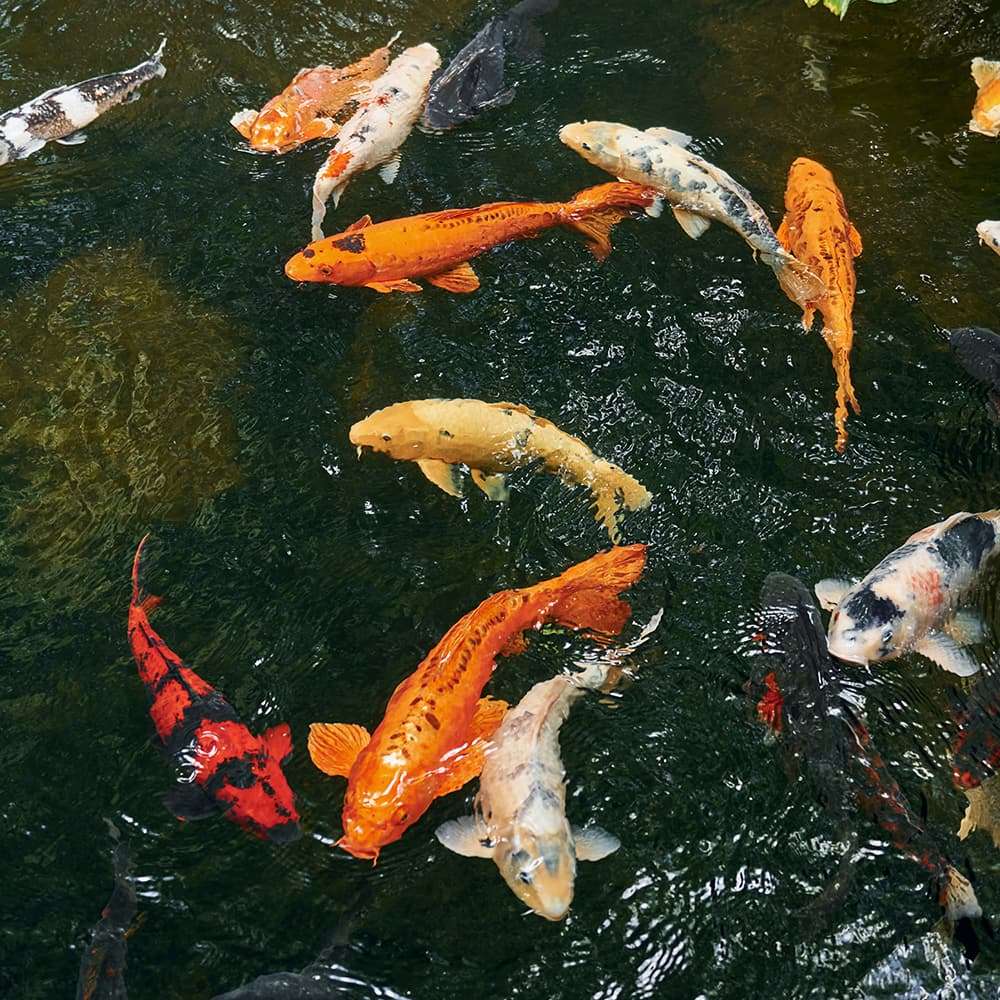
Some of the most common colors of koi include:
- White
- Red
- Black
- Yellow
- Orange
- Gray
- Blue gray
- Cream
- Gold
- Silver
A well planned koi pond often includes contrast in both color and pattern so the fish remain visually distinct from one another.
Caring for Different Types of Koi Fish in a Pond
All types of koi fish rely on healthy pond conditions. Even the most desirable koi varieties can lose color, become stressed, or develop health issues in a poorly maintained pond.
Important koi care factors include:
- Proper aeration and circulation
- Stable water quality
- Managed algae growth
- Appropriate stocking levels
- Debris and muck control
- Seasonal pond monitoring
- Protection from runoff and predators
Koi also need enough space to swim and grow. Overcrowding can stress the fish and reduce water quality.
Frequently Asked Questions
The most common types of koi fish include Kohaku, Sanke, Showa, Ogon, Utsuri, Bekko, Asagi, and Shusui. These varieties are widely recognized because they represent the main color and pattern groups most pond owners encounter in ornamental ponds.
Koi have a long, streamlined body, visible barbels near the mouth, and highly developed ornamental coloration. Compared to many other pond fish, koi are usually larger, more vividly patterned, and more visually distinct in both body shape and movement.
here are many recognized koi varieties, and the total number depends on whether the count includes only major classes or also subtypes and specialty forms. For most pond owners, the main named groups cover the varieties they are most likely to keep and identify.
Different colors of koi fish include white, red, black, yellow, orange, gray, blue gray, cream, silver, and gold. Some koi display a single dominant color, while others combine two or three colors in highly defined patterns.
Pond Guru helps evaluate the pond conditions that affect koi health, visibility, and long term performance. This includes reviewing aeration, circulation, water clarity, algae pressure, runoff concerns, and overall pond balance so the fish can thrive in a healthier environment.
Ready to Schedule a Visit ?
Have questions about your pond or lake? Our experts are ready to help you take the next step.
Latest Article
Popular Post

What Is Brackish Water? Florida Canal Basics
Table of Contents Anywhere fresh water meets the sea,…
Koi are among the most admired ornamental fish kept in ponds. Their color, movement, and pattern variety make them a centerpiece in private water gardens, estate ponds, and managed ornamental landscapes. For homeowners, HOA board members, golf course teams, and property managers, understanding the different types of koi fish helps with pond planning, fish selection, and long term care.
This guide explains the most recognized types of koi fish, how koi varieties are classified, what different colors and patterns mean, and how to identify the most common koi names. It also covers what koi look like, how many types of koi fish are there, and how Pond Guru helps support healthy koi ponds.
What Are the Different Types of Koi Fish
The phrase types of koi fish refers to the major ornamental classifications developed through selective breeding. Koi are a domesticated form of carp, which is why terms like types of koi carp, different types of koi carp, and koi species are often used when discussing them.
Koi are typically classified by:
- Base color
- Pattern placement
- Scale type
- Metallic or nonmetallic appearance
- Overall body shape
There are many different types of koi fish recognized by breeders and hobbyists. Some sources group koi into broad families, while others break them into highly specific koi varieties. For most pond owners, learning the most common types of koi provides a strong foundation for identification and care.
What Does a Koi Fish Look Like
Koi have a long, streamlined body with visible barbels near the mouth. Their body shape is similar to carp, but their colors and koi fish patterns are much more developed and visually striking.
When people search for what koi fish look like, they are usually trying to distinguish koi from goldfish or standard carp.
Typical koi features include:
- Elongated body shape
- Distinct barbels near the mouth
- Large visible scales in most varieties
- Strong, graceful swimming posture
- Bold or delicate color patterns depending on the variety
Healthy koi also tend to have a smooth body line, balanced fins, and clean, vivid coloration when kept in good pond conditions.
Types of Koi and How Koi Varieties Are Classified
There are many types of koi, but most koi varieties are grouped into named classes based on color and pattern. These koi names are widely used in ornamental pond care and koi breeding.
Some of the most recognized kinds of koi include:
- Kohaku
- Taisho Sanke
- Showa
- Ogon
- Utsuri
- Bekko
- Asagi
- Shusui
- Koromo
- Goshiki
- Kujaku
- Tancho
These different types of koi fish vary in base color, markings, and overall appearance. Learning the main classifications makes it easier to understand koi fish types and select fish that create visual balance in a pond.
Kohaku: One of the Most Popular Types of Koi Fish
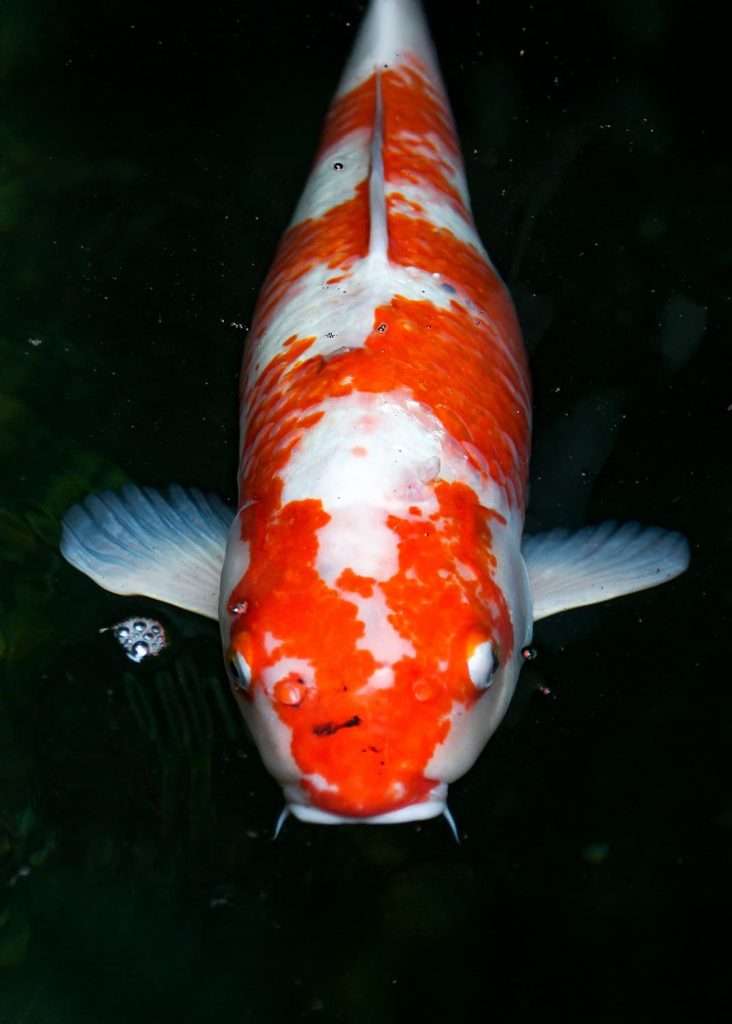
Kohaku is one of the most recognized types of koi fish and one of the easiest varieties for pond owners to identify. A Kohaku is a white koi fish with red markings and no black patterning.
The beauty of Kohaku comes from the contrast between the bright white base and the rich red pattern. Clean edges and balanced placement are highly valued in this variety.
Key Kohaku features include:
- White body
- Red pattern only
- No black markings
- Clear and balanced koi patterns
Kohaku are often considered a classic starting point for anyone learning about different types of koi.
Taisho Sanke and Showa: Different Types of Koi with Three Colors
Taisho Sanke and Showa are among the best known different types of koi fish because both display three colors. Even though they may look similar at first glance, their color structure is different.
Taisho Sanke
A Taisho Sanke typically has:
- White base
- Red markings
- Black accents
The black markings on a Sanke usually appear as smaller accent areas on the body and generally do not dominate the head.
Showa
A Showa typically has:
- Black base
- Red pattern
- White pattern
Showa koi usually appear bolder and darker because black is a foundational body color rather than an accent.
These koi varieties are highly appreciated because their koi fish patterns can be dramatic and visually unique.
Stock Your Pond With Koi Fish
Want to build a koi pond or add koi fish to your home pond? Pond Guru can help stock your pond today!
White Koi Fish, Yellow Koi Fish, and Other Solid Color Koi
Not every koi has a complex multicolor pattern. Some of the most striking koi varieties are solid colored or nearly solid in appearance.
White Koi Fish
A white koi fish creates strong contrast in darker pond water. White koi are often valued for their clean, elegant appearance and visibility.
Yellow Koi Fish and Yellow Koi Carp
A yellow koi fish, sometimes called yellow koi carp in broader search terms, is commonly seen in Yamabuki Ogon varieties. These fish are bright, highly visible, and especially attractive in ornamental ponds.
Orange Carp and Orange Toned Koi
The phrase orange carp is often used casually to describe koi with strong orange coloration. Many of these fall into Ogon or patterned koi groups depending on metallic sheen and body markings.
These solid or near solid koi can add brightness and visual contrast to a mixed pond population.
Ogon Koi: Metallic Koi Varieties with Strong Visibility
Ogon koi are metallic koi varieties known for their bright reflective appearance. They are often easy to spot from a distance, which makes them popular in larger ornamental ponds.
Popular Ogon types include:
- Platinum Ogon, often seen as a metallic white koi fish
- Yamabuki Ogon, a vivid yellow koi fish
- Orenji Ogon, a metallic orange koi
These kinds of koi work well in ponds where visual impact matters. Their metallic finish helps them reflect light and remain noticeable even in deeper water.
Utsuri and Bekko: Bold Koi Patterns with Black Contrast
Utsuri and Bekko are known for bold contrast and striking koi patterns.
Utsuri
Utsuri koi have a black base with another strong color layered over it. Common forms include white, red, or yellow over black.
Bekko
Bekko koi generally have a lighter base color with black markings placed across the body.
These varieties are especially popular with pond owners who enjoy bold, graphic koi fish patterns that stand out clearly in the water.
Asagi, Shusui, and Gray Koi Fish Tones
Asagi and Shusui are among the most distinctive types of koi because they combine softer tones with unique scale appearance.
Asagi
Asagi koi usually feature:
- Blue gray or gray koi fish tones on the back
- Red or orange along the sides and fins
- A net like scale pattern
Shusui
Shusui are related to Asagi but are doitsu, meaning they have reduced scaling. They often show a line of scales along the top of the back with clean side coloration.
People searching for gray koi fish or koi brown are sometimes looking at Asagi style fish, especially when the tones appear more muted than brighter red, white, or yellow koi.
Koi Patterns, Koi Fish Patterns, and Colors of Koi
Koi patterns are one of the defining features that make these fish so appealing. Even fish within the same variety can look very different based on the distribution of color.
Important pattern features include:
- Markings across the head
- Balance from front to back
- Clean separation between colors
- Large blocks versus smaller accents
- Symmetry or artistic asymmetry
Those without knowledge of species or varieties are usually trying to understand how koi are visually identified.
Some of the most common colors of koi include:
- White
- Red
- Black
- Yellow
- Orange
- Gray
- Blue gray
- Cream
- Gold
- Silver
A well planned koi pond often includes contrast in both color and pattern so the fish remain visually distinct from one another.
Caring for Different Types of Koi Fish in a Pond
All types of koi fish rely on healthy pond conditions. Even the most desirable koi varieties can lose color, become stressed, or develop health issues in a poorly maintained pond.
Important koi care factors include:
- Proper aeration and circulation
- Stable water quality
- Managed algae growth
- Appropriate stocking levels
- Debris and muck control
- Seasonal pond monitoring
- Protection from runoff and predators
Koi also need enough space to swim and grow. Overcrowding can stress the fish and reduce water quality.
Frequently Asked Questions
The most common types of koi fish include Kohaku, Sanke, Showa, Ogon, Utsuri, Bekko, Asagi, and Shusui. These varieties are widely recognized because they represent the main color and pattern groups most pond owners encounter in ornamental ponds.
Koi have a long, streamlined body, visible barbels near the mouth, and highly developed ornamental coloration. Compared to many other pond fish, koi are usually larger, more vividly patterned, and more visually distinct in both body shape and movement.
There are many recognized koi varieties, and the total number depends on whether the count includes only major classes or also subtypes and specialty forms. For most pond owners, the main named groups cover the varieties they are most likely to keep and identify.
Different colors of koi fish include white, red, black, yellow, orange, gray, blue gray, cream, silver, and gold. Some koi display a single dominant color, while others combine two or three colors in highly defined patterns.
Pond Guru helps evaluate the pond conditions that affect koi health, visibility, and long term performance. This includes reviewing aeration, circulation, water clarity, algae pressure, runoff concerns, and overall pond balance so the fish can thrive in a healthier environment.
Ready to Schedule a Visit ?
Have questions about your pond or lake? Our experts are ready to help you take the next step.
Latest Article
Popular Post
What Is Brackish Water? Florida Canal Basics
Table of Contents Anywhere fresh water meets the sea,…