

Top 6 Common Pond Snails in Florida Ponds
Top 6 Common Pond Snails in Florida Ponds
If you manage a pond, lake, retention pond, or koi pond in Florida, chances are you have seen snails attached to vegetation, rocks, docks, or shoreline areas. While some snails are harmless and even beneficial in moderation, others can multiply rapidly and become a larger pond management concern.
Understanding the most common types of pond snail species in Florida helps property owners recognize when snails are part of a healthy ecosystem and when they may indicate nutrient imbalance or developing water quality problems.
This guide covers the top common pond snails found in Florida ponds, how they survive underwater, what they eat, and when snail populations become problematic for HOAs, golf courses, and private property owners.
Do Snails Live in Water? Understanding Aquatic Snails
One of the most common questions people ask is: do snails live in water?
Yes. Many freshwater snail species are fully adapted to aquatic environments and spend their entire lives in ponds, lakes, marshes, and slow-moving waterways.
In fact, many people are surprised to learn that:
- Can snails live underwater? Yes, many species can
- Some aquatic snails breathe through gill-like structures
- Others surface periodically to access oxygen
Aquatic snails thrive in Florida because warm temperatures, shallow water, and abundant vegetation create ideal habitat conditions.
What Do Pond Snails Eat?
Understanding what do pond snails eat helps explain why some ponds develop large snail populations.
Most freshwater snails feed on:
- Algae
- Decaying plant material
- Biofilm on rocks and surfaces
- Organic debris
- Soft aquatic vegetation
Because of this, snails are often attracted to ponds with:
- Nutrient-rich water
- Excess algae growth
- Organic sediment buildup
- Heavy aquatic vegetation
When ponds contain large amounts of algae and decaying organic matter, snail populations can increase rapidly.
Top 6 Common Pond Snails in Florida
1. Apple Snails
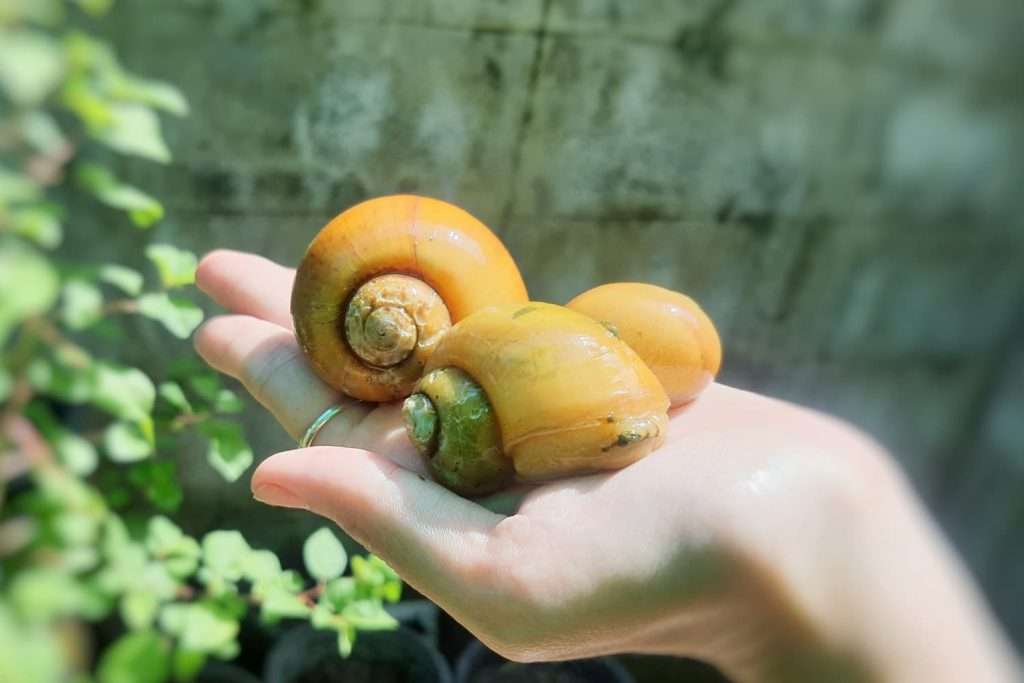
One of the most recognizable Florida snail species is the apple snail.
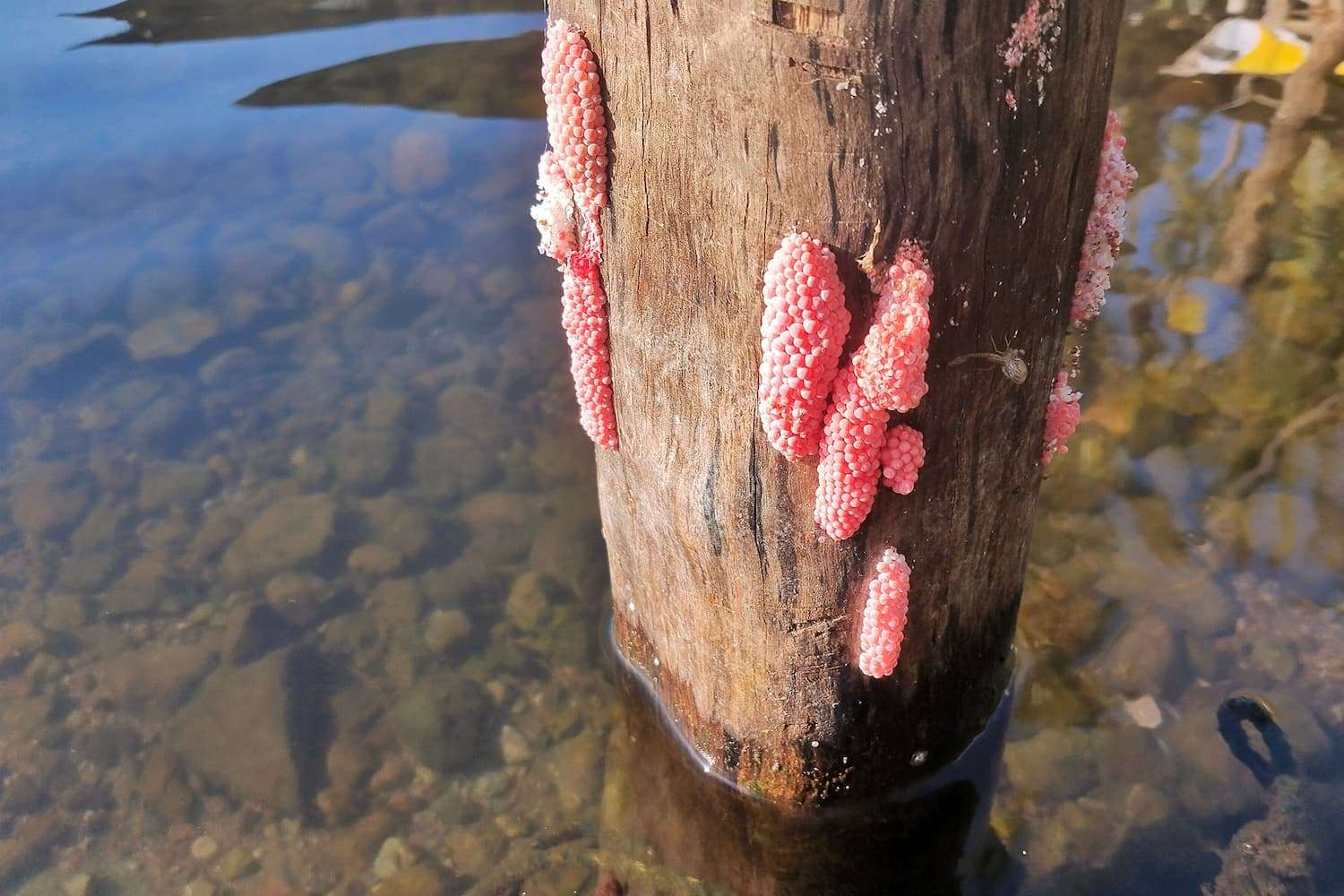
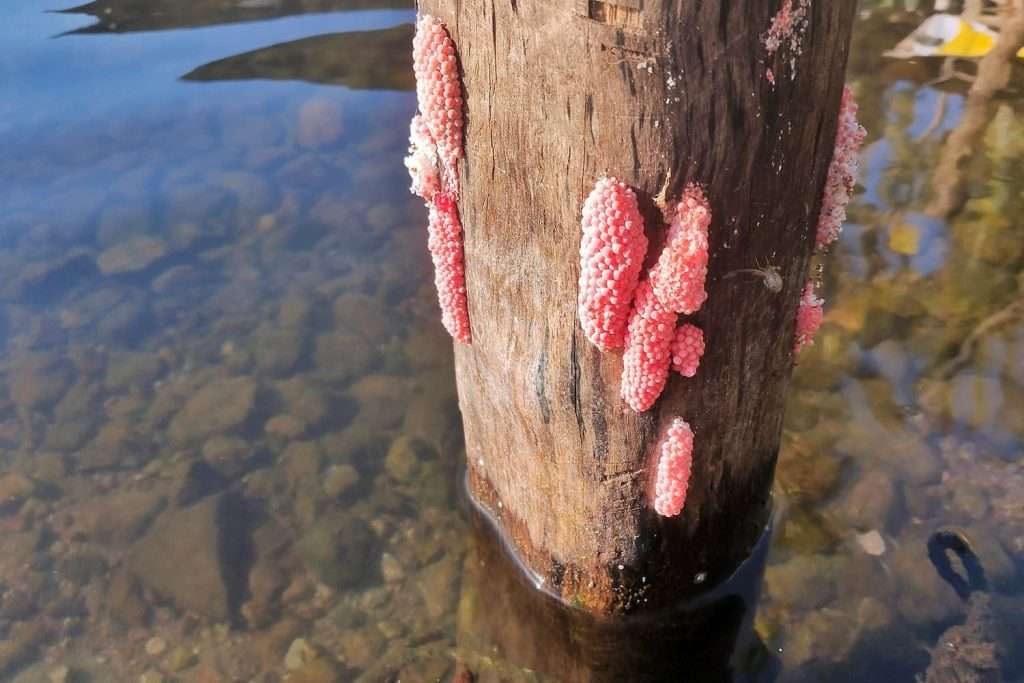
Apple snails are much larger than typical pond snails and are known for their round shells and bright pink egg masses often seen above the waterline.
Apple Snail Characteristics
- Large shell size
- Slow-moving aquatic snail
- Frequently found in shallow vegetation zones
- Can grow several inches in diameter
Apple Snail Lifespan
The typical apple snail lifespan ranges from 1 to 4 years depending on species, water quality, and predator pressure.
Are Apple Snails Beneficial?
In moderate numbers, apple snails can contribute to organic cleanup by feeding on algae and decaying vegetation. However, excessive populations may damage aquatic plants and contribute to nutrient cycling issues.
2. Bladder Snails
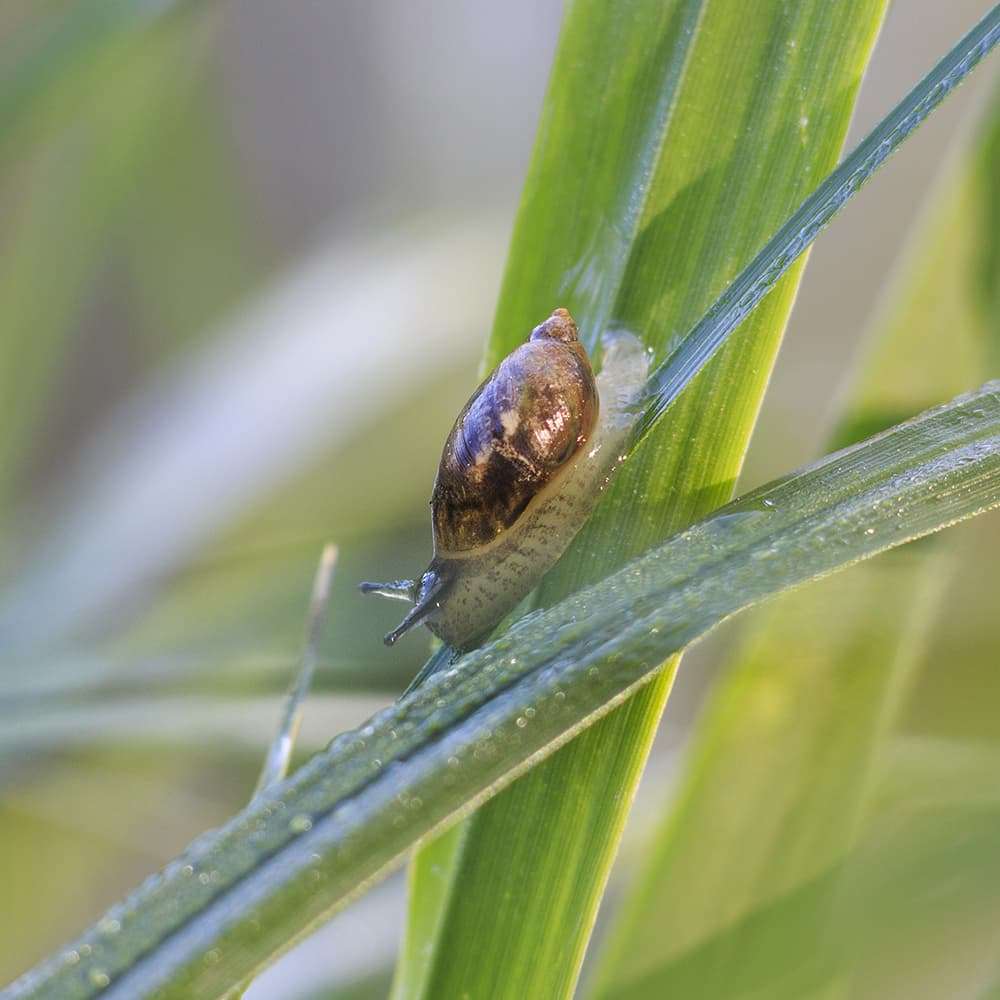
Bladder snails are one of the most common small pond snail species in Florida ponds.
They reproduce extremely quickly and are often associated with nutrient-rich water.
Key Features
- Small translucent shell
- Rapid breeding rates
- Common in ponds with algae buildup
Bladder snails are frequently the first sign that nutrient levels are becoming elevated.
3. Ramshorn Snails
Ramshorn snails are easy to identify because of their spiral-shaped shells.
These types of freshwater snails are common in:
- Decorative ponds
- Koi ponds
- Slow-moving lakes
Ramshorn snails primarily feed on algae and decaying organic matter, which makes them somewhat beneficial in low numbers.
However, populations can expand rapidly if excess nutrients are present.
Manage Freshwater Snail Populations
Work with Pond Guru to build an ecosystem that encourages native species and prevents overpopulation
4. Mystery Snails
Mystery snails are commonly introduced intentionally into ornamental ponds and snails in koi pond environments.
They are popular because of their appearance and algae-grazing behavior.
What Makes Mystery Snails Different?
- Larger and more colorful shells
- Slower reproduction than pest snails
- Often kept intentionally in decorative ponds
Unlike invasive snail species, mystery snails are generally easier to manage.
5. Trumpet Snails
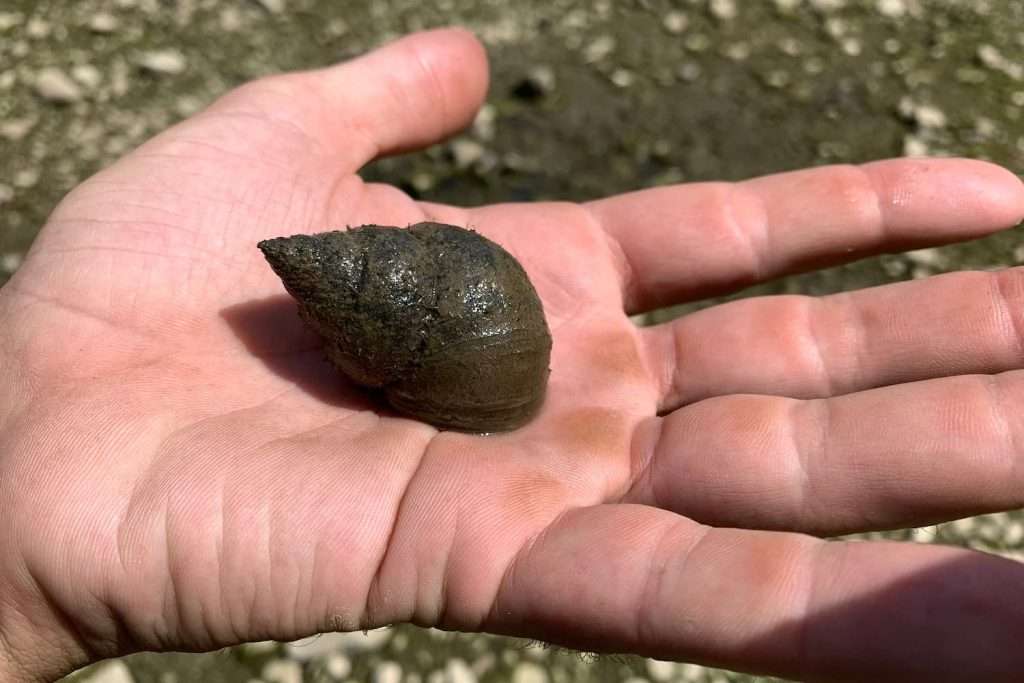
Trumpet snails are narrow, cone-shaped snails that spend much of their time burrowed in sediment.
These snails often emerge at night and are commonly found in ponds with:
- Soft organic muck
- Low oxygen bottom zones
- Excess nutrient accumulation
Because they disturb sediment while feeding, they can contribute to nutrient recycling in heavily impacted ponds.
6. Pond Limpets
Pond limpets are technically snail relatives rather than traditional snails, but they are often grouped into discussions about common lake snails.
They attach tightly to rocks and submerged surfaces and feed primarily on algae films.
These species are usually harmless unless populations become excessive.
Snails in Koi Pond Environments
Many pond owners ask about snails in koi pond systems specifically.
Snails are common in koi ponds because:
- Koi ponds often contain abundant algae growth
- Fish food contributes nutrients
- Decorative plants provide habitat
In moderation, snails can help consume algae and debris. However, excessive snail populations may indicate:
- Overfeeding
- Poor filtration
- Excess organic buildup
Large snail populations in koi ponds are usually a symptom of broader water quality imbalance rather than the primary problem itself.
Can Pond Snails Become a Snail Infestation?
Yes. Under favorable conditions, pond snails can reproduce rapidly and become a snail infestation.
Common signs include:
- Hundreds of snails attached to surfaces
- Egg masses appearing around the shoreline
- Increased algae and organic buildup
- Snails clogging intake structures or fountains
Snail infestations are most common in ponds with excessive nutrients and poor water circulation.
Why Snails Thrive in Florida Ponds
Florida ponds provide ideal conditions for aquatic snails because of:
- Warm temperatures year-round
- High nutrient runoff
- Shallow shoreline zones
- Heavy aquatic vegetation
- Organic sediment accumulation
As algae and aquatic weeds increase, snail populations often increase alongside them.
This is why snail management usually focuses on improving the pond itself rather than only targeting the snails.
What Does Freshwater Snails Eat in a Managed Pond?
Another common question is: what does freshwater snails eat in HOA ponds and managed lakes?
Most freshwater snails consume:
- Surface algae
- Decaying leaves
- Biofilm on riprap and docks
- Soft aquatic vegetation
- Organic detritus
Because they feed heavily on decomposing material, snail populations often rise in ponds with excessive organic matter.
Aquatic Weed Removal and Snail Population Control
One of the most effective long-term strategies is improving overall pond balance through aquatic weed removal and shoreline management.
Reducing excessive vegetation and algae limits the food and habitat available for snails.
At Pond Guru, pond management often includes:
- Algae control
- Vegetation management
- Mechanical harvesting
- Water quality improvements
- Shoreline maintenance
These approaches help reduce the conditions that allow snail infestations to develop.
Frequently Asked Questions
Yes. Many freshwater pond snails spend their entire lives underwater and are fully adapted to aquatic environments.
Most pond snails feed on algae, decaying plant material, biofilm, and organic debris found throughout the pond.
Yes. In nutrient-rich ponds with excess algae and vegetation, snail populations can increase rapidly and become excessive.
Some fish may consume snails occasionally, but fish alone usually do not fully control large snail populations.
Pond Guru evaluates pond conditions, algae growth, vegetation, and water quality to address the underlying causes of excessive snail populations.
Ready to Schedule a Visit ?
Have questions about your pond or lake? Our experts are ready to help you take the next step.
Latest Article
Popular Post

Pond Smelling Like Rotten Eggs? Foul Smelling Pond Water
Table of Contents That unmistakable rotten-egg, sulfur smell drifting…
If you manage a pond, lake, retention pond, or koi pond in Florida, chances are you have seen snails attached to vegetation, rocks, docks, or shoreline areas. While some snails are harmless and even beneficial in moderation, others can multiply rapidly and become a larger pond management concern.
Understanding the most common types of pond snail species in Florida helps property owners recognize when snails are part of a healthy ecosystem and when they may indicate nutrient imbalance or developing water quality problems.
This guide covers the top common pond snails found in Florida ponds, how they survive underwater, what they eat, and when snail populations become problematic for HOAs, golf courses, and private property owners.
Do Snails Live in Water? Understanding Aquatic Snails
One of the most common questions people ask is: do snails live in water?
Yes. Many freshwater snail species are fully adapted to aquatic environments and spend their entire lives in ponds, lakes, marshes, and slow-moving waterways.
In fact, many people are surprised to learn that:
- Can snails live underwater? Yes, many species can
- Some aquatic snails breathe through gill-like structures
- Others surface periodically to access oxygen
Aquatic snails thrive in Florida because warm temperatures, shallow water, and abundant vegetation create ideal habitat conditions.
What Do Pond Snails Eat?
Understanding what do pond snails eat helps explain why some ponds develop large snail populations.
Most freshwater snails feed on:
- Algae
- Decaying plant material
- Biofilm on rocks and surfaces
- Organic debris
- Soft aquatic vegetation
Because of this, snails are often attracted to ponds with:
- Nutrient-rich water
- Excess algae growth
- Organic sediment buildup
- Heavy aquatic vegetation
When ponds contain large amounts of algae and decaying organic matter, snail populations can increase rapidly.
Top 6 Common Pond Snails in Florida
1. Apple Snails
One of the most recognizable Florida snail species is the apple snail.
Apple snails are much larger than typical pond snails and are known for their round shells and bright pink egg masses often seen above the waterline.
Apple Snail Characteristics
- Large shell size
- Slow-moving aquatic snail
- Frequently found in shallow vegetation zones
- Can grow several inches in diameter
Apple Snail Lifespan
The typical apple snail lifespan ranges from 1 to 4 years depending on species, water quality, and predator pressure.
Are Apple Snails Beneficial?
In moderate numbers, apple snails can contribute to organic cleanup by feeding on algae and decaying vegetation. However, excessive populations may damage aquatic plants and contribute to nutrient cycling issues.
2. Bladder Snails
Bladder snails are one of the most common small pond snail species in Florida ponds.
They reproduce extremely quickly and are often associated with nutrient-rich water.
Key Features
- Small translucent shell
- Rapid breeding rates
- Common in ponds with algae buildup
Bladder snails are frequently the first sign that nutrient levels are becoming elevated.
3. Ramshorn Snails
Ramshorn snails are easy to identify because of their spiral-shaped shells.
These types of freshwater snails are common in:
- Decorative ponds
- Koi ponds
- Slow-moving lakes
Ramshorn snails primarily feed on algae and decaying organic matter, which makes them somewhat beneficial in low numbers.
However, populations can expand rapidly if excess nutrients are present.
Manage Freshwater Snail Populations
Work with Pond Guru to build an ecosystem that encourages native species and prevents overpopulation
4. Mystery Snails
Mystery snails are commonly introduced intentionally into ornamental ponds and snails in koi pond environments.
They are popular because of their appearance and algae-grazing behavior.
What Makes Mystery Snails Different?
- Larger and more colorful shells
- Slower reproduction than pest snails
- Often kept intentionally in decorative ponds
Unlike invasive snail species, mystery snails are generally easier to manage.
5. Trumpet Snails
Trumpet snails are narrow, cone-shaped snails that spend much of their time burrowed in sediment.
These snails often emerge at night and are commonly found in ponds with:
- Soft organic muck
- Low oxygen bottom zones
- Excess nutrient accumulation
Because they disturb sediment while feeding, they can contribute to nutrient recycling in heavily impacted ponds.
6. Pond Limpets
Pond limpets are technically snail relatives rather than traditional snails, but they are often grouped into discussions about common lake snails.
They attach tightly to rocks and submerged surfaces and feed primarily on algae films.
These species are usually harmless unless populations become excessive.
Snails in Koi Pond Environments
Many pond owners ask about snails in koi pond systems specifically.
Snails are common in koi ponds because:
- Koi ponds often contain abundant algae growth
- Fish food contributes nutrients
- Decorative plants provide habitat
In moderation, snails can help consume algae and debris. However, excessive snail populations may indicate:
- Overfeeding
- Poor filtration
- Excess organic buildup
Large snail populations in koi ponds are usually a symptom of broader water quality imbalance rather than the primary problem itself.
Can Pond Snails Become a Snail Infestation?
Yes. Under favorable conditions, pond snails can reproduce rapidly and become a snail infestation.
Common signs include:
- Hundreds of snails attached to surfaces
- Egg masses appearing around the shoreline
- Increased algae and organic buildup
- Snails clogging intake structures or fountains
Snail infestations are most common in ponds with excessive nutrients and poor water circulation.
Why Snails Thrive in Florida Ponds
Florida ponds provide ideal conditions for aquatic snails because of:
- Warm temperatures year-round
- High nutrient runoff
- Shallow shoreline zones
- Heavy aquatic vegetation
- Organic sediment accumulation
As algae and aquatic weeds increase, snail populations often increase alongside them.
This is why snail management usually focuses on improving the pond itself rather than only targeting the snails.
What Does Freshwater Snails Eat in a Managed Pond?
Another common question is: what does freshwater snails eat in HOA ponds and managed lakes?
Most freshwater snails consume:
- Surface algae
- Decaying leaves
- Biofilm on riprap and docks
- Soft aquatic vegetation
- Organic detritus
Because they feed heavily on decomposing material, snail populations often rise in ponds with excessive organic matter.
Aquatic Weed Removal and Snail Population Control
One of the most effective long-term strategies is improving overall pond balance through aquatic weed removal and shoreline management.
Reducing excessive vegetation and algae limits the food and habitat available for snails.
At Pond Guru, pond management often includes:
- Algae control
- Vegetation management
- Mechanical harvesting
- Water quality improvements
- Shoreline maintenance
These approaches help reduce the conditions that allow snail infestations to develop.
Frequently Asked Questions
Yes. Many freshwater pond snails spend their entire lives underwater and are fully adapted to aquatic environments.
Most pond snails feed on algae, decaying plant material, biofilm, and organic debris found throughout the pond.
Yes. In nutrient-rich ponds with excess algae and vegetation, snail populations can increase rapidly and become excessive.
Some fish may consume snails occasionally, but fish alone usually do not fully control large snail populations.
Pond Guru evaluates pond conditions, algae growth, vegetation, and water quality to address the underlying causes of excessive snail populations.
Ready to Schedule a Visit ?
Have questions about your pond or lake? Our experts are ready to help you take the next step.
Latest Article
Popular Post
Pond Smelling Like Rotten Eggs? Foul Smelling Pond Water
Table of Contents That unmistakable rotten-egg, sulfur smell drifting…