

How to Remove Algae on Rocks in a Pond
How to Remove Algae on Rocks in a Pond
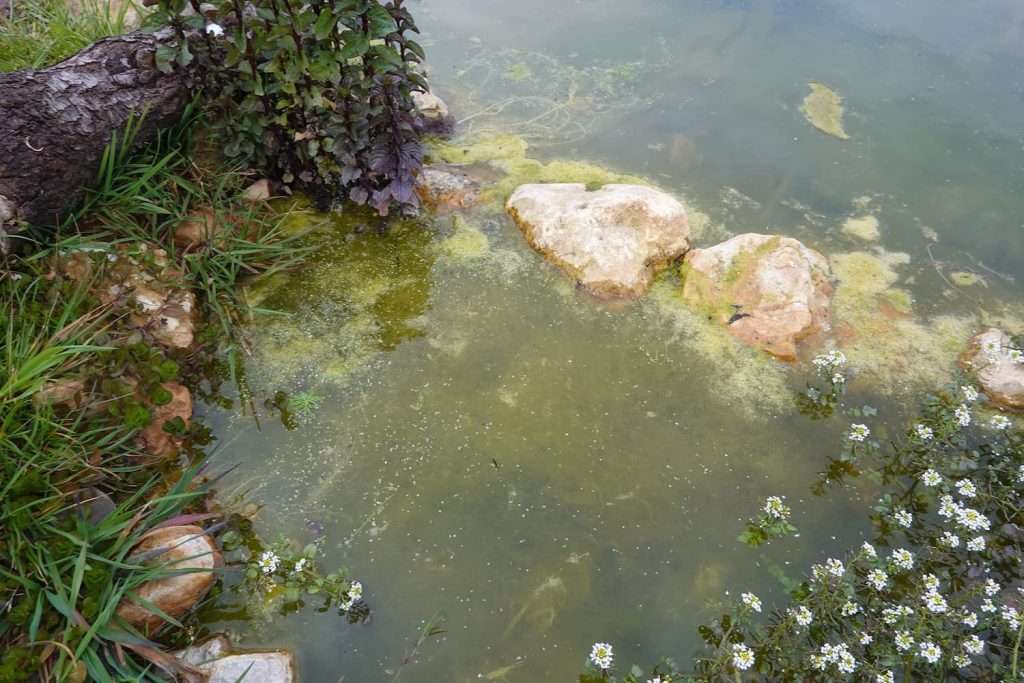
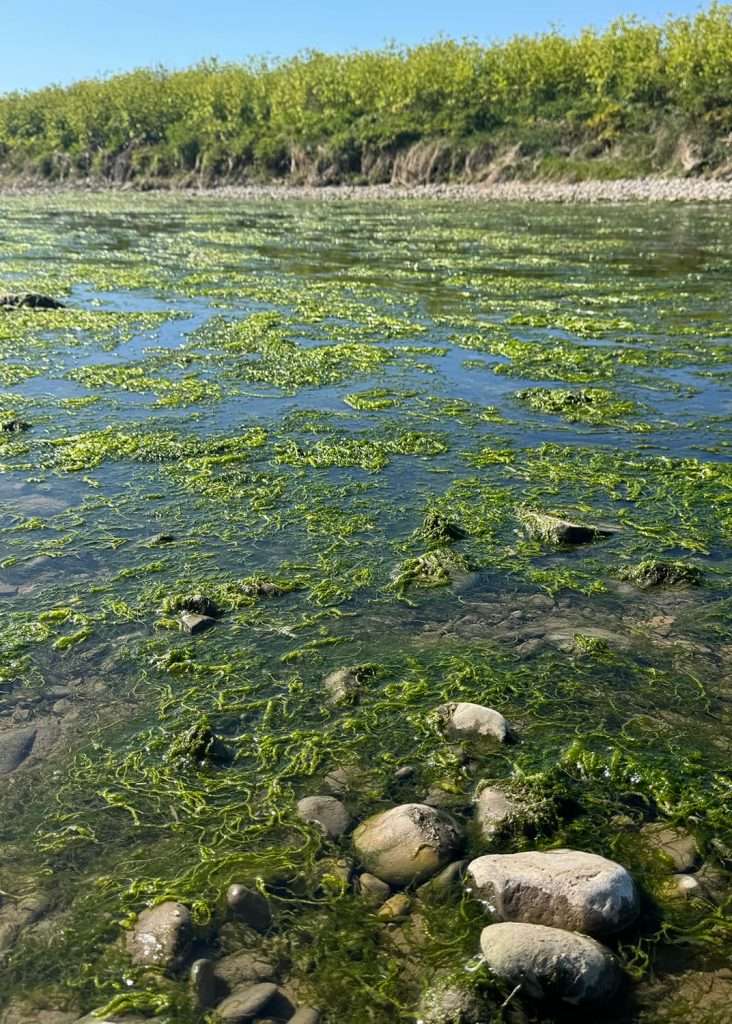
Algae-covered rocks are one of the most common complaints from HOA communities, golf courses, and private pond owners. What starts as a light green coating can quickly turn into thick, slippery buildup that affects the appearance of the shoreline and signals larger water quality issues beneath the surface.
If you are dealing with algae on rocks in pond environments, simply scrubbing the rocks is rarely a permanent solution. To control algae effectively, it is important to understand why it grows, what conditions encourage it, and how to remove it without damaging the pond ecosystem.
This guide explains the causes of algae growth on shoreline rocks, how to clean and manage it properly, and how Pond Guru helps maintain cleaner, healthier pond and lake environments.
Why Does Algae Grow on Rocks?
One of the most common questions property owners ask is: why does algae grow on rocks?
Algae naturally attaches to hard surfaces where sunlight, nutrients, and moisture are consistently available. Rocks along pond edges provide an ideal growing surface because they remain partially wet while receiving direct sunlight throughout the day.
Several conditions accelerate algae growth on shoreline rocks:
- Excess nutrients in the water
- Warm temperatures
- Stagnant or slow-moving water
- Organic runoff from landscaping
- Fertilizer entering the pond
- Shallow shoreline areas with heavy sunlight exposure
Once algae establishes itself on rock surfaces, it can spread rapidly during warm months, especially in Florida ponds and lakes.
What Is Riprap and Why Does It Often Develop Algae?
Before discussing removal, it is important to understand what is riprap.
Riprap refers to large rocks or stone placed along shorelines to reduce erosion and stabilize pond or lake banks. These rock barriers are common around:
- HOA retention ponds
- Golf course lakes
- Stormwater ponds
- Residential shorelines
Riprap is highly effective for erosion control, but it also creates extensive surface area for algae attachment.
Because riprap remains moist and receives continuous nutrient exposure from wave action and runoff, algae commonly develops between and across the stones.
How Do You Clean Algae Off Rocks?
Property owners frequently ask: how do you clean algae off rocks without damaging the pond?
The best method depends on:
- The severity of algae growth
- The type of shoreline
- Whether fish and wildlife are present
- The pond’s water quality conditions
Common algae removal approaches include:
- Mechanical cleaning
- Pressure washing in controlled areas
- Manual scrubbing
- Aquatic-safe algae treatments
- Improving water circulation
- Nutrient reduction strategies
The most effective long-term solutions combine cleaning with correcting the conditions causing algae growth.
How to Get Algae Off of Rocks Safely
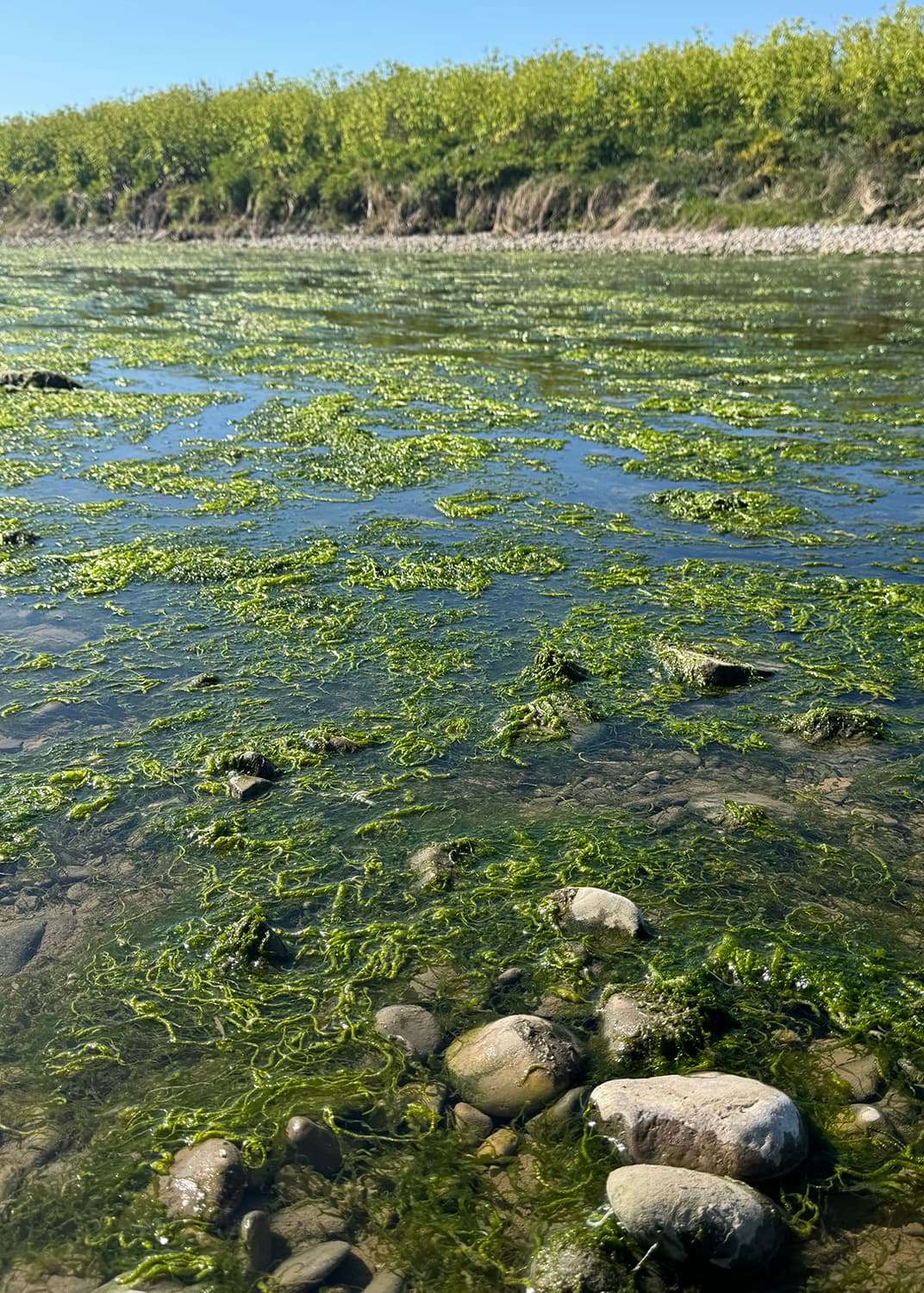
When deciding how to get algae off of rocks, safety for fish and aquatic life should always be considered.
Aggressive cleaning methods can sometimes:
- Disturb shoreline stability
- Release excess nutrients into the water
- Damage beneficial shoreline vegetation
- Create sudden water quality changes
For this reason, professional shoreline maintenance often focuses on targeted cleaning combined with algae prevention strategies.
Controlled cleaning methods can improve appearance while minimizing disruption to the ecosystem.
Removing Algae From a Pond Starts With Water Quality
Many property owners focus only on the visible algae coating the rocks, but removing algae from a pond requires understanding the larger system.
Algae growth is usually connected to excess nutrients such as:
- Nitrogen
- Phosphorus
- Organic sediment buildup
These nutrients enter ponds through:
- Fertilizer runoff
- Grass clippings
- Stormwater runoff
- Decaying vegetation
- Fish waste
If nutrient levels remain high, algae will continue returning even after the rocks are cleaned.
Remove Algae From Pond Rocks
Work with Pond Guru to manage, treat, and remove algae from your pond and shoreline rocks
Why Algae Commonly Forms on Rocks Along Lake Shorelines
Rocks on lake shoreline areas are particularly prone to algae growth because they exist in the transition zone between land and water.
These areas experience:
- Constant moisture
- Sun exposure
- Nutrient-rich runoff
- Sediment accumulation
Additionally, shoreline rocks often trap organic material between gaps, creating even more nutrients for algae growth.
This is especially common around riprap installations where water movement repeatedly washes nutrients across the stone surfaces.
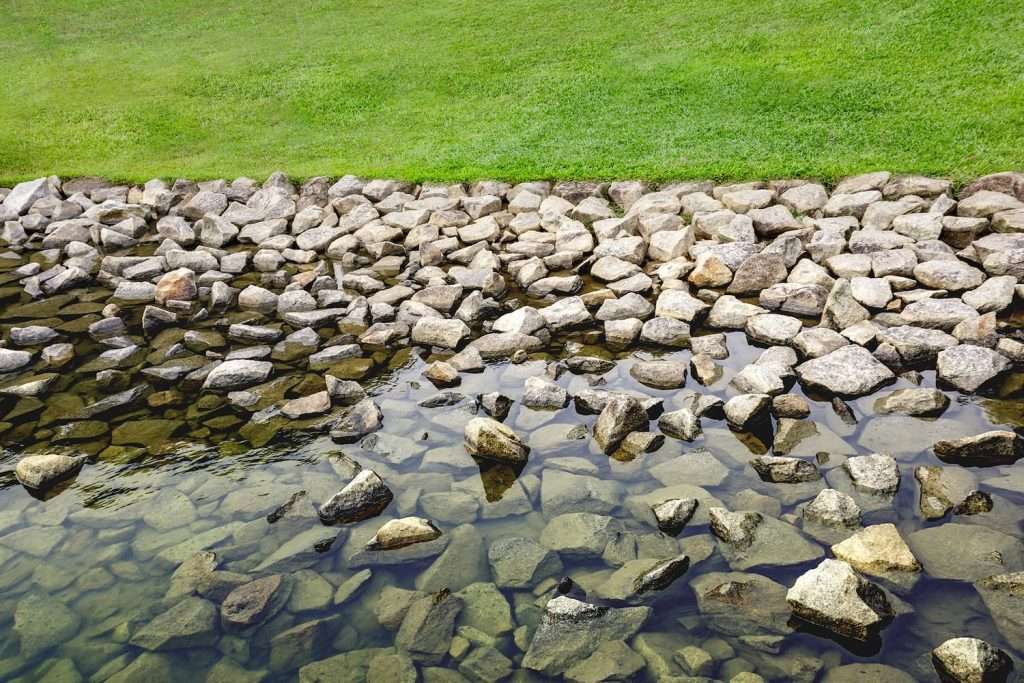
Riprap vs ShoreSOX: Different Shoreline Approaches
Many property owners compare riprap vs ShoreSOX when evaluating shoreline stabilization options.
Riprap
- Uses loose rock for erosion control
- Durable and effective
- Creates large surface area for algae attachment
- Can appear harsh or artificial in some settings
ShoreSOX
- Uses vegetated shoreline stabilization systems
- Blends more naturally into the environment
- Supports native vegetation establishment
- Often reduces exposed rock surface area
While both methods stabilize shorelines, ShoreSOX systems often create a softer, more natural appearance with reduced exposed hard surfaces where algae commonly accumulates.
How to Reduce Future Algae Growth on Shoreline Rocks
Cleaning algae is only part of the solution. Preventing regrowth is equally important.
Long-term algae reduction strategies include:
- Limiting fertilizer runoff
- Improving pond circulation
- Installing aeration systems
- Reducing sediment accumulation
- Managing shoreline vegetation properly
- Cleaning problem areas before heavy buildup develops
Routine maintenance prevents small algae issues from becoming widespread shoreline problems.
Mechanical Cleaning vs Chemical Treatment
There is no single best solution for every pond.
Mechanical cleaning advantages
- Immediate visual improvement
- Removes algae biomass physically
- Reduces buildup on shoreline surfaces
Chemical treatment advantages
- Can control widespread algae efficiently
- Useful for recurring outbreaks
- Works in areas difficult to clean manually
The most effective pond maintenance plans often combine both methods strategically.
Why HOA and Golf Course Ponds Commonly Struggle With Algae
Managed properties often experience recurring algae problems because of:
- Fertilized turf surrounding the pond
- Irrigation runoff
- High nutrient loads
- Shallow shoreline design
- Heavy sunlight exposure
Golf course ponds and HOA lakes are especially vulnerable because aesthetics are highly important while nutrient pressure remains constant.
This is why regular shoreline and water quality maintenance is critical.
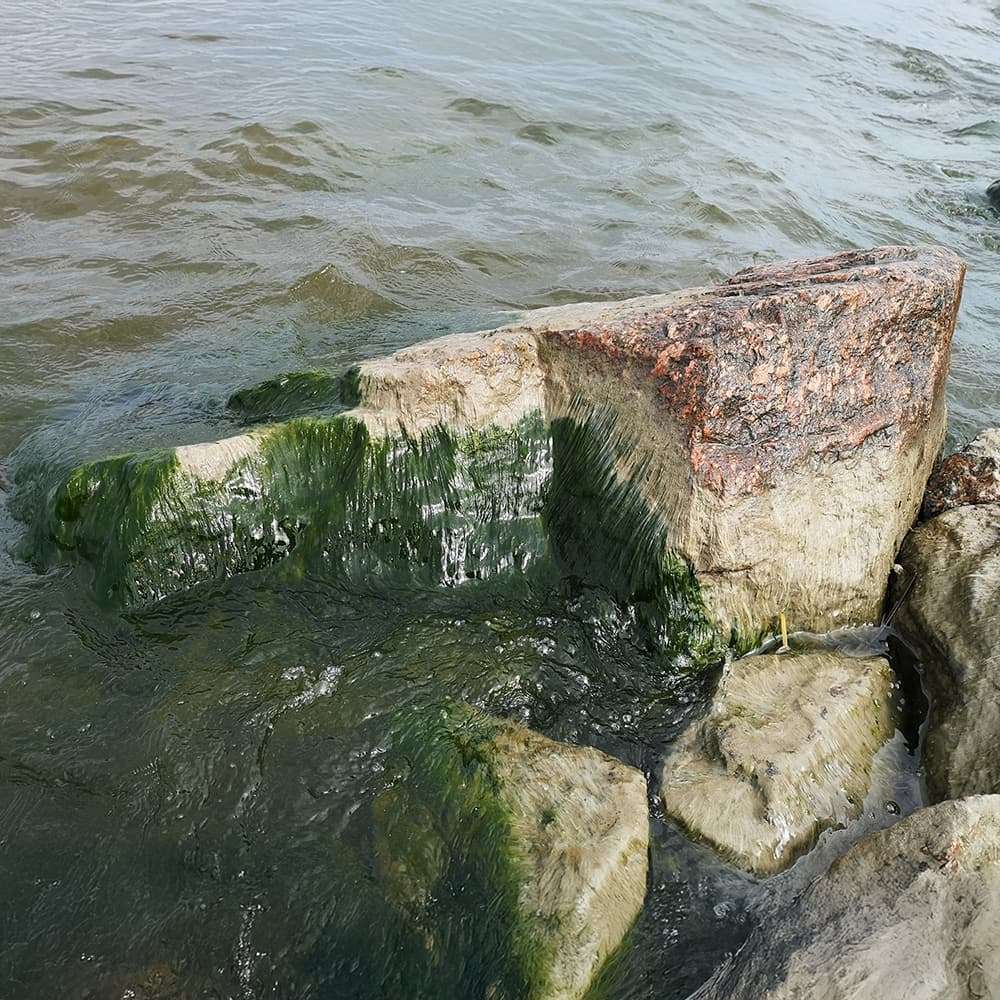
How Pond Guru Helps Remove and Prevent Algae Growth
Pond Guru provides customized pond and shoreline maintenance services designed to address both visible algae and the conditions causing it.
Our services may include:
- Shoreline algae cleaning
- Aquatic algae treatment
- Water quality evaluation
- Aeration recommendations
- Mechanical vegetation removal
- Long-term pond maintenance planning
Instead of simply treating symptoms, Pond Guru focuses on improving overall pond health and appearance.
Frequently Asked Questions
Algae can be removed through mechanical cleaning, pressure washing in controlled areas, or aquatic-safe algae treatments. The best method depends on the amount of growth and the condition of the shoreline.
Algae grows rapidly on rocks because the surfaces stay moist and receive direct sunlight. Excess nutrients from runoff and organic buildup accelerate the growth process.
Aquatic-labeled algaecides, aeration, nutrient reduction, and physical cleaning are all commonly used to control pond algae. Long-term results usually require combining several methods.
Riprap uses loose stone for shoreline stabilization, while ShoreSOX uses vegetated systems that create a more natural appearance and often reduce exposed hard surfaces.
Yes. Pond Guru provides shoreline cleaning, algae treatment, aquatic weed removal, and long-term pond maintenance services for ponds and lakes throughout Florida.
Ready to Schedule a Visit ?
Have questions about your pond or lake? Our experts are ready to help you take the next step.
Latest Article
Popular Post

Pennywort: From Lawn Weed to Pond Invader
Table of Contents Most Floridians know pennywort as dollarweed,…
Algae-covered rocks are one of the most common complaints from HOA communities, golf courses, and private pond owners. What starts as a light green coating can quickly turn into thick, slippery buildup that affects the appearance of the shoreline and signals larger water quality issues beneath the surface.
If you are dealing with algae on rocks in pond environments, simply scrubbing the rocks is rarely a permanent solution. To control algae effectively, it is important to understand why it grows, what conditions encourage it, and how to remove it without damaging the pond ecosystem.
This guide explains the causes of algae growth on shoreline rocks, how to clean and manage it properly, and how Pond Guru helps maintain cleaner, healthier pond and lake environments.
Why Does Algae Grow on Rocks?
One of the most common questions property owners ask is: why does algae grow on rocks?
Algae naturally attaches to hard surfaces where sunlight, nutrients, and moisture are consistently available. Rocks along pond edges provide an ideal growing surface because they remain partially wet while receiving direct sunlight throughout the day.
Several conditions accelerate algae growth on shoreline rocks:
- Excess nutrients in the water
- Warm temperatures
- Stagnant or slow-moving water
- Organic runoff from landscaping
- Fertilizer entering the pond
- Shallow shoreline areas with heavy sunlight exposure
Once algae establishes itself on rock surfaces, it can spread rapidly during warm months, especially in Florida ponds and lakes.
What Is Riprap and Why Does It Often Develop Algae?
Before discussing removal, it is important to understand what is riprap.
Riprap refers to large rocks or stone placed along shorelines to reduce erosion and stabilize pond or lake banks. These rock barriers are common around:
- HOA retention ponds
- Golf course lakes
- Stormwater ponds
- Residential shorelines
Riprap is highly effective for erosion control, but it also creates extensive surface area for algae attachment.
Because riprap remains moist and receives continuous nutrient exposure from wave action and runoff, algae commonly develops between and across the stones.
How Do You Clean Algae Off Rocks?
Property owners frequently ask: how do you clean algae off rocks without damaging the pond?
The best method depends on:
- The severity of algae growth
- The type of shoreline
- Whether fish and wildlife are present
- The pond’s water quality conditions
Common algae removal approaches include:
- Mechanical cleaning
- Pressure washing in controlled areas
- Manual scrubbing
- Aquatic-safe algae treatments
- Improving water circulation
- Nutrient reduction strategies
The most effective long-term solutions combine cleaning with correcting the conditions causing algae growth.
How to Get Algae Off of Rocks Safely
When deciding how to get algae off of rocks, safety for fish and aquatic life should always be considered.
Aggressive cleaning methods can sometimes:
- Disturb shoreline stability
- Release excess nutrients into the water
- Damage beneficial shoreline vegetation
- Create sudden water quality changes
For this reason, professional shoreline maintenance often focuses on targeted cleaning combined with algae prevention strategies.
Controlled cleaning methods can improve appearance while minimizing disruption to the ecosystem.
Removing Algae From a Pond Starts With Water Quality
Many property owners focus only on the visible algae coating the rocks, but removing algae from a pond requires understanding the larger system.
Algae growth is usually connected to excess nutrients such as:
- Nitrogen
- Phosphorus
- Organic sediment buildup
These nutrients enter ponds through:
- Fertilizer runoff
- Grass clippings
- Stormwater runoff
- Decaying vegetation
- Fish waste
If nutrient levels remain high, algae will continue returning even after the rocks are cleaned.
Remove Algae From Pond Rocks
Work with Pond Guru to manage, treat, and remove algae from your pond and shoreline rocks
Why Algae Commonly Forms on Rocks Along Lake Shorelines
Rocks on lake shoreline areas are particularly prone to algae growth because they exist in the transition zone between land and water.
These areas experience:
- Constant moisture
- Sun exposure
- Nutrient-rich runoff
- Sediment accumulation
Additionally, shoreline rocks often trap organic material between gaps, creating even more nutrients for algae growth.
This is especially common around riprap installations where water movement repeatedly washes nutrients across the stone surfaces.
Riprap vs ShoreSOX: Different Shoreline Approaches
Many property owners compare riprap vs ShoreSOX when evaluating shoreline stabilization options.
Riprap
- Uses loose rock for erosion control
- Durable and effective
- Creates large surface area for algae attachment
- Can appear harsh or artificial in some settings
ShoreSOX
- Uses vegetated shoreline stabilization systems
- Blends more naturally into the environment
- Supports native vegetation establishment
- Often reduces exposed rock surface area
While both methods stabilize shorelines, ShoreSOX systems often create a softer, more natural appearance with reduced exposed hard surfaces where algae commonly accumulates.
How to Reduce Future Algae Growth on Shoreline Rocks
Cleaning algae is only part of the solution. Preventing regrowth is equally important.
Long-term algae reduction strategies include:
- Limiting fertilizer runoff
- Improving pond circulation
- Installing aeration systems
- Reducing sediment accumulation
- Managing shoreline vegetation properly
- Cleaning problem areas before heavy buildup develops
Routine maintenance prevents small algae issues from becoming widespread shoreline problems.
Mechanical Cleaning vs Chemical Treatment
There is no single best solution for every pond.
Mechanical cleaning advantages
- Immediate visual improvement
- Removes algae biomass physically
- Reduces buildup on shoreline surfaces
Chemical treatment advantages
- Can control widespread algae efficiently
- Useful for recurring outbreaks
- Works in areas difficult to clean manually
The most effective pond maintenance plans often combine both methods strategically.
Why HOA and Golf Course Ponds Commonly Struggle With Algae
Managed properties often experience recurring algae problems because of:
- Fertilized turf surrounding the pond
- Irrigation runoff
- High nutrient loads
- Shallow shoreline design
- Heavy sunlight exposure
Golf course ponds and HOA lakes are especially vulnerable because aesthetics are highly important while nutrient pressure remains constant.
This is why regular shoreline and water quality maintenance is critical.
How Pond Guru Helps Remove and Prevent Algae Growth
Pond Guru provides customized pond and shoreline maintenance services designed to address both visible algae and the conditions causing it.
Our services may include:
- Shoreline algae cleaning
- Aquatic algae treatment
- Water quality evaluation
- Aeration recommendations
- Mechanical vegetation removal
- Long-term pond maintenance planning
Instead of simply treating symptoms, Pond Guru focuses on improving overall pond health and appearance.
Frequently Asked Questions
Algae can be removed through mechanical cleaning, pressure washing in controlled areas, or aquatic-safe algae treatments. The best method depends on the amount of growth and the condition of the shoreline.
Algae grows rapidly on rocks because the surfaces stay moist and receive direct sunlight. Excess nutrients from runoff and organic buildup accelerate the growth process.
Aquatic-labeled algaecides, aeration, nutrient reduction, and physical cleaning are all commonly used to control pond algae. Long-term results usually require combining several methods.
Riprap uses loose stone for shoreline stabilization, while ShoreSOX uses vegetated systems that create a more natural appearance and often reduce exposed hard surfaces.
Yes. Pond Guru provides shoreline cleaning, algae treatment, aquatic weed removal, and long-term pond maintenance services for ponds and lakes throughout Florida.
Ready to Schedule a Visit ?
Have questions about your pond or lake? Our experts are ready to help you take the next step.
Latest Article
Popular Post
Pennywort: From Lawn Weed to Pond Invader
Table of Contents Most Floridians know pennywort as dollarweed,…