

What Do Herons Eat? Florida Pond Wildlife Guide
What Do Herons Eat? Florida Pond Wildlife Guide
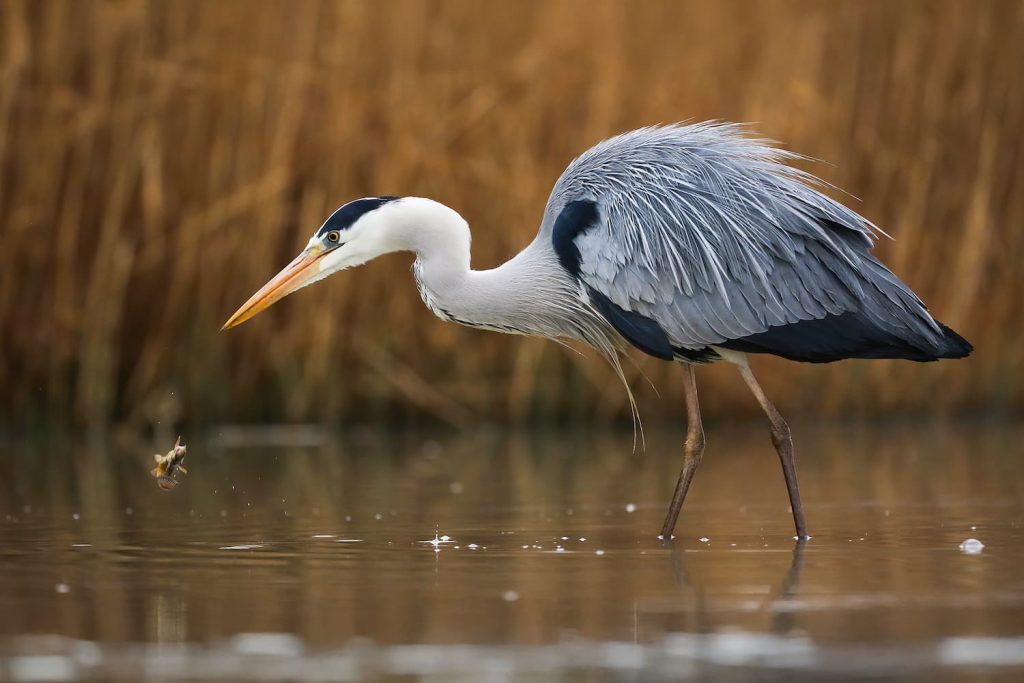
Table of Contents
That tall gray bird standing motionless at the edge of your community lake is almost certainly a great blue heron, and it is there for one reason: it is hunting. For HOA boards and property managers, a heron on the shoreline raises reasonable questions. What is it eating? Is it a problem for our stocked fish? And what does its presence say about the health of our water?
This guide answers what herons eat, how they hunt, what they look like, where they live, whether they migrate, and how pond conditions influence the wildlife your community attracts.
Herons eat almost any animal they can catch within striking distance. Fish make up the bulk of their diet, supplemented by frogs, snakes, lizards, insects, crayfish, small mammals such as voles and mice, and occasionally other birds. They are opportunistic ambush predators that hunt in shallow water and open fields.
Key Takeaways
- Herons are opportunistic carnivores. Fish are the staple, but they also eat amphibians, reptiles, insects, crustaceans, small mammals, and even other birds.
- They hunt by ambush, standing motionless in shallow water and striking with specially adapted neck vertebrae that let them stab prey in a fraction of a second.
- Great blue herons are year-round residents in Florida, unlike northern populations, which migrate south for winter.
- They are not endangered. The IUCN lists them as Least Concern and populations have been stable or increasing, but they are federally protected under the Migratory Bird Treaty Act.
- Herons favor shallow, vegetated shorelines. A healthy littoral zone supports the small fish, frogs, and invertebrates they hunt.
What Do Herons Eat?
Herons eat nearly anything they can catch, with fish forming the core of their diet. Their menu also includes frogs, salamanders, snakes, lizards, small turtles, crayfish, shrimp, dragonflies, grasshoppers, mice, voles, and sometimes small birds. Diet shifts with season, habitat, and whatever prey is locally abundant.
The heron is a generalist predator, and that flexibility is exactly why it thrives from Alaska to the Everglades.
According to the Cornell Lab of Ornithology, great blue herons eat nearly anything within striking distance, including fish, amphibians, reptiles, small mammals, insects, and other birds. They grab smaller prey in their mandibles or use their dagger-like bills to impale larger fish, often shaking them to break or relax the sharp spines before swallowing them whole.
Broken into categories, a Florida heron’s diet typically includes:
- Fish: The staple. Bluegill, shad, minnows, mosquitofish, small bass, and tilapia in community lakes.
- Amphibians: Frogs, toads, tadpoles, and salamanders, especially in spring and summer.
- Reptiles: Water snakes, small lizards, anoles, and occasionally hatchling turtles.
- Invertebrates: Crayfish, shrimp, aquatic insects, dragonflies, and grasshoppers.
- Small mammals: Voles, mice, shrews, and rats hunted in adjacent fields and turf.
- Birds: Rarely, but ducklings and small nestlings are taken when the opportunity arises.
Because herons swallow prey whole, the size of what they can eat is limited by what fits down the throat, which is why they concentrate on smaller fish even in ponds holding much larger ones.

What Does the Heron Eat in a Community Lake Specifically?
In a stormwater pond or HOA lake, herons mainly eat small forage fish, frogs, tadpoles, crayfish, and aquatic insects. They target the shallow margins where these animals concentrate. Larger sport fish are generally too big to swallow, so a heron’s impact falls mostly on the small prey species near the shoreline.
For a board worried about the fish stock, this distinction matters. A great blue heron working your shoreline is almost always taking bluegill fry, mosquitofish, tadpoles, and crayfish, not the bass your residents want to catch.
There is a useful piece of research on this point. The Cornell Lab of Ornithology notes that great blue herons congregate at fish hatcheries, which creates concern for fish farmers, but a study found the herons ate mostly diseased fish that would have died shortly anyway. Sick fish spent more time near the surface, where they were easier to catch.
In other words, herons tend to remove the weakest, slowest, and most vulnerable individuals first. In a managed pond, that function is closer to sanitation than predation. The population-level effect on a well-stocked lake is usually minimal.
How Do Herons Actually Catch Their Prey?

Herons hunt primarily by ambush. They stand motionless in shallow water or wade slowly with deliberate steps, watching for movement, then strike with extraordinary speed. Specialized neck vertebrae allow them to shoot the head forward in a fraction of a second, spearing or seizing prey before it can react.
The stillness is the strategy. A heron may stand in one spot for many minutes, and that patience is what makes the strike so effective.
The Cornell Lab notes that thanks to specially shaped neck vertebrae, great blue herons can quickly strike prey at a distance. That anatomy creates the coiled, spring-loaded S-curve you see in the neck, which unfolds in an instant.
Herons also hunt well beyond the water. They forage in meadows, farmland, and open fields, taking rodents and insects, which is why you may spot one standing in a dry retention area or a mowed common space far from the shoreline.
What Does a Heron Look Like?
The great blue heron is a very large wading bird, roughly 3 to 4.5 feet tall with a wingspan of about 5.5 to 6.5 feet. It has blue-gray plumage, a white face with a black crown stripe, a heavy yellow dagger-shaped bill, and long slate-gray legs. In flight, the neck folds back into an S shape.
Identification is straightforward once you know what to look for, though people frequently confuse herons with cranes.
Per the Audubon Field Guide, great blue herons measure roughly 3 feet 2 inches to 4 feet 6 inches in length, with a wingspan of 5 feet 6 inches to 6 feet 7 inches, weighing around 4.5 to 5.5 pounds. Breeding adults develop long ornamental plumes on the neck, back, and chest.
Two field marks settle most identification questions:
- Neck in flight. Herons fly with the neck tucked back against the body in a tight S, legs trailing behind. Cranes and storks fly with the neck extended straight out.
- Head pattern. The white face with a bold black stripe running above the eye and trailing into plumes is distinctive among large gray waders.
Create Healthy Habitats for Herons
Pond Guru can help maintain native beneficial plants in the littoral zone to ensure proper habitat for heron and other species.
Where Do Great Blue Herons Live?
Great blue herons live near almost any body of water across North and Central America, including marshes, swamps, lakeshores, rivers, estuaries, mangroves, and ponds. They are highly adaptable and are found throughout Florida in both freshwater and saltwater habitats. They nest colonially in trees, often well above the ground.
Habitat flexibility is this species’ defining trait, and it explains why a bird you might see in an Alaskan estuary also stalks a suburban stormwater pond in Sarasota.
The American Bird Conservancy describes the great blue heron as highly adaptable, inhabiting marshes, swamps, lakeshores, riversides, beaches, and ponds, and notes it can be found near just about any body of water throughout North America at some point during the year.
Nesting is a different matter from feeding. Herons feed alone but breed in colonies called heronries or rookeries. The Cornell Lab reports that colonies can consist of 500 or more individual nests, with multiple nests per tree built 100 or more feet off the ground. If your community has a stand of tall trees near water, you may be hosting more herons than you realize during nesting season.

Do Blue Herons Migrate?
It depends on where they live. Northern populations east of the Rockies are migratory, traveling to the southern United States, the Caribbean, Central America, or northern South America for winter. Florida populations are year-round residents. Many herons seen in Florida in winter are northern birds that traveled south.
This is a common point of confusion for Florida property managers, and the answer is genuinely both.
The Audubon Field Guide explains that northern populations east of the Rockies are migratory, migrating by day or night, alone or in flocks, while Pacific Coast populations may be permanent residents as far north as southeastern Alaska. Their variable diet lets them winter farther north than most herons.
In Florida, the great blue heron is a common year-round resident across the state’s aquatic habitats. What changes seasonally is density. Florida ponds often see more herons in winter as migrants from the north arrive, which is why boards sometimes notice increased activity in the cooler months without any change to the pond itself.
Are Blue Herons Endangered?
No. Great blue herons are not endangered. The IUCN lists the species as Least Concern, and populations have been stable or increasing in recent decades. However, they are federally protected under the Migratory Bird Treaty Act, which makes it illegal to harm, harass, or disturb the birds, their nests, or their eggs.
This distinction is important for HOA boards, because “not endangered” does not mean “unprotected.”
The American Bird Conservancy notes that great blue herons were hunted for their plumes until the early 20th century but are now protected under the Migratory Bird Treaty Act, and that the population is increasing in an era when many other bird species are declining. Ongoing threats are habitat-related, primarily wetland loss and exposure to pesticides and other pollutants.
Practically, this means a community cannot legally remove nests, harm birds, or disturb an active rookery. If herons are creating a genuine conflict at a property, the appropriate route is non-harmful habitat management guidance and, where necessary, consultation with the Florida Fish and Wildlife Conservation Commission, not direct action against the birds.
Which Other Herons Might You See in Florida Pond Wildlife?
Florida hosts a wide range of wading birds beyond the great blue heron. Common species around community lakes include the great egret, snowy egret, little blue heron, tricolored heron, green heron, and both black-crowned and yellow-crowned night herons. Each occupies a slightly different niche and prey size.
Recognizing the variety helps boards understand what a healthy waterbody supports. Florida pond wildlife typically includes several of these species:
- Great egret: Tall and all white with a yellow bill and black legs. Hunts much like a great blue heron.
- Snowy egret: Smaller, white, with a black bill and distinctive yellow feet, often actively stirring the shallows.
- Little blue heron: Slate-blue as an adult, white as a juvenile, which causes frequent misidentification.
- Tricolored heron: Slender, with a white belly, active and animated while foraging.
- Green heron: Small, stocky, and secretive, often crouched low on overhanging vegetation.
- Night herons: Stocky and short-necked, most active at dusk and after dark.
A pond that supports several of these species generally has a functioning food web, meaning adequate small fish, amphibians, and invertebrates.
What Makes an Ideal Pond Habitat for Herons?
An ideal pond habitat for herons includes shallow, gently sloped shorelines, established native littoral vegetation, clear enough water to see prey, a stable population of small fish and amphibians, and nearby trees for roosting. These conditions support the entire food web that wading birds depend on.
Herons are an indicator species. Their presence usually means the shallows are producing food, which is a reasonable proxy for pond health.
The elements that matter most:
- Shallow shelf. Herons hunt by wading, so they need water within leg depth. Steep, eroded banks that drop straight off give them nowhere to work.
- Littoral vegetation. Native plants along the water’s edge are nursery habitat for the small fish, frogs, tadpoles, and invertebrates herons hunt. Establishing that band through littoral planting and littoral zone management is the single most direct way to support wading birds.
- Water clarity. Herons hunt visually. Persistent algae blooms and turbidity reduce their ability to see prey, and usually signal nutrient problems worth investigating through pond water quality testing.
- Stable shoreline. Eroding banks lose the shallow margin entirely. Shoreline restoration rebuilds the transition zone that wildlife uses.
- Balanced fish population. A healthy forage base supports both wading birds and sport fish, which is where pond fish stocking decisions come in.
- Nearby trees. Roosting and nesting cover, ideally undisturbed.
Communities that want more wildlife and communities that want cleaner water generally need the same things, which is convenient. Broader pond wildlife management approaches address both together.
Schedule a Site Visit With Pond Guru
Herons are a visible sign of what is happening below the surface. A shoreline that supports wading birds usually has functioning shallows, reasonable water clarity, and a balanced food web. A shoreline that does not may be signaling erosion, nutrient problems, or a missing littoral zone.
Pond Guru works with HOA boards, property managers, and homeowners across Florida to evaluate lake conditions, restore shorelines, establish native littoral plantings, and manage water quality in ways that support both aesthetics and wildlife.
Because every waterbody differs in depth, slope, vegetation, and nutrient load, the process starts with an on-site evaluation. To assess what your lake can support, schedule a site visit with Pond Guru and a specialist will evaluate your conditions and recommend a plan suited to your property.

Frequently Asked Questions
Herons eat almost any animal they can catch within striking distance. Fish are the staple, supplemented by frogs, tadpoles, snakes, lizards, crayfish, aquatic insects, and small mammals such as voles and mice. They occasionally take small birds. Diet varies with season, habitat, and local prey availability.
Unlikely. Herons swallow prey whole, so they target small forage fish rather than mature sport fish. Research at fish hatcheries found herons ate mostly diseased fish that were already near death. In a well-stocked, balanced lake, the population-level impact is generally minimal.
Some do. Northern populations east of the Rockies migrate south for winter, reaching the southern United States, the Caribbean, and Central America. Florida great blue herons are year-round residents. Florida ponds often see more herons in winter as northern migrants arrive, even though local birds never leave.
No. The IUCN lists the great blue heron as Least Concern, and populations have been stable or increasing. However, they are federally protected under the Migratory Bird Treaty Act, making it illegal to harm, harass, or disturb the birds, their nests, or their eggs, regardless of their conservation status.
Great blue herons are 3 to 4.5 feet tall with blue-gray plumage, a white face with a black crown stripe, and a heavy yellow bill. The clearest difference is flight: herons fold the neck back into an S shape, while cranes fly with the neck fully extended forward.
Focus on shallow, gently sloped shorelines with established native littoral vegetation, reasonable water clarity, and a healthy forage fish population. These conditions produce the small fish, amphibians, and invertebrates herons hunt. Stabilizing eroding banks and managing nutrients supports both wildlife and water quality.
Ready to Schedule a Visit ?
Have questions about your pond or lake? Our experts are ready to help you take the next step.
Latest Article
Popular Post

Why Keeping Culverts Clear of Debris Matters for Stormwater Systems
Table of Contents A culvert is one of those…
Table of Contents
That tall gray bird standing motionless at the edge of your community lake is almost certainly a great blue heron, and it is there for one reason: it is hunting. For HOA boards and property managers, a heron on the shoreline raises reasonable questions. What is it eating? Is it a problem for our stocked fish? And what does its presence say about the health of our water?
This guide answers what herons eat, how they hunt, what they look like, where they live, whether they migrate, and how pond conditions influence the wildlife your community attracts.
Herons eat almost any animal they can catch within striking distance. Fish make up the bulk of their diet, supplemented by frogs, snakes, lizards, insects, crayfish, small mammals such as voles and mice, and occasionally other birds. They are opportunistic ambush predators that hunt in shallow water and open fields.
Key Takeaways
- Herons are opportunistic carnivores. Fish are the staple, but they also eat amphibians, reptiles, insects, crustaceans, small mammals, and even other birds.
- They hunt by ambush, standing motionless in shallow water and striking with specially adapted neck vertebrae that let them stab prey in a fraction of a second.
- Great blue herons are year-round residents in Florida, unlike northern populations, which migrate south for winter.
- They are not endangered. The IUCN lists them as Least Concern and populations have been stable or increasing, but they are federally protected under the Migratory Bird Treaty Act.
- Herons favor shallow, vegetated shorelines. A healthy littoral zone supports the small fish, frogs, and invertebrates they hunt.
What Do Herons Eat?
Herons eat nearly anything they can catch, with fish forming the core of their diet. Their menu also includes frogs, salamanders, snakes, lizards, small turtles, crayfish, shrimp, dragonflies, grasshoppers, mice, voles, and sometimes small birds. Diet shifts with season, habitat, and whatever prey is locally abundant.
The heron is a generalist predator, and that flexibility is exactly why it thrives from Alaska to the Everglades.
According to the Cornell Lab of Ornithology, great blue herons eat nearly anything within striking distance, including fish, amphibians, reptiles, small mammals, insects, and other birds. They grab smaller prey in their mandibles or use their dagger-like bills to impale larger fish, often shaking them to break or relax the sharp spines before swallowing them whole.
Broken into categories, a Florida heron’s diet typically includes:
- Fish: The staple. Bluegill, shad, minnows, mosquitofish, small bass, and tilapia in community lakes.
- Amphibians: Frogs, toads, tadpoles, and salamanders, especially in spring and summer.
- Reptiles: Water snakes, small lizards, anoles, and occasionally hatchling turtles.
- Invertebrates: Crayfish, shrimp, aquatic insects, dragonflies, and grasshoppers.
- Small mammals: Voles, mice, shrews, and rats hunted in adjacent fields and turf.
- Birds: Rarely, but ducklings and small nestlings are taken when the opportunity arises.
Because herons swallow prey whole, the size of what they can eat is limited by what fits down the throat, which is why they concentrate on smaller fish even in ponds holding much larger ones.
What Does the Heron Eat in a Community Lake Specifically?
In a stormwater pond or HOA lake, herons mainly eat small forage fish, frogs, tadpoles, crayfish, and aquatic insects. They target the shallow margins where these animals concentrate. Larger sport fish are generally too big to swallow, so a heron’s impact falls mostly on the small prey species near the shoreline.
For a board worried about the fish stock, this distinction matters. A great blue heron working your shoreline is almost always taking bluegill fry, mosquitofish, tadpoles, and crayfish, not the bass your residents want to catch.
There is a useful piece of research on this point. The Cornell Lab of Ornithology notes that great blue herons congregate at fish hatcheries, which creates concern for fish farmers, but a study found the herons ate mostly diseased fish that would have died shortly anyway. Sick fish spent more time near the surface, where they were easier to catch.
In other words, herons tend to remove the weakest, slowest, and most vulnerable individuals first. In a managed pond, that function is closer to sanitation than predation. The population-level effect on a well-stocked lake is usually minimal.
How Do Herons Actually Catch Their Prey?

Herons hunt primarily by ambush. They stand motionless in shallow water or wade slowly with deliberate steps, watching for movement, then strike with extraordinary speed. Specialized neck vertebrae allow them to shoot the head forward in a fraction of a second, spearing or seizing prey before it can react.
The stillness is the strategy. A heron may stand in one spot for many minutes, and that patience is what makes the strike so effective.
The Cornell Lab notes that thanks to specially shaped neck vertebrae, great blue herons can quickly strike prey at a distance. That anatomy creates the coiled, spring-loaded S-curve you see in the neck, which unfolds in an instant.
Herons also hunt well beyond the water. They forage in meadows, farmland, and open fields, taking rodents and insects, which is why you may spot one standing in a dry retention area or a mowed common space far from the shoreline.
What Does a Heron Look Like?
The great blue heron is a very large wading bird, roughly 3 to 4.5 feet tall with a wingspan of about 5.5 to 6.5 feet. It has blue-gray plumage, a white face with a black crown stripe, a heavy yellow dagger-shaped bill, and long slate-gray legs. In flight, the neck folds back into an S shape.
Identification is straightforward once you know what to look for, though people frequently confuse herons with cranes.
Per the Audubon Field Guide, great blue herons measure roughly 3 feet 2 inches to 4 feet 6 inches in length, with a wingspan of 5 feet 6 inches to 6 feet 7 inches, weighing around 4.5 to 5.5 pounds. Breeding adults develop long ornamental plumes on the neck, back, and chest.
Two field marks settle most identification questions:
- Neck in flight. Herons fly with the neck tucked back against the body in a tight S, legs trailing behind. Cranes and storks fly with the neck extended straight out.
- Head pattern. The white face with a bold black stripe running above the eye and trailing into plumes is distinctive among large gray waders.
Create Healthy Habitats for Herons
Pond Guru can help maintain native beneficial plants in the littoral zone to ensure proper habitat for heron and other species.
Where Do Great Blue Herons Live?
Great blue herons live near almost any body of water across North and Central America, including marshes, swamps, lakeshores, rivers, estuaries, mangroves, and ponds. They are highly adaptable and are found throughout Florida in both freshwater and saltwater habitats. They nest colonially in trees, often well above the ground.
Habitat flexibility is this species’ defining trait, and it explains why a bird you might see in an Alaskan estuary also stalks a suburban stormwater pond in Sarasota.
The American Bird Conservancy describes the great blue heron as highly adaptable, inhabiting marshes, swamps, lakeshores, riversides, beaches, and ponds, and notes it can be found near just about any body of water throughout North America at some point during the year.
Nesting is a different matter from feeding. Herons feed alone but breed in colonies called heronries or rookeries. The Cornell Lab reports that colonies can consist of 500 or more individual nests, with multiple nests per tree built 100 or more feet off the ground. If your community has a stand of tall trees near water, you may be hosting more herons than you realize during nesting season.
Do Blue Herons Migrate?
t depends on where they live. Northern populations east of the Rockies are migratory, traveling to the southern United States, the Caribbean, Central America, or northern South America for winter. Florida populations are year-round residents. Many herons seen in Florida in winter are northern birds that traveled south.
This is a common point of confusion for Florida property managers, and the answer is genuinely both.
The Audubon Field Guide explains that northern populations east of the Rockies are migratory, migrating by day or night, alone or in flocks, while Pacific Coast populations may be permanent residents as far north as southeastern Alaska. Their variable diet lets them winter farther north than most herons.
In Florida, the great blue heron is a common year-round resident across the state’s aquatic habitats. What changes seasonally is density. Florida ponds often see more herons in winter as migrants from the north arrive, which is why boards sometimes notice increased activity in the cooler months without any change to the pond itself.
Are Blue Herons Endangered?
No. Great blue herons are not endangered. The IUCN lists the species as Least Concern, and populations have been stable or increasing in recent decades. However, they are federally protected under the Migratory Bird Treaty Act, which makes it illegal to harm, harass, or disturb the birds, their nests, or their eggs.
This distinction is important for HOA boards, because “not endangered” does not mean “unprotected.”
The American Bird Conservancy notes that great blue herons were hunted for their plumes until the early 20th century but are now protected under the Migratory Bird Treaty Act, and that the population is increasing in an era when many other bird species are declining. Ongoing threats are habitat-related, primarily wetland loss and exposure to pesticides and other pollutants.
Practically, this means a community cannot legally remove nests, harm birds, or disturb an active rookery. If herons are creating a genuine conflict at a property, the appropriate route is non-harmful habitat management guidance and, where necessary, consultation with the Florida Fish and Wildlife Conservation Commission, not direct action against the birds.
Which Other Herons Might You See in Florida Pond Wildlife?
Florida hosts a wide range of wading birds beyond the great blue heron. Common species around community lakes include the great egret, snowy egret, little blue heron, tricolored heron, green heron, and both black-crowned and yellow-crowned night herons. Each occupies a slightly different niche and prey size.
Recognizing the variety helps boards understand what a healthy waterbody supports. Florida pond wildlife typically includes several of these species:
- Great egret: Tall and all white with a yellow bill and black legs. Hunts much like a great blue heron.
- Snowy egret: Smaller, white, with a black bill and distinctive yellow feet, often actively stirring the shallows.
- Little blue heron: Slate-blue as an adult, white as a juvenile, which causes frequent misidentification.
- Tricolored heron: Slender, with a white belly, active and animated while foraging.
- Green heron: Small, stocky, and secretive, often crouched low on overhanging vegetation.
- Night herons: Stocky and short-necked, most active at dusk and after dark.
A pond that supports several of these species generally has a functioning food web, meaning adequate small fish, amphibians, and invertebrates.
What Makes an Ideal Pond Habitat for Herons?
An ideal pond habitat for herons includes shallow, gently sloped shorelines, established native littoral vegetation, clear enough water to see prey, a stable population of small fish and amphibians, and nearby trees for roosting. These conditions support the entire food web that wading birds depend on.
Herons are an indicator species. Their presence usually means the shallows are producing food, which is a reasonable proxy for pond health.
The elements that matter most:
- Shallow shelf. Herons hunt by wading, so they need water within leg depth. Steep, eroded banks that drop straight off give them nowhere to work.
- Littoral vegetation. Native plants along the water’s edge are nursery habitat for the small fish, frogs, tadpoles, and invertebrates herons hunt. Establishing that band through littoral planting and littoral zone management is the single most direct way to support wading birds.
- Water clarity. Herons hunt visually. Persistent algae blooms and turbidity reduce their ability to see prey, and usually signal nutrient problems worth investigating through pond water quality testing.
- Stable shoreline. Eroding banks lose the shallow margin entirely. Shoreline restoration rebuilds the transition zone that wildlife uses.
- Balanced fish population. A healthy forage base supports both wading birds and sport fish, which is where pond fish stocking decisions come in.
- Nearby trees. Roosting and nesting cover, ideally undisturbed.
Communities that want more wildlife and communities that want cleaner water generally need the same things, which is convenient. Broader pond wildlife management approaches address both together.
Schedule a Site Visit With Pond Guru

Herons are a visible sign of what is happening below the surface. A shoreline that supports wading birds usually has functioning shallows, reasonable water clarity, and a balanced food web. A shoreline that does not may be signaling erosion, nutrient problems, or a missing littoral zone.
Pond Guru works with HOA boards, property managers, and homeowners across Florida to evaluate lake conditions, restore shorelines, establish native littoral plantings, and manage water quality in ways that support both aesthetics and wildlife.
Because every waterbody differs in depth, slope, vegetation, and nutrient load, the process starts with an on-site evaluation. To assess what your lake can support, schedule a site visit with Pond Guru and a specialist will evaluate your conditions and recommend a plan suited to your property.
Frequently Asked Questions
Herons eat almost any animal they can catch within striking distance. Fish are the staple, supplemented by frogs, tadpoles, snakes, lizards, crayfish, aquatic insects, and small mammals such as voles and mice. They occasionally take small birds. Diet varies with season, habitat, and local prey availability.
Unlikely. Herons swallow prey whole, so they target small forage fish rather than mature sport fish. Research at fish hatcheries found herons ate mostly diseased fish that were already near death. In a well-stocked, balanced lake, the population-level impact is generally minimal.
Some do. Northern populations east of the Rockies migrate south for winter, reaching the southern United States, the Caribbean, and Central America. Florida great blue herons are year-round residents. Florida ponds often see more herons in winter as northern migrants arrive, even though local birds never leave.
No. The IUCN lists the great blue heron as Least Concern, and populations have been stable or increasing. However, they are federally protected under the Migratory Bird Treaty Act, making it illegal to harm, harass, or disturb the birds, their nests, or their eggs, regardless of their conservation status.
Great blue herons are 3 to 4.5 feet tall with blue-gray plumage, a white face with a black crown stripe, and a heavy yellow bill. The clearest difference is flight: herons fold the neck back into an S shape, while cranes fly with the neck fully extended forward.
Focus on shallow, gently sloped shorelines with established native littoral vegetation, reasonable water clarity, and a healthy forage fish population. These conditions produce the small fish, amphibians, and invertebrates herons hunt. Stabilizing eroding banks and managing nutrients supports both wildlife and water quality.
Ready to Schedule a Visit ?
Have questions about your pond or lake? Our experts are ready to help you take the next step.
Latest Article
Popular Post
Why Keeping Culverts Clear of Debris Matters for Stormwater Systems
Table of Contents A culvert is one of those…