

Florida HOA Lake Management: 2026 Guide for Property Managers
Florida HOA Lake Management: 2026 Guide for Property Managers
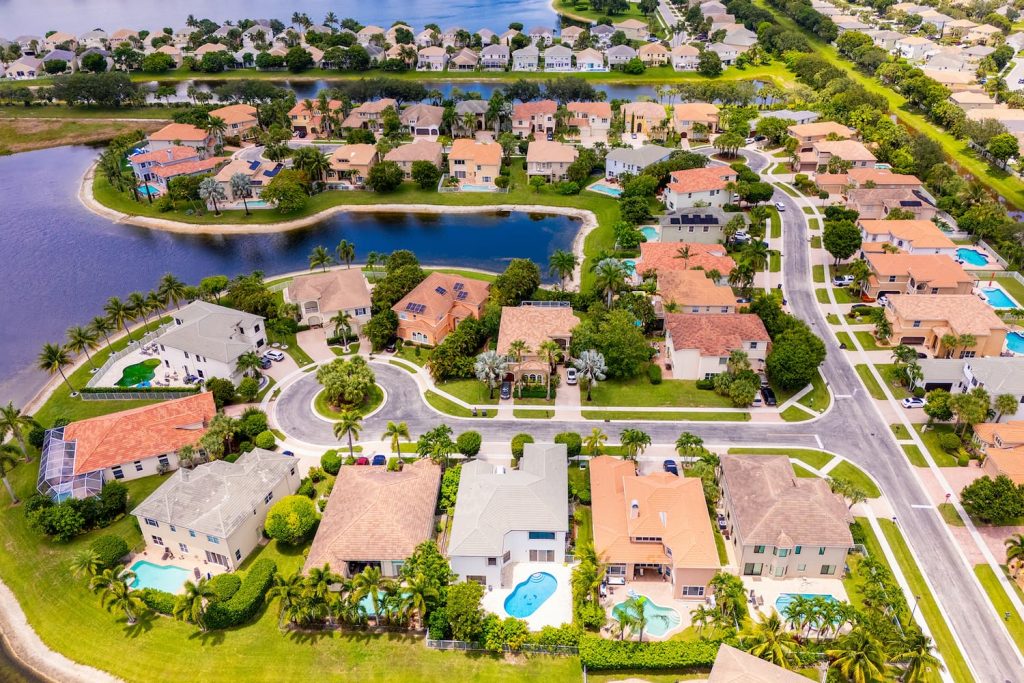
Table of Contents
If you serve on an HOA board or manage a community in Florida, there is a good chance a lake or pond sits at the center of your responsibilities, literally and figuratively. Residents see a scenic amenity. Regulators see a permitted piece of infrastructure. Your budget sees a recurring line item that never seems to go away.
This guide covers everything a board member or property manager needs to know about Florida HOA lake management in 2026: what your community is actually responsible for, what a proper maintenance program includes, how to budget for it, and how to choose the right partner.
What Is Florida HOA Lake Management?
HOA lake management is the ongoing program of inspections, treatments, and maintenance that keeps a community’s lakes and ponds functioning, attractive, and compliant with state and local regulations. It typically covers:
- Algae and aquatic weed control
- Water quality monitoring and testing
- Shoreline and erosion management
- Inflow and outflow structure inspections
- Fish and wildlife habitat care
- Fountain and aeration system upkeep
The key thing to understand is that lake management is not landscaping. Your landscaper mows to the water’s edge. What happens in and under the water is a separate discipline with its own science, its own licensing requirements, and its own regulatory obligations.
Your Community Lake Is Probably a Stormwater Pond
Here is the fact that surprises many new board members: in most Florida communities, that scenic lake is actually an engineered stormwater pond, designed to capture, store, and treat runoff from the neighborhood’s roads, roofs, and driveways.
The St. Johns River Water Management District explains that neighborhood stormwater systems are permitted by Florida’s water management districts and the Florida Department of Environmental Protection, and after construction, legal responsibility for maintaining these systems typically passes to the homeowners’ association.
The Lake Worth Drainage District puts it plainly: once the developer finishes the project, the permit and the legal responsibility for maintaining the system transfer to the association. Every owner in the community shares that responsibility, even those who do not live on the water, because everyone’s stormwater flows into the system.
In practical terms, your community lake has a job. It is flood protection and water treatment infrastructure first, an amenity second. Maintenance is not optional.
Common-Area Maintenance and Board Fiduciary Duty
Lakes and ponds are common areas, and common-area maintenance sits squarely within the board’s legal obligations. Under Section 720.303, Florida Statutes, the officers and directors of an association have a fiduciary relationship to the members they serve.
That board fiduciary duty means acting in good faith, with the care an ordinarily prudent person would exercise, and in the best interests of the association. Applied to lake management, it translates into a few concrete practices:
- Do not defer maintenance indefinitely. A neglected stormwater pond loses capacity, falls out of permit compliance, and becomes dramatically more expensive to restore.
- Document decisions. Keep inspection reports, treatment records, and vendor proposals in the association’s official records.
- Get qualified advice. Boards are not expected to be limnologists, but they are expected to seek competent professional input on technical matters.
- Put significant contracts in writing. Florida law has specific requirements for association contracts, and written scopes of work protect everyone.
A board that runs a documented, professionally guided lake program is in a strong position. A board that ignores a deteriorating pond until residents complain or a regulator sends a notice is not.
Retention Pond Maintenance in Florida: What Compliance Looks Like
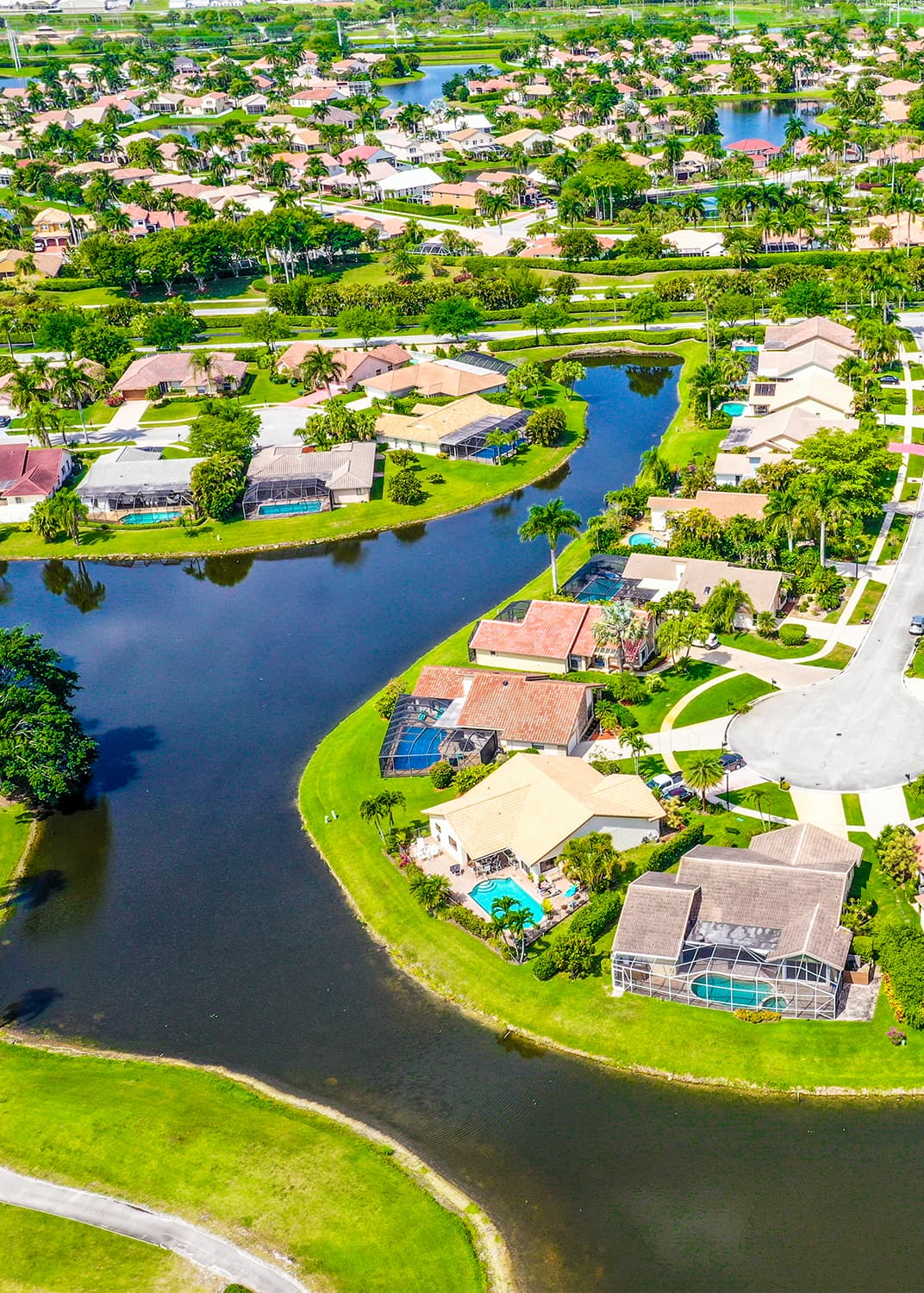
Retention pond maintenance in Florida is shaped by the permit your community operates under. The Southwest Florida Water Management District’s operation and maintenance guidance notes that environmental resource permits include conditions specifying how often inspection reports are due, and recommends designating one person to oversee operation, maintenance, monitoring, and reporting.
A compliant maintenance program generally includes:
- Routine inspections of banks, control structures, pipes, and outfalls
- Sediment monitoring, since accumulated muck steals storage capacity over time
- Vegetation management that controls invasives while preserving beneficial natives
- Erosion repair before small washouts become bank failures
- Recordkeeping that matches what your permit requires
If your board has never seen a copy of the community’s operation and maintenance permit, that is the first item for your next agenda. Your water management district can provide it.
Curb Appeal: The Business Case for Healthy Lakes
There is also a straightforward financial argument for proactive lake care: curb appeal. Waterfront and water-view lots typically command premium prices, and the condition of the community’s lakes directly affects how prospective buyers perceive the neighborhood.
A clean, blue lake with a running fountain says “well-managed community.” A pond ringed with dead vegetation, algae mats, and eroding banks says the opposite, and buyers extend that impression to everything else the association touches.
For property managers, lake condition is one of the most visible indicators of your work. For boards, it is one of the few maintenance investments that residents can see and appreciate every single day.
Free Site Visit and Reports for Your Community
We don’t charge for site visits. Let us take a look at your lake and give you free advice
Setting an Annual Lake Budget
So what should all this cost? Every community is different, but a realistic annual lake budget generally accounts for:
- Routine management contract: Monthly or bimonthly service covering inspections, treatments, and reporting. This is the foundation.
- Aeration and fountain costs: Electricity, seasonal maintenance, and eventual equipment replacement.
- Periodic extras: Shoreline repairs, fish stocking, midge or mosquito management, and storm cleanup.
- Long-horizon capital items: Sediment removal or dredging, which may only happen every 15 to 25 years but carries a significant price tag when it does.
Two budgeting principles serve boards well. First, fund the routine program consistently, because skipping a year of maintenance to save money almost always costs more later. Second, start planning early for the big-ticket items. A reserve line for future sediment removal, even a modest one, prevents the special assessment shock that hits communities who ignored their pond for two decades.
Vendor Selection: How to Choose an HOA Pond Management Company
Sooner or later, every board faces vendor selection for lake services. Choosing the right HOA pond management company comes down to a handful of questions worth asking every candidate:
- Licensing and certification. Are your applicators licensed for aquatic herbicide use in Florida? Aquatic treatments require specific state licensing, not just a landscaping license.
- Insurance. Can you provide proof of general liability and workers’ compensation coverage?
- Permit literacy. Have you worked with our water management district? Can you help us meet our inspection and reporting obligations?
- Scope clarity. Exactly what is included in the monthly fee, and what is billed separately? Where does responsibility end at the shoreline?
- Communication. Will we receive written service reports after each visit? Who fields resident questions?
- References. Can you provide other Florida HOA or community references of similar size?
Be cautious with proposals that are dramatically cheaper than the rest. In lake management, a low price usually means fewer visits, reactive-only treatment, or scope gaps that surface as change orders later. The goal of vendor selection is not the lowest bid. It is the best long-term cost of keeping your water healthy and compliant.
Aquatic Management Services From Pond Guru
Aquatic management done well combines science, regulatory knowledge, and consistent fieldwork. That is exactly what Pond Guru delivers for HOA boards and property managers across Florida.
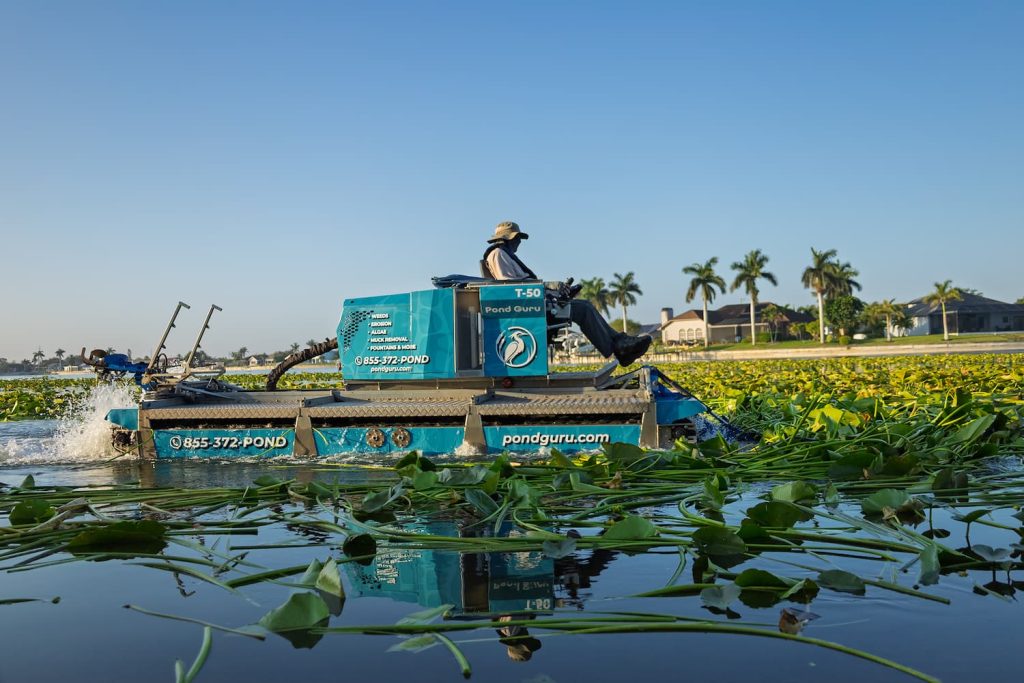
Pond Guru’s aquatic management services are built around the realities Florida communities face: hot summers that fuel algae, stormwater permits that demand documentation, residents who expect beautiful water, and budgets that demand predictability. Services span routine water quality programs, algae and aquatic weed control, fountain and aeration support, shoreline care, and the inspection documentation your permit requires.
Just as important, Pond Guru understands the board side of the table. Clear scopes of work, written service reports for your official records, and straightforward communication make it easier for boards to demonstrate they are meeting their obligations to the community.
Schedule Your Free On-Site Evaluation
Every community’s water is different. The right program for a three-acre stormwater pond in a 200-home community looks nothing like the program for a golf course community with seven interconnected lakes. That is why the best first step is a free on-site visit.
Contact Pond Guru to schedule your free on-site evaluation. A specialist will walk your shorelines, assess water conditions, review what your current program covers, and give your board a clear picture of where your lakes stand and what they need. No pressure, no obligation, just the information you need to make a confident decision for your community.
Frequently Asked Questions
In most cases, the homeowners' association. After a developer completes a permitted stormwater system, legal responsibility for operating and maintaining it typically transfers to the HOA, and the cost is shared by all owners in the community.
Very likely, yes. Most lakes and ponds in Florida communities built since the 1980s are engineered stormwater facilities permitted through a water management district. Your association should have a copy of its operation and maintenance permit.
It depends on the number, size, and condition of your water bodies. A sound annual lake budget covers a routine management contract, aeration and fountain costs, periodic repairs, and long-term reserves for sediment removal.
Florida aquatic applicator licensing, proper insurance, experience with water management district permits, clear written scopes, consistent service reporting, and references from similar communities.
Schedule a free on-site evaluation. A specialist will assess your community's lakes and provide a clear, board-ready picture of their condition and maintenance needs.
Ready to Schedule a Visit ?
Have questions about your pond or lake? Our experts are ready to help you take the next step.
Latest Article
Popular Post

Why Keeping Culverts Clear of Debris Matters for Stormwater Systems
Table of Contents A culvert is one of those…
Table of Contents
If you serve on an HOA board or manage a community in Florida, there is a good chance a lake or pond sits at the center of your responsibilities, literally and figuratively. Residents see a scenic amenity. Regulators see a permitted piece of infrastructure. Your budget sees a recurring line item that never seems to go away.
This guide covers everything a board member or property manager needs to know about Florida HOA lake management in 2026: what your community is actually responsible for, what a proper maintenance program includes, how to budget for it, and how to choose the right partner.
What Is Florida HOA Lake Management?
HOA lake management is the ongoing program of inspections, treatments, and maintenance that keeps a community’s lakes and ponds functioning, attractive, and compliant with state and local regulations. It typically covers:
- Algae and aquatic weed control
- Water quality monitoring and testing
- Shoreline and erosion management
- Inflow and outflow structure inspections
- Fish and wildlife habitat care
- Fountain and aeration system upkeep
The key thing to understand is that lake management is not landscaping. Your landscaper mows to the water’s edge. What happens in and under the water is a separate discipline with its own science, its own licensing requirements, and its own regulatory obligations.
Your Community Lake Is Probably a Stormwater Pond
Here is the fact that surprises many new board members: in most Florida communities, that scenic lake is actually an engineered stormwater pond, designed to capture, store, and treat runoff from the neighborhood’s roads, roofs, and driveways.
The St. Johns River Water Management District explains that neighborhood stormwater systems are permitted by Florida’s water management districts and the Florida Department of Environmental Protection, and after construction, legal responsibility for maintaining these systems typically passes to the homeowners’ association.
The Lake Worth Drainage District puts it plainly: once the developer finishes the project, the permit and the legal responsibility for maintaining the system transfer to the association. Every owner in the community shares that responsibility, even those who do not live on the water, because everyone’s stormwater flows into the system.
In practical terms, your community lake has a job. It is flood protection and water treatment infrastructure first, an amenity second. Maintenance is not optional.
Common-Area Maintenance and Board Fiduciary Duty
Lakes and ponds are common areas, and common-area maintenance sits squarely within the board’s legal obligations. Under Section 720.303, Florida Statutes, the officers and directors of an association have a fiduciary relationship to the members they serve.
That board fiduciary duty means acting in good faith, with the care an ordinarily prudent person would exercise, and in the best interests of the association. Applied to lake management, it translates into a few concrete practices:
- Do not defer maintenance indefinitely. A neglected stormwater pond loses capacity, falls out of permit compliance, and becomes dramatically more expensive to restore.
- Document decisions. Keep inspection reports, treatment records, and vendor proposals in the association’s official records.
- Get qualified advice. Boards are not expected to be limnologists, but they are expected to seek competent professional input on technical matters.
- Put significant contracts in writing. Florida law has specific requirements for association contracts, and written scopes of work protect everyone.
A board that runs a documented, professionally guided lake program is in a strong position. A board that ignores a deteriorating pond until residents complain or a regulator sends a notice is not.
Retention Pond Maintenance in Florida: What Compliance Looks Like
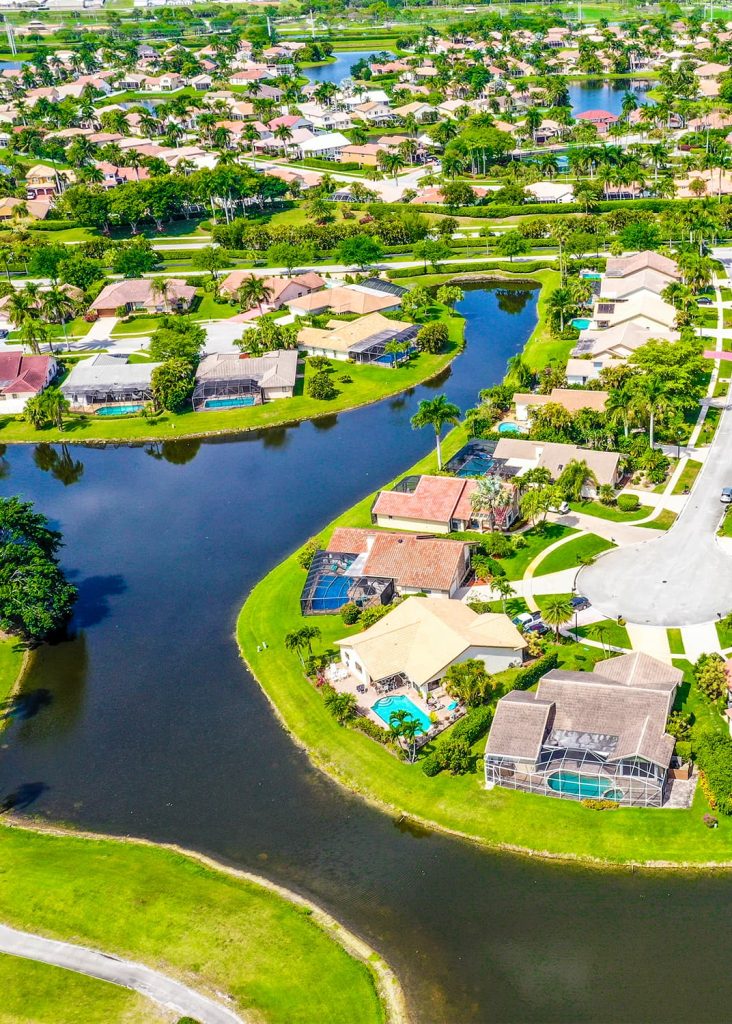
Retention pond maintenance in Florida is shaped by the permit your community operates under. The Southwest Florida Water Management District’s operation and maintenance guidance notes that environmental resource permits include conditions specifying how often inspection reports are due, and recommends designating one person to oversee operation, maintenance, monitoring, and reporting.
A compliant maintenance program generally includes:
- Routine inspections of banks, control structures, pipes, and outfalls
- Sediment monitoring, since accumulated muck steals storage capacity over time
- Vegetation management that controls invasives while preserving beneficial natives
- Erosion repair before small washouts become bank failures
- Recordkeeping that matches what your permit requires
If your board has never seen a copy of the community’s operation and maintenance permit, that is the first item for your next agenda. Your water management district can provide it.
Curb Appeal: The Business Case for Healthy Lakes
There is also a straightforward financial argument for proactive lake care: curb appeal. Waterfront and water-view lots typically command premium prices, and the condition of the community’s lakes directly affects how prospective buyers perceive the neighborhood.
A clean, blue lake with a running fountain says “well-managed community.” A pond ringed with dead vegetation, algae mats, and eroding banks says the opposite, and buyers extend that impression to everything else the association touches.
For property managers, lake condition is one of the most visible indicators of your work. For boards, it is one of the few maintenance investments that residents can see and appreciate every single day.
Free Site Visit and Reports for Your Community
We don’t charge for site visits. Let us take a look at your lake and give you free advice
Setting an Annual Lake Budget
So what should all this cost? Every community is different, but a realistic annual lake budget generally accounts for:
- Routine management contract: Monthly or bimonthly service covering inspections, treatments, and reporting. This is the foundation.
- Aeration and fountain costs: Electricity, seasonal maintenance, and eventual equipment replacement.
- Periodic extras: Shoreline repairs, fish stocking, midge or mosquito management, and storm cleanup.
- Long-horizon capital items: Sediment removal or dredging, which may only happen every 15 to 25 years but carries a significant price tag when it does.
Two budgeting principles serve boards well. First, fund the routine program consistently, because skipping a year of maintenance to save money almost always costs more later. Second, start planning early for the big-ticket items. A reserve line for future sediment removal, even a modest one, prevents the special assessment shock that hits communities who ignored their pond for two decades.
Vendor Selection: How to Choose an HOA Pond Management Company
Sooner or later, every board faces vendor selection for lake services. Choosing the right HOA pond management company comes down to a handful of questions worth asking every candidate:
- Licensing and certification. Are your applicators licensed for aquatic herbicide use in Florida? Aquatic treatments require specific state licensing, not just a landscaping license.
- Insurance. Can you provide proof of general liability and workers’ compensation coverage?
- Permit literacy. Have you worked with our water management district? Can you help us meet our inspection and reporting obligations?
- Scope clarity. Exactly what is included in the monthly fee, and what is billed separately? Where does responsibility end at the shoreline?
- Communication. Will we receive written service reports after each visit? Who fields resident questions?
- References. Can you provide other Florida HOA or community references of similar size?
Be cautious with proposals that are dramatically cheaper than the rest. In lake management, a low price usually means fewer visits, reactive-only treatment, or scope gaps that surface as change orders later. The goal of vendor selection is not the lowest bid. It is the best long-term cost of keeping your water healthy and compliant.
Aquatic Management Services From Pond Guru
Aquatic management done well combines science, regulatory knowledge, and consistent fieldwork. That is exactly what Pond Guru delivers for HOA boards and property managers across Florida.
Pond Guru’s aquatic management services are built around the realities Florida communities face: hot summers that fuel algae, stormwater permits that demand documentation, residents who expect beautiful water, and budgets that demand predictability. Services span routine water quality programs, algae and aquatic weed control, fountain and aeration support, shoreline care, and the inspection documentation your permit requires.
Just as important, Pond Guru understands the board side of the table. Clear scopes of work, written service reports for your official records, and straightforward communication make it easier for boards to demonstrate they are meeting their obligations to the community.
Schedule Your Free On-Site Evaluation
Every community’s water is different. The right program for a three-acre stormwater pond in a 200-home community looks nothing like the program for a golf course community with seven interconnected lakes. That is why the best first step is a free on-site visit.
Contact Pond Guru to schedule your free on-site evaluation. A specialist will walk your shorelines, assess water conditions, review what your current program covers, and give your board a clear picture of where your lakes stand and what they need. No pressure, no obligation, just the information you need to make a confident decision for your community.
Frequently Asked Questions
In most cases, the homeowners' association. After a developer completes a permitted stormwater system, legal responsibility for operating and maintaining it typically transfers to the HOA, and the cost is shared by all owners in the community.
Very likely, yes. Most lakes and ponds in Florida communities built since the 1980s are engineered stormwater facilities permitted through a water management district. Your association should have a copy of its operation and maintenance permit.
It depends on the number, size, and condition of your water bodies. A sound annual lake budget covers a routine management contract, aeration and fountain costs, periodic repairs, and long-term reserves for sediment removal.
Florida aquatic applicator licensing, proper insurance, experience with water management district permits, clear written scopes, consistent service reporting, and references from similar communities.
Schedule a free on-site evaluation. A specialist will assess your community's lakes and provide a clear, board-ready picture of their condition and maintenance needs.
Ready to Schedule a Visit ?
Have questions about your pond or lake? Our experts are ready to help you take the next step.
Latest Article
Popular Post
Why Keeping Culverts Clear of Debris Matters for Stormwater Systems
Table of Contents A culvert is one of those…