

Smooth Cordgrass: A Florida Shoreline and Erosion Control Guide
Smooth Cordgrass: A Florida Shoreline and Erosion Control Guide
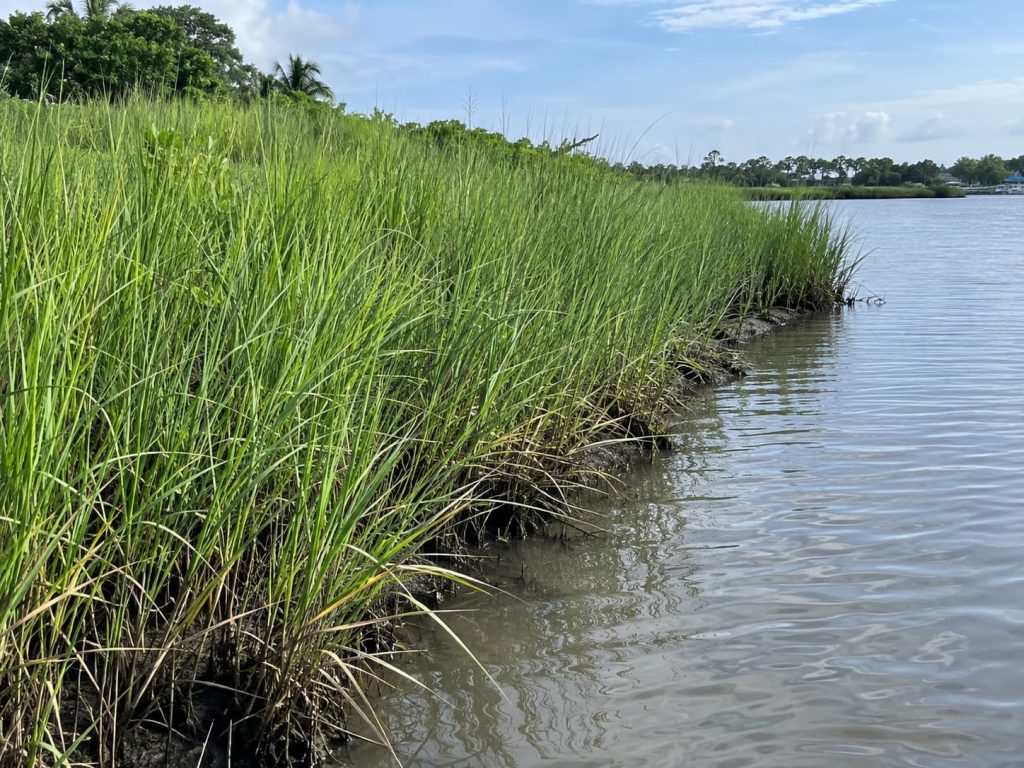
Table of Contents
Along Florida’s brackish shorelines, tidal canals, and salt marshes, one native grass does more to hold the land together than almost any other: smooth cordgrass. Its dense stands absorb wave energy, trap sediment, and lock down banks that would otherwise wash away, which is why it is a cornerstone of shoreline restoration across the coastal Southeast. For waterfront communities dealing with erosion, it is one of the most effective natural tools available.
This guide covers what smooth cordgrass is, how it controls erosion, how to identify it, where it grows, how it supports wildlife, and how it is established along shorelines.
Smooth cordgrass (Spartina alterniflora) is a native, salt-tolerant marsh grass that grows along brackish and saltwater shorelines. It is one of the most effective plants for erosion control, using dense roots and stems to dissipate wave energy, trap sediment, and stabilize banks. It thrives in intertidal zones where few other plants can survive.
Key Takeaways
- Smooth cordgrass is a native salt-marsh grass found along Florida’s brackish and saltwater shorelines.
- It is an erosion control powerhouse, dissipating wave energy, trapping sediment, and stabilizing banks with dense roots.
- It tolerates salt exceptionally well, thriving in intertidal zones from brackish to fully saline water.
- It supports wildlife, providing habitat and food for fish, shellfish, wading birds, waterfowl, and even manatees.
- It spreads by rhizomes, forming dense, self-sustaining colonies that can protect a shoreline indefinitely.
What Is Smooth Cordgrass?
Smooth cordgrass (Spartina alterniflora) is a native, warm-season perennial grass that forms dense colonies along shorelines and intertidal flats in coastal wetlands. It is robust, fast-spreading, and highly tolerant of fluctuating water depths and salinity. It is one of the dominant plants of salt marshes along the Atlantic and Gulf coasts.
Understanding smooth cordgrass starts with recognizing it as a specialist built for the harsh intertidal zone where land meets salt water.
According to the USDA NRCS plant guide, smooth cordgrass is an herbaceous, native, warm-season grass that forms dense vegetative colonies along shorelines and intertidal flats, is robust and rapidly spreading, and is tolerant of fluctuating water depths and salinity. It spreads primarily by vegetative propagation, sending up new stems from an extensive underground rhizome network.
Key characteristics:
- Type: Native perennial warm-season grass, one of the dominant salt-marsh species.
- Growth: Robust and fast-spreading, forming dense monoculture-like stands.
- Salt tolerance: A facultative halophyte, meaning it tolerates salt but does not strictly require it, thriving in brackish to saline water.
- Spread: Primarily by rhizomes, creating interconnected colonies.
- Forms: Grows in a short form to about 2 feet and a tall form that can reach 7 feet.
One important note on status: smooth cordgrass is native and beneficial along the Atlantic and Gulf coasts, including Florida, but it has been introduced to the U.S. Pacific coast, where it is considered invasive. In its native Florida range, it is a valued restoration plant, not a problem species.

How Does Smooth Cordgrass Control Erosion?
Smooth cordgrass controls erosion by dissipating wave energy, trapping sediment, and binding soil with a dense, interconnected root system. Planted along a shoreline, it forms a buffer that reduces scouring, slows water, and captures suspended sediment, which not only protects the bank but actively builds new soil over time.
Erosion control is smooth cordgrass’s signature strength, and it works through several mechanisms at once.
As the USDA describes, when established along shorelines, smooth cordgrass provides an effective buffer that dissipates energy, reduces shoreline scouring, and traps suspended sediments and other solids, while dense stands are efficient users of nutrients and produce significant organic matter. The cumulative effect of sediment trapping and erosion control not only protects the shoreline but accelerates sediment accumulation and near-shore building.
The mechanisms working together:
- Wave energy dissipation. The dense above-ground stems absorb and slow incoming wave energy before it can erode the bank.
- Sediment trapping. As water slows through the stand, suspended sediment settles out, building and reinforcing the shoreline.
- Root binding. The extensive rhizome and root network holds soil in place, resisting the forces that wash banks away.
- Self-building. Over time, the trapped sediment and accumulated organic matter actually extend and raise the shoreline, a rare regenerative quality.
This combination makes smooth cordgrass, in the USDA’s words, a sustainable and renewable restoration resource that, when properly established in the right habitat, can persist and remain effective indefinitely. For a waterfront property fighting erosion, that is a durable, living solution rather than a structure that degrades. It is a natural complement to engineered erosion control and shoreline restoration.
Plant Smooth Cordgrass in Your Lake
If you’re facing erosion in your lake, introducing beneficial littoral plants like smooth cordgrass can help maintain your shoreline.
How Do You Identify Smooth Cordgrass?

Identify smooth cordgrass by its smooth, blade-like leaves that taper to a point, its round, hollow stems, and its growth in dense stands along brackish and salt water shorelines. Leaves grow 12 to 20 inches long, and the plant ranges from about 2 feet in its short form to 7 feet in its tall form, with small white flower spikes in summer.
The combination of habitat, smooth tapering leaves, and hollow stems makes smooth cordgrass recognizable in its intertidal zone.
Key identification features:
- Leaves: Smooth, blade-like, tapering to a point, roughly 12 to 20 inches long and about half an inch wide, often with silvery-white undersides.
- Stems: Round and hollow, rising from a strong interconnected root system.
- Flowers: Small white flower spikes, typically blooming mid to late summer, developing into seeds.
- Height: A short form to about 2 feet and a tall form reaching up to 7 feet, depending on conditions.
- Habit: Dense, spreading colonies growing parallel and continuous along the shoreline.
The most reliable context clue is location. Smooth cordgrass grows right at the water’s edge in the intertidal zone of brackish and salt water, forming continuous bands along the shoreline. A tall, dense grass stand in that specific salt-influenced zone is very likely smooth cordgrass.
Where Does Smooth Cordgrass Grow?
Smooth cordgrass grows in the intertidal zone of brackish and saltwater shorelines, salt marshes, tidal canals, and coastal wetlands. It requires a tidal, salt-influenced setting and does not persist in freshwater. Its ideal salinity range is brackish to saline, and it needs full sun and shallow water or saturated soil.
Its habitat requirements are specific, which is important for knowing where it fits and where it does not.
According to the USDA and the Florida Native Plant Society, smooth cordgrass is critically suited to intertidal areas, and while it can establish in freshwater, field trials show it does not persist under freshwater conditions. Its ideal salinity range is roughly 8 to 33 parts per thousand, meaning brackish to saline habitats.
Conditions smooth cordgrass needs:
- Setting: Intertidal zone of brackish and salt water. It should not be planted outside the tidal zone.
- Salinity: Brackish to saline, its ideal range. It tolerates salt exceptionally well but does not persist in pure freshwater.
- Water depth: Shallow, roughly the mean high tide line down to a few inches of water, with optimum establishing depths of a few inches to well over a foot.
- Light: Full sun.
- Soil: Sandy soils work well; very high-organic soils can be problematic for establishment.
This salt requirement is the key distinction for Florida waterfronts. Smooth cordgrass is the right choice for tidal, brackish, and coastal shorelines, while freshwater ponds and lakes call for freshwater natives like pickerelweed or bulrush instead. Matching the plant to the water is essential, which is part of what a littoral zone planting plan determines.

Does Smooth Cordgrass Support Wildlife?
Yes. Smooth cordgrass is a keystone of coastal salt-marsh ecosystems, providing habitat and food for a wide range of wildlife. Its dense stands shelter commercially important fish and shellfish, feed waterfowl and wading birds, and even serve as food for West Indian manatees. Salt marshes built on cordgrass are among the most productive habitats on earth.
The ecological value of smooth cordgrass rivals its erosion control benefits, making it doubly valuable.
Smooth cordgrass supports wildlife in several ways:
- Fish and shellfish habitat. Its stands provide cover and nursery habitat for commercially important fish and shellfish, underpinning coastal fisheries.
- Bird habitat. It provides cover and food for waterfowl, wading birds, and shorebirds.
- Food for wildlife. Its seeds and foliage feed waterfowl and muskrats, and it is an important food source for West Indian manatees and snow geese.
- Ecosystem productivity. By producing large amounts of organic matter, it fuels the food web of the entire salt-marsh system.
This wildlife value is why restoring smooth cordgrass does more than stop erosion. It rebuilds a functioning coastal habitat, supporting the fisheries, birds, and marine life that depend on healthy salt marshes. For a coastal community, a cordgrass shoreline is both a protective buffer and a living ecosystem.
How Is Smooth Cordgrass Established Along a Shoreline?
Smooth cordgrass is established by planting container plants or plugs in the intertidal zone, at or just below the mean high tide line, in shallow water and full sun. Plants are spaced to allow spreading, since they colonize by rhizomes over time. Proper site selection within the tidal zone is critical to success.
Establishment is a specialized process where matching the planting to the tidal zone makes the difference between success and washout.
Guidance drawn from USDA and restoration practice:
- Site selection is critical. The site must be intertidal. Smooth cordgrass should not be planted outside the tidal zone, and planting depth matters.
- Planting position. Plant at the mean high tide line and down into shallow water, generally where water is only a few inches deep, so plants can anchor before being exposed to strong wave action.
- Plant material. Container plants or plugs are used, with larger containers giving the most reliable establishment.
- Spacing. Space plants to allow them to spread and colonize, commonly on the order of a foot to a foot and a half apart, with over-planting recommended to offset losses.
- Protect new plantings. Newly installed plugs are vulnerable to washout and to wildlife, since geese in particular will pull them out, so protection during establishment helps.
Because success depends so heavily on correct placement within the tidal zone, salinity, and wave exposure, establishing smooth cordgrass is best planned and installed with shoreline restoration expertise. Done right, it becomes a permanent, self-maintaining shoreline defense.
Schedule a Site Visit With Pond Guru
Smooth cordgrass is one of the most effective living solutions for a brackish or coastal shoreline losing ground to erosion. It dissipates waves, traps sediment, builds new soil, and creates wildlife habitat, all while asking for little once established. The key is matching it to the right salt-influenced setting and installing it correctly within the tidal zone.
Pond Guru works with waterfront HOA boards, property managers, and communities across Florida to design and install native shoreline plantings, control erosion, and restore shorelines using the right plants for each specific water condition.
Because plant selection depends on salinity, tidal exposure, and shoreline conditions, the process starts with an evaluation. To find out whether smooth cordgrass or another native is right for your shoreline, schedule a site visit with Pond Guru and a specialist will assess conditions and recommend a plan.

Frequently Asked Questions
Smooth cordgrass is used primarily for erosion control and shoreline restoration along brackish and saltwater shorelines, canal banks, and coastal wetlands. Its dense roots and stems dissipate wave energy, trap sediment, and stabilize banks. It also provides valuable habitat and food for fish, shellfish, birds, and other coastal wildlife.
Yes. Smooth cordgrass (Spartina alterniflora) is native to the Atlantic and Gulf coasts, including Florida, where it is a dominant salt-marsh plant and valued for restoration. It is considered invasive only on the U.S. Pacific coast, where it was introduced. In its native Florida range, it is beneficial, not a problem species.
Smooth cordgrass can establish in freshwater but does not persist there, according to field trials. It is a salt-marsh species adapted to brackish and saline intertidal zones, with an ideal salinity range of brackish to saline water. For freshwater ponds and lakes, freshwater natives like pickerelweed or bulrush are the appropriate choice instead.
Smooth cordgrass stops erosion by dissipating wave energy with its dense stems, trapping suspended sediment as water slows through the stand, and binding soil with an extensive rhizome root system. Over time it even builds new shoreline by accumulating sediment and organic matter, making it a self-reinforcing, living erosion control solution.
Smooth cordgrass is planted in the intertidal zone at or just below the mean high tide line, in shallow water and full sun, during the warm growing season so it establishes before facing strong wave action. Correct placement within the tidal zone is critical, and new plantings should be protected from washout and wildlife.
Ready to Schedule a Visit ?
Have questions about your pond or lake? Our experts are ready to help you take the next step.
Latest Article
Popular Post

Why Keeping Culverts Clear of Debris Matters for Stormwater Systems
Table of Contents A culvert is one of those…
Table of Contents
Along Florida’s brackish shorelines, tidal canals, and salt marshes, one native grass does more to hold the land together than almost any other: smooth cordgrass. Its dense stands absorb wave energy, trap sediment, and lock down banks that would otherwise wash away, which is why it is a cornerstone of shoreline restoration across the coastal Southeast. For waterfront communities dealing with erosion, it is one of the most effective natural tools available.
This guide covers what smooth cordgrass is, how it controls erosion, how to identify it, where it grows, how it supports wildlife, and how it is established along shorelines.
Smooth cordgrass (Spartina alterniflora) is a native, salt-tolerant marsh grass that grows along brackish and saltwater shorelines. It is one of the most effective plants for erosion control, using dense roots and stems to dissipate wave energy, trap sediment, and stabilize banks. It thrives in intertidal zones where few other plants can survive.
Key Takeaways
- Smooth cordgrass is a native salt-marsh grass found along Florida’s brackish and saltwater shorelines.
- It is an erosion control powerhouse, dissipating wave energy, trapping sediment, and stabilizing banks with dense roots.
- It tolerates salt exceptionally well, thriving in intertidal zones from brackish to fully saline water.
- It supports wildlife, providing habitat and food for fish, shellfish, wading birds, waterfowl, and even manatees.
- It spreads by rhizomes, forming dense, self-sustaining colonies that can protect a shoreline indefinitely.
What Is Smooth Cordgrass?
Smooth cordgrass (Spartina alterniflora) is a native, warm-season perennial grass that forms dense colonies along shorelines and intertidal flats in coastal wetlands. It is robust, fast-spreading, and highly tolerant of fluctuating water depths and salinity. It is one of the dominant plants of salt marshes along the Atlantic and Gulf coasts.
Understanding smooth cordgrass starts with recognizing it as a specialist built for the harsh intertidal zone where land meets salt water.
According to the USDA NRCS plant guide, smooth cordgrass is an herbaceous, native, warm-season grass that forms dense vegetative colonies along shorelines and intertidal flats, is robust and rapidly spreading, and is tolerant of fluctuating water depths and salinity. It spreads primarily by vegetative propagation, sending up new stems from an extensive underground rhizome network.
Key characteristics:
- Type: Native perennial warm-season grass, one of the dominant salt-marsh species.
- Growth: Robust and fast-spreading, forming dense monoculture-like stands.
- Salt tolerance: A facultative halophyte, meaning it tolerates salt but does not strictly require it, thriving in brackish to saline water.
- Spread: Primarily by rhizomes, creating interconnected colonies.
- Forms: Grows in a short form to about 2 feet and a tall form that can reach 7 feet.
One important note on status: smooth cordgrass is native and beneficial along the Atlantic and Gulf coasts, including Florida, but it has been introduced to the U.S. Pacific coast, where it is considered invasive. In its native Florida range, it is a valued restoration plant, not a problem species.
How Does Smooth Cordgrass Control Erosion?
Smooth cordgrass controls erosion by dissipating wave energy, trapping sediment, and binding soil with a dense, interconnected root system. Planted along a shoreline, it forms a buffer that reduces scouring, slows water, and captures suspended sediment, which not only protects the bank but actively builds new soil over time.
Erosion control is smooth cordgrass’s signature strength, and it works through several mechanisms at once.
As the USDA describes, when established along shorelines, smooth cordgrass provides an effective buffer that dissipates energy, reduces shoreline scouring, and traps suspended sediments and other solids, while dense stands are efficient users of nutrients and produce significant organic matter. The cumulative effect of sediment trapping and erosion control not only protects the shoreline but accelerates sediment accumulation and near-shore building.
The mechanisms working together:
- Wave energy dissipation. The dense above-ground stems absorb and slow incoming wave energy before it can erode the bank.
- Sediment trapping. As water slows through the stand, suspended sediment settles out, building and reinforcing the shoreline.
- Root binding. The extensive rhizome and root network holds soil in place, resisting the forces that wash banks away.
- Self-building. Over time, the trapped sediment and accumulated organic matter actually extend and raise the shoreline, a rare regenerative quality.
This combination makes smooth cordgrass, in the USDA’s words, a sustainable and renewable restoration resource that, when properly established in the right habitat, can persist and remain effective indefinitely. For a waterfront property fighting erosion, that is a durable, living solution rather than a structure that degrades. It is a natural complement to engineered erosion control and shoreline restoration.
Plant Smooth Cordgrass in Your Lake
If you’re facing erosion in your lake, introducing beneficial littoral plants like smooth cordgrass can help maintain your shoreline.
How Do You Identify Smooth Cordgrass?

Identify smooth cordgrass by its smooth, blade-like leaves that taper to a point, its round, hollow stems, and its growth in dense stands along brackish and salt water shorelines. Leaves grow 12 to 20 inches long, and the plant ranges from about 2 feet in its short form to 7 feet in its tall form, with small white flower spikes in summer.
The combination of habitat, smooth tapering leaves, and hollow stems makes smooth cordgrass recognizable in its intertidal zone.
Key identification features:
- Leaves: Smooth, blade-like, tapering to a point, roughly 12 to 20 inches long and about half an inch wide, often with silvery-white undersides.
- Stems: Round and hollow, rising from a strong interconnected root system.
- Flowers: Small white flower spikes, typically blooming mid to late summer, developing into seeds.
- Height: A short form to about 2 feet and a tall form reaching up to 7 feet, depending on conditions.
- Habit: Dense, spreading colonies growing parallel and continuous along the shoreline.
The most reliable context clue is location. Smooth cordgrass grows right at the water’s edge in the intertidal zone of brackish and salt water, forming continuous bands along the shoreline. A tall, dense grass stand in that specific salt-influenced zone is very likely smooth cordgrass.
Where Does Smooth Cordgrass Grow?
Smooth cordgrass grows in the intertidal zone of brackish and saltwater shorelines, salt marshes, tidal canals, and coastal wetlands. It requires a tidal, salt-influenced setting and does not persist in freshwater. Its ideal salinity range is brackish to saline, and it needs full sun and shallow water or saturated soil.
Its habitat requirements are specific, which is important for knowing where it fits and where it does not.
According to the USDA and the Florida Native Plant Society, smooth cordgrass is critically suited to intertidal areas, and while it can establish in freshwater, field trials show it does not persist under freshwater conditions. Its ideal salinity range is roughly 8 to 33 parts per thousand, meaning brackish to saline habitats.
Conditions smooth cordgrass needs:
- Setting: Intertidal zone of brackish and salt water. It should not be planted outside the tidal zone.
- Salinity: Brackish to saline, its ideal range. It tolerates salt exceptionally well but does not persist in pure freshwater.
- Water depth: Shallow, roughly the mean high tide line down to a few inches of water, with optimum establishing depths of a few inches to well over a foot.
- Light: Full sun.
- Soil: Sandy soils work well; very high-organic soils can be problematic for establishment.
This salt requirement is the key distinction for Florida waterfronts. Smooth cordgrass is the right choice for tidal, brackish, and coastal shorelines, while freshwater ponds and lakes call for freshwater natives like pickerelweed or bulrush instead. Matching the plant to the water is essential, which is part of what a littoral zone planting plan determines.
Does Smooth Cordgrass Support Wildlife?
Yes. Smooth cordgrass is a keystone of coastal salt-marsh ecosystems, providing habitat and food for a wide range of wildlife. Its dense stands shelter commercially important fish and shellfish, feed waterfowl and wading birds, and even serve as food for West Indian manatees. Salt marshes built on cordgrass are among the most productive habitats on earth.
The ecological value of smooth cordgrass rivals its erosion control benefits, making it doubly valuable.
Smooth cordgrass supports wildlife in several ways:
- Fish and shellfish habitat. Its stands provide cover and nursery habitat for commercially important fish and shellfish, underpinning coastal fisheries.
- Bird habitat. It provides cover and food for waterfowl, wading birds, and shorebirds.
- Food for wildlife. Its seeds and foliage feed waterfowl and muskrats, and it is an important food source for West Indian manatees and snow geese.
- Ecosystem productivity. By producing large amounts of organic matter, it fuels the food web of the entire salt-marsh system.
This wildlife value is why restoring smooth cordgrass does more than stop erosion. It rebuilds a functioning coastal habitat, supporting the fisheries, birds, and marine life that depend on healthy salt marshes. For a coastal community, a cordgrass shoreline is both a protective buffer and a living ecosystem.
How Is Smooth Cordgrass Established Along a Shoreline?
Smooth cordgrass is established by planting container plants or plugs in the intertidal zone, at or just below the mean high tide line, in shallow water and full sun. Plants are spaced to allow spreading, since they colonize by rhizomes over time. Proper site selection within the tidal zone is critical to success.
Establishment is a specialized process where matching the planting to the tidal zone makes the difference between success and washout.
Guidance drawn from USDA and restoration practice:
- Site selection is critical. The site must be intertidal. Smooth cordgrass should not be planted outside the tidal zone, and planting depth matters.
- Planting position. Plant at the mean high tide line and down into shallow water, generally where water is only a few inches deep, so plants can anchor before being exposed to strong wave action.
- Plant material. Container plants or plugs are used, with larger containers giving the most reliable establishment.
- Spacing. Space plants to allow them to spread and colonize, commonly on the order of a foot to a foot and a half apart, with over-planting recommended to offset losses.
- Protect new plantings. Newly installed plugs are vulnerable to washout and to wildlife, since geese in particular will pull them out, so protection during establishment helps.
Because success depends so heavily on correct placement within the tidal zone, salinity, and wave exposure, establishing smooth cordgrass is best planned and installed with shoreline restoration expertise. Done right, it becomes a permanent, self-maintaining shoreline defense.
Schedule a Site Visit With Pond Guru

Smooth cordgrass is one of the most effective living solutions for a brackish or coastal shoreline losing ground to erosion. It dissipates waves, traps sediment, builds new soil, and creates wildlife habitat, all while asking for little once established. The key is matching it to the right salt-influenced setting and installing it correctly within the tidal zone.
Pond Guru works with waterfront HOA boards, property managers, and communities across Florida to design and install native shoreline plantings, control erosion, and restore shorelines using the right plants for each specific water condition.
Because plant selection depends on salinity, tidal exposure, and shoreline conditions, the process starts with an evaluation. To find out whether smooth cordgrass or another native is right for your shoreline, schedule a site visit with Pond Guru and a specialist will assess conditions and recommend a plan.
Frequently Asked Questions
Smooth cordgrass is used primarily for erosion control and shoreline restoration along brackish and saltwater shorelines, canal banks, and coastal wetlands. Its dense roots and stems dissipate wave energy, trap sediment, and stabilize banks. It also provides valuable habitat and food for fish, shellfish, birds, and other coastal wildlife.
Yes. Smooth cordgrass (Spartina alterniflora) is native to the Atlantic and Gulf coasts, including Florida, where it is a dominant salt-marsh plant and valued for restoration. It is considered invasive only on the U.S. Pacific coast, where it was introduced. In its native Florida range, it is beneficial, not a problem species.
Smooth cordgrass can establish in freshwater but does not persist there, according to field trials. It is a salt-marsh species adapted to brackish and saline intertidal zones, with an ideal salinity range of brackish to saline water. For freshwater ponds and lakes, freshwater natives like pickerelweed or bulrush are the appropriate choice instead.
Smooth cordgrass stops erosion by dissipating wave energy with its dense stems, trapping suspended sediment as water slows through the stand, and binding soil with an extensive rhizome root system. Over time it even builds new shoreline by accumulating sediment and organic matter, making it a self-reinforcing, living erosion control solution.
Smooth cordgrass is planted in the intertidal zone at or just below the mean high tide line, in shallow water and full sun, during the warm growing season so it establishes before facing strong wave action. Correct placement within the tidal zone is critical, and new plantings should be protected from washout and wildlife.
Ready to Schedule a Visit ?
Have questions about your pond or lake? Our experts are ready to help you take the next step.
Latest Article
Popular Post
Why Keeping Culverts Clear of Debris Matters for Stormwater Systems
Table of Contents A culvert is one of those…