

Common Pond Ducks in Florida: An Identification Guide
Common Pond Ducks in Florida: An Identification Guide
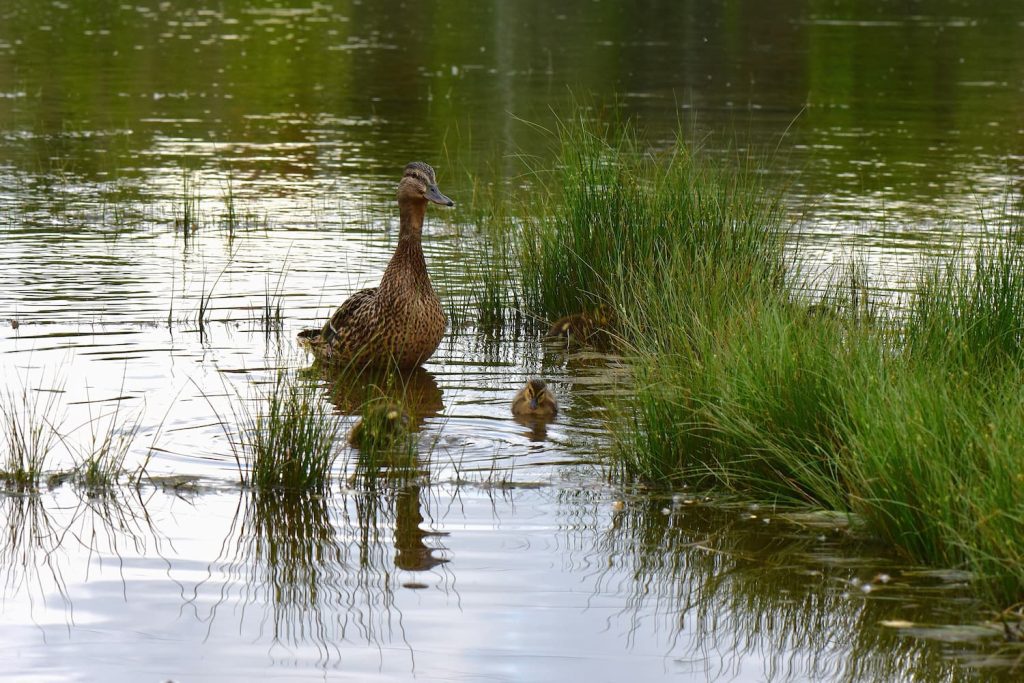
Table of Contents
If you manage or live near a pond in Florida, you have ducks, and probably more variety than you realize. Beyond the familiar mallard, Florida ponds host some genuinely distinctive residents: the tree-perching black-bellied whistling duck, the nearly Florida-exclusive mottled duck, and the large, sometimes controversial muscovy. Knowing which is which tells you a lot about your pond and how to manage the wildlife around it.
This guide identifies the most common ducks in Florida ponds, how to recognize each one, which are year-round residents versus winter visitors, and what their presence means for your waterbody.
The most common ducks on Florida ponds are the mottled duck, black-bellied whistling duck, muscovy duck, mallard, and wood duck. The black-bellied whistling duck is the most frequently seen. Mottled ducks, whistling ducks, wood ducks, and mallards are year-round residents, while many other species visit only in winter.
Key Takeaways
- Florida has both resident and migratory ducks. Residents live here year-round; many others arrive only in winter.
- The black-bellied whistling duck is the most commonly seen duck in the state, and it perches in trees.
- The mottled duck is nearly unique to Florida and looks like a female mallard, with both sexes similar.
- Muscovy ducks are large, distinctive, and non-native, often found in urban ponds.
- Wood ducks are among the most colorful, nesting in tree cavities and nest boxes rather than on the ground.
Which Ducks Live on Florida Ponds Year-Round?
Florida’s year-round resident ducks include the mottled duck, black-bellied whistling duck, wood duck, mallard, and the non-native muscovy duck. These species live and often breed in the state rather than only visiting in winter. The mottled duck and black-bellied whistling duck are especially characteristic of Florida ponds and wetlands.
Understanding the resident-versus-visitor distinction is the foundation for identifying what you are seeing.
According to the Florida Fish and Wildlife Conservation Commission, mottled ducks, wood ducks, black-bellied whistling ducks, and fulvous whistling ducks live in Florida year-round and can be found in many types of wetland areas. These are the ducks most likely to become familiar faces on a community pond, since they do not leave with the seasons.
The year-round residents you are most likely to encounter:
- Mottled duck, a Florida signature species.
- Black-bellied whistling duck, the most commonly seen duck in the state.
- Wood duck, colorful and cavity-nesting.
- Mallard, familiar but less common in Florida than farther north.
- Muscovy duck, large and non-native, common in urban settings.
Come winter, these residents are joined by many migratory species escaping the cold up north, including teal, ring-necked ducks, and scaup, which is why Florida duck variety peaks from November through March.

How Do You Identify Common Florida Pond Ducks?
You can identify Florida’s common pond ducks by size, coloring, and behavior. The mottled duck resembles a female mallard. The black-bellied whistling duck has a bright pink bill and legs with a black belly. The muscovy is large with a red facial patch. The wood duck male is unmistakably colorful. The table below summarizes the key marks.
Each species has field marks that make identification straightforward once you know what to look for.
Duck | Size | Key field marks | Behavior |
|---|---|---|---|
Mottled duck | Medium | Dark buff-brown body, both sexes similar, yellow or orange bill | Dabbles, often in pairs |
Black-bellied whistling duck | Large | Pink-red bill, black belly, gray face, white wing patch, pink legs | Perches in trees, very social, whistles |
Muscovy duck | Large | Black and white body, red warty face patch | Common in urban ponds, non-native |
Wood duck | Small | Male iridescent green and chestnut; female brown with white eye ring | Nests in tree cavities, quiet ponds |
Mallard | Medium to large | Male glossy green head; female mottled brown | Familiar, dabbles |
Two identification notes worth knowing. First, the black-bellied whistling duck is unusual among ducks for perching and nesting in trees and for its distinctive whistling call, which makes it easy to recognize once you have heard it. Second, mottled ducks and mallards look alike and hybridize so often that the mixes have earned the nickname “muddled ducks,” which can make a pure mottled duck genuinely tricky to distinguish.
What Is a Black-Bellied Whistling Duck?
The black-bellied whistling duck is a large, long-legged, goose-like duck that is now the most commonly seen duck in Florida. It has a bright pink-red bill, a black belly, a gray face with a white eye ring, and a distinctive whistling call. Unusually for a duck, it perches and nests in trees.
This species deserves special attention because it is both extremely common in Florida and unlike most people’s mental image of a duck.
As UF/IFAS Extension describes them, black-bellied whistling ducks are large, goose-like ducks with long legs, long necks, and short tails, identifiable by their brownish-gray heads with white eye rings and red bills, or by their bright pink feet, with white wing patches visible in flight. They favor ponds with good tree cover nearby.
What makes them distinctive:
- They perch in trees, spending time on branches, fences, and logs rather than only on the water.
- They nest in cavities, using tree hollows, old woodpecker holes, or nest boxes, much like wood ducks.
- They are highly social, forming large, noisy flocks that fly low with a rhythmic, whistling call.
- They are increasingly abundant, having expanded significantly in Florida in recent years.
Their tree-perching habit and whistling call together make them one of the easiest Florida ducks to identify with confidence.
What Is a Mottled Duck, and Why Is It Special?

The mottled duck is a medium-sized dabbling duck found almost exclusively in Florida and a few nearby Gulf areas, making it a regional specialty. Both sexes look similar, resembling a female mallard, with a dark buff-brown body and a paler head. It is a non-migratory year-round resident of Florida wetlands.
The mottled duck matters because it is nearly a Florida endemic, a duck you essentially cannot see across most of the country.
Unlike most ducks, where males and females look very different, mottled ducks show little difference between the sexes. Both have a dark brown, streaked body and a lighter head, with the main difference being bill color: males have a yellow bill, while females have an orange bill often with darker markings. This resemblance to a female mallard is a frequent source of confusion.
The conservation angle is genuinely important. Mottled ducks hybridize readily with mallards, especially feral and released mallards, so much that the hybrids are nicknamed “muddled ducks.” This hybridization is a real concern for the long-term genetic integrity of the mottled duck population. It is one reason wildlife authorities discourage releasing domestic mallards into Florida ponds.
For a Florida pond owner, hosting mottled ducks is a small point of pride, since it means supporting a species with a very limited global range.
Are Muscovy Ducks a Problem on Ponds?
Muscovy ducks are large, distinctive ducks with black and white bodies and a red, warty facial patch. In Florida they are non-native and often considered a nuisance in urban and suburban ponds, where feral populations can grow large. They are not a protected native species, and their management is sometimes necessary in community settings.
Muscovy ducks generate more questions from HOA boards than any other duck, so they are worth addressing directly.
The domestic muscovy ducks common in Florida ponds are descendants of a species native to Central and South America, not native Florida wildlife. In neighborhood ponds they can become abundant, and their numbers, droppings, and occasional aggressiveness make them a common concern for property managers.
Key points for pond managers:
- They are non-native. Florida’s feral muscovy ducks are an introduced population, not protected native waterfowl.
- They can multiply quickly in urban ponds with reliable food, especially where people feed them.
- Feeding makes it worse. Feeding ducks encourages larger, unhealthier populations and more droppings.
- Management has rules. Because regulations govern how muscovy ducks may be handled, communities should consult current Florida wildlife guidance before taking action.
The single most effective step a community can take is to discourage residents from feeding the ducks, which is often what drives the population growth in the first place.
Manage Florida Duck Habitats
Pond Guru can help manage pond habitat for native ducks.
What Do Ducks Mean for Your Pond's Health?
Ducks are a natural part of a pond ecosystem, but large concentrations, especially of fed or non-native ducks, can affect water quality. Their droppings add nutrients that can contribute to algae growth, and overpopulation concentrates that effect. A balanced number of wild ducks is a sign of a healthy pond; an overpopulated one can be a water quality concern.
This is where duck identification connects to pond management, because not all duck situations are equal.
A few wild ducks visiting a healthy pond is entirely normal and part of a functioning ecosystem. They feed on aquatic plants, insects, and algae, and they are part of the food web. The problems arise with concentration and feeding:
- Nutrient loading. Duck droppings add nitrogen and phosphorus, the same nutrients that fuel algae blooms, so large flocks can worsen water quality.
- Overpopulation from feeding. When residents feed ducks, populations grow beyond what the pond would naturally support, concentrating the nutrient impact.
- Shoreline wear. Heavy duck traffic can damage shoreline vegetation and contribute to bank erosion.
The connection to water quality is why duck management and pond health go together. A well-managed pond with healthy shoreline vegetation and good water quality monitoring handles a normal duck population easily, while an overpopulated pond may need both wildlife and nutrient management. Broader pond wildlife management balances welcoming wildlife against protecting the water.
Schedule a Site Visit With Pond Guru
Ducks are one of the pleasures of a community pond, and a little knowledge makes them more enjoyable, whether you are proud to host a rare mottled duck or wondering what to do about a growing muscovy population. When duck numbers start affecting water quality, though, it becomes a management question worth addressing.
Pond Guru works with HOA boards, property managers, and homeowners across Florida to manage pond wildlife, maintain healthy shorelines, monitor water quality, and balance thriving wildlife with a clean, healthy waterbody.
Because every pond and its wildlife are different, the process starts with an on-site evaluation. To keep your pond healthy for both people and wildlife, schedule a site visit with Pond Guru and a specialist will assess conditions and recommend a plan.

Frequently Asked Questions
The black-bellied whistling duck is the most commonly seen duck in Florida, according to bird observation data. This large, long-legged duck has a bright pink-red bill and a black belly, perches in trees, and travels in noisy, social flocks. It is a year-round resident found statewide in ponds and wetlands.
Common Florida pond ducks include the mottled duck, black-bellied whistling duck, wood duck, mallard, and the non-native muscovy duck as year-round residents. In winter, many migratory species join them, including teal, ring-necked ducks, and scaup. The mottled and whistling ducks are especially characteristic of Florida.
No. The muscovy ducks common in Florida ponds are a non-native, introduced population descended from a species native to Central and South America. In urban and suburban ponds they are often considered a nuisance, and feral populations can grow large, especially where people feed them. Regulations govern their management.
The mottled duck is a medium-sized dabbling duck found almost exclusively in Florida and nearby Gulf areas, making it a regional specialty. Both sexes look similar, resembling a female mallard. It is a year-round resident that hybridizes with mallards so readily that the mixes are nicknamed "muddled ducks," a genuine conservation concern.
A few wild ducks are a natural, healthy part of a pond. Problems arise with overpopulation, often driven by people feeding them, because duck droppings add nutrients that fuel algae growth. Large concentrations can worsen water quality and erode shorelines, so discouraging feeding is the most effective preventive step.
Ready to Schedule a Visit ?
Have questions about your pond or lake? Our experts are ready to help you take the next step.
Latest Article
Popular Post

Why Keeping Culverts Clear of Debris Matters for Stormwater Systems
Table of Contents A culvert is one of those…
Table of Contents
If you manage or live near a pond in Florida, you have ducks, and probably more variety than you realize. Beyond the familiar mallard, Florida ponds host some genuinely distinctive residents: the tree-perching black-bellied whistling duck, the nearly Florida-exclusive mottled duck, and the large, sometimes controversial muscovy. Knowing which is which tells you a lot about your pond and how to manage the wildlife around it.
This guide identifies the most common ducks in Florida ponds, how to recognize each one, which are year-round residents versus winter visitors, and what their presence means for your waterbody.
The most common ducks on Florida ponds are the mottled duck, black-bellied whistling duck, muscovy duck, mallard, and wood duck. The black-bellied whistling duck is the most frequently seen. Mottled ducks, whistling ducks, wood ducks, and mallards are year-round residents, while many other species visit only in winter.
Key Takeaways
- Florida has both resident and migratory ducks. Residents live here year-round; many others arrive only in winter.
- The black-bellied whistling duck is the most commonly seen duck in the state, and it perches in trees.
- The mottled duck is nearly unique to Florida and looks like a female mallard, with both sexes similar.
- Muscovy ducks are large, distinctive, and non-native, often found in urban ponds.
- Wood ducks are among the most colorful, nesting in tree cavities and nest boxes rather than on the ground.
Which Ducks Live on Florida Ponds Year-Round?
Florida’s year-round resident ducks include the mottled duck, black-bellied whistling duck, wood duck, mallard, and the non-native muscovy duck. These species live and often breed in the state rather than only visiting in winter. The mottled duck and black-bellied whistling duck are especially characteristic of Florida ponds and wetlands.
Understanding the resident-versus-visitor distinction is the foundation for identifying what you are seeing.
According to the Florida Fish and Wildlife Conservation Commission, mottled ducks, wood ducks, black-bellied whistling ducks, and fulvous whistling ducks live in Florida year-round and can be found in many types of wetland areas. These are the ducks most likely to become familiar faces on a community pond, since they do not leave with the seasons.
The year-round residents you are most likely to encounter:
- Mottled duck, a Florida signature species.
- Black-bellied whistling duck, the most commonly seen duck in the state.
- Wood duck, colorful and cavity-nesting.
- Mallard, familiar but less common in Florida than farther north.
- Muscovy duck, large and non-native, common in urban settings.
Come winter, these residents are joined by many migratory species escaping the cold up north, including teal, ring-necked ducks, and scaup, which is why Florida duck variety peaks from November through March.
How Do You Identify Common Florida Pond Ducks?
You can identify Florida’s common pond ducks by size, coloring, and behavior. The mottled duck resembles a female mallard. The black-bellied whistling duck has a bright pink bill and legs with a black belly. The muscovy is large with a red facial patch. The wood duck male is unmistakably colorful. The table below summarizes the key marks.
Each species has field marks that make identification straightforward once you know what to look for.
Mottled duck (medium): Dark buff-brown body, both sexes similar, yellow or orange bill. Dabbles, often in pairs.
Black-bellied whistling duck (large): Pink-red bill, black belly, gray face, white wing patch, pink legs. Perches in trees, very social, whistles.
Muscovy duck (large): Black and white body, red warty face patch. Common in urban ponds, non-native.
Wood duck (small): Male iridescent green and chestnut; female brown with white eye ring. Nests in tree cavities, quiet ponds.
Mallard (medium to large): Male glossy green head; female mottled brown. Familiar, dabbles.
Two identification notes worth knowing. First, the black-bellied whistling duck is unusual among ducks for perching and nesting in trees and for its distinctive whistling call, which makes it easy to recognize once you have heard it. Second, mottled ducks and mallards look alike and hybridize so often that the mixes have earned the nickname “muddled ducks,” which can make a pure mottled duck genuinely tricky to distinguish.
What Is a Black-Bellied Whistling Duck?
The black-bellied whistling duck is a large, long-legged, goose-like duck that is now the most commonly seen duck in Florida. It has a bright pink-red bill, a black belly, a gray face with a white eye ring, and a distinctive whistling call. Unusually for a duck, it perches and nests in trees.
This species deserves special attention because it is both extremely common in Florida and unlike most people’s mental image of a duck.
As UF/IFAS Extension describes them, black-bellied whistling ducks are large, goose-like ducks with long legs, long necks, and short tails, identifiable by their brownish-gray heads with white eye rings and red bills, or by their bright pink feet, with white wing patches visible in flight. They favor ponds with good tree cover nearby.
What makes them distinctive:
- They perch in trees, spending time on branches, fences, and logs rather than only on the water.
- They nest in cavities, using tree hollows, old woodpecker holes, or nest boxes, much like wood ducks.
- They are highly social, forming large, noisy flocks that fly low with a rhythmic, whistling call.
- They are increasingly abundant, having expanded significantly in Florida in recent years.
Their tree-perching habit and whistling call together make them one of the easiest Florida ducks to identify with confidence.
What Is a Mottled Duck, and Why Is It Special?

The mottled duck is a medium-sized dabbling duck found almost exclusively in Florida and a few nearby Gulf areas, making it a regional specialty. Both sexes look similar, resembling a female mallard, with a dark buff-brown body and a paler head. It is a non-migratory year-round resident of Florida wetlands.
The mottled duck matters because it is nearly a Florida endemic, a duck you essentially cannot see across most of the country.
Unlike most ducks, where males and females look very different, mottled ducks show little difference between the sexes. Both have a dark brown, streaked body and a lighter head, with the main difference being bill color: males have a yellow bill, while females have an orange bill often with darker markings. This resemblance to a female mallard is a frequent source of confusion.
The conservation angle is genuinely important. Mottled ducks hybridize readily with mallards, especially feral and released mallards, so much that the hybrids are nicknamed “muddled ducks.” This hybridization is a real concern for the long-term genetic integrity of the mottled duck population. It is one reason wildlife authorities discourage releasing domestic mallards into Florida ponds.
For a Florida pond owner, hosting mottled ducks is a small point of pride, since it means supporting a species with a very limited global range.
Are Muscovy Ducks a Problem on Ponds?
Muscovy ducks are large, distinctive ducks with black and white bodies and a red, warty facial patch. In Florida they are non-native and often considered a nuisance in urban and suburban ponds, where feral populations can grow large. They are not a protected native species, and their management is sometimes necessary in community settings.
Muscovy ducks generate more questions from HOA boards than any other duck, so they are worth addressing directly.
The domestic muscovy ducks common in Florida ponds are descendants of a species native to Central and South America, not native Florida wildlife. In neighborhood ponds they can become abundant, and their numbers, droppings, and occasional aggressiveness make them a common concern for property managers.
Key points for pond managers:
- They are non-native. Florida’s feral muscovy ducks are an introduced population, not protected native waterfowl.
- They can multiply quickly in urban ponds with reliable food, especially where people feed them.
- Feeding makes it worse. Feeding ducks encourages larger, unhealthier populations and more droppings.
- Management has rules. Because regulations govern how muscovy ducks may be handled, communities should consult current Florida wildlife guidance before taking action.
The single most effective step a community can take is to discourage residents from feeding the ducks, which is often what drives the population growth in the first place.
Manage Florida Duck Habitats
Pond Guru can help manage pond habitat for native ducks.
What Do Ducks Mean for Your Pond's Health?
Ducks are a natural part of a pond ecosystem, but large concentrations, especially of fed or non-native ducks, can affect water quality. Their droppings add nutrients that can contribute to algae growth, and overpopulation concentrates that effect. A balanced number of wild ducks is a sign of a healthy pond; an overpopulated one can be a water quality concern.
This is where duck identification connects to pond management, because not all duck situations are equal.
A few wild ducks visiting a healthy pond is entirely normal and part of a functioning ecosystem. They feed on aquatic plants, insects, and algae, and they are part of the food web. The problems arise with concentration and feeding:
- Nutrient loading. Duck droppings add nitrogen and phosphorus, the same nutrients that fuel algae blooms, so large flocks can worsen water quality.
- Overpopulation from feeding. When residents feed ducks, populations grow beyond what the pond would naturally support, concentrating the nutrient impact.
- Shoreline wear. Heavy duck traffic can damage shoreline vegetation and contribute to bank erosion.
The connection to water quality is why duck management and pond health go together. A well-managed pond with healthy shoreline vegetation and good water quality monitoring handles a normal duck population easily, while an overpopulated pond may need both wildlife and nutrient management. Broader pond wildlife management balances welcoming wildlife against protecting the water.
Schedule a Site Visit With Pond Guru

Ducks are one of the pleasures of a community pond, and a little knowledge makes them more enjoyable, whether you are proud to host a rare mottled duck or wondering what to do about a growing muscovy population. When duck numbers start affecting water quality, though, it becomes a management question worth addressing.
Pond Guru works with HOA boards, property managers, and homeowners across Florida to manage pond wildlife, maintain healthy shorelines, monitor water quality, and balance thriving wildlife with a clean, healthy waterbody.
Because every pond and its wildlife are different, the process starts with an on-site evaluation. To keep your pond healthy for both people and wildlife, schedule a site visit with Pond Guru and a specialist will assess conditions and recommend a plan.
Frequently Asked Questions
The black-bellied whistling duck is the most commonly seen duck in Florida, according to bird observation data. This large, long-legged duck has a bright pink-red bill and a black belly, perches in trees, and travels in noisy, social flocks. It is a year-round resident found statewide in ponds and wetlands.
Common Florida pond ducks include the mottled duck, black-bellied whistling duck, wood duck, mallard, and the non-native muscovy duck as year-round residents. In winter, many migratory species join them, including teal, ring-necked ducks, and scaup. The mottled and whistling ducks are especially characteristic of Florida.
No. The muscovy ducks common in Florida ponds are a non-native, introduced population descended from a species native to Central and South America. In urban and suburban ponds they are often considered a nuisance, and feral populations can grow large, especially where people feed them. Regulations govern their management.
The mottled duck is a medium-sized dabbling duck found almost exclusively in Florida and nearby Gulf areas, making it a regional specialty. Both sexes look similar, resembling a female mallard. It is a year-round resident that hybridizes with mallards so readily that the mixes are nicknamed "muddled ducks," a genuine conservation concern.
A few wild ducks are a natural, healthy part of a pond. Problems arise with overpopulation, often driven by people feeding them, because duck droppings add nutrients that fuel algae growth. Large concentrations can worsen water quality and erode shorelines, so discouraging feeding is the most effective preventive step.
Ready to Schedule a Visit ?
Have questions about your pond or lake? Our experts are ready to help you take the next step.
Latest Article
Popular Post
Why Keeping Culverts Clear of Debris Matters for Stormwater Systems
Table of Contents A culvert is one of those…