

Algae Control for Florida Lakes & Ponds: Complete Treatment Guide
Algae Control for Florida Lakes & Ponds: Complete Treatment Guide
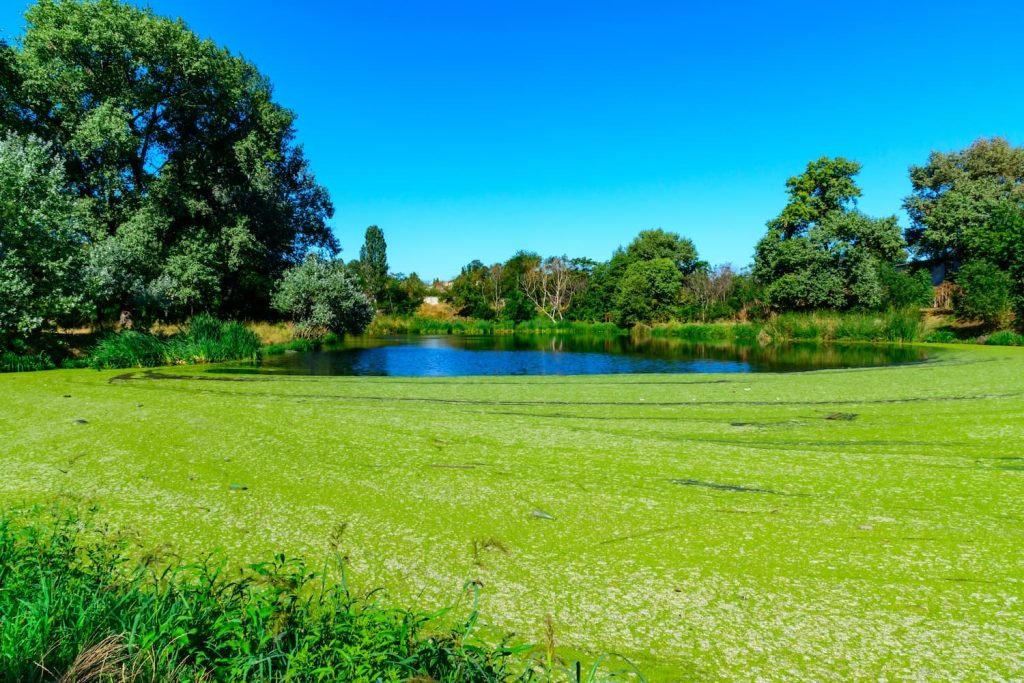
Table of Contents
If you manage or own a lake or pond in Florida, algae is not a question of “if” but “when.” Our warm climate, abundant sunshine, and nutrient-rich runoff create nearly perfect conditions for algae to flourish. Left unchecked, it turns scenic water into green, smelly, sometimes hazardous soup.
The good news is that effective algae control for Florida lakes is very achievable with the right knowledge and approach. This guide explains the main types of algae you’ll encounter, the treatment options professionals use, and why prevention matters more than any single product.
Why Algae Thrives in Florida Lakes and Ponds
Florida is one of the most algae-prone environments in the country, and it comes down to a simple recipe. Algae needs three things to bloom: sunlight, warm water, and nutrients. Florida delivers all three in abundance for most of the year.
The biggest driver is usually nutrients, specifically nitrogen and phosphorus. These flow into our lakes and ponds from:
- Lawn and landscape fertilizer runoff
- Stormwater carrying road and rooftop pollutants
- Grass clippings and leaf litter
- Failing septic systems and other sources
When those nutrients build up in warm, sunlit water, algae populations can explode in a matter of days. Understanding this cause-and-effect relationship is the foundation of every effective pond algae treatment plan.
The Main Types of Algae in Florida Waters
Not all algae is the same, and effective treatment depends on correct identification. Most algae you’ll see in Florida lakes and ponds falls into three broad groups.
Planktonic Algae: The Green Water Culprit
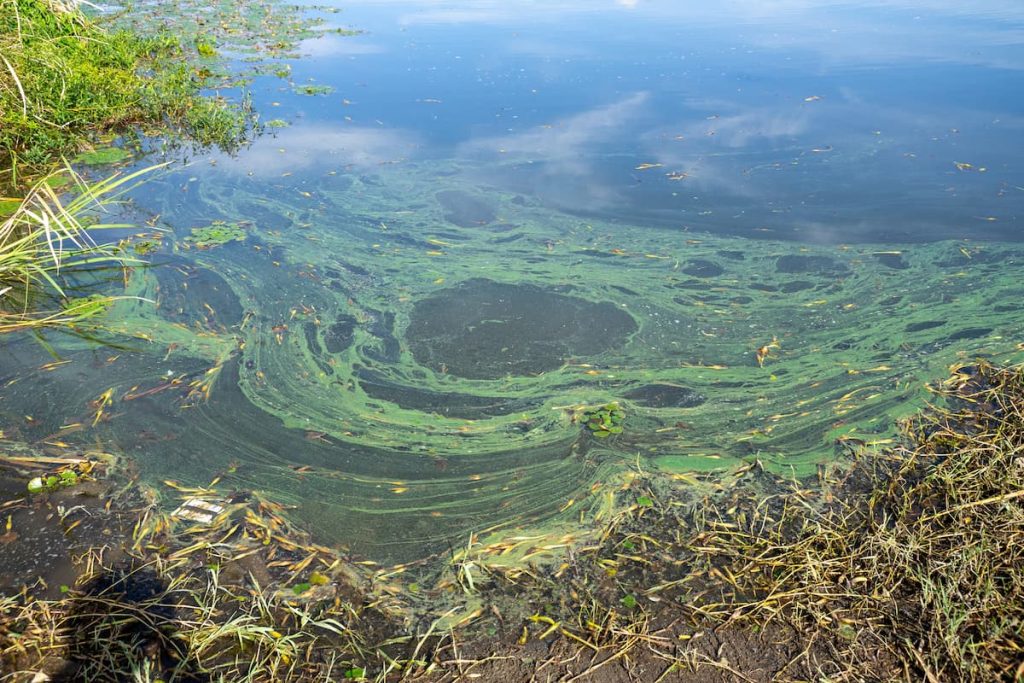
Planktonic algae are microscopic, free-floating organisms suspended throughout the water column. They are the reason a pond turns pea-green, tea-brown, or sometimes reddish almost overnight.
A few key things to know:
- Planktonic algae are the base of the aquatic food web, so a moderate amount is healthy and feeds your pond’s fish and invertebrates.
- In the right balance, they give water a slight green tint and that is perfectly normal.
- The problem comes when a bloom gets out of control, turning water opaque and crashing oxygen levels at night when the algae stops producing oxygen and starts consuming it.
You cannot pick planktonic algae up with a stick. If you scoop the water and it looks like green paint, you are almost certainly dealing with a planktonic bloom rather than a stringy mat.
Filamentous Algae: The Stringy Surface Mats
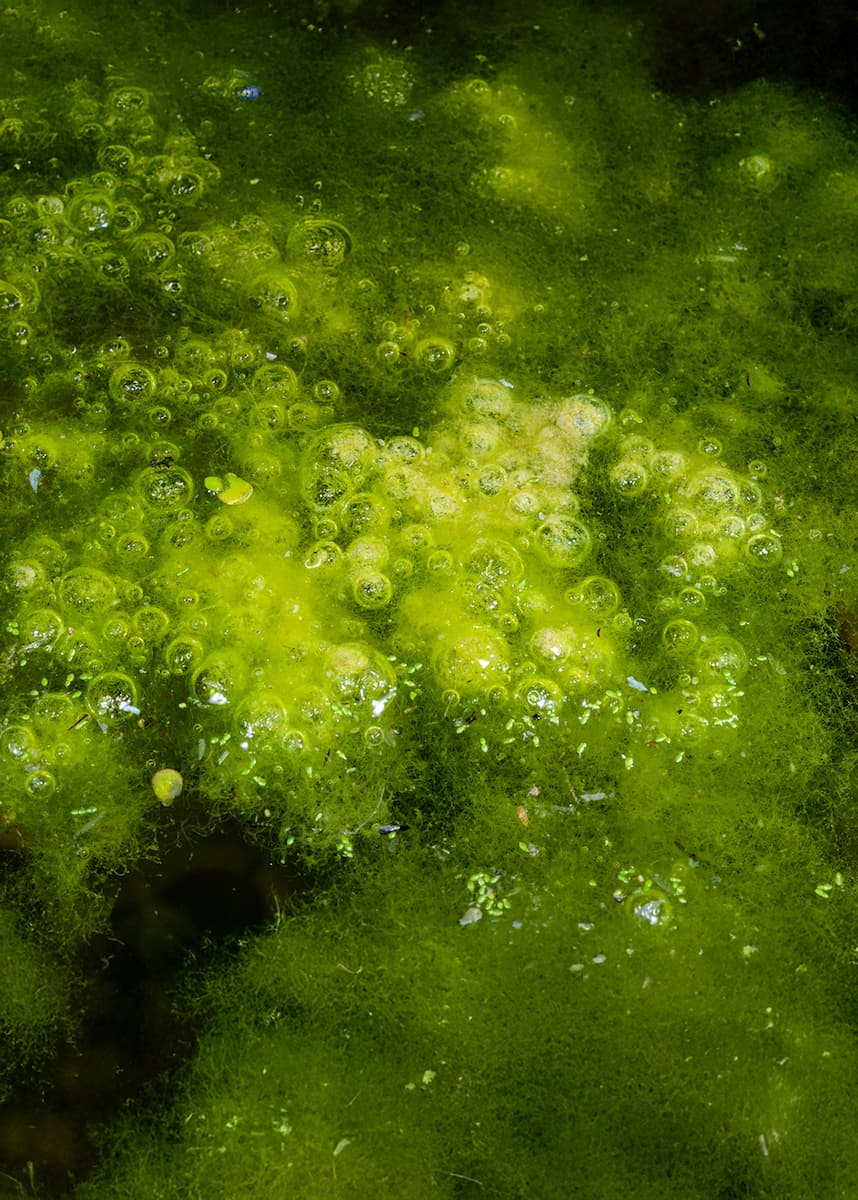
Filamentous algae are the stringy, hair-like or cotton-candy mats that form on the surface or cling to rocks, plants, and structures. Pond owners often call it “pond scum” or “moss,” though it is neither.
According to Oklahoma State University Extension, filamentous algae typically begin growing in spring on the pond bottom and then develop into floating mats as they produce oxygen bubbles that lift them to the surface.
How to recognize it:
- It forms visible threads or mats you can lift with a stick or rake.
- It often starts along shallow edges and spreads outward.
- It can quickly blanket large areas, interfering with fishing, swimming, and the look of your water.
A quick note on a common mix-up: a native plant called southern naiad (guppy grass) is sometimes mistaken for filamentous algae, but naiad has actual stems and leaves, while algae does not.
Cyanobacteria: When Algae Becomes a Health Concern
The most serious group is cyanobacteria, commonly called blue-green algae. Despite the name, these are actually bacteria that photosynthesize like plants, and some species can produce toxins that pose real risks to people, pets, and wildlife.
This is where algae control stops being just about aesthetics. According to the Florida Fish and Wildlife Conservation Commission, roughly 20 cyanobacteria species in Florida’s waters are capable of producing toxins, and there is no way to tell visually whether a given bloom is toxic.
A few critical facts from Florida agencies:
- The Florida Department of Health notes that some blooms release toxins that can make ecosystems, animals, and people sick. These are called harmful algal blooms, or HABs.
- The U.S. EPA warns that scums drying on shorelines can hold high toxin concentrations for months, even after the bloom appears to have collapsed.
- Blooms most often appear in summer and early fall but can happen any time of year.
If you suspect a cyanobacteria bloom, keep people and pets out of the water and contact a professional. Do not attempt aggressive do-it-yourself treatment, because killing a toxic bloom incorrectly can release more toxins into the water at once. In Florida, you can also report blooms to the Department of Environmental Protection.
Take Control of Algae-Covered Lakes
Managing algae is a delicate balance that requires a professional lake management approach
How to Get Rid of Algae in a Pond: Treatment Options
So how to get rid of algae in a pond the right way? Professionals draw from several tools, and the best choice depends on the algae type, the water chemistry, and what else lives in your pond. Here is an overview of the main approaches.
Lake Algaecide and Copper Algaecide Treatments
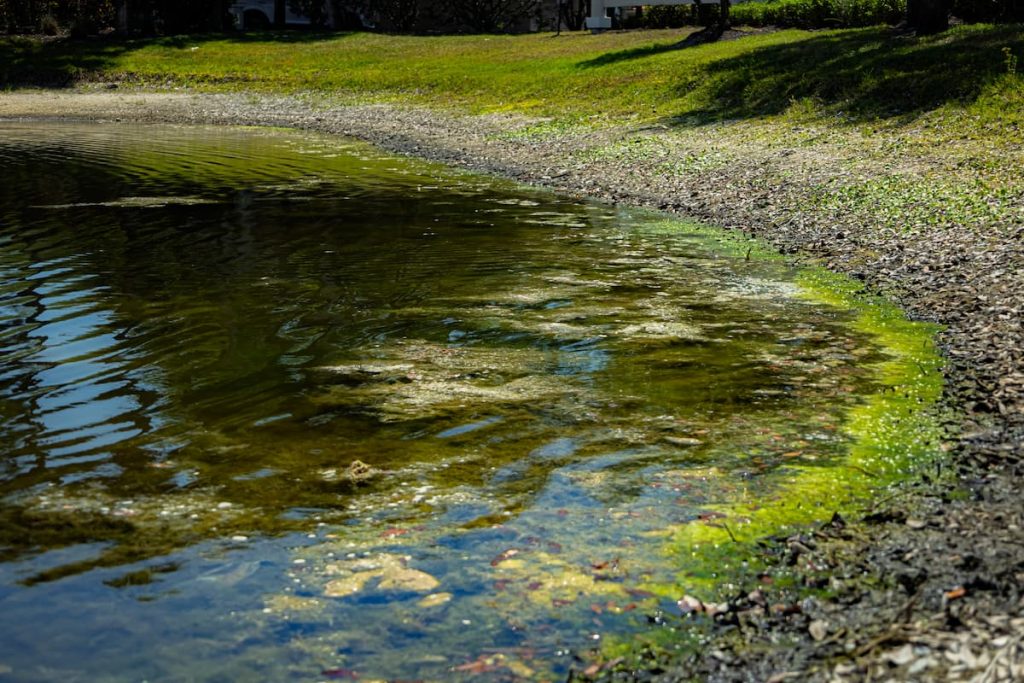
The fastest way to knock down an active bloom is usually a lake algaecide. The most common and well-studied active ingredient is copper, which has been used in pond and lake management for decades.
Copper algaecide comes in two main forms:
- Copper sulfate, the traditional granular or crystal “bluestone” form.
- Chelated (complexed) copper, buffered formulations that stay active longer and are gentler in certain water conditions.
Copper is effective, but it is not a casual do-it-yourself product, and the science backs that up:
- UF/IFAS Extension cautions that with copper there is a thin line separating effective treatment levels from overdoses that can kill fish.
- New Mexico State University Extension explains that both the toxicity and the effectiveness of copper sulfate depend heavily on water alkalinity. In soft, low-alkalinity water (below 40 mg/L), the amount needed to control algae can be toxic to fish, while in very hard water the copper binds up and becomes ineffective.
- Certain fish like trout and ornamental goldfish are especially sensitive to copper, and it is also toxic to the snails and zooplankton that fish rely on for food.
This is exactly why professional applicators test water chemistry first and calculate dosing precisely. The same product that clears one pond safely can cause a fish kill in another with different alkalinity.
Why EPA-Registered Products and Licensing Matter
Any algaecide applied to a Florida lake or pond should be EPA-registered for aquatic use, and applied according to its label. This is not just best practice, it is the law.
EPA pesticide labels carry specific legal requirements. As one EPA copper algaecide label states directly, it is a violation of federal law to use the product in a manner inconsistent with its labeling. Labels dictate maximum application rates, water-use restrictions after treatment, and environmental precautions.
In Florida, applying aquatic herbicides and algaecides to public waters also requires proper state licensing. A qualified lake management company carries the applicator certifications, follows label law, and documents treatments. When you are vetting providers, asking about EPA-registered products and Florida aquatic applicator licensing is one of the smartest questions you can ask.
Beneficial Bacteria and Biological Algae Bloom Treatment
Algaecides handle the symptom. To address the cause, professionals increasingly turn to biological tools, and beneficial bacteria are at the center of that approach.
Beneficial bacteria are naturally occurring microbes that consume the excess organic matter and nutrients algae feeds on. By outcompeting algae for nitrogen and phosphorus, they help shift the pond toward a cleaner, more balanced state over time.
As part of a broader algae bloom treatment strategy, beneficial bacteria offer several advantages:
- They reduce the muck and organic sludge on the pond bottom.
- They lower the nutrient levels that fuel future blooms.
- They are fish- and wildlife-friendly when used properly.
- They support long-term results rather than a quick, temporary knockdown.
Bacteria work best as a consistent, ongoing program paired with aeration, not as a one-time fix. They are a complement to algaecides, not always a replacement, especially when a bloom is already severe.
Nutrient Remediation: Treating the Root Cause
The most advanced piece of modern algae control is nutrient remediation, which targets the fuel supply directly. Since nutrients drive nearly every algae problem, reducing available phosphorus and nitrogen is the surest path to lasting results.
Common nutrient remediation tools include:
- Phosphorus-binding products such as lanthanum-modified clay or alum, which lock up phosphorus so algae cannot use it.
- Aeration and circulation, which improve oxygen levels and disrupt the still, stratified conditions blooms love.
- Shoreline buffer plantings that filter runoff before it reaches the water.
- Watershed and runoff management to cut the nutrients entering the system in the first place.
The Florida Department of Environmental Protection confirms the underlying principle: reducing the supply of nutrients, particularly nitrogen and phosphorus, can help decrease the intensity and duration of blue-green algal blooms. Treat the nutrients, and you treat the problem at its source.
Prevention: The Best Long-Term Algae Control Strategy
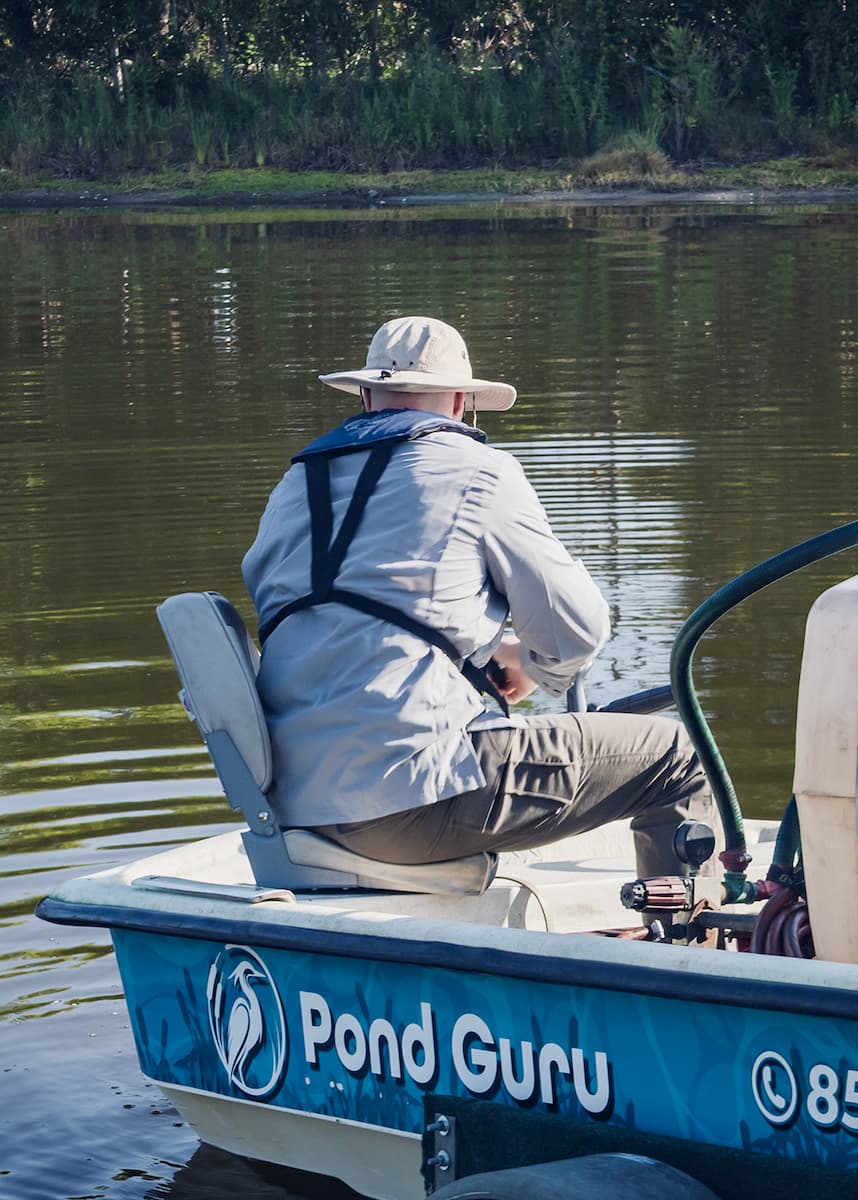
Here is the truth every experienced lake manager knows: prevention is cheaper, easier, and more effective than fighting blooms after they appear. A reactive approach means constantly chasing problems. A preventive program keeps your water healthy year-round.
A strong prevention plan typically combines:
- Routine water quality monitoring to catch rising nutrients before they trigger a bloom
- Consistent aeration to keep water oxygenated and circulating
- Ongoing beneficial bacteria programs to manage nutrients biologically
- Smart landscaping with reduced fertilizer use and vegetated buffers
- Scheduled inspections so small issues are addressed early
Think of it like maintaining your car. Regular oil changes cost far less than a blown engine. The same logic applies to your lake, where steady, modest investment prevents the expensive crisis of a major bloom and fish kill.
Professional Algae Control and Lake Management With Pond Guru
Algae control done right combines accurate identification, careful water chemistry, EPA-registered products applied by licensed professionals, and a long-term plan that addresses root causes. That is a lot to manage on your own, especially when cyanobacteria and fish safety are on the line.
Pond Guru provides comprehensive lake management for HOAs, property managers, and homeowners across Florida. Services bring together every tool discussed in this guide:
- Algae identification and water quality testing
- Targeted, properly dosed algaecide treatments
- Beneficial bacteria and nutrient remediation programs
- Aeration and fountain solutions
- Ongoing monitoring and prevention
Because every water body is different, the right plan depends on your specific conditions, which is why the process starts with seeing your lake or pond in person.
Schedule a Site Visit With Pond Guru
If your lake or pond is turning green, developing surface mats, or showing signs of a blue-green algae bloom, do not wait for it to get worse. The sooner algae is addressed, the easier and less expensive it is to control.
Contact Pond Guru to schedule a site visit. A specialist will assess your water, identify exactly what type of algae you are dealing with, and build a safe, effective treatment and prevention plan tailored to your property. Protect your water, your wildlife, and your community’s most valuable amenity.
Frequently Asked Questions
Excess nutrients (mainly nitrogen and phosphorus) combined with warm water and sunlight. The nutrients usually come from fertilizer runoff, stormwater, grass clippings, and similar sources.
Planktonic algae are microscopic and float through the water, turning it green. Filamentous algae form stringy mats you can lift with a stick. They often require different treatment approaches.
It can be. Cyanobacteria (blue-green algae) can produce toxins harmful to people, pets, and wildlife, and you cannot tell visually whether a bloom is toxic. Keep people and pets away and contact a professional if you suspect a bloom.
When applied correctly by a licensed professional using EPA-registered products, copper is an effective tool. However, dosing depends on water alkalinity and fish species, and incorrect use can harm or kill fish, so it should not be a casual DIY treatment.
Prevention combines water quality monitoring, aeration, beneficial bacteria, nutrient remediation, and smart landscaping. A consistent professional program is far more effective and affordable than reacting to blooms after they form.
Pond Guru offers full-service lake management, including algae identification, safe treatment, nutrient remediation, aeration, and ongoing prevention. Schedule a site visit to get a plan built around your water body.
Ready to Schedule a Visit ?
Have questions about your pond or lake? Our experts are ready to help you take the next step.
Latest Article
Popular Post

Why Keeping Culverts Clear of Debris Matters for Stormwater Systems
Table of Contents A culvert is one of those…
Table of Contents
If you manage or own a lake or pond in Florida, algae is not a question of “if” but “when.” Our warm climate, abundant sunshine, and nutrient-rich runoff create nearly perfect conditions for algae to flourish. Left unchecked, it turns scenic water into green, smelly, sometimes hazardous soup.
The good news is that effective algae control for Florida lakes is very achievable with the right knowledge and approach. This guide explains the main types of algae you’ll encounter, the treatment options professionals use, and why prevention matters more than any single product.
Why Algae Thrives in Florida Lakes and Ponds
Florida is one of the most algae-prone environments in the country, and it comes down to a simple recipe. Algae needs three things to bloom: sunlight, warm water, and nutrients. Florida delivers all three in abundance for most of the year.
The biggest driver is usually nutrients, specifically nitrogen and phosphorus. These flow into our lakes and ponds from:
- Lawn and landscape fertilizer runoff
- Stormwater carrying road and rooftop pollutants
- Grass clippings and leaf litter
- Failing septic systems and other sources
When those nutrients build up in warm, sunlit water, algae populations can explode in a matter of days. Understanding this cause-and-effect relationship is the foundation of every effective pond algae treatment plan.
The Main Types of Algae in Florida Waters
Not all algae is the same, and effective treatment depends on correct identification. Most algae you’ll see in Florida lakes and ponds falls into three broad groups.
Planktonic Algae: The Green Water Culprit
Planktonic algae are microscopic, free-floating organisms suspended throughout the water column. They are the reason a pond turns pea-green, tea-brown, or sometimes reddish almost overnight.
A few key things to know:
- Planktonic algae are the base of the aquatic food web, so a moderate amount is healthy and feeds your pond’s fish and invertebrates.
- In the right balance, they give water a slight green tint and that is perfectly normal.
- The problem comes when a bloom gets out of control, turning water opaque and crashing oxygen levels at night when the algae stops producing oxygen and starts consuming it.
You cannot pick planktonic algae up with a stick. If you scoop the water and it looks like green paint, you are almost certainly dealing with a planktonic bloom rather than a stringy mat.
Filamentous Algae: The Stringy Surface Mats
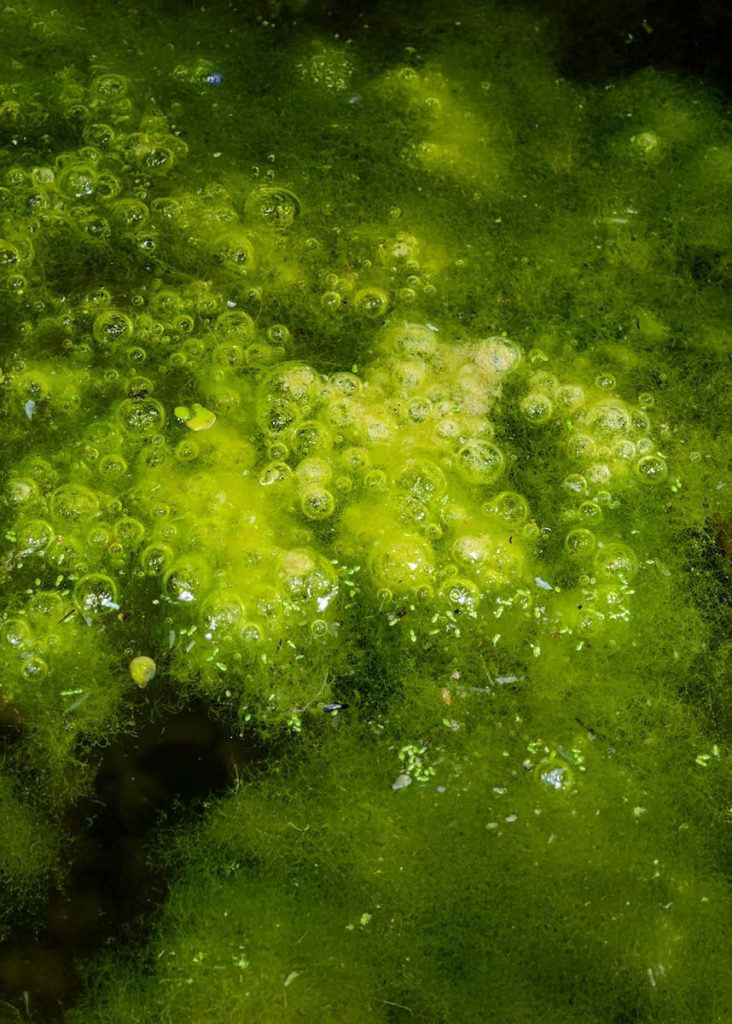
Filamentous algae are the stringy, hair-like or cotton-candy mats that form on the surface or cling to rocks, plants, and structures. Pond owners often call it “pond scum” or “moss,” though it is neither.
According to Oklahoma State University Extension, filamentous algae typically begin growing in spring on the pond bottom and then develop into floating mats as they produce oxygen bubbles that lift them to the surface.
How to recognize it:
- It forms visible threads or mats you can lift with a stick or rake.
- It often starts along shallow edges and spreads outward.
- It can quickly blanket large areas, interfering with fishing, swimming, and the look of your water.
A quick note on a common mix-up: a native plant called southern naiad (guppy grass) is sometimes mistaken for filamentous algae, but naiad has actual stems and leaves, while algae does not.
Cyanobacteria: When Algae Becomes a Health Concern
The most serious group is cyanobacteria, commonly called blue-green algae. Despite the name, these are actually bacteria that photosynthesize like plants, and some species can produce toxins that pose real risks to people, pets, and wildlife.
This is where algae control stops being just about aesthetics. According to the Florida Fish and Wildlife Conservation Commission, roughly 20 cyanobacteria species in Florida’s waters are capable of producing toxins, and there is no way to tell visually whether a given bloom is toxic.
A few critical facts from Florida agencies:
- The Florida Department of Health notes that some blooms release toxins that can make ecosystems, animals, and people sick. These are called harmful algal blooms, or HABs.
- The U.S. EPA warns that scums drying on shorelines can hold high toxin concentrations for months, even after the bloom appears to have collapsed.
- Blooms most often appear in summer and early fall but can happen any time of year.
If you suspect a cyanobacteria bloom, keep people and pets out of the water and contact a professional. Do not attempt aggressive do-it-yourself treatment, because killing a toxic bloom incorrectly can release more toxins into the water at once. In Florida, you can also report blooms to the Department of Environmental Protection.
Take Control of Algae-Covered Lakes
Managing algae is a delicate balance that requires a professional lake management approach
How to Get Rid of Algae in a Pond: Treatment Options
So how to get rid of algae in a pond the right way? Professionals draw from several tools, and the best choice depends on the algae type, the water chemistry, and what else lives in your pond. Here is an overview of the main approaches.
Lake Algaecide and Copper Algaecide Treatments
The fastest way to knock down an active bloom is usually a lake algaecide. The most common and well-studied active ingredient is copper, which has been used in pond and lake management for decades.
Copper algaecide comes in two main forms:
- Copper sulfate, the traditional granular or crystal “bluestone” form.
- Chelated (complexed) copper, buffered formulations that stay active longer and are gentler in certain water conditions.
Copper is effective, but it is not a casual do-it-yourself product, and the science backs that up:
- UF/IFAS Extension cautions that with copper there is a thin line separating effective treatment levels from overdoses that can kill fish.
- New Mexico State University Extension explains that both the toxicity and the effectiveness of copper sulfate depend heavily on water alkalinity. In soft, low-alkalinity water (below 40 mg/L), the amount needed to control algae can be toxic to fish, while in very hard water the copper binds up and becomes ineffective.
- Certain fish like trout and ornamental goldfish are especially sensitive to copper, and it is also toxic to the snails and zooplankton that fish rely on for food.
This is exactly why professional applicators test water chemistry first and calculate dosing precisely. The same product that clears one pond safely can cause a fish kill in another with different alkalinity.
Why EPA-Registered Products and Licensing Matter
Any algaecide applied to a Florida lake or pond should be EPA-registered for aquatic use, and applied according to its label. This is not just best practice, it is the law.
EPA pesticide labels carry specific legal requirements. As one EPA copper algaecide label states directly, it is a violation of federal law to use the product in a manner inconsistent with its labeling. Labels dictate maximum application rates, water-use restrictions after treatment, and environmental precautions.
In Florida, applying aquatic herbicides and algaecides to public waters also requires proper state licensing. A qualified lake management company carries the applicator certifications, follows label law, and documents treatments. When you are vetting providers, asking about EPA-registered products and Florida aquatic applicator licensing is one of the smartest questions you can ask.
Beneficial Bacteria and Biological Algae Bloom Treatment
Algaecides handle the symptom. To address the cause, professionals increasingly turn to biological tools, and beneficial bacteria are at the center of that approach.
Beneficial bacteria are naturally occurring microbes that consume the excess organic matter and nutrients algae feeds on. By outcompeting algae for nitrogen and phosphorus, they help shift the pond toward a cleaner, more balanced state over time.
As part of a broader algae bloom treatment strategy, beneficial bacteria offer several advantages:
- They reduce the muck and organic sludge on the pond bottom.
- They lower the nutrient levels that fuel future blooms.
- They are fish- and wildlife-friendly when used properly.
- They support long-term results rather than a quick, temporary knockdown.
Bacteria work best as a consistent, ongoing program paired with aeration, not as a one-time fix. They are a complement to algaecides, not always a replacement, especially when a bloom is already severe.
Nutrient Remediation: Treating the Root Cause
The most advanced piece of modern algae control is nutrient remediation, which targets the fuel supply directly. Since nutrients drive nearly every algae problem, reducing available phosphorus and nitrogen is the surest path to lasting results.
Common nutrient remediation tools include:
- Phosphorus-binding products such as lanthanum-modified clay or alum, which lock up phosphorus so algae cannot use it.
- Aeration and circulation, which improve oxygen levels and disrupt the still, stratified conditions blooms love.
- Shoreline buffer plantings that filter runoff before it reaches the water.
- Watershed and runoff management to cut the nutrients entering the system in the first place.
The Florida Department of Environmental Protection confirms the underlying principle: reducing the supply of nutrients, particularly nitrogen and phosphorus, can help decrease the intensity and duration of blue-green algal blooms. Treat the nutrients, and you treat the problem at its source.
Prevention: The Best Long-Term Algae Control Strategy
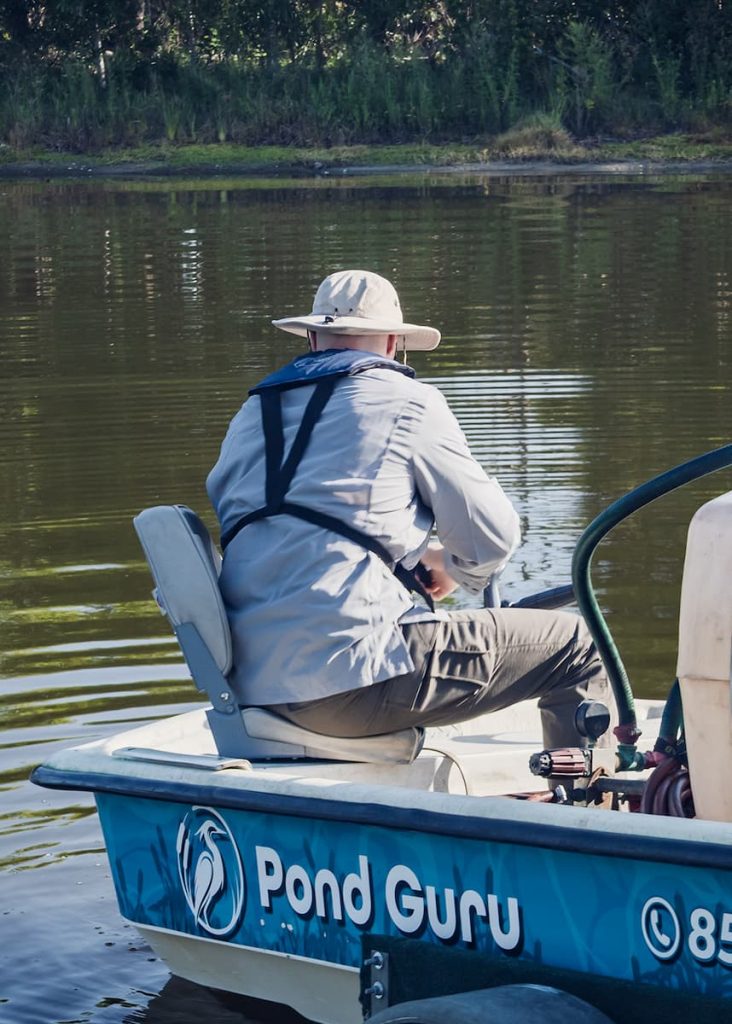
Here is the truth every experienced lake manager knows: prevention is cheaper, easier, and more effective than fighting blooms after they appear. A reactive approach means constantly chasing problems. A preventive program keeps your water healthy year-round.
A strong prevention plan typically combines:
- Routine water quality monitoring to catch rising nutrients before they trigger a bloom
- Consistent aeration to keep water oxygenated and circulating
- Ongoing beneficial bacteria programs to manage nutrients biologically
- Smart landscaping with reduced fertilizer use and vegetated buffers
- Scheduled inspections so small issues are addressed early
Think of it like maintaining your car. Regular oil changes cost far less than a blown engine. The same logic applies to your lake, where steady, modest investment prevents the expensive crisis of a major bloom and fish kill.
Professional Algae Control and Lake Management With Pond Guru
Algae control done right combines accurate identification, careful water chemistry, EPA-registered products applied by licensed professionals, and a long-term plan that addresses root causes. That is a lot to manage on your own, especially when cyanobacteria and fish safety are on the line.
Pond Guru provides comprehensive lake management for HOAs, property managers, and homeowners across Florida. Services bring together every tool discussed in this guide:
- Algae identification and water quality testing
- Targeted, properly dosed algaecide treatments
- Beneficial bacteria and nutrient remediation programs
- Aeration and fountain solutions
- Ongoing monitoring and prevention
Because every water body is different, the right plan depends on your specific conditions, which is why the process starts with seeing your lake or pond in person.
Schedule a Site Visit With Pond Guru
If your lake or pond is turning green, developing surface mats, or showing signs of a blue-green algae bloom, do not wait for it to get worse. The sooner algae is addressed, the easier and less expensive it is to control.
Contact Pond Guru to schedule a site visit. A specialist will assess your water, identify exactly what type of algae you are dealing with, and build a safe, effective treatment and prevention plan tailored to your property. Protect your water, your wildlife, and your community’s most valuable amenity.
Frequently Asked Questions
Excess nutrients (mainly nitrogen and phosphorus) combined with warm water and sunlight. The nutrients usually come from fertilizer runoff, stormwater, grass clippings, and similar sources.
Planktonic algae are microscopic and float through the water, turning it green. Filamentous algae form stringy mats you can lift with a stick. They often require different treatment approaches.
It can be. Cyanobacteria (blue-green algae) can produce toxins harmful to people, pets, and wildlife, and you cannot tell visually whether a bloom is toxic. Keep people and pets away and contact a professional if you suspect a bloom.
When applied correctly by a licensed professional using EPA-registered products, copper is an effective tool. However, dosing depends on water alkalinity and fish species, and incorrect use can harm or kill fish, so it should not be a casual DIY treatment.
Prevention combines water quality monitoring, aeration, beneficial bacteria, nutrient remediation, and smart landscaping. A consistent professional program is far more effective and affordable than reacting to blooms after they form.
Pond Guru offers full-service lake management, including algae identification, safe treatment, nutrient remediation, aeration, and ongoing prevention. Schedule a site visit to get a plan built around your water body.
Ready to Schedule a Visit ?
Have questions about your pond or lake? Our experts are ready to help you take the next step.
Latest Article
Popular Post
Why Keeping Culverts Clear of Debris Matters for Stormwater Systems
Table of Contents A culvert is one of those…