

Can Tarpon Live in Freshwater Lakes and Ponds?
Can Tarpon Live in Freshwater Lakes and Ponds?
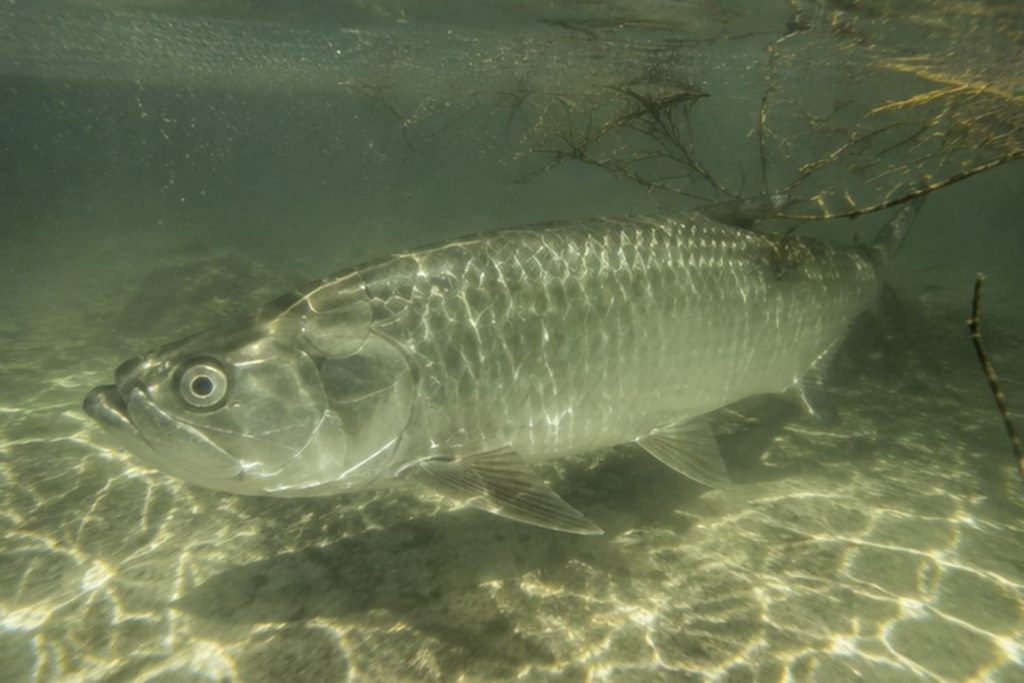
Table of Contents
It is one of the most surprising facts in Florida fishing: the tarpon, the acrobatic “Silver King” that anglers chase in coastal saltwater, can also turn up deep in freshwater lakes, ponds, and canals miles from the ocean. It seems impossible for a famous saltwater game fish, yet it is true, and the reason comes down to a remarkable piece of anatomy.
This article explains whether tarpon can really live in freshwater, how they pull it off biologically, where they are found inland, why juvenile tarpon in particular seek out freshwater ponds, and the limits that keep them from becoming permanent lake residents everywhere.
Yes, tarpon can live in freshwater. They are euryhaline, meaning they tolerate a wide range of salinities, and they possess a modified swim bladder that lets them breathe air. This allows tarpon, especially juveniles, to survive in freshwater lakes, ponds, canals, and rivers, including low-oxygen waters that would kill most fish.
Key Takeaways
- Yes, tarpon live in freshwater, thanks to broad salinity tolerance and an air-breathing swim bladder.
- They can breathe air, gulping at the surface to survive in low-oxygen water that would suffocate other fish.
- Juveniles specifically use freshwater ponds as predator-free nurseries.
- They are found in lakes and canals well inland, including landlocked waters connected to the coast.
- There are limits: tarpon are cold-sensitive and must return to saltwater to spawn, so they rarely become permanent lake residents outside warm, connected systems.
Can Tarpon Really Survive in Freshwater?
Yes. Tarpon are euryhaline fish, meaning they can tolerate a wide range of salinities from full seawater to pure freshwater. They routinely move between salt, brackish, and fresh water, and are regularly found in freshwater rivers, canals, and lakes, particularly in Florida. Their freshwater ability is genuine, not occasional.
This surprises people because tarpon are so strongly associated with saltwater sport fishing, but their biology is built for both worlds.
As Mote Marine Laboratory explains, tarpon can survive in both freshwater and saltwater habitats due to their adaptable swim bladders, and they actually start their lives in freshwater environments before moving out into the open ocean as they mature. Their tolerance for varying salinity makes them adaptable to a wide range of environments.
The mechanism behind this is osmoregulation, the process fish use to balance salt and water in their bodies. Specialized cells in the tarpon’s gills adjust to either expel salt in saltwater or retain it in freshwater, letting the same fish thrive across the full salinity range. Combined with their air-breathing ability, covered next, this makes tarpon extraordinarily adaptable.

How Do Tarpon Breathe in Low-Oxygen Freshwater?
Tarpon have a modified swim bladder connected to their esophagus that functions like a primitive lung. By gulping air at the surface, a behavior called rolling, they extract oxygen directly from the atmosphere. This lets them survive in warm, stagnant, low-oxygen freshwater that would suffocate most other fish.
This is the single adaptation that makes the tarpon’s freshwater lifestyle possible, and it is genuinely unusual.
According to the Bonefish & Tarpon Trust, while most fish have a swim bladder for buoyancy, tarpon can control the contents of theirs by taking in and releasing air, and can use that air for respiration. This allows them to obtain much of their oxygen from the air rather than the water, which is critical in the low-oxygen backwaters they favor.
Why this matters so much:
- Air-breathing bypasses the water. When dissolved oxygen in the water is too low for other fish, the tarpon simply breathes from the surface.
- Rolling is the visible sign. Anglers often spot tarpon by their habit of rolling at the surface to gulp air, especially in warm, still water.
- It unlocks habitats other fish cannot use. Stagnant, hypoxic ponds and backwaters are off-limits to most predators, which turns out to be exactly the point.
This air-breathing ability is why a fish the size of a tarpon can survive in a warm, mucky pond where you would never expect to find a large game fish.
Why Do Juvenile Tarpon Live in Freshwater Ponds?
Juvenile tarpon deliberately use freshwater and brackish ponds, creeks, and backwaters as nursery habitats because these low-oxygen environments keep predators out. Most fish that would eat young tarpon cannot survive in stagnant, oxygen-poor water, but air-breathing juvenile tarpon can, giving them a safe place to grow.
This is one of the most elegant survival strategies in the fish world, and it explains why tarpon end up in freshwater in the first place.
Research on juvenile tarpon describes them as obligate users of low-salinity, often stagnant backwater creeks, mangrove marshes, and isolated ponds, favoring these hypoxic, brackish waters specifically because of the reduced presence of predators. A peer-reviewed study of southwest Florida found juvenile tarpon rely on a mosaic of pond and creek habitats with restricted connection to the estuary that inhibits access by predatory fishes.
The strategy works like this:
- Stagnant ponds are low in oxygen, which excludes most predatory fish.
- Juvenile tarpon breathe air, so the low oxygen does not affect them.
- The result is a predator-free nursery where young tarpon can grow with far less risk.
- As they mature, tarpon leave these nurseries and move toward the coast and open water.
So when a young tarpon turns up in a freshwater pond, it is not lost. It is exactly where it is supposed to be, using a nursery strategy the species has relied on for millions of years.
Where Are Tarpon Found in Freshwater?

Tarpon are found in freshwater rivers, canals, drainage systems, and lakes, especially in Florida, sometimes far inland from the coast. They are most common in waters connected to the sea by rivers or canals, but adults have been documented even in landlocked lakes, using them to forage and to shelter from temperature extremes.
Their inland reach is broader than most people expect, and Florida’s extensive canal systems make it especially common there.
Tarpon regularly push into freshwater through connected waterways. Reports and observations place them in freshwater creeks and canals well inland, and adult tarpon have been observed in the mouths of rivers, canals, and even landlocked lakes, where they use the diverse habitats for foraging and refuge. Florida’s interconnected network of rivers and canals gives tarpon natural highways deep into freshwater.
Common freshwater tarpon locations include:
- Coastal rivers, which tarpon ascend from the sea.
- Canals and drainage systems, especially throughout South Florida.
- Connected lakes, reachable through those canals and rivers.
- Backwater ponds and creeks, the classic juvenile nursery habitat.
- Occasionally landlocked lakes, where tarpon have become established or been introduced.
While a tarpon in a lake is a genuine possibility, the most reliable freshwater tarpon fishing happens in waters with a connection to the coast, since that is how the fish get there and how they return to spawn.
Can Tarpon Live Permanently in a Lake?
Tarpon can survive in a lake for extended periods, but two factors usually prevent them from becoming permanent, self-sustaining lake residents: they are sensitive to cold, and they must return to saltwater to spawn. In warm, coast-connected systems tarpon may live for years, but they cannot complete their full life cycle in an isolated freshwater lake.
This is the important nuance, because “can tarpon survive in freshwater” and “can tarpon live permanently in a landlocked lake” have different answers.
The two key limits:
- Cold sensitivity. Tarpon are tropical fish with limited cold tolerance. Research on juvenile tarpon found a minimum lethal temperature around 12 degrees Celsius, roughly 54 degrees Fahrenheit, meaning a cold snap can kill tarpon in shallow, unbuffered water. This is why they thrive in warm South Florida but not in cooler waters.
- Spawning requires saltwater. Tarpon spawn offshore, and their ribbon-like larvae develop in the ocean before moving inshore. A tarpon in a landlocked lake can grow and live, but it cannot reproduce there, so the population cannot sustain itself without a connection to the sea.
The result is that tarpon in freshwater are usually either juveniles using a temporary nursery, or adults foraging in connected systems that they can leave to spawn. A truly landlocked tarpon is living out its life as an individual, not founding a lake population.
Manage Fish Population In Your Lake
Pond Guru can ensure your lake’s water conditions including nutrients, dissolved oxygen, and habitat are conducive to healthy fish populations.
What Does This Mean for Florida Pond and Lake Owners?
For most Florida community ponds, tarpon are a fascinating possibility rather than a management concern. A tarpon appearing in a connected lake or canal is a natural event and a sign of how interconnected Florida’s waters are. Managing any waterbody for healthy fish habitat, whatever the species, comes down to good water quality and oxygen.
While tarpon are more a curiosity than a routine issue for pond managers, the situation does illustrate something useful about pond ecology.
The tarpon’s story highlights how much fish life depends on oxygen and water conditions. The same factors that let air-breathing tarpon exploit low-oxygen ponds, warm stagnant water and poor circulation, are exactly the conditions that stress and kill most other fish. For a community pond stocked with bass, bluegill, or other typical species, maintaining good dissolved oxygen through healthy circulation and vegetation is essential.
This is where sound pond management matters for whatever fish inhabit your water:
- Oxygen is everything. Most fish, unlike tarpon, depend entirely on dissolved oxygen, so preventing the stagnation that causes oxygen crashes protects them.
- Healthy habitat supports fish. Native vegetation and stable shorelines through littoral zone management provide the cover and food a fishery needs.
- Water quality underpins it all. Regular pond water quality testing catches the oxygen and nutrient problems that determine whether fish thrive.
- Stocking decisions matter. Any fish stocking should match the species to the pond’s real conditions.
So while you are unlikely to be managing tarpon, the tarpon’s remarkable adaptations are a memorable reminder that oxygen and water quality are the foundation of every healthy pond.
Schedule a Site Visit With Pond Guru
The tarpon is a striking example of how Florida’s waters connect salt to fresh and how much aquatic life depends on oxygen and water quality. Whether your pond hosts bass, bluegill, or the occasional surprise visitor, a healthy waterbody starts with the same fundamentals.
Pond Guru works with HOA boards, property managers, and homeowners across Florida to test water quality, maintain fish habitat, manage vegetation and oxygen, and keep community ponds and lakes healthy for the fish and wildlife that live in them.
Because every pond is different, the process starts with an on-site evaluation. To keep your waterbody healthy for fish and wildlife, schedule a site visit with Pond Guru and a specialist will assess conditions and recommend a plan.

Frequently Asked Questions
Yes. Tarpon are euryhaline, meaning they tolerate a wide range of salinities from seawater to pure freshwater. They also breathe air with a modified swim bladder. Together these adaptations let tarpon live in freshwater rivers, canals, ponds, and lakes, including low-oxygen waters that would kill most other fish.
Tarpon have a modified swim bladder connected to the esophagus that works like a primitive lung. By gulping air at the surface, a behavior called rolling, they take oxygen directly from the atmosphere. This lets them survive in warm, stagnant, low-oxygen freshwater where most fish would suffocate.
Juvenile tarpon use stagnant, low-oxygen freshwater and brackish ponds as nurseries because most predators cannot survive there. Since young tarpon breathe air, the low oxygen does not affect them, giving them a predator-free place to grow. They move toward the coast as they mature.
They can survive for years but generally cannot form permanent populations. Tarpon are cold-sensitive, with a lethal temperature around 54 degrees Fahrenheit, and they must return to saltwater to spawn. A tarpon in a landlocked lake can grow and live but cannot reproduce there, so it cannot sustain a population.
Yes, tarpon are found in many Florida freshwater systems, especially lakes and canals connected to the coast, and occasionally in landlocked lakes. Florida's extensive network of rivers and canals gives tarpon routes far inland. They are most reliably found in waters with a connection to the sea.
Ready to Schedule a Visit ?
Have questions about your pond or lake? Our experts are ready to help you take the next step.
Latest Article
Popular Post

Why Keeping Culverts Clear of Debris Matters for Stormwater Systems
Table of Contents A culvert is one of those…
Table of Contents
It is one of the most surprising facts in Florida fishing: the tarpon, the acrobatic “Silver King” that anglers chase in coastal saltwater, can also turn up deep in freshwater lakes, ponds, and canals miles from the ocean. It seems impossible for a famous saltwater game fish, yet it is true, and the reason comes down to a remarkable piece of anatomy.
This article explains whether tarpon can really live in freshwater, how they pull it off biologically, where they are found inland, why juvenile tarpon in particular seek out freshwater ponds, and the limits that keep them from becoming permanent lake residents everywhere.
Yes, tarpon can live in freshwater. They are euryhaline, meaning they tolerate a wide range of salinities, and they possess a modified swim bladder that lets them breathe air. This allows tarpon, especially juveniles, to survive in freshwater lakes, ponds, canals, and rivers, including low-oxygen waters that would kill most fish.
Key Takeaways
- Yes, tarpon live in freshwater, thanks to broad salinity tolerance and an air-breathing swim bladder.
- They can breathe air, gulping at the surface to survive in low-oxygen water that would suffocate other fish.
- Juveniles specifically use freshwater ponds as predator-free nurseries.
- They are found in lakes and canals well inland, including landlocked waters connected to the coast.
- There are limits: tarpon are cold-sensitive and must return to saltwater to spawn, so they rarely become permanent lake residents outside warm, connected systems.
Can Tarpon Really Survive in Freshwater?
Yes. Tarpon are euryhaline fish, meaning they can tolerate a wide range of salinities from full seawater to pure freshwater. They routinely move between salt, brackish, and fresh water, and are regularly found in freshwater rivers, canals, and lakes, particularly in Florida. Their freshwater ability is genuine, not occasional.
This surprises people because tarpon are so strongly associated with saltwater sport fishing, but their biology is built for both worlds.
As Mote Marine Laboratory explains, tarpon can survive in both freshwater and saltwater habitats due to their adaptable swim bladders, and they actually start their lives in freshwater environments before moving out into the open ocean as they mature. Their tolerance for varying salinity makes them adaptable to a wide range of environments.
The mechanism behind this is osmoregulation, the process fish use to balance salt and water in their bodies. Specialized cells in the tarpon’s gills adjust to either expel salt in saltwater or retain it in freshwater, letting the same fish thrive across the full salinity range. Combined with their air-breathing ability, covered next, this makes tarpon extraordinarily adaptable.
How Do Tarpon Breathe in Low-Oxygen Freshwater?
Tarpon have a modified swim bladder connected to their esophagus that functions like a primitive lung. By gulping air at the surface, a behavior called rolling, they extract oxygen directly from the atmosphere. This lets them survive in warm, stagnant, low-oxygen freshwater that would suffocate most other fish.
This is the single adaptation that makes the tarpon’s freshwater lifestyle possible, and it is genuinely unusual.
According to the Bonefish & Tarpon Trust, while most fish have a swim bladder for buoyancy, tarpon can control the contents of theirs by taking in and releasing air, and can use that air for respiration. This allows them to obtain much of their oxygen from the air rather than the water, which is critical in the low-oxygen backwaters they favor.
Why this matters so much:
- Air-breathing bypasses the water. When dissolved oxygen in the water is too low for other fish, the tarpon simply breathes from the surface.
- Rolling is the visible sign. Anglers often spot tarpon by their habit of rolling at the surface to gulp air, especially in warm, still water.
- It unlocks habitats other fish cannot use. Stagnant, hypoxic ponds and backwaters are off-limits to most predators, which turns out to be exactly the point.
This air-breathing ability is why a fish the size of a tarpon can survive in a warm, mucky pond where you would never expect to find a large game fish.
Why Do Juvenile Tarpon Live in Freshwater Ponds?
Juvenile tarpon deliberately use freshwater and brackish ponds, creeks, and backwaters as nursery habitats because these low-oxygen environments keep predators out. Most fish that would eat young tarpon cannot survive in stagnant, oxygen-poor water, but air-breathing juvenile tarpon can, giving them a safe place to grow.
This is one of the most elegant survival strategies in the fish world, and it explains why tarpon end up in freshwater in the first place.
Research on juvenile tarpon describes them as obligate users of low-salinity, often stagnant backwater creeks, mangrove marshes, and isolated ponds, favoring these hypoxic, brackish waters specifically because of the reduced presence of predators. A peer-reviewed study of southwest Florida found juvenile tarpon rely on a mosaic of pond and creek habitats with restricted connection to the estuary that inhibits access by predatory fishes.
The strategy works like this:
- Stagnant ponds are low in oxygen, which excludes most predatory fish.
- Juvenile tarpon breathe air, so the low oxygen does not affect them.
- The result is a predator-free nursery where young tarpon can grow with far less risk.
- As they mature, tarpon leave these nurseries and move toward the coast and open water.
So when a young tarpon turns up in a freshwater pond, it is not lost. It is exactly where it is supposed to be, using a nursery strategy the species has relied on for millions of years.
Where Are Tarpon Found in Freshwater?

Tarpon are found in freshwater rivers, canals, drainage systems, and lakes, especially in Florida, sometimes far inland from the coast. They are most common in waters connected to the sea by rivers or canals, but adults have been documented even in landlocked lakes, using them to forage and to shelter from temperature extremes.
Their inland reach is broader than most people expect, and Florida’s extensive canal systems make it especially common there.
Tarpon regularly push into freshwater through connected waterways. Reports and observations place them in freshwater creeks and canals well inland, and adult tarpon have been observed in the mouths of rivers, canals, and even landlocked lakes, where they use the diverse habitats for foraging and refuge. Florida’s interconnected network of rivers and canals gives tarpon natural highways deep into freshwater.
Common freshwater tarpon locations include:
- Coastal rivers, which tarpon ascend from the sea.
- Canals and drainage systems, especially throughout South Florida.
- Connected lakes, reachable through those canals and rivers.
- Backwater ponds and creeks, the classic juvenile nursery habitat.
- Occasionally landlocked lakes, where tarpon have become established or been introduced.
While a tarpon in a lake is a genuine possibility, the most reliable freshwater tarpon fishing happens in waters with a connection to the coast, since that is how the fish get there and how they return to spawn.
Can Tarpon Live Permanently in a Lake?
Tarpon can survive in a lake for extended periods, but two factors usually prevent them from becoming permanent, self-sustaining lake residents: they are sensitive to cold, and they must return to saltwater to spawn. In warm, coast-connected systems tarpon may live for years, but they cannot complete their full life cycle in an isolated freshwater lake.
This is the important nuance, because “can tarpon survive in freshwater” and “can tarpon live permanently in a landlocked lake” have different answers.
The two key limits:
- Cold sensitivity. Tarpon are tropical fish with limited cold tolerance. Research on juvenile tarpon found a minimum lethal temperature around 12 degrees Celsius, roughly 54 degrees Fahrenheit, meaning a cold snap can kill tarpon in shallow, unbuffered water. This is why they thrive in warm South Florida but not in cooler waters.
- Spawning requires saltwater. Tarpon spawn offshore, and their ribbon-like larvae develop in the ocean before moving inshore. A tarpon in a landlocked lake can grow and live, but it cannot reproduce there, so the population cannot sustain itself without a connection to the sea.
The result is that tarpon in freshwater are usually either juveniles using a temporary nursery, or adults foraging in connected systems that they can leave to spawn. A truly landlocked tarpon is living out its life as an individual, not founding a lake population.
Manage Fish Population In Your Lake
Pond Guru can ensure your lake’s water conditions including nutrients, dissolved oxygen, and habitat are conducive to healthy fish populations.
What Does This Mean for Florida Pond and Lake Owners?
For most Florida community ponds, tarpon are a fascinating possibility rather than a management concern. A tarpon appearing in a connected lake or canal is a natural event and a sign of how interconnected Florida’s waters are. Managing any waterbody for healthy fish habitat, whatever the species, comes down to good water quality and oxygen.
While tarpon are more a curiosity than a routine issue for pond managers, the situation does illustrate something useful about pond ecology.
The tarpon’s story highlights how much fish life depends on oxygen and water conditions. The same factors that let air-breathing tarpon exploit low-oxygen ponds, warm stagnant water and poor circulation, are exactly the conditions that stress and kill most other fish. For a community pond stocked with bass, bluegill, or other typical species, maintaining good dissolved oxygen through healthy circulation and vegetation is essential.
This is where sound pond management matters for whatever fish inhabit your water:
- Oxygen is everything. Most fish, unlike tarpon, depend entirely on dissolved oxygen, so preventing the stagnation that causes oxygen crashes protects them.
- Healthy habitat supports fish. Native vegetation and stable shorelines through littoral zone management provide the cover and food a fishery needs.
- Water quality underpins it all. Regular pond water quality testing catches the oxygen and nutrient problems that determine whether fish thrive.
- Stocking decisions matter. Any fish stocking should match the species to the pond’s real conditions.
So while you are unlikely to be managing tarpon, the tarpon’s remarkable adaptations are a memorable reminder that oxygen and water quality are the foundation of every healthy pond.
Schedule a Site Visit With Pond Guru

The tarpon is a striking example of how Florida’s waters connect salt to fresh and how much aquatic life depends on oxygen and water quality. Whether your pond hosts bass, bluegill, or the occasional surprise visitor, a healthy waterbody starts with the same fundamentals.
Pond Guru works with HOA boards, property managers, and homeowners across Florida to test water quality, maintain fish habitat, manage vegetation and oxygen, and keep community ponds and lakes healthy for the fish and wildlife that live in them.
Because every pond is different, the process starts with an on-site evaluation. To keep your waterbody healthy for fish and wildlife, schedule a site visit with Pond Guru and a specialist will assess conditions and recommend a plan.
Frequently Asked Questions
Yes. Tarpon are euryhaline, meaning they tolerate a wide range of salinities from seawater to pure freshwater. They also breathe air with a modified swim bladder. Together these adaptations let tarpon live in freshwater rivers, canals, ponds, and lakes, including low-oxygen waters that would kill most other fish.
Tarpon have a modified swim bladder connected to the esophagus that works like a primitive lung. By gulping air at the surface, a behavior called rolling, they take oxygen directly from the atmosphere. This lets them survive in warm, stagnant, low-oxygen freshwater where most fish would suffocate.
Juvenile tarpon use stagnant, low-oxygen freshwater and brackish ponds as nurseries because most predators cannot survive there. Since young tarpon breathe air, the low oxygen does not affect them, giving them a predator-free place to grow. They move toward the coast as they mature.
They can survive for years but generally cannot form permanent populations. Tarpon are cold-sensitive, with a lethal temperature around 54 degrees Fahrenheit, and they must return to saltwater to spawn. A tarpon in a landlocked lake can grow and live but cannot reproduce there, so it cannot sustain a population.
Yes, tarpon are found in many Florida freshwater systems, especially lakes and canals connected to the coast, and occasionally in landlocked lakes. Florida's extensive network of rivers and canals gives tarpon routes far inland. They are most reliably found in waters with a connection to the sea.
Ready to Schedule a Visit ?
Have questions about your pond or lake? Our experts are ready to help you take the next step.
Latest Article
Popular Post
Why Keeping Culverts Clear of Debris Matters for Stormwater Systems
Table of Contents A culvert is one of those…