

How Storm Drains Pollute HOA Lakes | Board Guide
How Storm Drains Pollute HOA Lakes | Board Guide
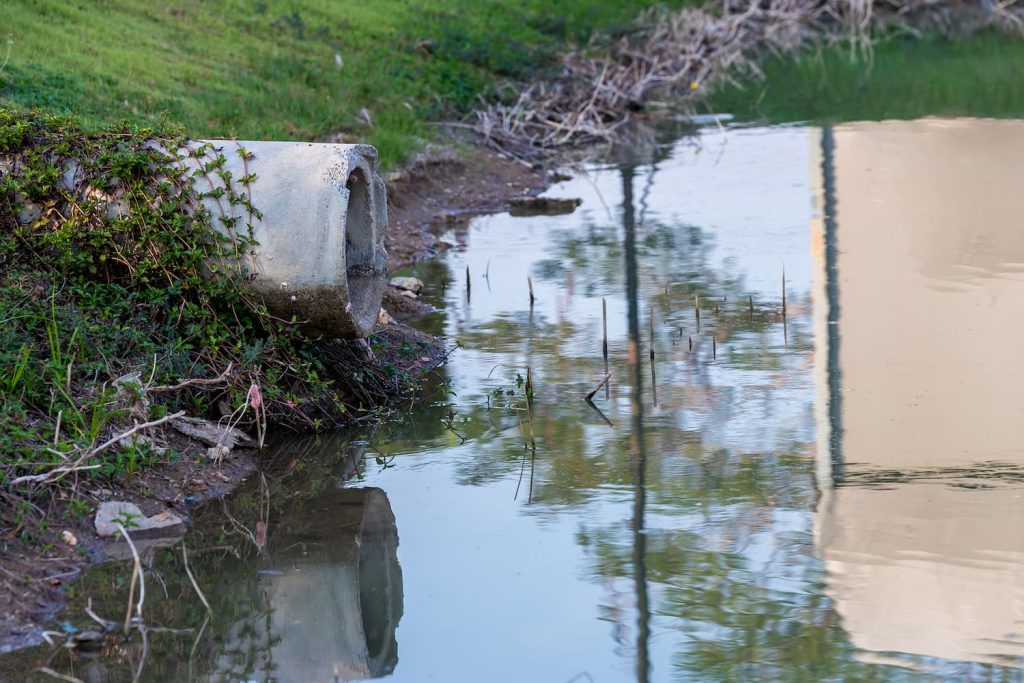
Table of Contents
Every storm drain in your community leads somewhere, and in most HOAs, that somewhere is the community lake. The grate at the curb is not connected to a treatment plant. It is a direct pipe to the pond, and everything that washes into it, fertilizer, grass clippings, oil, pet waste, arrives in the water untreated.
This is why a lake can turn green just days after a heavy rain, and why the same nutrient and algae problems keep returning no matter how many times they are treated. This guide explains how storm drains pollute community lakes, then gives boards a concrete action plan and a ready-to-use resident-education flyer template.
Storm drains pollute HOA lakes by carrying untreated stormwater runoff directly into the water. As rain flows over lawns, streets, and parking lots, it picks up fertilizer, grass clippings, pet waste, sediment, and automotive fluids, then discharges them into the lake through the storm drain system, fueling algae blooms and degrading water quality.
Key Takeaways
- Storm drains discharge untreated. Unlike sewer systems, storm drains carry runoff straight to the lake with no filtration or treatment.
- Runoff is the main pollution source. Fertilizer, grass clippings, pet waste, sediment, and oil are the most common pollutants in an HOA setting.
- This is nonpoint source pollution, the leading remaining cause of water quality problems nationally, and it is largely preventable.
- Boards have real tools, including storm-drain stenciling, inlet protection, buffer plantings, and resident education.
- Residents are half the solution. Most of the pollution originates on individual lots, so a resident-education effort is essential, and a flyer template is included below.
How Do Storm Drains Actually Pollute a Community Lake?
Storm drains pollute community lakes by transporting untreated runoff directly into the water. Rain flows across impervious surfaces like roofs, streets, and driveways, collecting pollutants along the way, then enters storm drains that discharge into the lake without any treatment. The lake becomes the endpoint for everything the runoff collected.
The critical misunderstanding, common even among board members, is the assumption that storm drains lead somewhere that cleans the water. They do not.
As the University of Minnesota Office of Sustainability explains, stormwater and all the pollutants it carries travel through the storm sewer system and are discharged as is, with no cleaning or treatment, before entering waterways. The system is simply not designed to treat polluted water.
The volume problem makes it worse. Developed communities are covered in impervious surfaces, roofs, roads, driveways, and parking lots, that cannot absorb rain. Instead of soaking into the ground and being naturally filtered, water sheets across these surfaces, gaining speed and collecting pollutants, before funneling into the drains. The U.S. EPA notes that runoff picks up fertilizer, oil, pesticides, dirt, bacteria, and other pollutants and carries them untreated through storm drains to streams, rivers, and lakes.

What Is Nonpoint Source Pollution?
Nonpoint source pollution is contamination that comes from many diffuse sources spread across the landscape rather than a single identifiable pipe. In an HOA, it is the combined runoff from every lawn, driveway, and street. The EPA identifies it as the leading remaining cause of water quality problems in the United States.
This concept matters because it explains why the problem is everyone’s responsibility and no single person’s fault.
The U.S. EPA describes nonpoint source pollution as pollution caused by rainfall or snowmelt moving over and through the ground, picking up and carrying pollutants into lakes, rivers, and wetlands. Urban and suburban areas, with their buildings, pavement, and compacted landscapes, are a major source.
The contrast with point source pollution makes it clearer. Point source pollution comes from a single, identifiable location, like a factory discharge pipe, and is relatively easy to regulate. Nonpoint source pollution comes from countless small contributions across an entire community: a little fertilizer from each lawn, a little oil from each driveway. No single contribution looks significant, but together they degrade the lake.
That distributed nature is exactly why storm-drain pollution cannot be solved by one fix. It requires changes across the whole community, which is why board action and resident education both matter.
Which Pollutants End Up in HOA Lakes?

The most common storm-drain pollutants in an HOA are nutrients from fertilizer, organic matter like grass clippings and leaves, pet waste, sediment from bare soil and construction, and automotive fluids like oil and grease. Nutrients and organic matter are the biggest drivers of algae blooms and the low-oxygen conditions that harm fish.
Knowing what is actually reaching the lake helps a board target the sources it can control.
The main culprits in a residential community:
- Fertilizer nutrients. Nitrogen and phosphorus from lawn care are the primary fuel for algae blooms. Even small amounts are potent.
- Grass clippings and leaves. Organic debris that washes into drains decomposes in the lake, releasing large amounts of nutrients. As stormwater treatment engineering documents note, clippings and leaves that reach storm drains leach nutrients and can cause large algae blooms that deplete oxygen.
- Pet waste. A significant source of bacteria and nutrients, and one of the most controllable through resident behavior.
- Sediment. Soil from bare spots, eroding banks, and construction sites clouds the water and carries bound phosphorus with it.
- Automotive fluids. Oil, grease, and heavy metals from vehicles on driveways and streets.
- Litter and debris. Trash that is unsightly and can clog inlets and outfalls.
Nutrients deserve the most attention because they set off the chain reaction that boards spend the most money fighting: excess nitrogen and phosphorus feed algae, the algae die and decompose, and decomposition consumes the oxygen fish need.
What Is the First Flush, and Why Does It Matter?
The first flush is the initial surge of runoff at the start of a storm, which typically carries the highest concentration of pollutants. As the first rain washes across surfaces that have accumulated pollutants since the last storm, it picks up the heaviest load. This is why lakes often show problems shortly after rain begins.
Understanding the first flush helps a board grasp why timing matters and why prevention beats treatment.
Between storms, pollutants accumulate on every surface in the community: fertilizer sits on lawns, oil drips onto driveways, clippings pile at curbs. When rain finally arrives, that first wash of water collects the built-up material all at once and rushes it toward the storm drains in a concentrated pulse.
The practical implication is important. Because pollutants concentrate in that first flush, keeping surfaces clean between storms has an outsized benefit. Every bag of clippings swept up, every driveway kept oil-free, and every pound of fertilizer kept off the pavement reduces what that first flush can carry. Prevention at the source is far more effective than trying to treat the lake after the pulse arrives.

What Can an HOA Board Do About Storm-Drain Pollution?
Boards can reduce storm-drain pollution through a combination of physical measures and community programs: storm-drain stenciling, inlet protection, shoreline buffer plantings, improved landscaping practices, and resident education. Because most pollution originates on individual lots, the most effective approach pairs infrastructure improvements with a sustained education effort.
Here is a concrete board action plan, organized from simplest to most involved.
1. Launch a Storm-Drain Stenciling Program
Storm-drain stenciling marks each drain with a message like “No Dumping, Drains to Lake.” It is inexpensive, high-visibility, and reminds residents that the drain connects directly to the community’s water. It is often an ideal volunteer or community-group project and a strong first step.
2. Add Inlet Protection
Inlet protection places filters, sediment traps, or filter socks at storm-drain openings to capture sediment, debris, and trash before they enter the system. These require periodic cleaning to keep working, so pair installation with a maintenance schedule.
3. Establish or Restore Shoreline Buffers
A vegetated buffer of native plants along the lake edge intercepts runoff before it reaches the water, filtering nutrients and trapping sediment. Reducing mowing to the water’s edge and installing littoral plantings are among the most effective long-term measures a community can take. This works hand in hand with professional littoral zone management and shoreline restoration.
4. Fix Landscaping Practices
Much of the pollution is generated by community landscaping itself. Direct crews to never blow clippings into the street or drains, to sweep up spilled fertilizer, to follow proper fertilizer timing and rates, and to maintain no-fertilizer buffer zones near the water. These changes cost nothing and cut nutrients at the source.
5. Address Illicit Discharges
An illicit discharge is anything entering a storm drain that is not stormwater, such as dumped motor oil, paint, or household chemicals. Boards should make clear to residents that dumping into storm drains is prohibited and harmful, and establish a way to report it. Per the U.S. EPA, illicit discharge programs exist specifically to prevent this kind of contamination of surface water.
6. Run a Resident-Education Campaign
Because so much pollution originates on private lots, resident behavior is decisive. A sustained education effort, using the flyer template below, is one of the highest-value actions a board can take.
7. Add Monitoring and Professional Support
Regular pond water quality testing establishes whether measures are working, and ongoing lake management services provide the technical support most volunteer boards need. Monitoring turns guesswork into evidence.

Resident-Education Flyer Template
The template below can be copied into a newsletter, printed as a handout, or posted in common areas. It is written in plain language for residents and covers the behaviors that matter most. Customize the bracketed fields for your community.
Protect [Community Name] Lake: It Starts at Your Curb
Did you know? The storm drains in our community do not lead to a treatment plant. They flow directly and untreated into our community lake. That means whatever washes off your lawn, driveway, and street ends up in our water.
Here is how you can help keep our lake clean:
Fertilize responsibly. Follow label rates, never apply before heavy rain, and sweep any fertilizer off driveways and sidewalks back onto the lawn. Nitrogen and phosphorus are the main cause of algae blooms.
Bag or mulch your clippings. Never blow grass clippings or leaves into the street or storm drains. They rot in the lake and feed algae.
Pick up after your pet. Pet waste is a major source of bacteria and nutrients in our lake. Always bag it and dispose of it properly.
Never dump anything down a storm drain. No oil, paint, chemicals, or yard waste. The drain goes straight to the lake. This is both harmful and prohibited.
Keep your car from leaking. Clean up oil spots on your driveway, and do not hose fluids into the street.
Report dumping. If you see someone dumping into a storm drain, please contact [board contact or management].
Our lake is a shared asset that affects property values, wildlife, and the beauty of our community. Small actions at every home add up to a healthier lake for everyone.
Questions? Contact [board or property manager contact].
Schedule a Site Visit With Pond Guru
Storm-drain pollution is a community-wide challenge, and while board action and resident education address the sources, most lakes also need professional support to recover and stay healthy. Testing reveals what is actually in the water, and targeted management addresses problems the runoff has already caused.
Pond Guru works with HOA boards and property managers across Florida to test water quality, establish shoreline buffers, manage vegetation, and build maintenance programs that reduce the impact of runoff over time.
Because every community’s lake and drainage layout is different, the process begins with an on-site evaluation. To assess your lake and build a plan, schedule a site visit with Pond Guru and a specialist will evaluate conditions and recommend next steps.

Frequently Asked Questions
No. This is a common misconception. Storm drains carry runoff directly and untreated into local waterways, which in most HOAs means the community lake. Unlike household sewer systems, the storm drain system provides no filtration or treatment, so whatever enters a drain reaches the lake unchanged.
Nutrient runoff, primarily nitrogen and phosphorus from lawn fertilizer, is usually the biggest driver of water quality problems. Combined with grass clippings and pet waste, these nutrients fuel the algae blooms and low-oxygen conditions that cause green water, odors, and fish kills in community lakes.
Storm-drain stenciling is marking drains with a message such as "No Dumping, Drains to Lake" to remind residents that the drain connects directly to the community's water. It is an inexpensive, high-visibility measure, often done by volunteers, that discourages dumping and raises awareness of where runoff actually goes.
An illicit discharge is anything entering a storm drain that is not stormwater, such as dumped motor oil, paint, household chemicals, or yard waste. Because storm drains flow untreated to the lake, these discharges directly contaminate the water. They are prohibited, and communities should give residents a way to report them.
Residents can fertilize responsibly and never before rain, bag or mulch grass clippings, pick up pet waste, keep driveways free of oil, and never dump anything down a storm drain. Because most runoff pollution originates on individual lots, these everyday actions have a genuine, measurable impact on lake health.
Ready to Schedule a Visit ?
Have questions about your pond or lake? Our experts are ready to help you take the next step.
Latest Article
Popular Post

Why Keeping Culverts Clear of Debris Matters for Stormwater Systems
Table of Contents A culvert is one of those…
Table of Contents
Every storm drain in your community leads somewhere, and in most HOAs, that somewhere is the community lake. The grate at the curb is not connected to a treatment plant. It is a direct pipe to the pond, and everything that washes into it, fertilizer, grass clippings, oil, pet waste, arrives in the water untreated.
This is why a lake can turn green just days after a heavy rain, and why the same nutrient and algae problems keep returning no matter how many times they are treated. This guide explains how storm drains pollute community lakes, then gives boards a concrete action plan and a ready-to-use resident-education flyer template.
Storm drains pollute HOA lakes by carrying untreated stormwater runoff directly into the water. As rain flows over lawns, streets, and parking lots, it picks up fertilizer, grass clippings, pet waste, sediment, and automotive fluids, then discharges them into the lake through the storm drain system, fueling algae blooms and degrading water quality.
Key Takeaways
- Storm drains discharge untreated. Unlike sewer systems, storm drains carry runoff straight to the lake with no filtration or treatment.
- Runoff is the main pollution source. Fertilizer, grass clippings, pet waste, sediment, and oil are the most common pollutants in an HOA setting.
- This is nonpoint source pollution, the leading remaining cause of water quality problems nationally, and it is largely preventable.
- Boards have real tools, including storm-drain stenciling, inlet protection, buffer plantings, and resident education.
- Residents are half the solution. Most of the pollution originates on individual lots, so a resident-education effort is essential, and a flyer template is included below.
How Do Storm Drains Actually Pollute a Community Lake?
Storm drains pollute community lakes by transporting untreated runoff directly into the water. Rain flows across impervious surfaces like roofs, streets, and driveways, collecting pollutants along the way, then enters storm drains that discharge into the lake without any treatment. The lake becomes the endpoint for everything the runoff collected.
The critical misunderstanding, common even among board members, is the assumption that storm drains lead somewhere that cleans the water. They do not.
As the University of Minnesota Office of Sustainability explains, stormwater and all the pollutants it carries travel through the storm sewer system and are discharged as is, with no cleaning or treatment, before entering waterways. The system is simply not designed to treat polluted water.
The volume problem makes it worse. Developed communities are covered in impervious surfaces, roofs, roads, driveways, and parking lots, that cannot absorb rain. Instead of soaking into the ground and being naturally filtered, water sheets across these surfaces, gaining speed and collecting pollutants, before funneling into the drains. The U.S. EPA notes that runoff picks up fertilizer, oil, pesticides, dirt, bacteria, and other pollutants and carries them untreated through storm drains to streams, rivers, and lakes.
What Is Nonpoint Source Pollution?
Nonpoint source pollution is contamination that comes from many diffuse sources spread across the landscape rather than a single identifiable pipe. In an HOA, it is the combined runoff from every lawn, driveway, and street. The EPA identifies it as the leading remaining cause of water quality problems in the United States.
This concept matters because it explains why the problem is everyone’s responsibility and no single person’s fault.
The U.S. EPA describes nonpoint source pollution as pollution caused by rainfall or snowmelt moving over and through the ground, picking up and carrying pollutants into lakes, rivers, and wetlands. Urban and suburban areas, with their buildings, pavement, and compacted landscapes, are a major source.
The contrast with point source pollution makes it clearer. Point source pollution comes from a single, identifiable location, like a factory discharge pipe, and is relatively easy to regulate. Nonpoint source pollution comes from countless small contributions across an entire community: a little fertilizer from each lawn, a little oil from each driveway. No single contribution looks significant, but together they degrade the lake.
That distributed nature is exactly why storm-drain pollution cannot be solved by one fix. It requires changes across the whole community, which is why board action and resident education both matter.
Which Pollutants End Up in HOA Lakes?

The most common storm-drain pollutants in an HOA are nutrients from fertilizer, organic matter like grass clippings and leaves, pet waste, sediment from bare soil and construction, and automotive fluids like oil and grease. Nutrients and organic matter are the biggest drivers of algae blooms and the low-oxygen conditions that harm fish.
Knowing what is actually reaching the lake helps a board target the sources it can control.
The main culprits in a residential community:
- Fertilizer nutrients. Nitrogen and phosphorus from lawn care are the primary fuel for algae blooms. Even small amounts are potent.
- Grass clippings and leaves. Organic debris that washes into drains decomposes in the lake, releasing large amounts of nutrients. As stormwater treatment engineering documents note, clippings and leaves that reach storm drains leach nutrients and can cause large algae blooms that deplete oxygen.
- Pet waste. A significant source of bacteria and nutrients, and one of the most controllable through resident behavior.
- Sediment. Soil from bare spots, eroding banks, and construction sites clouds the water and carries bound phosphorus with it.
- Automotive fluids. Oil, grease, and heavy metals from vehicles on driveways and streets.
- Litter and debris. Trash that is unsightly and can clog inlets and outfalls.
Nutrients deserve the most attention because they set off the chain reaction that boards spend the most money fighting: excess nitrogen and phosphorus feed algae, the algae die and decompose, and decomposition consumes the oxygen fish need.
What Is the First Flush, and Why Does It Matter?
The first flush is the initial surge of runoff at the start of a storm, which typically carries the highest concentration of pollutants. As the first rain washes across surfaces that have accumulated pollutants since the last storm, it picks up the heaviest load. This is why lakes often show problems shortly after rain begins.
Understanding the first flush helps a board grasp why timing matters and why prevention beats treatment.
Between storms, pollutants accumulate on every surface in the community: fertilizer sits on lawns, oil drips onto driveways, clippings pile at curbs. When rain finally arrives, that first wash of water collects the built-up material all at once and rushes it toward the storm drains in a concentrated pulse.
The practical implication is important. Because pollutants concentrate in that first flush, keeping surfaces clean between storms has an outsized benefit. Every bag of clippings swept up, every driveway kept oil-free, and every pound of fertilizer kept off the pavement reduces what that first flush can carry. Prevention at the source is far more effective than trying to treat the lake after the pulse arrives.
What Can an HOA Board Do About Storm-Drain Pollution?
Boards can reduce storm-drain pollution through a combination of physical measures and community programs: storm-drain stenciling, inlet protection, shoreline buffer plantings, improved landscaping practices, and resident education. Because most pollution originates on individual lots, the most effective approach pairs infrastructure improvements with a sustained education effort.
Here is a concrete board action plan, organized from simplest to most involved.
1. Launch a Storm-Drain Stenciling Program
Storm-drain stenciling marks each drain with a message like “No Dumping, Drains to Lake.” It is inexpensive, high-visibility, and reminds residents that the drain connects directly to the community’s water. It is often an ideal volunteer or community-group project and a strong first step.
2. Add Inlet Protection
Inlet protection places filters, sediment traps, or filter socks at storm-drain openings to capture sediment, debris, and trash before they enter the system. These require periodic cleaning to keep working, so pair installation with a maintenance schedule.
3. Establish or Restore Shoreline Buffers
A vegetated buffer of native plants along the lake edge intercepts runoff before it reaches the water, filtering nutrients and trapping sediment. Reducing mowing to the water’s edge and installing littoral plantings are among the most effective long-term measures a community can take. This works hand in hand with professional littoral zone management and shoreline restoration.
4. Fix Landscaping Practices
Much of the pollution is generated by community landscaping itself. Direct crews to never blow clippings into the street or drains, to sweep up spilled fertilizer, to follow proper fertilizer timing and rates, and to maintain no-fertilizer buffer zones near the water. These changes cost nothing and cut nutrients at the source.
5. Address Illicit Discharges
An illicit discharge is anything entering a storm drain that is not stormwater, such as dumped motor oil, paint, or household chemicals. Boards should make clear to residents that dumping into storm drains is prohibited and harmful, and establish a way to report it. Per the U.S. EPA, illicit discharge programs exist specifically to prevent this kind of contamination of surface water.
6. Run a Resident-Education Campaign
Because so much pollution originates on private lots, resident behavior is decisive. A sustained education effort, using the flyer template below, is one of the highest-value actions a board can take.
7. Add Monitoring and Professional Support
Regular pond water quality testing establishes whether measures are working, and ongoing lake management services provide the technical support most volunteer boards need. Monitoring turns guesswork into evidence.
Resident-Education Flyer Template
The template below can be copied into a newsletter, printed as a handout, or posted in common areas. It is written in plain language for residents and covers the behaviors that matter most. Customize the bracketed fields for your community.
Protect [Community Name] Lake: It Starts at Your Curb
Did you know? The storm drains in our community do not lead to a treatment plant. They flow directly and untreated into our community lake. That means whatever washes off your lawn, driveway, and street ends up in our water.
Here is how you can help keep our lake clean:
Fertilize responsibly. Follow label rates, never apply before heavy rain, and sweep any fertilizer off driveways and sidewalks back onto the lawn. Nitrogen and phosphorus are the main cause of algae blooms.
Bag or mulch your clippings. Never blow grass clippings or leaves into the street or storm drains. They rot in the lake and feed algae.
Pick up after your pet. Pet waste is a major source of bacteria and nutrients in our lake. Always bag it and dispose of it properly.
Never dump anything down a storm drain. No oil, paint, chemicals, or yard waste. The drain goes straight to the lake. This is both harmful and prohibited.
Keep your car from leaking. Clean up oil spots on your driveway, and do not hose fluids into the street.
Report dumping. If you see someone dumping into a storm drain, please contact [board contact or management].
Our lake is a shared asset that affects property values, wildlife, and the beauty of our community. Small actions at every home add up to a healthier lake for everyone.
Questions? Contact [board or property manager contact].
Schedule a Site Visit With Pond Guru

Storm-drain pollution is a community-wide challenge, and while board action and resident education address the sources, most lakes also need professional support to recover and stay healthy. Testing reveals what is actually in the water, and targeted management addresses problems the runoff has already caused.
Pond Guru works with HOA boards and property managers across Florida to test water quality, establish shoreline buffers, manage vegetation, and build maintenance programs that reduce the impact of runoff over time.
Because every community’s lake and drainage layout is different, the process begins with an on-site evaluation. To assess your lake and build a plan, schedule a site visit with Pond Guru and a specialist will evaluate conditions and recommend next steps.
Frequently Asked Questions
No. This is a common misconception. Storm drains carry runoff directly and untreated into local waterways, which in most HOAs means the community lake. Unlike household sewer systems, the storm drain system provides no filtration or treatment, so whatever enters a drain reaches the lake unchanged.
Nutrient runoff, primarily nitrogen and phosphorus from lawn fertilizer, is usually the biggest driver of water quality problems. Combined with grass clippings and pet waste, these nutrients fuel the algae blooms and low-oxygen conditions that cause green water, odors, and fish kills in community lakes.
Storm-drain stenciling is marking drains with a message such as "No Dumping, Drains to Lake" to remind residents that the drain connects directly to the community's water. It is an inexpensive, high-visibility measure, often done by volunteers, that discourages dumping and raises awareness of where runoff actually goes.
An illicit discharge is anything entering a storm drain that is not stormwater, such as dumped motor oil, paint, household chemicals, or yard waste. Because storm drains flow untreated to the lake, these discharges directly contaminate the water. They are prohibited, and communities should give residents a way to report them.
Residents can fertilize responsibly and never before rain, bag or mulch grass clippings, pick up pet waste, keep driveways free of oil, and never dump anything down a storm drain. Because most runoff pollution originates on individual lots, these everyday actions have a genuine, measurable impact on lake health.
Ready to Schedule a Visit ?
Have questions about your pond or lake? Our experts are ready to help you take the next step.
Latest Article
Popular Post
Why Keeping Culverts Clear of Debris Matters for Stormwater Systems
Table of Contents A culvert is one of those…