
Top 10 Most Common Pond Turtles in Florida
Top 10 Most Common Pond Turtles in Florida
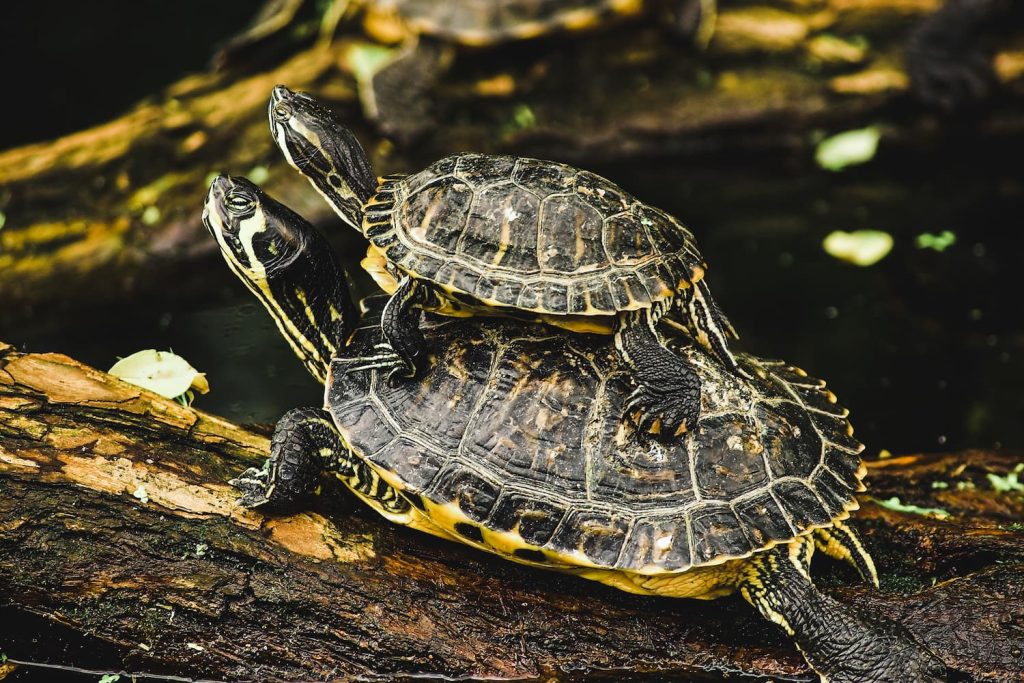
Florida ponds support a wide mix of freshwater turtles. Some are large basking cooters, some are softshells, and some are smaller turtles that stay hidden along the edge or under shallow cover. For homeowners, HOA boards, golf course managers, and property managers, knowing which pond turtles are most common helps with identification, shoreline planning, and general pond management.
Most turtles in pond settings are not a water quality crisis on their own. Even so, heavy basking pressure, shoreline nesting, plant grazing, and pet releases can affect how a pond looks and functions. The bigger management issue is usually not the turtle itself. It is whether the pond edge, vegetation, and habitat are still in balance.
This guide covers ten freshwater turtles pond owners are most likely to notice in Florida, along with a few commonly confused pet-trade species that do not belong in a managed pond.
Pond Turtles in Florida
Florida Fish and Wildlife Conservation Commission recognizes a broad group of freshwater turtles in the state, and the Florida Museum checklist includes cooters, sliders, softshells, mud turtles, musk turtles, chicken turtles, snapping turtles, and painted turtles among Florida’s freshwater species. UF IFAS also notes that cooters, sliders, and Florida softshell turtles are among the common freshwater turtles seen in local Florida waters.
For pond owners, the most useful list is not every turtle in Florida. It is the species most often seen around managed freshwater ponds, retention lakes, golf course water, and neighborhood shoreline habitat.
Top 10 Pond Turtles
1. Florida red-bellied cooter
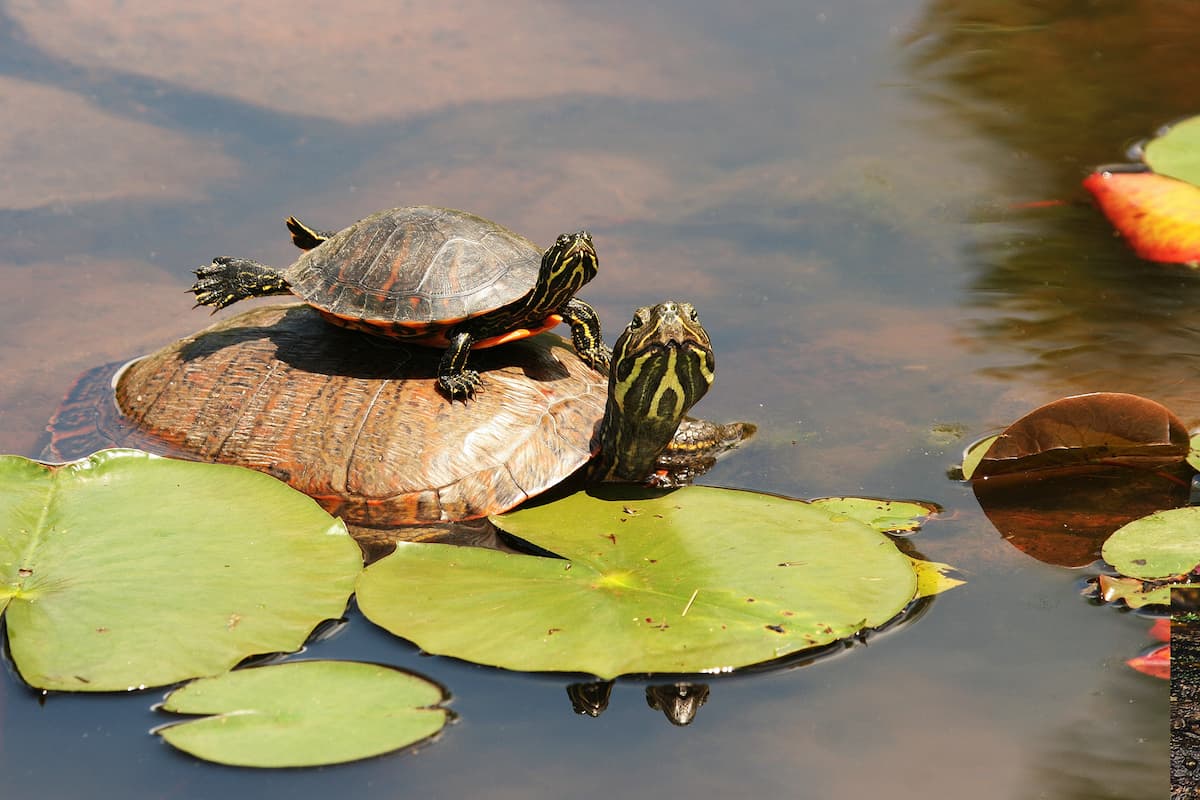
The Florida red-bellied cooter is one of the most recognizable pond turtles in the state. It is a large basking turtle with a reddish to orange lower shell and is commonly seen on logs, banks, and pond edges. UF IFAS specifically highlights the Florida red-bellied turtle or cooter as a freshwater turtle found in Sarasota County, and Osceola County notes the red-bellied Florida cooter as one of the cooters commonly encountered in Central Florida.
2. Peninsula cooter
The peninsula cooter is another large cooter commonly seen in Florida freshwater habitat. It is a strong fit for the “large basking turtle on a pond log” image that many owners notice first. UF IFAS describes the peninsula cooter as one of the cooters found throughout much of the state.
3. River cooter
River cooters are widespread in Florida and are often seen in larger ponds, canals, and freshwater lakes. They are part of the broader cooter group that many people casually identify as one type, even though several pond turtles in Florida belong to that category.
4. Yellow-bellied slider
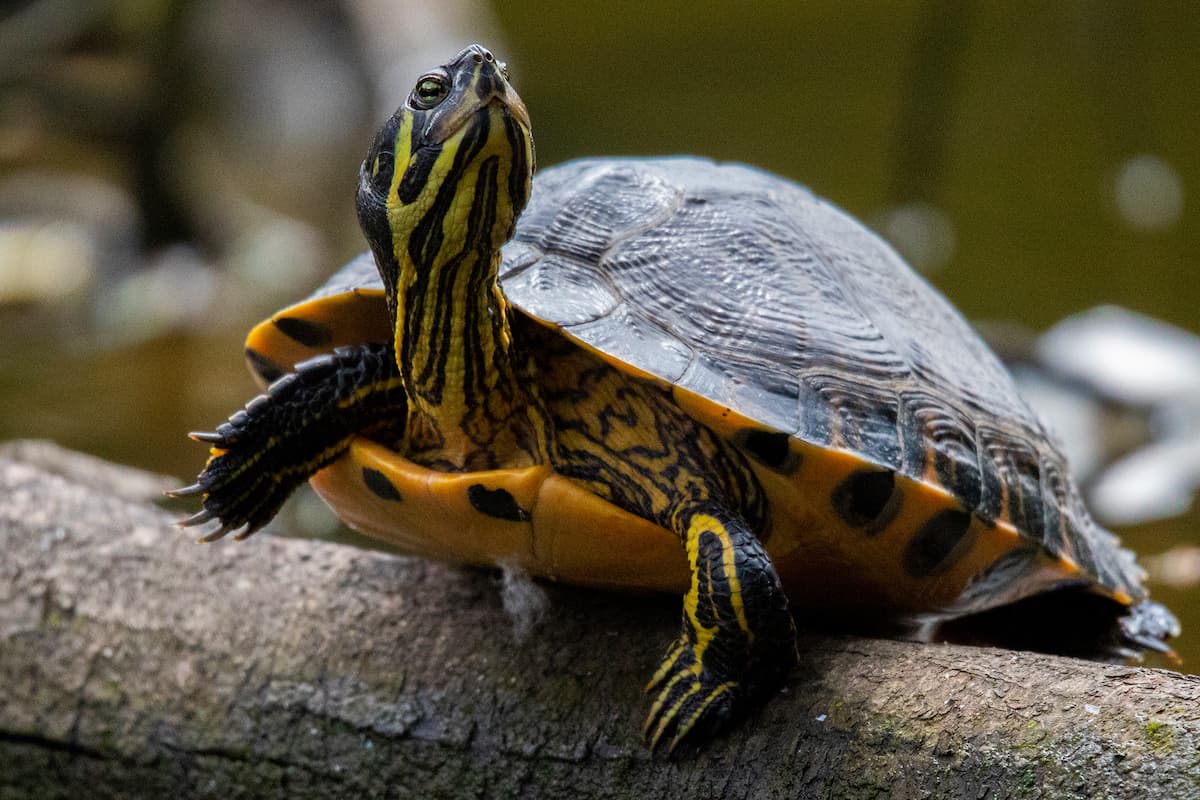
The yellow-bellied slider, also called the yellow belly turtle or yellow slider turtle, is one of the most familiar turtles in freshwater pond habitat. Its scientific name is Trachemys scripta scripta, a subspecies of Trachemys scripta. It is one of the more recognizable yellow bellied sliders because of the bright yellow lower shell and bold striping. Florida lists the yellowbelly slider among its freshwater turtle fauna, and FWC notes this species in current freshwater turtle management rules.
5. Red-eared slider
The red-eared slider is a common nonnative turtle in Florida, especially in developed waters where former pets were released. FWC states that red-eared sliders are a common non-native turtle in Florida, have been popular in the pet trade, and that release of any non-native animal is prohibited in the state. This is why phrases like red eared slider for sale, red turtle for sale, and turtle hatchling for sale matter in pond management. Pet turtles sold casually can end up in neighborhood lakes where they compete with native turtles.
6. Florida softshell
The Florida softshell is one of the most commonly noticed turtles in Florida ponds because of its size, speed, and unusual shape. UF IFAS specifically lists the large Florida softshell among the common freshwater species found in Sarasota County. In many managed ponds, it is one of the first turtles owners notice once they begin watching the shoreline closely.
7. Florida chicken turtle
The Florida chicken turtle is less often seen basking in large open groups, but it is still one of the more distinctive native freshwater turtles in the state. It has a longer neck than many pond species and is closely tied to shallow vegetated freshwater habitat. The Florida Museum lists the Florida chicken turtle as part of Florida’s native freshwater turtle fauna.
8. Common snapping turtle
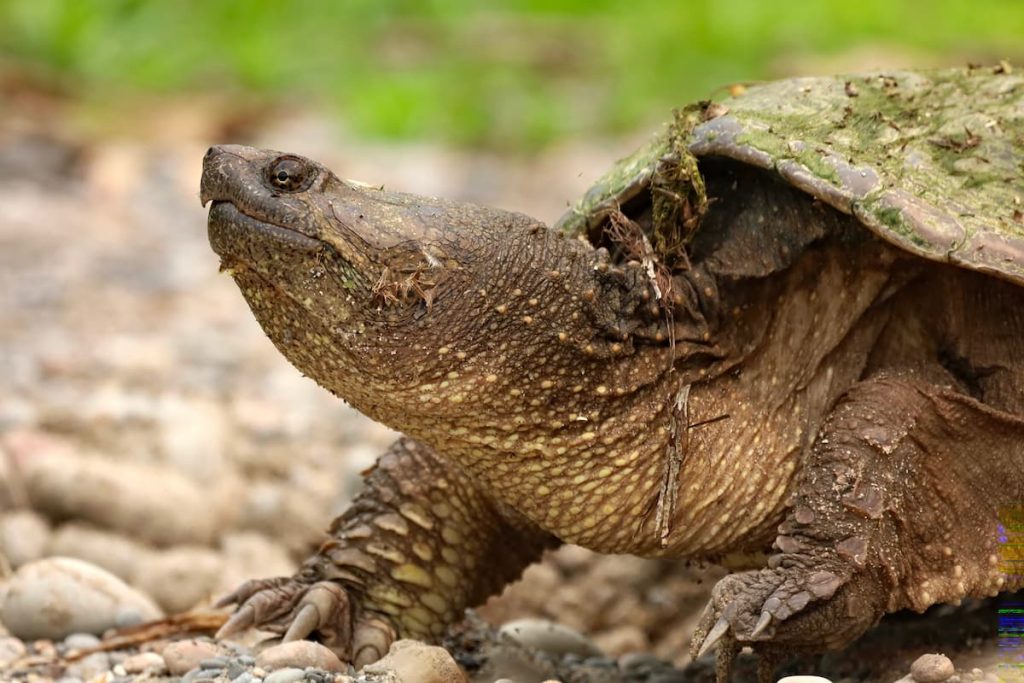
Snapping turtles are part of Florida’s freshwater turtle mix and can appear in ponds, canals, and lake margins, especially where soft bottoms and deeper cover are available. They are usually less visible than cooters and sliders, but they are important to include in any realistic Florida pond turtle list. The Florida Museum includes the common snapping turtle in the state checklist, and FWC notes snapping turtles in freshwater turtle regulation language.
9. Striped mud turtle
If you start noticing small turtles around pond edges, the striped mud turtle is one of the most likely possibilities. It is much smaller than cooters, sliders, and softshells and is often missed unless someone is actively looking near shallow water or muddy shoreline cover. The Florida Museum lists the striped mud turtle as part of Florida’s native freshwater fauna.
10. Eastern musk turtle
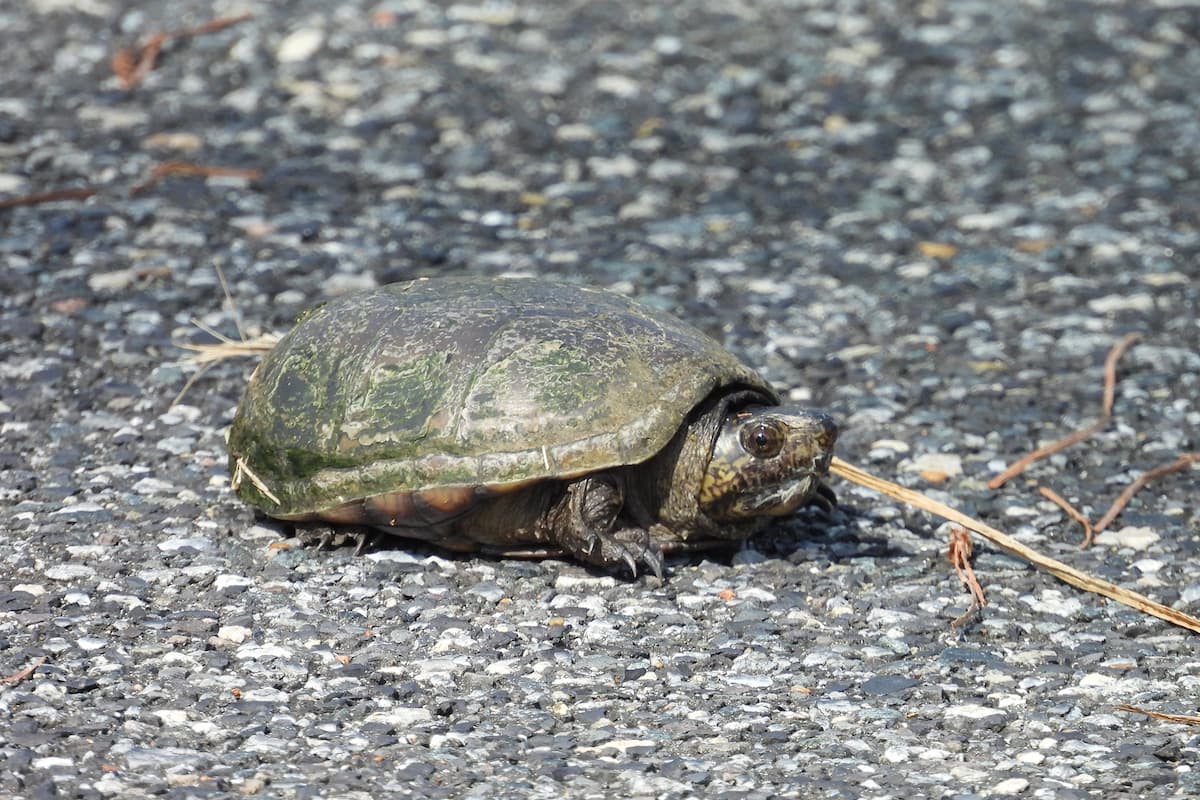
The eastern musk turtle is another one of the more easily overlooked small turtles in Florida ponds. It tends to stay lower in the water and around structure rather than spending long periods basking in exposed shoreline areas. For pond owners, it is one of the turtles more often found during close shoreline inspection than from a distance.
Colors and Quick ID
The colours of a turtle can make identification easier, especially in a pond where several species may bask together.
A simple field guide approach helps:
- red or orange lower shell often suggests a Florida red-bellied cooter
- bright yellow underside and striping often point to a yellow-bellied slider
- a red patch behind the eye usually indicates a red-eared slider
- a flatter, softer shell and long nose often suggest a Florida softshell
- very small dark turtles near muddy edges are often mud or musk turtles
This kind of quick visual sorting is often enough for basic pond management, even without species-level certainty every time.
Build a Healthy Habitat for Pond Turtles
Work with pros like your local Pond Guru in Florida to help manage lake vegetation and pond water quality to build a healthier ecosystem.
Pet Trade Confusion
A few turtle names show up often in online searches but do not belong on a list of common Florida pond turtles.
That includes names like:
- western pond turtle
- Chinese pond turtle
- baby painted turtle in pet-sale listings
Florida does have the southern painted turtle on its turtle checklist, but many online listings use broader hobby terms that do not match the species most commonly seen in Florida ponds. The bigger concern is not the label. It is the release. FWC warns that non-native turtles can compete with native wildlife, spread disease, and create long-term management issues, with red-eared sliders being the clearest example.
That is why turtles for ponds should almost never be treated like a stocking decision. In many cases, native turtles arrive on their own when habitat is suitable. Releasing captive turtles creates far more problems than it solves.
Turtles and Pond Health
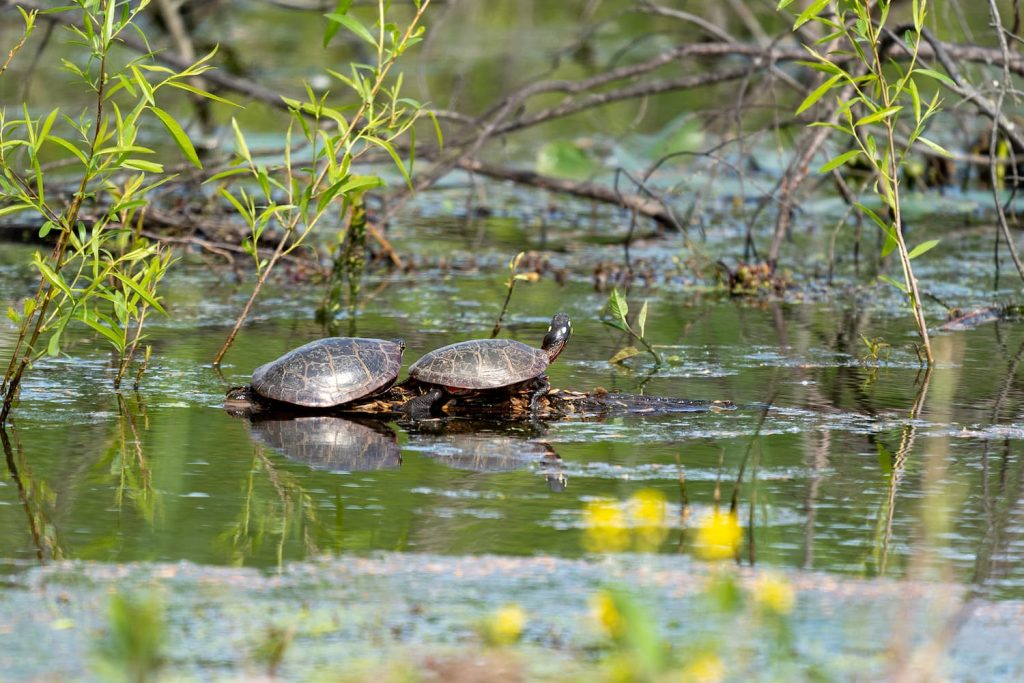
Most native pond turtles are part of a functioning freshwater system. They bask, forage, nest, and move through the pond edge without automatically harming the water. The real issues usually come from one of three conditions:
- too many nonnative pet turtles in one pond
- excessive shoreline nesting and traffic in small, highly managed ponds
- a pond edge that is already stressed by erosion, overgrowth, or poor vegetation balance
In other words, turtles often reveal habitat conditions more than they create them. A pond full of basking cooters, sliders, and softshells may simply be a pond with strong sun, available logs, and healthy access to shoreline cover. A pond dominated by released pet sliders is a different issue and may require a different response.
How Pond Guru Helps
Pond Guru helps owners evaluate whether turtles are simply part of a healthy pond system or whether the shoreline and habitat conditions around the pond need closer attention.
A site visit can help assess:
- turtle activity around the pond edge
- basking and nesting pressure
- shoreline vegetation and open water balance
- signs of nonnative turtle issues
- whether pond appearance or water function is being affected
That kind of review helps separate normal wildlife use from a condition that needs active management.
Frequently Asked Questions
The turtles most pond owners notice most often are cooters, sliders, Florida softshells, snapping turtles, chicken turtles, mud turtles, and musk turtles. In many developed ponds, red-eared sliders also show up because of past pet releases.
Yes. The yellow-bellied slider is Trachemys scripta scripta, a subspecies of Trachemys scripta. It is also sometimes called a yellow belly turtle or yellow slider turtle in common conversation.
No. FWC identifies the red-eared slider as a common non-native turtle in Florida and notes that release of non-native animals is prohibited.
Usually not by themselves. Most native turtles are just part of the freshwater system. The bigger issues tend to come from nonnative releases, shoreline overuse in very small ponds, or other habitat imbalances already affecting the pond.
Pond Guru can inspect shoreline conditions, habitat structure, basking areas, and signs of nonnative turtle pressure to help determine whether turtle activity is normal or whether the pond edge needs management.
Ready to Schedule a Visit ?
Have questions about your pond or lake? Our experts are ready to help you take the next step.
Latest Article
Popular Post

Top 10 Most Common Pond Turtles in Florida
Florida ponds support a wide mix of freshwater turtles. Some…
Florida ponds support a wide mix of freshwater turtles. Some are large basking cooters, some are softshells, and some are smaller turtles that stay hidden along the edge or under shallow cover. For homeowners, HOA boards, golf course managers, and property managers, knowing which pond turtles are most common helps with identification, shoreline planning, and general pond management.
Most turtles in pond settings are not a water quality crisis on their own. Even so, heavy basking pressure, shoreline nesting, plant grazing, and pet releases can affect how a pond looks and functions. The bigger management issue is usually not the turtle itself. It is whether the pond edge, vegetation, and habitat are still in balance.
This guide covers ten freshwater turtles pond owners are most likely to notice in Florida, along with a few commonly confused pet-trade species that do not belong in a managed pond.
Pond Turtles in Florida
Florida Fish and Wildlife Conservation Commission recognizes a broad group of freshwater turtles in the state, and the Florida Museum checklist includes cooters, sliders, softshells, mud turtles, musk turtles, chicken turtles, snapping turtles, and painted turtles among Florida’s freshwater species. UF IFAS also notes that cooters, sliders, and Florida softshell turtles are among the common freshwater turtles seen in local Florida waters.
For pond owners, the most useful list is not every turtle in Florida. It is the species most often seen around managed freshwater ponds, retention lakes, golf course water, and neighborhood shoreline habitat.
Top 10 Pond Turtles
1. Florida red-bellied cooter
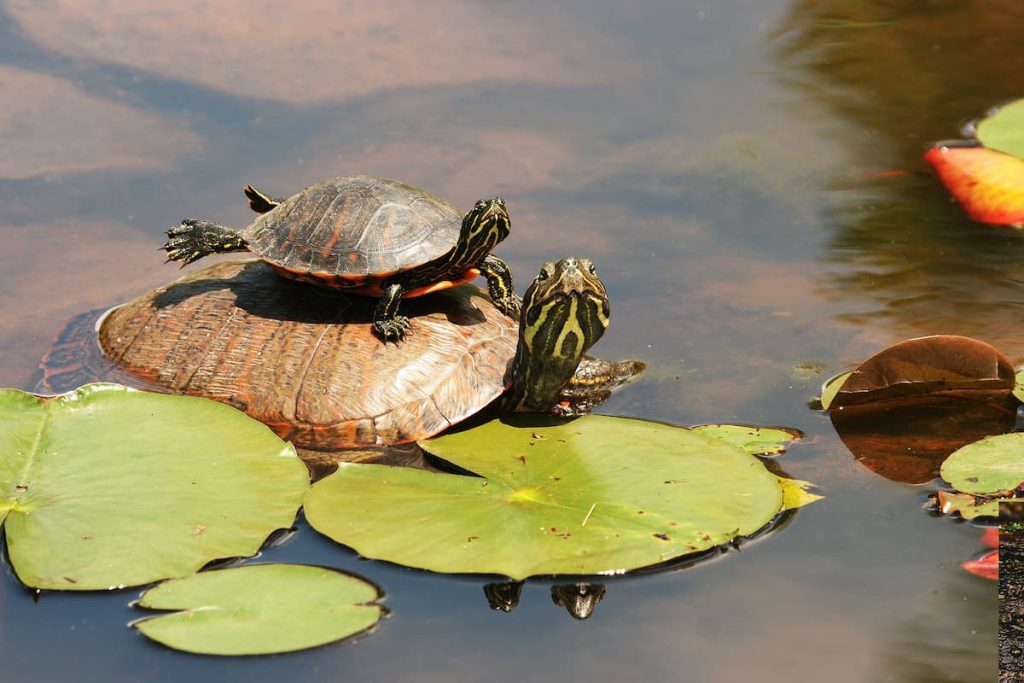
The Florida red-bellied cooter is one of the most recognizable pond turtles in the state. It is a large basking turtle with a reddish to orange lower shell and is commonly seen on logs, banks, and pond edges. UF IFAS specifically highlights the Florida red-bellied turtle or cooter as a freshwater turtle found in Sarasota County, and Osceola County notes the red-bellied Florida cooter as one of the cooters commonly encountered in Central Florida.
2. Peninsula cooter
The peninsula cooter is another large cooter commonly seen in Florida freshwater habitat. It is a strong fit for the “large basking turtle on a pond log” image that many owners notice first. UF IFAS describes the peninsula cooter as one of the cooters found throughout much of the state.
3. River cooter
River cooters are widespread in Florida and are often seen in larger ponds, canals, and freshwater lakes. They are part of the broader cooter group that many people casually identify as one type, even though several pond turtles in Florida belong to that category.
4. Yellow-bellied slider
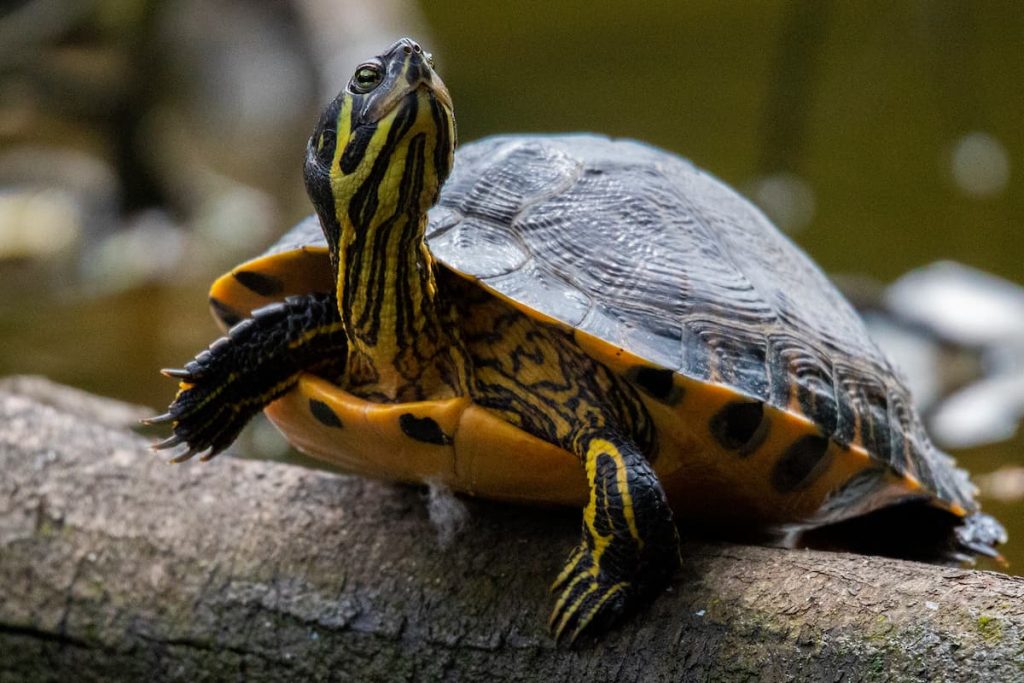
The yellow-bellied slider, also called the yellow belly turtle or yellow slider turtle, is one of the most familiar turtles in freshwater pond habitat. Its scientific name is Trachemys scripta scripta, a subspecies of Trachemys scripta. It is one of the more recognizable yellow bellied sliders because of the bright yellow lower shell and bold striping. Florida lists the yellowbelly slider among its freshwater turtle fauna, and FWC notes this species in current freshwater turtle management rules.
5. Red-eared slider
The red-eared slider is a common nonnative turtle in Florida, especially in developed waters where former pets were released. FWC states that red-eared sliders are a common non-native turtle in Florida, have been popular in the pet trade, and that release of any non-native animal is prohibited in the state. This is why phrases like red eared slider for sale, red turtle for sale, and turtle hatchling for sale matter in pond management. Pet turtles sold casually can end up in neighborhood lakes where they compete with native turtles.
6. Florida softshell
The Florida softshell is one of the most commonly noticed turtles in Florida ponds because of its size, speed, and unusual shape. UF IFAS specifically lists the large Florida softshell among the common freshwater species found in Sarasota County. In many managed ponds, it is one of the first turtles owners notice once they begin watching the shoreline closely.
7. Florida chicken turtle
The Florida chicken turtle is less often seen basking in large open groups, but it is still one of the more distinctive native freshwater turtles in the state. It has a longer neck than many pond species and is closely tied to shallow vegetated freshwater habitat. The Florida Museum lists the Florida chicken turtle as part of Florida’s native freshwater turtle fauna.
8. Common snapping turtle
Snapping turtles are part of Florida’s freshwater turtle mix and can appear in ponds, canals, and lake margins, especially where soft bottoms and deeper cover are available. They are usually less visible than cooters and sliders, but they are important to include in any realistic Florida pond turtle list. The Florida Museum includes the common snapping turtle in the state checklist, and FWC notes snapping turtles in freshwater turtle regulation language.
9. Striped mud turtle
Snapping turtles are part of Florida’s freshwater turtle mix and can appear in ponds, canals, and lake margins, especially where soft bottoms and deeper cover are available. They are usually less visible than cooters and sliders, but they are important to include in any realistic Florida pond turtle list. The Florida Museum includes the common snapping turtle in the state checklist, and FWC notes snapping turtles in freshwater turtle regulation language.
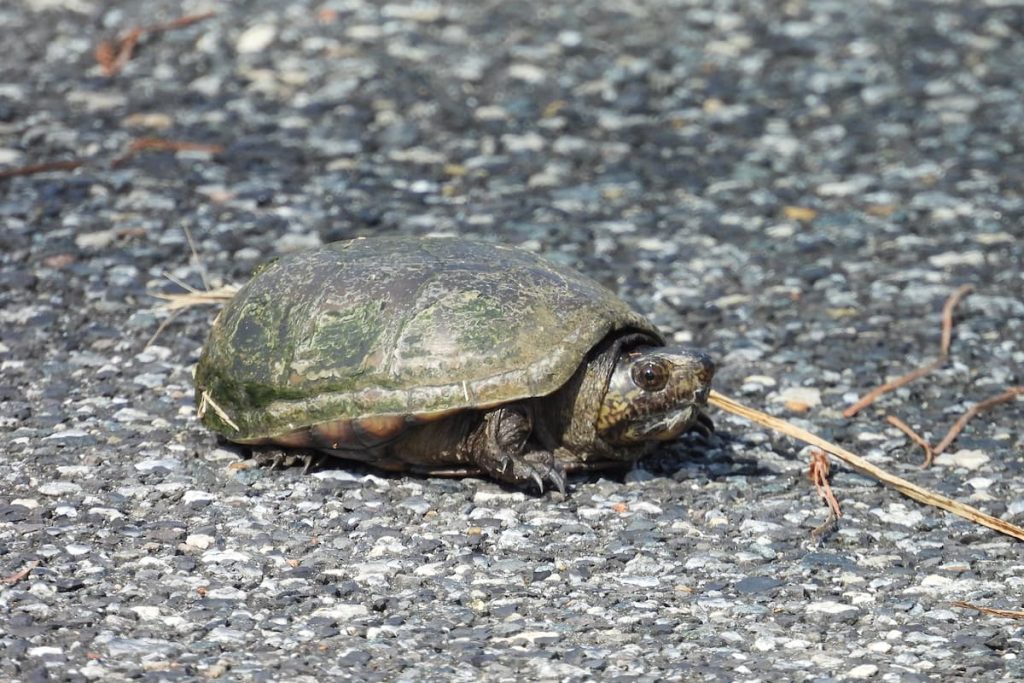
10. Eastern musk turtle
The eastern musk turtle is another one of the more easily overlooked small turtles in Florida ponds. It tends to stay lower in the water and around structure rather than spending long periods basking in exposed shoreline areas. For pond owners, it is one of the turtles more often found during close shoreline inspection than from a distance.
Colors and Quick ID
The colours of a turtle can make identification easier, especially in a pond where several species may bask together.
A simple field guide approach helps:
- red or orange lower shell often suggests a Florida red-bellied cooter
- bright yellow underside and striping often point to a yellow-bellied slider
- a red patch behind the eye usually indicates a red-eared slider
- a flatter, softer shell and long nose often suggest a Florida softshell
- very small dark turtles near muddy edges are often mud or musk turtles
This kind of quick visual sorting is often enough for basic pond management, even without species-level certainty every time.
Build a Healthy Habitat for Pond Turtles
Work with pros like your local Pond Guru in Florida to help manage lake vegetation and pond water quality to build a healthier ecosystem.
Pet Trade Confusion
A few turtle names show up often in online searches but do not belong on a list of common Florida pond turtles.
That includes names like:
- western pond turtle
- Chinese pond turtle
- baby painted turtle in pet-sale listings
Florida does have the southern painted turtle on its turtle checklist, but many online listings use broader hobby terms that do not match the species most commonly seen in Florida ponds. The bigger concern is not the label. It is the release. FWC warns that non-native turtles can compete with native wildlife, spread disease, and create long-term management issues, with red-eared sliders being the clearest example.
That is why turtles for ponds should almost never be treated like a stocking decision. In many cases, native turtles arrive on their own when habitat is suitable. Releasing captive turtles creates far more problems than it solves.
Turtles and Pond Health
Most native pond turtles are part of a functioning freshwater system. They bask, forage, nest, and move through the pond edge without automatically harming the water. The real issues usually come from one of three conditions:
- too many nonnative pet turtles in one pond
- excessive shoreline nesting and traffic in small, highly managed ponds
- a pond edge that is already stressed by erosion, overgrowth, or poor vegetation balance
In other words, turtles often reveal habitat conditions more than they create them. A pond full of basking cooters, sliders, and softshells may simply be a pond with strong sun, available logs, and healthy access to shoreline cover. A pond dominated by released pet sliders is a different issue and may require a different response.
How Pond Guru Helps
Pond Guru helps owners evaluate whether turtles are simply part of a healthy pond system or whether the shoreline and habitat conditions around the pond need closer attention.
A site visit can help assess:
- turtle activity around the pond edge
- basking and nesting pressure
- shoreline vegetation and open water balance
- signs of nonnative turtle issues
- whether pond appearance or water function is being affected
That kind of review helps separate normal wildlife use from a condition that needs active management.
Frequently Asked Questions
The turtles most pond owners notice most often are cooters, sliders, Florida softshells, snapping turtles, chicken turtles, mud turtles, and musk turtles. In many developed ponds, red-eared sliders also show up because of past pet releases.
Yes. The yellow-bellied slider is Trachemys scripta scripta, a subspecies of Trachemys scripta. It is also sometimes called a yellow belly turtle or yellow slider turtle in common conversation.
No. FWC identifies the red-eared slider as a common non-native turtle in Florida and notes that release of non-native animals is prohibited.
Usually not by themselves. Most native turtles are just part of the freshwater system. The bigger issues tend to come from nonnative releases, shoreline overuse in very small ponds, or other habitat imbalances already affecting the pond.
Pond Guru can inspect shoreline conditions, habitat structure, basking areas, and signs of nonnative turtle pressure to help determine whether turtle activity is normal or whether the pond edge needs management.
Ready to Schedule a Visit ?
Have questions about your pond or lake? Our experts are ready to help you take the next step.
Latest Article
Popular Post
Top 10 Most Common Pond Turtles in Florida
Florida ponds support a wide mix of freshwater turtles. Some…