

Blue Iris Flower | Is Blue Flag Iris Invasive in Florida?
Blue Iris Flower | Is Blue Flag Iris Invasive in Florida?
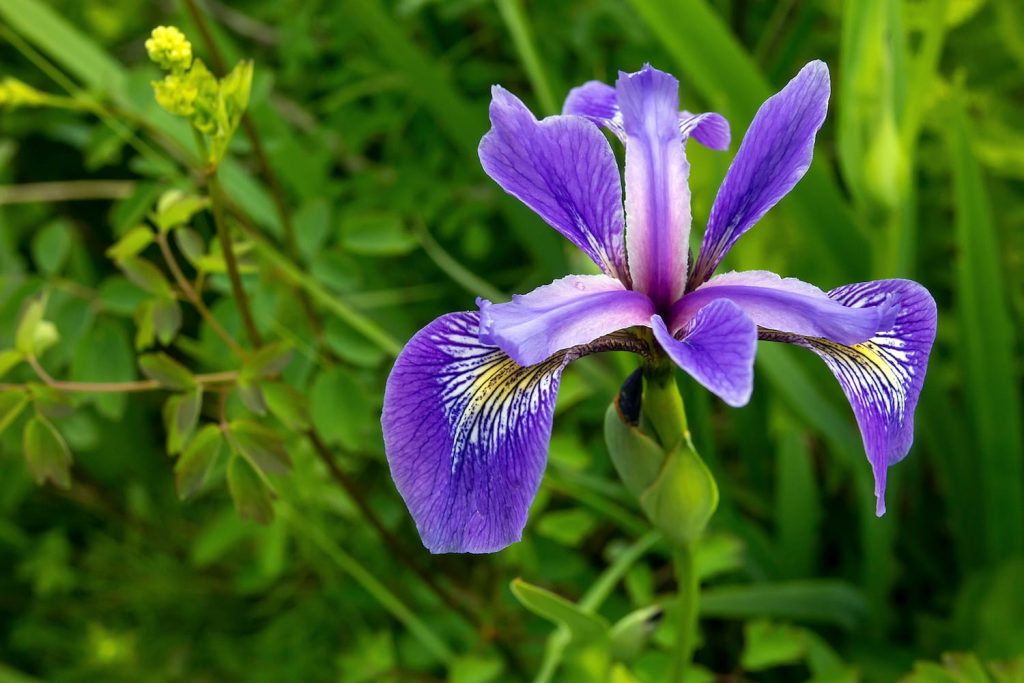
A blue iris flower can be one of the best looking plants around a pond edge. It adds color, softens the shoreline, and fits well in wet soil. In Florida, though, the bigger issue is not the bloom itself. It is making sure the plant is correctly identified.
The blue flag iris most often used around Florida ponds is a native wetland plant, not an invasive one. The invasive warning applies more often to yellow flag iris, which is a different species that can spread aggressively in wet areas. That distinction matters for pond owners deciding whether to keep, thin, or remove iris plantings around the water.
This guide explains what blue flag iris is, how to recognize it, why it gets confused with other iris species, and when a pond planting needs to be managed more carefully.
What Blue Flag Iris Is
In Florida pond landscapes, the blue iris flower most people are looking at is usually blue flag iris, Iris virginica. It is a native wetland perennial that grows naturally in marshes, swamps, ditches, and pond or lake edges. It is well suited to wet soils and shallow shoreline conditions, which is why it is often used around pond margins and rain garden style plantings.
This is also where confusion starts. The term blue flag iris can refer to more than one species. In Florida, the native blue flag is usually Iris virginica. In other parts of North America, Iris versicolor is also called blue flag iris. Both are wetland irises, but they are not the same plant.
What It Looks Like
Blue flag iris grows in upright clumps with narrow, sword shaped leaves. The flowers are usually pale blue to violet, though some forms can lean lighter. Each bloom has darker veining and a yellow signal near the center, which helps separate it from some of the other iris species found in wet landscapes.
A clean visual comparison often helps.
Blue flag iris usually has:
- blue to violet blooms
- fan shaped foliage
- clumping rhizomes
- wetland growth habit
- strong performance on pond edges
A white iris flower may look similar in shape, but it is not the common color form most pond owners see when they are looking at the Florida blue flag. The native plant is known much more for its blue to purple range than for white blooms.
Why Blue Iris Gets Confused For Invasive Species
The biggest source of confusion is naming. Many homeowners hear blue flag irises and assume every blue iris near water is the same plant. That is not true.
Two common mix-ups are:
- Iris virginica, the native blue flag commonly used in Florida
- Iris versicolor, another blue flag species more often associated with northern and eastern wetland habitats
The second issue is visual confusion with yellow flag iris. Yellow flag can be easy to mistake for native iris when the plant is not in bloom, especially because the foliage has the same upright, sword leaf look. Once it flowers, the difference becomes much clearer. Yellow flag produces bright yellow flowers, spreads aggressively by rhizomes, and is considered a high invasion risk in Florida.
Why It Matters at a Pond
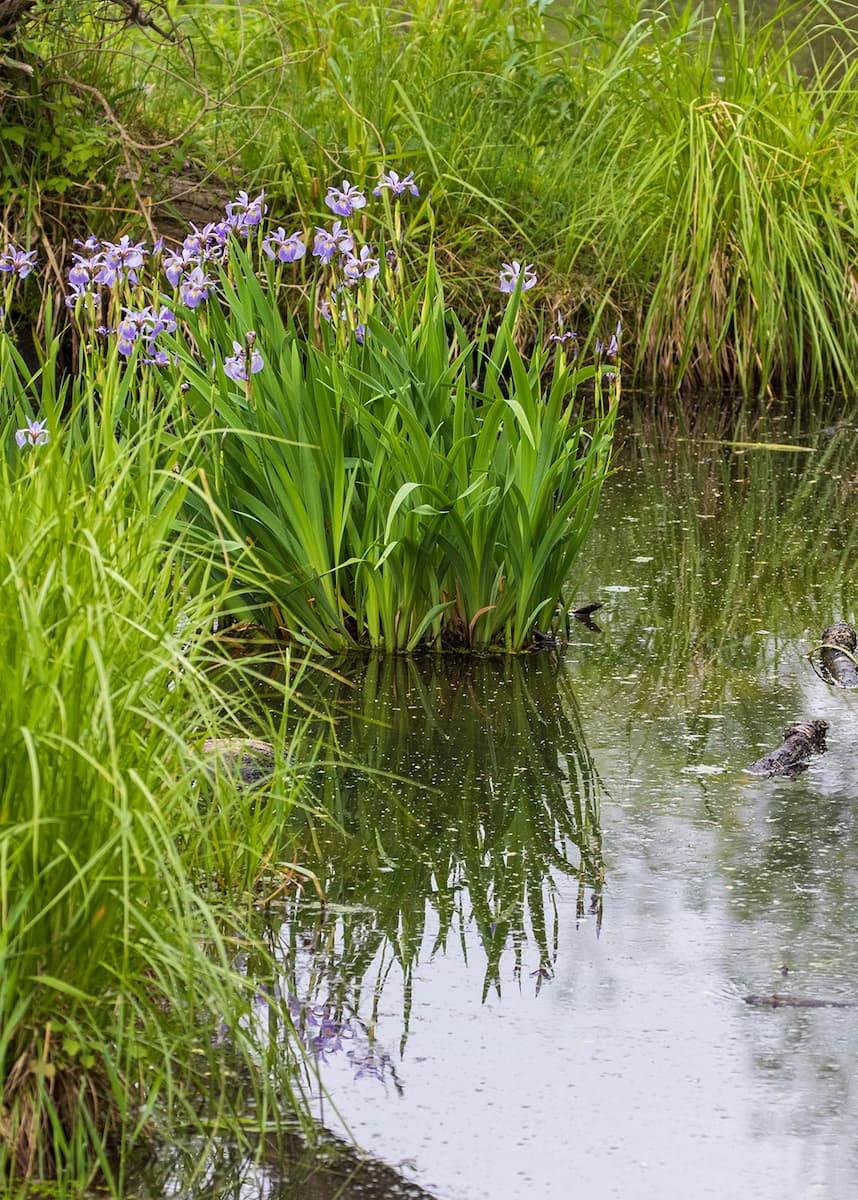
A healthy stand of blue flag iris can be a benefit around a pond. It helps soften the edge, adds seasonal color, and works well in wet soils where many other ornamentals fail. It can also improve the look of retention ponds, decorative ponds, and lightly naturalized shorelines.
The problem starts when plantings are not managed. Even a good shoreline plant can become too dense for a small pond shelf if it is planted too tightly or never divided. Dense clumps can trap debris, narrow the open edge, and make shoreline maintenance harder.
That means there are really two separate concerns:
- a native blue iris planting that needs thinning
- a misidentified invasive iris that should be removed
Those are not the same situation, and they should not be managed the same way.
Symbolism and Garden Appeal
Part of the reason the blue iris flower remains so popular is visual and cultural. Iris flower symbolism is often linked to wisdom, hope, courage, and faith. In broader gardening culture, the meaning of flower iris, iris symbolism, and other iris flower meanings often shift slightly by color, but blue irises are commonly associated with calm, trust, and dignity.
That symbolism is not a management issue, but it does help explain why blue irises continue to be chosen for pond edges, memorial gardens, and formal water features. The plant looks refined, reads well from a distance, and holds strong color near water.
Want Some Blue Flag Iris In Your Pond?
Contact Pond Guru for littoral zone planting. Native plants on your pond’s shoreline can lead to a healthy ecosystem.
When Removal Makes Sense
A blue flag planting may need to be reduced when it starts to crowd the pond margin or interfere with maintenance. That is very different from removing an invasive yellow flag stand, which usually calls for a more aggressive response.
A pond edge iris should be thinned or removed when it is:
- blocking access to the shoreline
- holding too much debris
- crowding out other beneficial plants
- spreading beyond the intended planting zone
- turning a clean pond edge into a dense wet border
If the species is actually yellow flag iris, removal becomes much more important because it is a spreading nonnative plant with a documented invasion risk in Florida.
How to Remove It
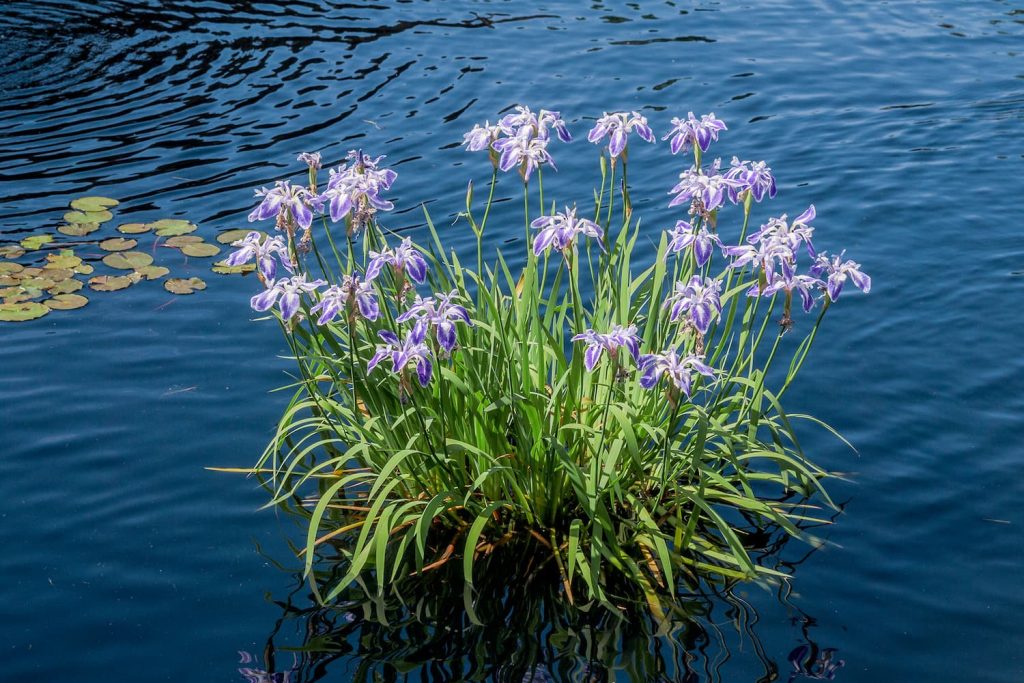
The most practical way to manage overgrown blue flag iris is usually physical division and thinning. The plant grows from rhizomes, so dense clumps can be lifted, divided, and reset with better spacing. This keeps the shoreline planting cleaner and reduces the chance of one mass taking over the whole shelf.
A clean pond edge removal plan usually includes:
- digging and lifting dense clumps
- removing excess rhizomes
- replanting only what the shoreline can support
- clearing dead foliage and trapped debris
- confirming the species before deciding how aggressive removal should be
That last step matters most. Native blue flag iris and invasive yellow flag iris should not be treated the same way.
How Pond Guru Helps
Pond Guru helps pond owners determine whether the iris at the pond edge is a healthy native planting, an overgrown clump that needs thinning, or a misidentified invasive species that should be removed.
A site visit can help assess:
- shoreline planting density
- rhizome spread
- maintenance access
- debris trapping around the edge
- whether the plant is helping or crowding the pond margin
- whether removal, division, or redesign makes the most sense
That kind of review keeps the shoreline functional and visually balanced.
Frequently Asked Questions
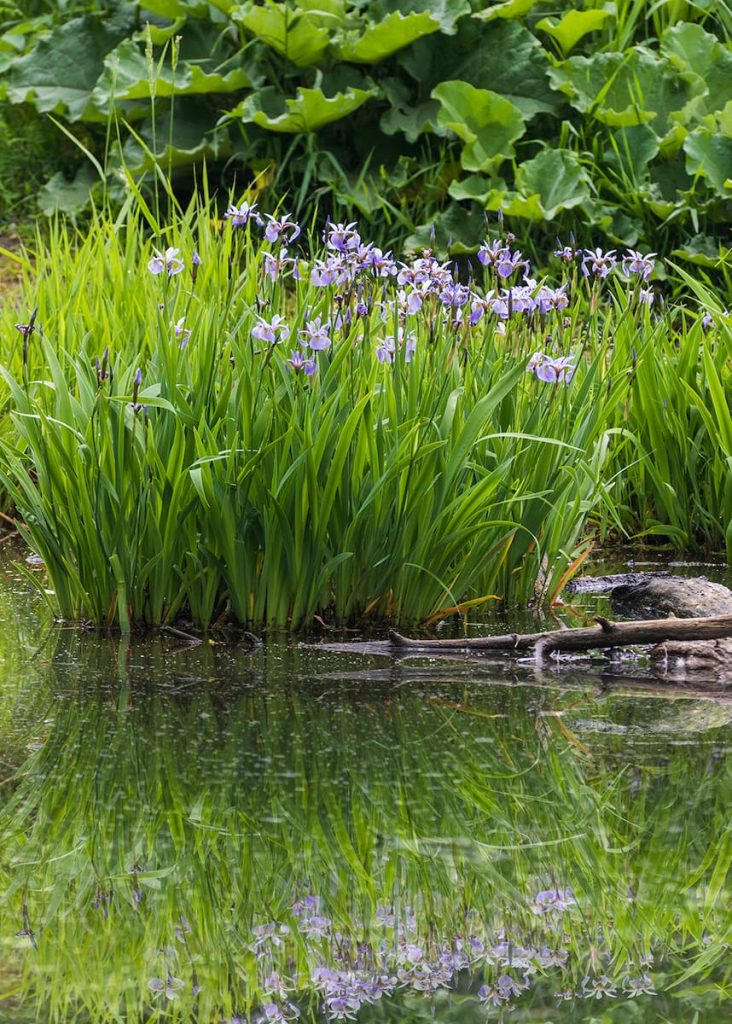
Native blue flag iris in Florida is generally not treated as invasive. The Florida native most often used around ponds is Iris virginica. The invasive concern is more closely tied to yellow flag iris, which is a different species.
Not exactly. Iris versicolor is another blue flag species, but Florida pond plantings are more often referring to Iris virginica. The shared common name is one reason these plants are often confused.
Blue flag iris usually has blue to violet blooms. Yellow flag iris has bright yellow flowers and is considered a high invasion risk in Florida. The foliage can look similar before bloom, which is why flower color and growth pattern matter so much.
Yes. Even a good native shoreline plant can become too dense if it is never thinned. The issue is not invasiveness in that case. It has overgrowth, crowding, and reduced shoreline function.
Pond Guru can inspect the shoreline, identify the iris species, evaluate plant spread, and recommend whether thinning, removal, or a larger shoreline redesign is the best next step.
Ready to Schedule a Visit ?
Have questions about your pond or lake? Our experts are ready to help you take the next step.
Latest Article
Popular Post

Pennywort: From Lawn Weed to Pond Invader
Table of Contents Most Floridians know pennywort as dollarweed,…
A blue iris flower can be one of the best looking plants around a pond edge. It adds color, softens the shoreline, and fits well in wet soil. In Florida, though, the bigger issue is not the bloom itself. It is making sure the plant is correctly identified.
The blue flag iris most often used around Florida ponds is a native wetland plant, not an invasive one. The invasive warning applies more often to yellow flag iris, which is a different species that can spread aggressively in wet areas. That distinction matters for pond owners deciding whether to keep, thin, or remove iris plantings around the water.
This guide explains what blue flag iris is, how to recognize it, why it gets confused with other iris species, and when a pond planting needs to be managed more carefully.
What Blue Flag Iris Is
In Florida pond landscapes, the blue iris flower most people are looking at is usually blue flag iris, Iris virginica. It is a native wetland perennial that grows naturally in marshes, swamps, ditches, and pond or lake edges. It is well suited to wet soils and shallow shoreline conditions, which is why it is often used around pond margins and rain garden style plantings.
This is also where confusion starts. The term blue flag iris can refer to more than one species. In Florida, the native blue flag is usually Iris virginica. In other parts of North America, Iris versicolor is also called blue flag iris. Both are wetland irises, but they are not the same plant.
What It Looks Like
Blue flag iris grows in upright clumps with narrow, sword shaped leaves. The flowers are usually pale blue to violet, though some forms can lean lighter. Each bloom has darker veining and a yellow signal near the center, which helps separate it from some of the other iris species found in wet landscapes.
A clean visual comparison often helps.
Blue flag iris usually has:
- blue to violet blooms
- fan shaped foliage
- clumping rhizomes
- wetland growth habit
- strong performance on pond edges
A white iris flower may look similar in shape, but it is not the common color form most pond owners see when they are looking at the Florida blue flag. The native plant is known much more for its blue to purple range than for white blooms.
Why Blue Iris Gets Confused For Invasive Species
The biggest source of confusion is naming. Many homeowners hear blue flag irises and assume every blue iris near water is the same plant. That is not true.
Two common mix-ups are:
- Iris virginica, the native blue flag commonly used in Florida
- Iris versicolor, another blue flag species more often associated with northern and eastern wetland habitats
The second issue is visual confusion with yellow flag iris. Yellow flag can be easy to mistake for native iris when the plant is not in bloom, especially because the foliage has the same upright, sword leaf look. Once it flowers, the difference becomes much clearer. Yellow flag produces bright yellow flowers, spreads aggressively by rhizomes, and is considered a high invasion risk in Florida.
Why It Matters at a Pond
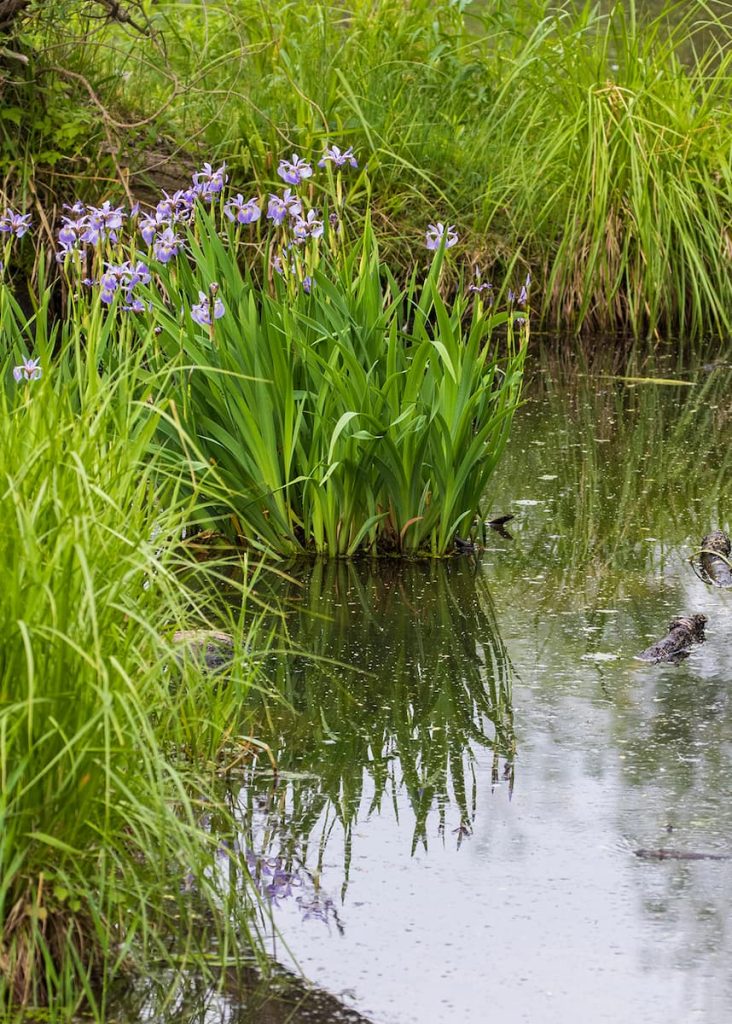
A healthy stand of blue flag iris can be a benefit around a pond. It helps soften the edge, adds seasonal color, and works well in wet soils where many other ornamentals fail. It can also improve the look of retention ponds, decorative ponds, and lightly naturalized shorelines.
The problem starts when plantings are not managed. Even a good shoreline plant can become too dense for a small pond shelf if it is planted too tightly or never divided. Dense clumps can trap debris, narrow the open edge, and make shoreline maintenance harder.
That means there are really two separate concerns:
- a native blue iris planting that needs thinning
- a misidentified invasive iris that should be removed
Those are not the same situation, and they should not be managed the same way.
Symbolism and Garden Appeal
Part of the reason the blue iris flower remains so popular is visual and cultural. Iris flower symbolism is often linked to wisdom, hope, courage, and faith. In broader gardening culture, the meaning of flower iris, iris symbolism, and other iris flower meanings often shift slightly by color, but blue irises are commonly associated with calm, trust, and dignity.
That symbolism is not a management issue, but it does help explain why blue irises continue to be chosen for pond edges, memorial gardens, and formal water features. The plant looks refined, reads well from a distance, and holds strong color near water.
Want Some Blue Flag Iris In Your Pond?
Contact Pond Guru for littoral zone planting. Native plants on your pond’s shoreline can lead to a healthy ecosystem.
When Removal Makes Sense
A blue flag planting may need to be reduced when it starts to crowd the pond margin or interfere with maintenance. That is very different from removing an invasive yellow flag stand, which usually calls for a more aggressive response.
A pond edge iris should be thinned or removed when it is:
- blocking access to the shoreline
- holding too much debris
- crowding out other beneficial plants
- spreading beyond the intended planting zone
- turning a clean pond edge into a dense wet border
If the species is actually yellow flag iris, removal becomes much more important because it is a spreading nonnative plant with a documented invasion risk in Florida.
How to Remove It
The most practical way to manage overgrown blue flag iris is usually physical division and thinning. The plant grows from rhizomes, so dense clumps can be lifted, divided, and reset with better spacing. This keeps the shoreline planting cleaner and reduces the chance of one mass taking over the whole shelf.
A clean pond edge removal plan usually includes:
- digging and lifting dense clumps
- removing excess rhizomes
- replanting only what the shoreline can support
- clearing dead foliage and trapped debris
- confirming the species before deciding how aggressive removal should be
That last step matters most. Native blue flag iris and invasive yellow flag iris should not be treated the same way.
How Pond Guru Helps
Pond Guru helps pond owners determine whether the iris at the pond edge is a healthy native planting, an overgrown clump that needs thinning, or a misidentified invasive species that should be removed.
A site visit can help assess:
- shoreline planting density
- rhizome spread
- maintenance access
- debris trapping around the edge
- whether the plant is helping or crowding the pond margin
- whether removal, division, or redesign makes the most sense
That kind of review keeps the shoreline functional and visually balanced.
Frequently Asked Questions
Native blue flag iris in Florida is generally not treated as invasive. The Florida native most often used around ponds is Iris virginica. The invasive concern is more closely tied to yellow flag iris, which is a different species.
Not exactly. Iris versicolor is another blue flag species, but Florida pond plantings are more often referring to Iris virginica. The shared common name is one reason these plants are often confused.
Blue flag iris usually has blue to violet blooms. Yellow flag iris has bright yellow flowers and is considered a high invasion risk in Florida. The foliage can look similar before bloom, which is why flower color and growth pattern matter so much.
Yes. Even a good native shoreline plant can become too dense if it is never thinned. The issue is not invasiveness in that case. It has overgrowth, crowding, and reduced shoreline function.
Pond Guru can inspect the shoreline, identify the iris species, evaluate plant spread, and recommend whether thinning, removal, or a larger shoreline redesign is the best next step.
Ready to Schedule a Visit ?
Have questions about your pond or lake? Our experts are ready to help you take the next step.
Latest Article
Popular Post
Pennywort: From Lawn Weed to Pond Invader
Table of Contents Most Floridians know pennywort as dollarweed,…