

Pickerelweed Benefits for Florida Ponds and Lakes
Pickerelweed Benefits for Florida Ponds and Lakes
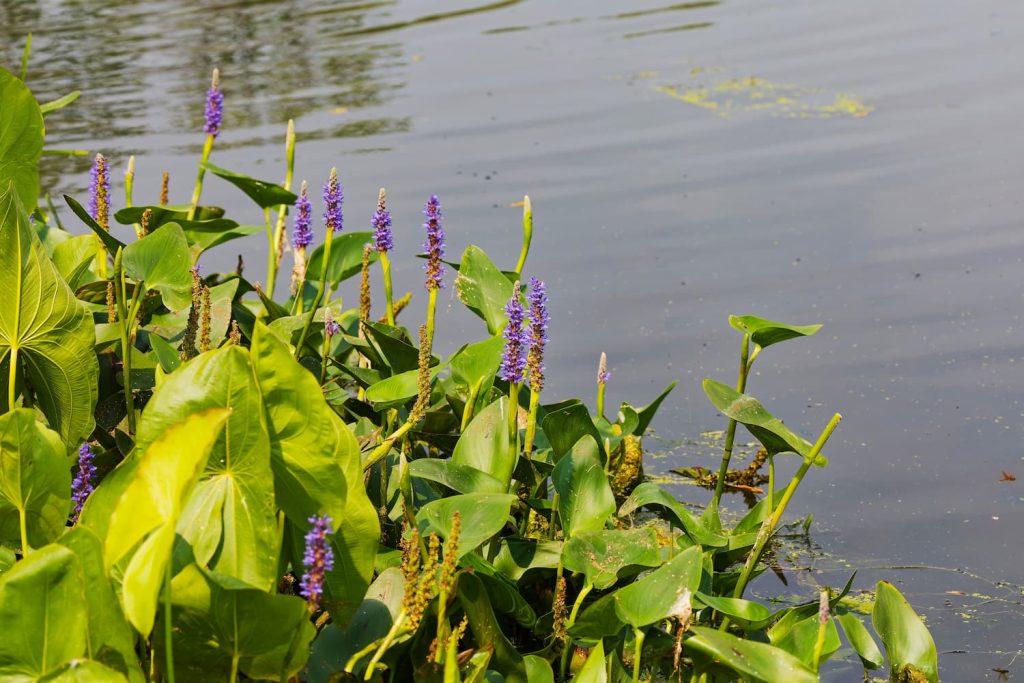
Table of Contents
If you have admired tall spikes of violet-blue flowers rising from the shallow edge of a Florida lake, you have likely been looking at pickerelweed, one of the state’s most valuable and beautiful native aquatic plants. Beyond its good looks, pickerelweed quietly does the work every healthy pond needs: filtering nutrients, holding the shoreline, and feeding an entire web of wildlife from bees to fish to ducks.
This guide covers the ecological benefits of pickerelweed for ponds and lakes, how to identify it, where it grows, how to establish it, and how to keep its vigorous growth in balance in a managed waterbody.
Pickerelweed (Pontederia cordata) is a native Florida aquatic plant that benefits ponds and lakes by absorbing excess nutrients like phosphorus, stabilizing shorelines against erosion, and providing habitat and food for pollinators, fish, and waterfowl. Its violet-blue flower spikes bloom spring through fall, making it both functional and ornamental.
Key Takeaways
- Pickerelweed is a Florida native found nearly throughout the state along shallow pond, lake, and marsh edges.
- It filters nutrients, taking up dissolved phosphorus and nitrogen that would otherwise feed algae.
- It stabilizes shorelines, with a thick rhizome root system that holds bank soil in place.
- It is a wildlife powerhouse, feeding pollinators with nectar, sheltering young fish, and providing seeds for ducks.
- It spreads readily, forming large colonies by underground rhizomes, so occasional maintenance keeps it in balance.
What Is Pickerelweed?
Pickerelweed (Pontederia cordata) is a native emergent aquatic perennial found throughout Florida and much of North America. It grows in shallow water along pond, lake, and marsh edges, producing glossy heart-shaped leaves and dense spikes of violet-blue flowers. It typically reaches 2 to 4 feet tall and blooms from spring through fall.
Understanding what pickerelweed is explains why it appears so often in both natural wetlands and well-designed pond plantings.
According to the Florida Wildflower Foundation, pickerelweed is a perennial native nearly throughout Florida, growing in inundated to saturated soils in full sun to partial shade, reaching 2 to 4 feet, and spreading easily on its own by underground rhizomes to form large colonies. It is an emergent plant, meaning its roots stay submerged while its leaves and flowers rise above the water.
The plant gets its common name from the pickerel, a fish that shelters among its underwater stems, a hint at its value as habitat. Its species name, cordata, means heart-shaped, referring to the leaf shape. Each tall flower spike is packed with small violet-blue flowers, and while individual flowers last only a day, the plant blooms continuously from spring through fall, giving it exceptionally long seasonal color.
What Are the Benefits of Pickerelweed for a Pond?
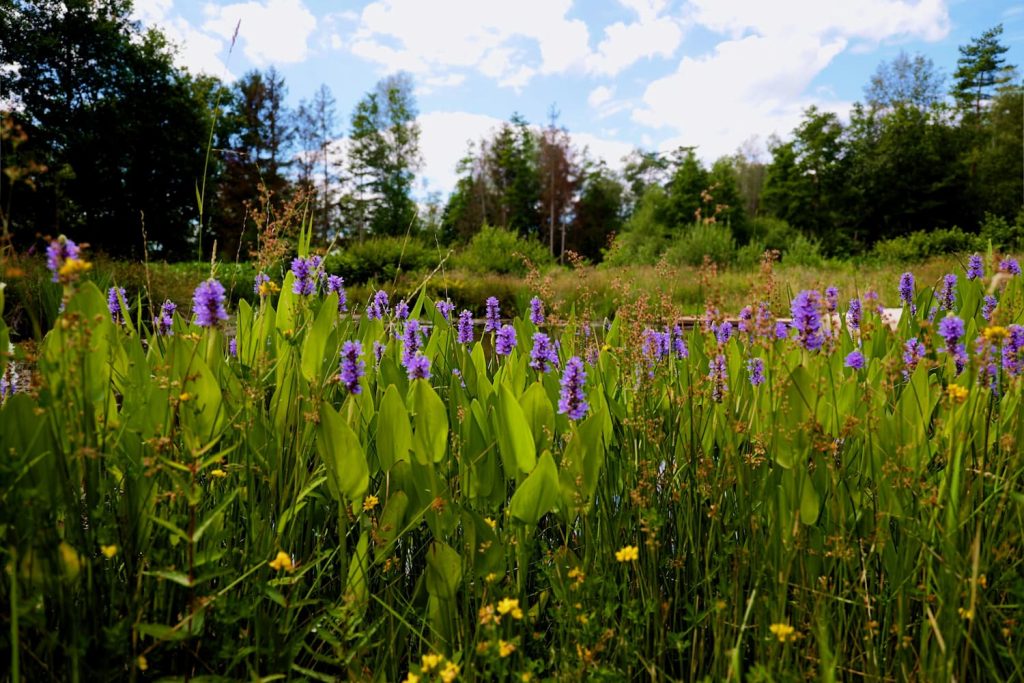
Pickerelweed benefits a pond in four main ways: it absorbs excess nutrients that would otherwise fuel algae, stabilizes shoreline soil with its dense roots, provides food and habitat for pollinators, fish, and waterfowl, and adds long-lasting ornamental color. It is one of the most useful native plants for a managed Florida waterbody.
These overlapping benefits are why pickerelweed is a staple of professional littoral plantings.
Nutrient uptake and water quality. Pickerelweed is noted for excellent uptake of dissolved phosphorus, drawing in the nutrients that drive algae blooms. By competing with algae for that phosphorus and nitrogen, a healthy stand of pickerelweed helps keep water clearer, complementing broader water quality management.
Shoreline stabilization. Its stout rhizome root system binds bank soil and its standing foliage absorbs wave energy, making it a frontline defense against erosion. This is exactly the role native plants play in shoreline restoration and erosion control.
Wildlife and pollinator support. The flowers attract bees, butterflies, and dragonflies, the underwater stems shelter young fish and the invertebrates that feed them, and the seeds are eaten by ducks. It contributes across the whole food web that pond wildlife management aims to sustain.
Beauty and function together. Few native aquatic plants match its long bloom season, so it makes a pond look intentional and cared-for while doing real ecological work.
For communities with permit-required littoral coverage, pickerelweed is a reliable component of a compliant littoral zone planting, often installed alongside other natives for diversity.
How Do You Identify Pickerelweed?
Identify pickerelweed by its glossy, heart-shaped to lance-shaped green leaves on tall fleshy stalks, and its dense spikes of small violet-blue flowers that bloom spring through fall. It grows 2 to 4 feet tall in shallow water at the edges of ponds and lakes, forming spreading colonies.
The combination of leaf shape and the distinctive flower spike makes pickerelweed one of the easier native aquatics to recognize.
Key identification features:
- Leaves: Glossy green, heart-shaped to lance-shaped, up to about 10 inches long, on thick upright stalks.
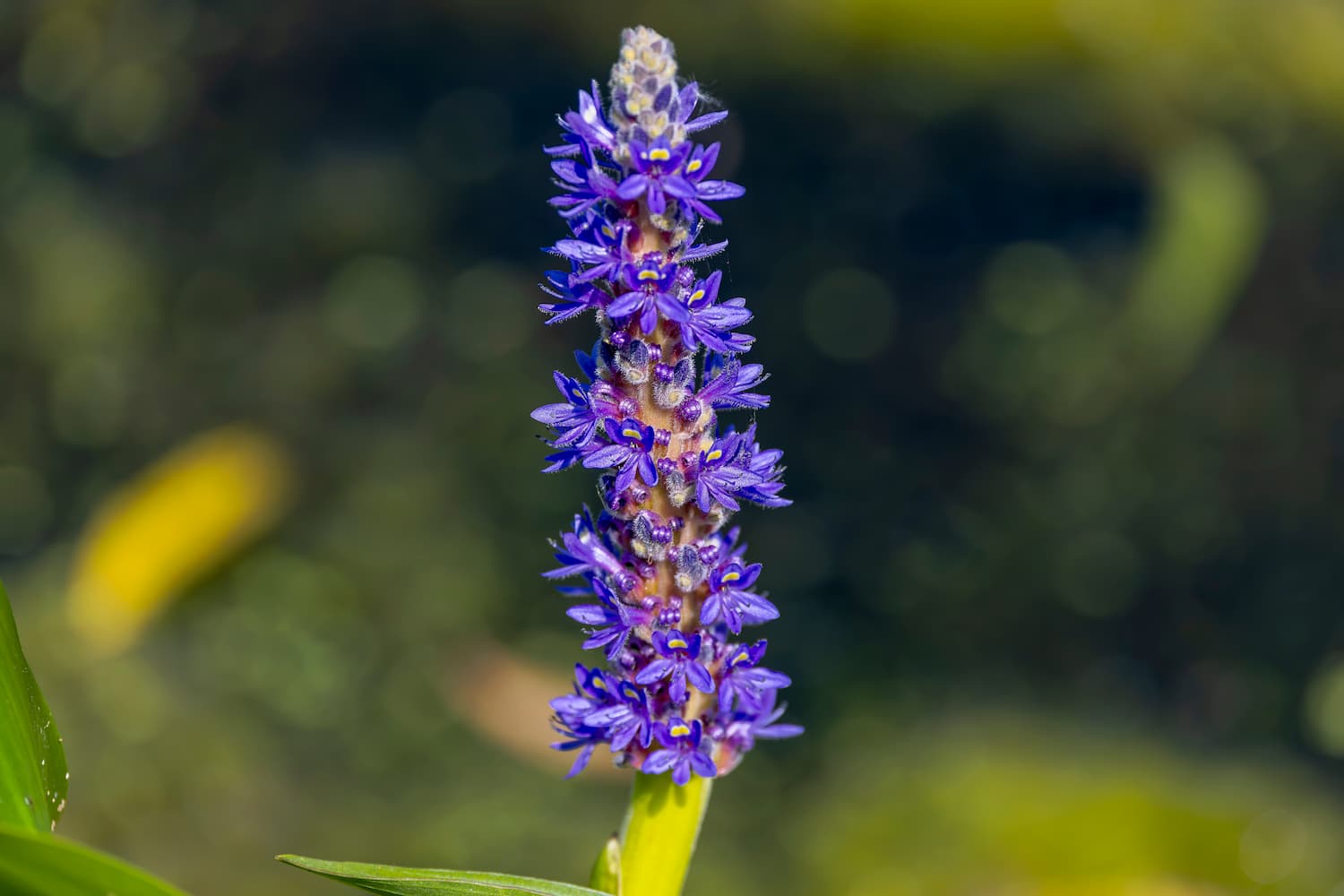
- Flowers: Dense spikes of small violet-blue flowers, each spike up to about 6 inches long, blooming spring through fall.
- Height: Commonly 2 to 4 feet above the water.
- Habit: Colony-forming, spreading by underground rhizomes into large stands.
- Location: Shallow water at the edge, generally in a foot or less of water.
While the flowers are usually violet-blue, they can occasionally be white or pink. The reliable combination to look for is the heart-shaped leaves plus the upright purple flower spike rising from shallow water.
Where Does Pickerelweed Grow in Florida?
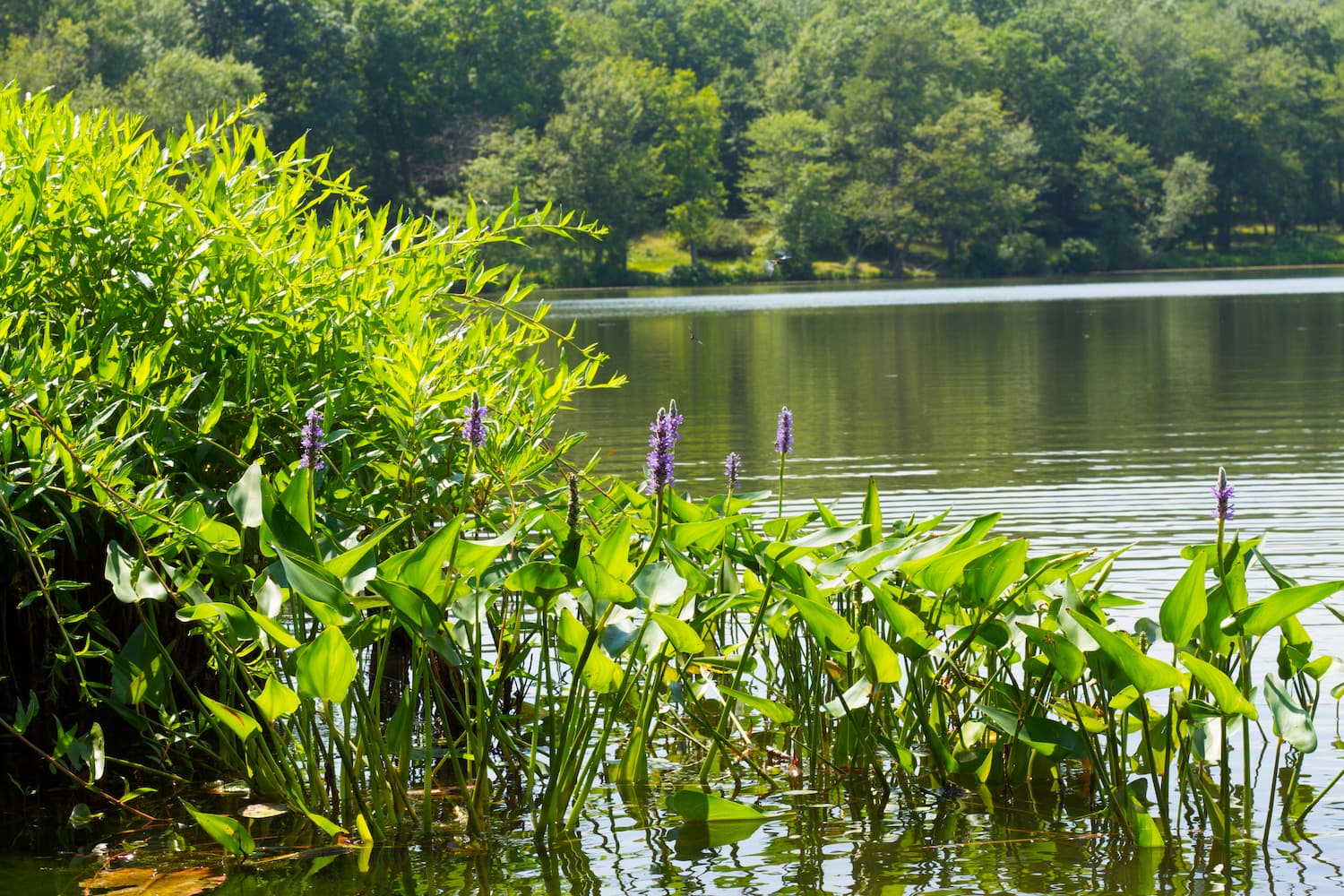
Pickerelweed grows throughout Florida in shallow freshwater along the edges of ponds, lakes, marshes, and slow-moving streams, as well as in drainage swales. It thrives in saturated soil to about a foot of standing water, in full sun to partial shade, and flowers best in full sun.
Its habitat needs align almost perfectly with the shallow shelf engineered into Florida stormwater ponds, which is why it appears so often in plantings.
Conditions pickerelweed prefers:
- Water depth: Saturated soil to roughly a foot of standing water.
- Light: Full sun to partial shade, with best flowering in full sun.
- Water type: Freshwater. It is a wetland species, not salt tolerant.
- Soil: Muddy, mucky, or saturated substrate where its rhizomes can anchor.
Because it is native nearly throughout the state and suited to North, Central, and South Florida, pickerelweed is a dependable choice across the state’s range of conditions.
How Do You Plant and Establish Pickerelweed?
Plant pickerelweed in the shallow littoral zone, from saturated soil to about a foot of water, in full sun for best flowering. It establishes from nursery plugs or division of its rhizomes, and spreads readily once rooted. Plant during the warm growing season and give it room to fill in.
Establishment is generally easy, since pickerelweed is vigorous and adaptable.
Practical guidance:
- Timing. Plant during the warm growing season so roots establish quickly.
- Depth. Set plugs at the waterline or in a few inches of water, matching the shallow edge.
- Propagation. Division of rhizomes or nursery plugs are both reliable, and it can also grow from seed.
- Spacing. Space plants to allow spread, since colonies fill in on their own over time. Spacing of roughly 18 to 24 inches produces cohesive flowering drifts.
- Sun. Give it full sun where possible for the best flowering.
The most common consideration is not getting it to grow, but keeping its spread in balance, which the next section addresses.
Plant Pickerelweed in Your Lake
Pond Guru can help introduce beneficial plants like pickerelweed to help balance your pond’s ecosystem.
Can Pickerelweed Become Too Aggressive?
Pickerelweed can spread vigorously. It grows fast and forms large colonies by underground rhizomes, so in a managed pond it may occasionally need thinning to maintain open water, views, or access. This vigor is usually an asset for erosion control and habitat, but it benefits from periodic maintenance in an amenity setting.
Being honest about its growth habit helps set the right expectations for a community pond.
The Florida Wildflower Foundation notes that pickerelweed is fast-growing and spreads easily on its own by underground rhizomes, forming large colonies if not maintained. In a restoration or erosion-control context, that vigor is exactly what you want. In a manicured amenity pond, it means planning for occasional upkeep.
Practical implications for a managed waterbody:
- Expect it to expand and fill its zone over a few seasons.
- Periodic thinning may be needed to preserve sightlines, fishing access, or open water.
- This is routine maintenance, not a control problem, since pickerelweed is a beneficial native, not an invasive.
- Watch permit coverage, keeping the stand within any required littoral percentage.
Importantly, this is native vigor, fundamentally different from an invasive plant like hydrilla or water hyacinth. Pickerelweed supports the ecosystem it evolved in rather than displacing it, so managing it is about balance, not eradication.
Schedule a Site Visit With Pond Guru
Pickerelweed is a great example of what the right native plant does for a waterbody: it filters nutrients, holds the bank, feeds wildlife, and blooms for months, all while looking like the shoreline was designed rather than left to chance. It works best as part of a diverse littoral planting matched to your pond’s specific conditions.
Pond Guru works with HOA boards, property managers, and homeowners across Florida to design and install native littoral plantings, restore shorelines, and manage water quality in community lakes and ponds.
Because plant selection depends on depth, sunlight, and any permit requirements, the process starts with an evaluation. To find out what your shoreline can support, schedule a site visit with Pond Guru and a specialist will assess conditions and recommend a planting plan.
Frequently Asked Questions
Pickerelweed benefits a pond by absorbing excess nutrients like phosphorus that fuel algae, stabilizing shoreline soil against erosion, and providing food and habitat for pollinators, fish, and waterfowl. Its long bloom season also adds ornamental value, making it one of the most useful native plants for a managed Florida waterbody.
Yes. Pickerelweed (Pontederia cordata) is a native perennial found nearly throughout Florida, growing along the shallow edges of ponds, lakes, marshes, and slow streams. It is a beneficial native, not an invasive species, and it supports pollinators, fish, and waterfowl as part of a healthy wetland ecosystem.
Plant pickerelweed in the shallow littoral zone, from saturated soil to about a foot of standing water, in full sun for the best flowering. Install nursery plugs or rhizome divisions during the warm growing season, and give plants room to spread, since they fill in on their own over time.
Pickerelweed grows quickly and forms large colonies through underground rhizomes, so it can spread vigorously. In a managed amenity pond it may need occasional thinning to maintain open water and access. This is routine maintenance rather than an invasive problem, since pickerelweed is a beneficial Florida native.
Yes, extensively. The violet-blue flowers attract bees, butterflies, and dragonflies, the underwater stems shelter young fish and invertebrates, and the seeds are eaten by ducks. Pickerelweed is a genuine wildlife powerhouse, supporting multiple levels of the pond food web from pollinators to fish to waterfowl.
Ready to Schedule a Visit ?
Have questions about your pond or lake? Our experts are ready to help you take the next step.
Latest Article
Popular Post

Why Keeping Culverts Clear of Debris Matters for Stormwater Systems
Table of Contents A culvert is one of those…
Table of Contents
If you have admired tall spikes of violet-blue flowers rising from the shallow edge of a Florida lake, you have likely been looking at pickerelweed, one of the state’s most valuable and beautiful native aquatic plants. Beyond its good looks, pickerelweed quietly does the work every healthy pond needs: filtering nutrients, holding the shoreline, and feeding an entire web of wildlife from bees to fish to ducks.
This guide covers the ecological benefits of pickerelweed for ponds and lakes, how to identify it, where it grows, how to establish it, and how to keep its vigorous growth in balance in a managed waterbody.
Pickerelweed (Pontederia cordata) is a native Florida aquatic plant that benefits ponds and lakes by absorbing excess nutrients like phosphorus, stabilizing shorelines against erosion, and providing habitat and food for pollinators, fish, and waterfowl. Its violet-blue flower spikes bloom spring through fall, making it both functional and ornamental.
Key Takeaways
- Pickerelweed is a Florida native found nearly throughout the state along shallow pond, lake, and marsh edges.
- It filters nutrients, taking up dissolved phosphorus and nitrogen that would otherwise feed algae.
- It stabilizes shorelines, with a thick rhizome root system that holds bank soil in place.
- It is a wildlife powerhouse, feeding pollinators with nectar, sheltering young fish, and providing seeds for ducks.
- It spreads readily, forming large colonies by underground rhizomes, so occasional maintenance keeps it in balance.
What Is Pickerelweed?
Pickerelweed (Pontederia cordata) is a native emergent aquatic perennial found throughout Florida and much of North America. It grows in shallow water along pond, lake, and marsh edges, producing glossy heart-shaped leaves and dense spikes of violet-blue flowers. It typically reaches 2 to 4 feet tall and blooms from spring through fall.
Understanding what pickerelweed is explains why it appears so often in both natural wetlands and well-designed pond plantings.
According to the Florida Wildflower Foundation, pickerelweed is a perennial native nearly throughout Florida, growing in inundated to saturated soils in full sun to partial shade, reaching 2 to 4 feet, and spreading easily on its own by underground rhizomes to form large colonies. It is an emergent plant, meaning its roots stay submerged while its leaves and flowers rise above the water.
The plant gets its common name from the pickerel, a fish that shelters among its underwater stems, a hint at its value as habitat. Its species name, cordata, means heart-shaped, referring to the leaf shape. Each tall flower spike is packed with small violet-blue flowers, and while individual flowers last only a day, the plant blooms continuously from spring through fall, giving it exceptionally long seasonal color.
What Are the Benefits of Pickerelweed for a Pond?
Pickerelweed benefits a pond in four main ways: it absorbs excess nutrients that would otherwise fuel algae, stabilizes shoreline soil with its dense roots, provides food and habitat for pollinators, fish, and waterfowl, and adds long-lasting ornamental color. It is one of the most useful native plants for a managed Florida waterbody.
These overlapping benefits are why pickerelweed is a staple of professional littoral plantings.
Nutrient uptake and water quality. Pickerelweed is noted for excellent uptake of dissolved phosphorus, drawing in the nutrients that drive algae blooms. By competing with algae for that phosphorus and nitrogen, a healthy stand of pickerelweed helps keep water clearer, complementing broader water quality management.
Shoreline stabilization. Its stout rhizome root system binds bank soil and its standing foliage absorbs wave energy, making it a frontline defense against erosion. This is exactly the role native plants play in shoreline restoration and erosion control.
Wildlife and pollinator support. The flowers attract bees, butterflies, and dragonflies, the underwater stems shelter young fish and the invertebrates that feed them, and the seeds are eaten by ducks. It contributes across the whole food web that pond wildlife management aims to sustain.
Beauty and function together. Few native aquatic plants match its long bloom season, so it makes a pond look intentional and cared-for while doing real ecological work.
For communities with permit-required littoral coverage, pickerelweed is a reliable component of a compliant littoral zone planting, often installed alongside other natives for diversity.
How Do You Identify Pickerelweed?
Identify pickerelweed by its glossy, heart-shaped to lance-shaped green leaves on tall fleshy stalks, and its dense spikes of small violet-blue flowers that bloom spring through fall. It grows 2 to 4 feet tall in shallow water at the edges of ponds and lakes, forming spreading colonies.
The combination of leaf shape and the distinctive flower spike makes pickerelweed one of the easier native aquatics to recognize.
Key identification features:
- Leaves: Glossy green, heart-shaped to lance-shaped, up to about 10 inches long, on thick upright stalks.
- Flowers: Dense spikes of small violet-blue flowers, each spike up to about 6 inches long, blooming spring through fall.
- Height: Commonly 2 to 4 feet above the water.
- Habit: Colony-forming, spreading by underground rhizomes into large stands.
- Location: Shallow water at the edge, generally in a foot or less of water.
While the flowers are usually violet-blue, they can occasionally be white or pink. The reliable combination to look for is the heart-shaped leaves plus the upright purple flower spike rising from shallow water.
Where Does Pickerelweed Grow in Florida?

Pickerelweed grows throughout Florida in shallow freshwater along the edges of ponds, lakes, marshes, and slow-moving streams, as well as in drainage swales. It thrives in saturated soil to about a foot of standing water, in full sun to partial shade, and flowers best in full sun.
Its habitat needs align almost perfectly with the shallow shelf engineered into Florida stormwater ponds, which is why it appears so often in plantings.
Conditions pickerelweed prefers:
- Water depth: Saturated soil to roughly a foot of standing water.
- Light: Full sun to partial shade, with best flowering in full sun.
- Water type: Freshwater. It is a wetland species, not salt tolerant.
- Soil: Muddy, mucky, or saturated substrate where its rhizomes can anchor.
Because it is native nearly throughout the state and suited to North, Central, and South Florida, pickerelweed is a dependable choice across the state’s range of conditions.
How Do You Plant and Establish Pickerelweed?
Plant pickerelweed in the shallow littoral zone, from saturated soil to about a foot of water, in full sun for best flowering. It establishes from nursery plugs or division of its rhizomes, and spreads readily once rooted. Plant during the warm growing season and give it room to fill in.
Establishment is generally easy, since pickerelweed is vigorous and adaptable.
Practical guidance:
- Timing. Plant during the warm growing season so roots establish quickly.
- Depth. Set plugs at the waterline or in a few inches of water, matching the shallow edge.
- Propagation. Division of rhizomes or nursery plugs are both reliable, and it can also grow from seed.
- Spacing. Space plants to allow spread, since colonies fill in on their own over time. Spacing of roughly 18 to 24 inches produces cohesive flowering drifts.
- Sun. Give it full sun where possible for the best flowering.
The most common consideration is not getting it to grow, but keeping its spread in balance, which the next section addresses.
Plant Pickerelweed in Your Lake
Pond Guru can help introduce beneficial plants like pickerelweed to help balance your pond’s ecosystem.
Can Pickerelweed Become Too Aggressive?
Pickerelweed can spread vigorously. It grows fast and forms large colonies by underground rhizomes, so in a managed pond it may occasionally need thinning to maintain open water, views, or access. This vigor is usually an asset for erosion control and habitat, but it benefits from periodic maintenance in an amenity setting.
Being honest about its growth habit helps set the right expectations for a community pond.
The Florida Wildflower Foundation notes that pickerelweed is fast-growing and spreads easily on its own by underground rhizomes, forming large colonies if not maintained. In a restoration or erosion-control context, that vigor is exactly what you want. In a manicured amenity pond, it means planning for occasional upkeep.
Practical implications for a managed waterbody:
- Expect it to expand and fill its zone over a few seasons.
- Periodic thinning may be needed to preserve sightlines, fishing access, or open water.
- This is routine maintenance, not a control problem, since pickerelweed is a beneficial native, not an invasive.
- Watch permit coverage, keeping the stand within any required littoral percentage.
Importantly, this is native vigor, fundamentally different from an invasive plant like hydrilla or water hyacinth. Pickerelweed supports the ecosystem it evolved in rather than displacing it, so managing it is about balance, not eradication.
Schedule a Site Visit With Pond Guru

Pickerelweed is a great example of what the right native plant does for a waterbody: it filters nutrients, holds the bank, feeds wildlife, and blooms for months, all while looking like the shoreline was designed rather than left to chance. It works best as part of a diverse littoral planting matched to your pond’s specific conditions.
Pond Guru works with HOA boards, property managers, and homeowners across Florida to design and install native littoral plantings, restore shorelines, and manage water quality in community lakes and ponds.
Because plant selection depends on depth, sunlight, and any permit requirements, the process starts with an evaluation. To find out what your shoreline can support, schedule a site visit with Pond Guru and a specialist will assess conditions and recommend a planting plan.
Frequently Asked Questions
Pickerelweed benefits a pond by absorbing excess nutrients like phosphorus that fuel algae, stabilizing shoreline soil against erosion, and providing food and habitat for pollinators, fish, and waterfowl. Its long bloom season also adds ornamental value, making it one of the most useful native plants for a managed Florida waterbody.
Yes. Pickerelweed (Pontederia cordata) is a native perennial found nearly throughout Florida, growing along the shallow edges of ponds, lakes, marshes, and slow streams. It is a beneficial native, not an invasive species, and it supports pollinators, fish, and waterfowl as part of a healthy wetland ecosystem.
Plant pickerelweed in the shallow littoral zone, from saturated soil to about a foot of standing water, in full sun for the best flowering. Install nursery plugs or rhizome divisions during the warm growing season, and give plants room to spread, since they fill in on their own over time.
Pickerelweed grows quickly and forms large colonies through underground rhizomes, so it can spread vigorously. In a managed amenity pond it may need occasional thinning to maintain open water and access. This is routine maintenance rather than an invasive problem, since pickerelweed is a beneficial Florida native.
Yes, extensively. The violet-blue flowers attract bees, butterflies, and dragonflies, the underwater stems shelter young fish and invertebrates, and the seeds are eaten by ducks. Pickerelweed is a genuine wildlife powerhouse, supporting multiple levels of the pond food web from pollinators to fish to waterfowl.
Ready to Schedule a Visit ?
Have questions about your pond or lake? Our experts are ready to help you take the next step.
Latest Article
Popular Post
Why Keeping Culverts Clear of Debris Matters for Stormwater Systems
Table of Contents A culvert is one of those…