

Coontail in Ponds and Lakes: Benefits, Control, and Identification
Coontail in Ponds and Lakes: Benefits, Control, and Identification
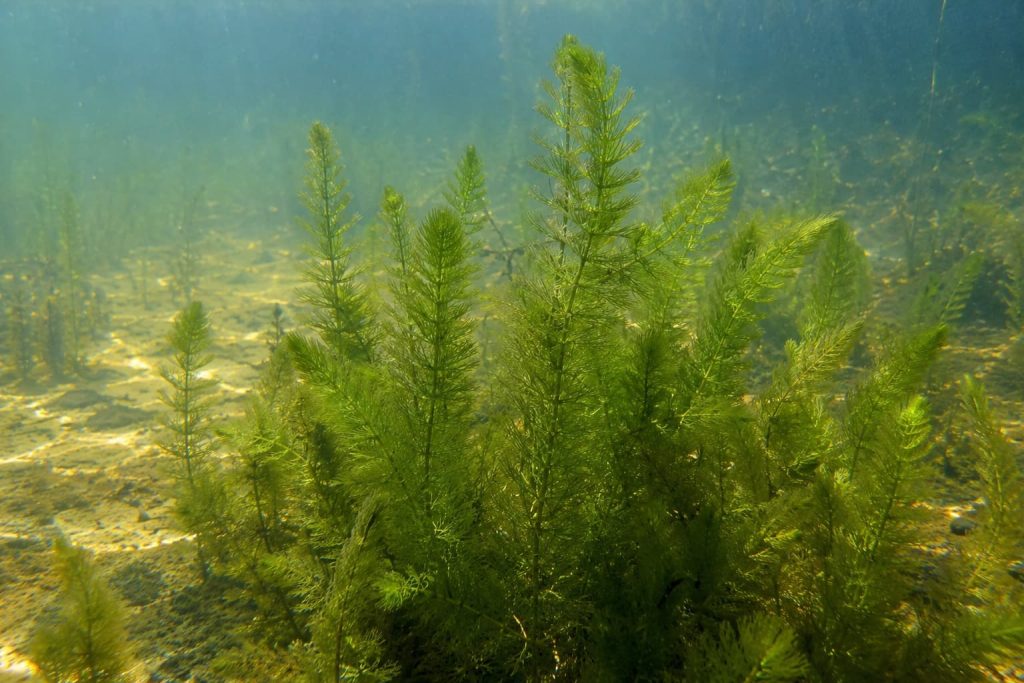
Table of Contents
Coontail is one of the most common submerged plants in ponds and lakes across North America, and it tends to divide opinion. To one pond owner it is valuable fish habitat and a natural water cleaner. To another it is a nuisance weed choking out the swimming area. Both are right, because coontail is genuinely a case of a good plant that can become a problem.
This guide explains what coontail is, how to identify it and tell it apart from lookalikes like milfoil and hydrilla, the real benefits it provides, and how to control it when it takes over.
Coontail (Ceratophyllum demersum), also called hornwort, is a native submerged aquatic plant found in ponds and lakes. It is rootless and grows entirely underwater. In moderate amounts it benefits water quality and fish habitat, but it can grow rapidly and take over a waterbody, usually when excess nutrients are present.
Key Takeaways
- Coontail is a native plant, not an invasive one, despite sometimes being called a weed. In moderation it is part of a healthy pond.
- It is rootless. Coontail floats or loosely anchors, absorbing nutrients directly from the water, which is why it improves water clarity.
- It benefits fish and wildlife, providing cover for young fish and food for waterfowl.
- It can overgrow, forming dense mats that limit swimming, boating, and fishing, usually when nutrients are high.
- Control combines methods: raking, grass carp, and aquatic herbicides, paired with nutrient management to address the cause.
What Is Coontail?
Coontail (Ceratophyllum demersum) is a native, rootless, submerged perennial aquatic plant, also known as hornwort. It grows entirely underwater, with dark green, forked, bristly leaves arranged in whorls around the stem. The bushy tips resemble a raccoon’s tail, giving the plant its common name.
Understanding coontail starts with its most unusual trait: it has no true roots. It draws everything it needs directly from the water.
According to Rutgers New Jersey Agricultural Experiment Station, coontail lacks true roots but may be loosely anchored to the bottom by specialized, finely divided stems called rhizoids, and because it absorbs nutrients from the water rather than the sediment, it provides a water quality benefit and may help improve pond clarity. Its leaves are arranged in whorls of five or more, with forks and small teeth that give the plant a rough feel.
The plant can grow surprisingly long, reaching 15 feet or more, and is often bushy near the tips. It is a true submerged plant, spending its whole life underwater, with tiny flowers that are rarely seen. It reproduces both by seed and, importantly for control, by fragments of the plant breaking off and growing into new plants.

How Do You Identify Coontail?
You can identify coontail by its whorls of dark green, stiff, forked leaves with small teeth along the edges, giving it a rough, bristly feel. The stems are bushy near the tips, resembling a raccoon’s tail or a Christmas tree. Unlike many aquatic plants, coontail has no roots and is often found free-floating or loosely anchored.
The feel and shape of the leaves are the most reliable identification clues, especially when distinguishing coontail from similar plants.
Key identification features:
- Leaves: Dark green, stiff, and forked, arranged in whorls around the stem, with tiny teeth that make them feel rough or bristly.
- Tips: Bushy and dense, creating the characteristic raccoon-tail or Christmas-tree appearance.
- Roots: None. Coontail is rootless, though it may loosely anchor with modified stems.
- Growth: Entirely submerged, sometimes reaching 15 feet long.
- Feel: Rough and coarse, not soft or feathery.
That rough, forked texture is the single best way to separate coontail from its common lookalikes, which is covered next.
Coontail vs Milfoil vs Hydrilla: What Is the Difference?
The key difference is leaf texture and structure. Coontail has stiff, forked, bristly leaves and no roots. Milfoil has soft, feather-like leaves that are finely divided like a feather. Hydrilla has small, pointed leaves in whorls with a distinctly toothed, rough midrib. Correct identification matters because these plants can require different management.
These three submerged plants are constantly confused, and telling them apart is one of the most common questions in pond management.
Feature | Coontail | Milfoil | Hydrilla |
|---|---|---|---|
Leaf shape | Forked, bristly | Feather-like, soft | Small, pointed, in whorls |
Texture | Rough and stiff | Soft and limp out of water | Rough, toothed leaf edges |
Roots | None | Rooted | Rooted, with tubers |
Memory cue | Christmas tree | Feather | Toothed strands |
Native status | Native | Some species invasive | Invasive |
When you think milfoil, think feather-like, and when you think coontail, think Christmas tree. Milfoil leaves are soft and finely divided, while coontail leaves are spiny and forked. The distinction matters, because hydrilla in particular is an aggressive invasive that often warrants faster, more serious intervention than native coontail.
If you are unsure what you are looking at, professional identification is worthwhile, since misidentifying an invasive like hydrilla as harmless coontail can allow a serious problem to spread.
Is Coontail Good or Bad for a Pond?

Coontail is both. In moderate amounts it is beneficial: it oxygenates water, absorbs excess nutrients, improves clarity, provides cover for young fish, and offers food for waterfowl. It becomes a problem when it grows into dense mats that crowd out open water and interfere with fishing, swimming, and boating, usually a sign of excess nutrients.
This dual nature is the key to understanding coontail, and it explains why advice about it seems contradictory.
On the beneficial side, Mississippi State University Extension notes that coontail is a native plant that provides habitat to invertebrates and fish, that ducks eat the fruit, and that in small quantities it is part of a healthy pond ecosystem. Its nutrient absorption can genuinely improve water quality and clarity.
The benefits in summary:
- Oxygenates the water through photosynthesis during the day.
- Absorbs excess nutrients, competing with algae and improving clarity.
- Shelters young fish like bluegill, perch, and bass from predators.
- Feeds waterfowl, which eat the plant and its fruit.
The problem is that the same nutrient absorption that makes coontail useful also lets it grow explosively when nutrients are abundant. Mississippi State notes it grows quickly and can take over aquatic habitats even in deeper ponds. When that happens, dense mats limit recreation, can crowd out other plants, and in extreme cases contribute to oxygen swings when large amounts die and decompose.
The takeaway is balance. A moderate amount of coontail is a sign of a functioning pond. A pond choked with it usually has an underlying nutrient problem worth addressing.
What Causes Coontail to Take Over a Pond?
Coontail overgrowth is usually driven by excess nutrients, primarily phosphorus and nitrogen, combined with sunlight reaching the pond bottom. These nutrients typically come from fertilizer runoff, organic matter, and sediment buildup. Because coontail absorbs nutrients directly from the water, a nutrient-rich pond fuels rapid, dense growth.
Understanding the cause is what separates a lasting solution from an endless cycle of treatment.
Coontail is essentially a symptom as much as a plant. Because it feeds directly from the water column, an overabundance of dissolved nutrients is like pouring fuel on it. The common nutrient sources will be familiar to anyone who has dealt with pond algae:
- Fertilizer runoff from surrounding lawns and landscaping.
- Organic matter like leaves, grass clippings, and accumulated muck.
- Sediment buildup that makes the pond shallower and sunlit to the bottom.
- Stormwater runoff carrying nutrients from surrounding surfaces.
This is why treating coontail without addressing nutrients tends to fail. You can remove or kill the existing plants, but if the nutrient supply remains, it grows back. Lasting management pairs plant control with nutrient reduction, which is where pond water quality testing helps by identifying the sources feeding the growth.
Manage Out of Control Coontail
Lake weed management is core to maintaining healthy waterbodies, especially when it comes to stormwater and retention ponds.
How Do You Get Rid of Coontail in a Pond?
Coontail is controlled through a combination of methods: mechanical removal by raking or harvesting, biological control with grass carp, and aquatic herbicides for larger infestations. Because coontail regrows from fragments, mechanical removal must be thorough. Pairing any method with nutrient management is essential to prevent regrowth.
There is no single best method; the right approach depends on the size of the pond, the severity of the growth, and how the water is used. Here are the main options.
- Mechanical removal. Raking, cutting, or harvesting works for smaller areas and provides immediate results. The critical caution, per Rutgers, is that coontail reproduces from fragments, so every piece must be removed or it will regrow from the pieces left behind.
- Grass carp. Triploid (sterile) grass carp will eat coontail, though it is not their preferred food, so they eat other plants first. Extension guidance suggests stocking rates in the range of roughly 7 to 15 per surface acre, and many states require a permit for these fish. They are a slow, long-term biological control.
- Aquatic herbicides. Several herbicides labeled for submerged plants can control coontail, often working within weeks. These must be applied according to the label, which is the law, and large ponds are often treated in sections to avoid oxygen crashes from too much plant matter dying at once.
- Pond dye and shading. Limiting sunlight to the pond bottom can slow regrowth as a supporting measure.
A crucial point applies to every method: killing a large amount of coontail at once can deplete oxygen as the plants decompose, potentially harming fish. This is why professional aquatic vegetation and lake management often treats in stages and pairs removal with aeration. Combining control with littoral and nutrient management addresses the underlying cause so the problem does not simply return each season.
Schedule a Site Visit With Pond Guru
Coontail is a good example of why pond management is rarely as simple as killing a plant. A moderate amount is healthy, an overgrowth signals a nutrient problem, and clearing it too aggressively can harm your fish. The right approach depends on your specific pond and what is actually driving the growth.
Pond Guru works with HOA boards, property managers, and homeowners across Florida to identify aquatic plants, manage nuisance growth safely, test water quality, and address the nutrient sources behind recurring problems.
Because every pond is different, the process starts with an on-site evaluation. To identify what is growing in your water and manage it properly, schedule a site visit with Pond Guru and a specialist will assess conditions and recommend a plan.

Frequently Asked Questions
Coontail (Ceratophyllum demersum), also called hornwort, is a native, rootless, submerged aquatic plant common in ponds and lakes. It grows entirely underwater with dark green, forked, bristly leaves in whorls, and bushy tips resembling a raccoon's tail. In moderation it benefits water quality and fish habitat.
Both. In moderate amounts, coontail oxygenates water, absorbs excess nutrients, improves clarity, and shelters young fish, making it part of a healthy pond. It becomes a problem when it forms dense mats that crowd out open water and interfere with fishing and swimming, usually a sign of excess nutrients.
Use a combination of mechanical removal, grass carp, and aquatic herbicides depending on the severity. Because coontail regrows from fragments, mechanical removal must be thorough. Most importantly, pair control with nutrient management, since overgrowth is driven by excess nutrients that will fuel regrowth if left unaddressed.
Yes, but it is not their preferred food, so they eat other aquatic plants first and may be slow to control it. Stocking rates are typically around 7 to 15 triploid grass carp per surface acre, and many states require a permit. Grass carp are a gradual, long-term biological control option.
Coontail has stiff, forked, bristly leaves and no roots, resembling a Christmas tree. Milfoil has soft, feather-like leaves and is rooted. Hydrilla has small pointed leaves with toothed edges and is an aggressive invasive. Correct identification matters, since invasive hydrilla often needs faster, more serious management than native coontail.
Ready to Schedule a Visit ?
Have questions about your pond or lake? Our experts are ready to help you take the next step.
Latest Article
Popular Post

Why Keeping Culverts Clear of Debris Matters for Stormwater Systems
Table of Contents A culvert is one of those…
Table of Contents
Coontail is one of the most common submerged plants in ponds and lakes across North America, and it tends to divide opinion. To one pond owner it is valuable fish habitat and a natural water cleaner. To another it is a nuisance weed choking out the swimming area. Both are right, because coontail is genuinely a case of a good plant that can become a problem.
This guide explains what coontail is, how to identify it and tell it apart from lookalikes like milfoil and hydrilla, the real benefits it provides, and how to control it when it takes over.
Coontail (Ceratophyllum demersum), also called hornwort, is a native submerged aquatic plant found in ponds and lakes. It is rootless and grows entirely underwater. In moderate amounts it benefits water quality and fish habitat, but it can grow rapidly and take over a waterbody, usually when excess nutrients are present.
Key Takeaways
- Coontail is a native plant, not an invasive one, despite sometimes being called a weed. In moderation it is part of a healthy pond.
- It is rootless. Coontail floats or loosely anchors, absorbing nutrients directly from the water, which is why it improves water clarity.
- It benefits fish and wildlife, providing cover for young fish and food for waterfowl.
- It can overgrow, forming dense mats that limit swimming, boating, and fishing, usually when nutrients are high.
- Control combines methods: raking, grass carp, and aquatic herbicides, paired with nutrient management to address the cause.
What Is Coontail?
Coontail (Ceratophyllum demersum) is a native, rootless, submerged perennial aquatic plant, also known as hornwort. It grows entirely underwater, with dark green, forked, bristly leaves arranged in whorls around the stem. The bushy tips resemble a raccoon’s tail, giving the plant its common name.
Understanding coontail starts with its most unusual trait: it has no true roots. It draws everything it needs directly from the water.
According to Rutgers New Jersey Agricultural Experiment Station, coontail lacks true roots but may be loosely anchored to the bottom by specialized, finely divided stems called rhizoids, and because it absorbs nutrients from the water rather than the sediment, it provides a water quality benefit and may help improve pond clarity. Its leaves are arranged in whorls of five or more, with forks and small teeth that give the plant a rough feel.
The plant can grow surprisingly long, reaching 15 feet or more, and is often bushy near the tips. It is a true submerged plant, spending its whole life underwater, with tiny flowers that are rarely seen. It reproduces both by seed and, importantly for control, by fragments of the plant breaking off and growing into new plants.
How Do You Identify Coontail?
You can identify coontail by its whorls of dark green, stiff, forked leaves with small teeth along the edges, giving it a rough, bristly feel. The stems are bushy near the tips, resembling a raccoon’s tail or a Christmas tree. Unlike many aquatic plants, coontail has no roots and is often found free-floating or loosely anchored.
The feel and shape of the leaves are the most reliable identification clues, especially when distinguishing coontail from similar plants.
Key identification features:
- Leaves: Dark green, stiff, and forked, arranged in whorls around the stem, with tiny teeth that make them feel rough or bristly.
- Tips: Bushy and dense, creating the characteristic raccoon-tail or Christmas-tree appearance.
- Roots: None. Coontail is rootless, though it may loosely anchor with modified stems.
- Growth: Entirely submerged, sometimes reaching 15 feet long.
- Feel: Rough and coarse, not soft or feathery.
That rough, forked texture is the single best way to separate coontail from its common lookalikes, which is covered next.
Coontail vs Milfoil vs Hydrilla: What Is the Difference?
The key difference is leaf texture and structure. Coontail has stiff, forked, bristly leaves and no roots. Milfoil has soft, feather-like leaves that are finely divided like a feather. Hydrilla has small, pointed leaves in whorls with a distinctly toothed, rough midrib. Correct identification matters because these plants can require different management.
These three submerged plants are constantly confused, and telling them apart is one of the most common questions in pond management.
Coontail: Forked, bristly leaves. Rough and stiff texture. No roots. Memory cue: Christmas tree. Native.
Milfoil: Feather-like, soft leaves. Soft and limp out of water. Rooted. Memory cue: feather. Some species invasive.
Hydrilla: Small, pointed leaves in whorls. Rough with toothed leaf edges. Rooted, with tubers. Memory cue: toothed strands. Invasive.
As The Pond Guy learning center puts it, when you think milfoil, think feather-like, and when you think coontail, think Christmas tree. Milfoil leaves are soft and finely divided, while coontail leaves are spiny and forked. The distinction matters, because hydrilla in particular is an aggressive invasive that often warrants faster, more serious intervention than native coontail.
If you are unsure what you are looking at, professional identification is worthwhile, since misidentifying an invasive like hydrilla as harmless coontail can allow a serious problem to spread.
Is Coontail Good or Bad for a Pond?

Coontail is both. In moderate amounts it is beneficial: it oxygenates water, absorbs excess nutrients, improves clarity, provides cover for young fish, and offers food for waterfowl. It becomes a problem when it grows into dense mats that crowd out open water and interfere with fishing, swimming, and boating, usually a sign of excess nutrients.
This dual nature is the key to understanding coontail, and it explains why advice about it seems contradictory.
On the beneficial side, Mississippi State University Extension notes that coontail is a native plant that provides habitat to invertebrates and fish, that ducks eat the fruit, and that in small quantities it is part of a healthy pond ecosystem. Its nutrient absorption can genuinely improve water quality and clarity.
The benefits in summary:
- Oxygenates the water through photosynthesis during the day.
- Absorbs excess nutrients, competing with algae and improving clarity.
- Shelters young fish like bluegill, perch, and bass from predators.
- Feeds waterfowl, which eat the plant and its fruit.
The problem is that the same nutrient absorption that makes coontail useful also lets it grow explosively when nutrients are abundant. Mississippi State notes it grows quickly and can take over aquatic habitats even in deeper ponds. When that happens, dense mats limit recreation, can crowd out other plants, and in extreme cases contribute to oxygen swings when large amounts die and decompose.
The takeaway is balance. A moderate amount of coontail is a sign of a functioning pond. A pond choked with it usually has an underlying nutrient problem worth addressing.
What Causes Coontail to Take Over a Pond?
Coontail overgrowth is usually driven by excess nutrients, primarily phosphorus and nitrogen, combined with sunlight reaching the pond bottom. These nutrients typically come from fertilizer runoff, organic matter, and sediment buildup. Because coontail absorbs nutrients directly from the water, a nutrient-rich pond fuels rapid, dense growth.
Understanding the cause is what separates a lasting solution from an endless cycle of treatment.
Coontail is essentially a symptom as much as a plant. Because it feeds directly from the water column, an overabundance of dissolved nutrients is like pouring fuel on it. The common nutrient sources will be familiar to anyone who has dealt with pond algae:
- Fertilizer runoff from surrounding lawns and landscaping.
- Organic matter like leaves, grass clippings, and accumulated muck.
- Sediment buildup that makes the pond shallower and sunlit to the bottom.
- Stormwater runoff carrying nutrients from surrounding surfaces.
This is why treating coontail without addressing nutrients tends to fail. You can remove or kill the existing plants, but if the nutrient supply remains, it grows back. Lasting management pairs plant control with nutrient reduction, which is where pond water quality testing helps by identifying the sources feeding the growth.
Manage Out of Control Coontail
Lake weed management is core to maintaining healthy waterbodies, especially when it comes to stormwater and retention ponds.
How Do You Get Rid of Coontail in a Pond?
Coontail is controlled through a combination of methods: mechanical removal by raking or harvesting, biological control with grass carp, and aquatic herbicides for larger infestations. Because coontail regrows from fragments, mechanical removal must be thorough. Pairing any method with nutrient management is essential to prevent regrowth.
There is no single best method; the right approach depends on the size of the pond, the severity of the growth, and how the water is used. Here are the main options.
- Mechanical removal. Raking, cutting, or harvesting works for smaller areas and provides immediate results. The critical caution, per Rutgers, is that coontail reproduces from fragments, so every piece must be removed or it will regrow from the pieces left behind.
- Grass carp. Triploid (sterile) grass carp will eat coontail, though it is not their preferred food, so they eat other plants first. Extension guidance suggests stocking rates in the range of roughly 7 to 15 per surface acre, and many states require a permit for these fish. They are a slow, long-term biological control.
- Aquatic herbicides. Several herbicides labeled for submerged plants can control coontail, often working within weeks. These must be applied according to the label, which is the law, and large ponds are often treated in sections to avoid oxygen crashes from too much plant matter dying at once.
- Pond dye and shading. Limiting sunlight to the pond bottom can slow regrowth as a supporting measure.
A crucial point applies to every method: killing a large amount of coontail at once can deplete oxygen as the plants decompose, potentially harming fish. This is why professional aquatic vegetation and lake management often treats in stages and pairs removal with aeration. Combining control with littoral and nutrient management addresses the underlying cause so the problem does not simply return each season.
Schedule a Site Visit With Pond Guru

Coontail is a good example of why pond management is rarely as simple as killing a plant. A moderate amount is healthy, an overgrowth signals a nutrient problem, and clearing it too aggressively can harm your fish. The right approach depends on your specific pond and what is actually driving the growth.
Pond Guru works with HOA boards, property managers, and homeowners across Florida to identify aquatic plants, manage nuisance growth safely, test water quality, and address the nutrient sources behind recurring problems.
Because every pond is different, the process starts with an on-site evaluation. To identify what is growing in your water and manage it properly, schedule a site visit with Pond Guru and a specialist will assess conditions and recommend a plan.
Frequently Asked Questions
Coontail (Ceratophyllum demersum), also called hornwort, is a native, rootless, submerged aquatic plant common in ponds and lakes. It grows entirely underwater with dark green, forked, bristly leaves in whorls, and bushy tips resembling a raccoon's tail. In moderation it benefits water quality and fish habitat.
Both. In moderate amounts, coontail oxygenates water, absorbs excess nutrients, improves clarity, and shelters young fish, making it part of a healthy pond. It becomes a problem when it forms dense mats that crowd out open water and interfere with fishing and swimming, usually a sign of excess nutrients.
Use a combination of mechanical removal, grass carp, and aquatic herbicides depending on the severity. Because coontail regrows from fragments, mechanical removal must be thorough. Most importantly, pair control with nutrient management, since overgrowth is driven by excess nutrients that will fuel regrowth if left unaddressed.
Yes, but it is not their preferred food, so they eat other aquatic plants first and may be slow to control it. Stocking rates are typically around 7 to 15 triploid grass carp per surface acre, and many states require a permit. Grass carp are a gradual, long-term biological control option.
Coontail has stiff, forked, bristly leaves and no roots, resembling a Christmas tree. Milfoil has soft, feather-like leaves and is rooted. Hydrilla has small pointed leaves with toothed edges and is an aggressive invasive. Correct identification matters, since invasive hydrilla often needs faster, more serious management than native coontail.
Ready to Schedule a Visit ?
Have questions about your pond or lake? Our experts are ready to help you take the next step.
Latest Article
Popular Post
Why Keeping Culverts Clear of Debris Matters for Stormwater Systems
Table of Contents A culvert is one of those…