

What Is a Tiger Muskie? Northern Lake Fish
What Is a Tiger Muskie? Northern Lake Fish
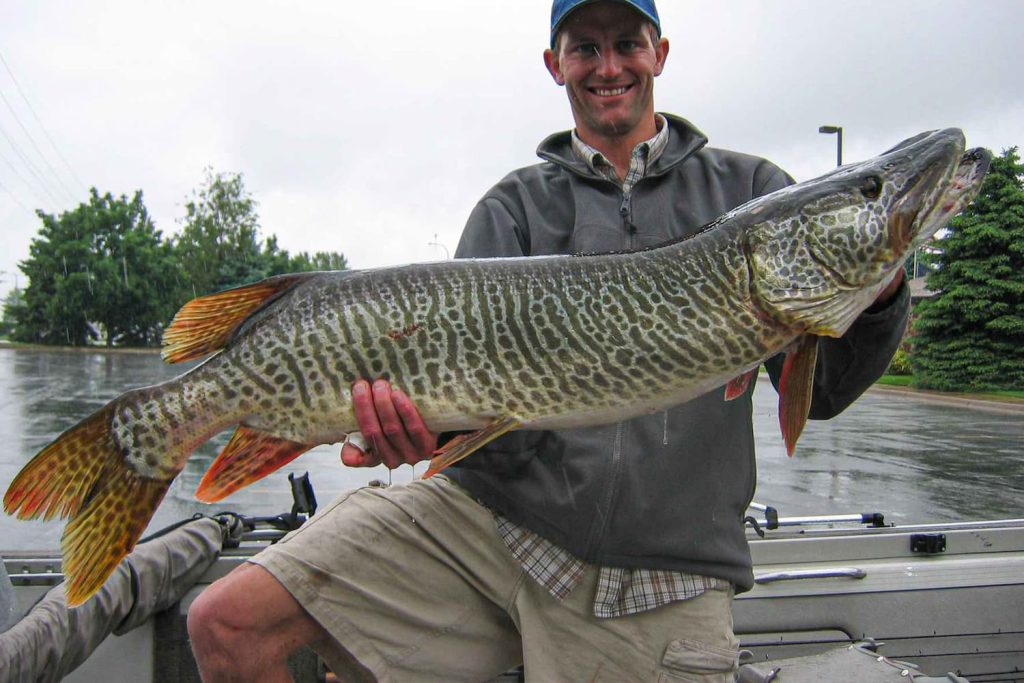
Table of Contents
If you fish or live near a northern lake, you may have heard anglers talk about the tiger muskie in hushed, reverent tones. It is one of freshwater’s most striking predators and one of the most useful fish in a lake manager’s toolkit, yet it is widely misunderstood.
This guide explains what a tiger muskie is, where it lives, what it eats, how to tell it apart from its parent species, and why it plays a valuable role in managed ponds and lakes.
A tiger muskie is a sterile hybrid fish produced by crossing a true muskellunge with a northern pike. It is a member of the pike family, prized as a hard-fighting sport fish, and stocked in many lakes because, being unable to reproduce, its population can be controlled precisely while it grows quickly to a large size.
Key Takeaways
- A tiger muskie is a hybrid of a true muskellunge and a northern pike, two members of the pike (Esox) family.
- It is sterile and cannot reproduce, which makes its numbers easy to control through stocking.
- It grows fast. Thanks to “hybrid vigor,” it often grows faster than either parent species.
- It is an ambush predator that hunts fish from cover in weedy, vegetated water.
- It is a cool-water northern fish, not native to Florida, and is stocked for sport and predator control in many states.
What Exactly Is a Tiger Muskie?
A tiger muskie is the hybrid offspring of a true muskellunge (Esox masquinongy) and a northern pike (Esox lucius), two predatory members of the pike family. It is almost always sterile, meaning it cannot reproduce. Most tiger muskies are produced in hatcheries for stocking, though rare natural crosses occur where both parent species spawn together.
The defining feature of the tiger muskie fish is its hybrid nature. It carries traits from both parents and, like many hybrids, often outperforms them in growth and hardiness.
According to the West Virginia Division of Natural Resources, the tiger musky is a sterile hybrid that cannot reproduce, either naturally or through hatchery efforts, and producing one requires a synthetic cross between a true northern pike and a true muskie. Because it spends no energy on spawning, it tends to grow very quickly compared to its parent species, a phenomenon known as hybrid vigor.
The Minnesota DNR describes the tiger muskie as a sterile hybrid of the northern pike and the muskie that is stocked in several heavily fished lakes. That sterility is the single most important thing to understand about the fish, because it is the reason managers like it.
Is It Spelled Tiger Muskie or Tiger Musky?
Both spellings are correct. “Tiger muskie” and “tiger musky” refer to the exact same fish, and state agencies use both. The name comes from the bold, tiger-like vertical bars along the body. You may also see the full name “tiger muskellunge.” All three terms describe the same sterile pike-muskellunge hybrid.
The spelling variation between tiger musky and tiger muskie causes a lot of confusion, but there is no difference in meaning.
Different states simply favor different spellings. West Virginia and New Jersey wildlife agencies tend to write “musky,” while Minnesota and Washington use “muskie.” The formal common name is “tiger muskellunge,” which both shorter spellings abbreviate.
Whichever spelling you encounter, the fish is identical: a striped, sterile hybrid of the pike family.
How Do You Identify a Tiger Muskie?
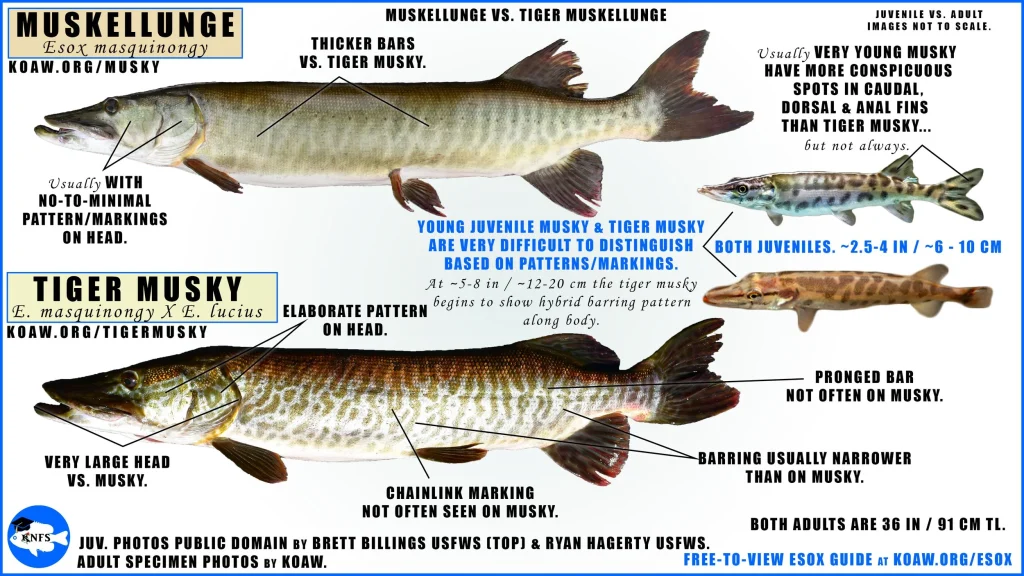
You can identify a tiger muskie by its color pattern and tail. It has dark, irregular vertical bars and spots on a light olive-to-gray background, the reverse of a northern pike’s light spots on a dark body. Its tail fins are rounded like a pike’s, rather than sharply pointed like a true muskellunge’s. It has a duckbill-shaped snout.
Learning to identify the tiger muskie comes down to a few reliable features that separate it from its two parent species.
Here is what to look for, drawn from state fisheries guidance:
- Pattern: The Washington Department of Fish and Wildlife notes tiger muskies show dark spots (as juveniles) or vertical stripes and bars on a light background, while northern pike have light horizontal spots on a dark background. The color scheme is essentially reversed.
- Tail shape: The Iowa DNR explains a true muskie’s tail splits to two sharp points, while pike and tiger muskies have rounded tail lobes.
- Body shape: Long and cylindrical, with dorsal and ventral fins set far back near the tail and a compressed, duckbill-shaped snout.
- Markings: The New Jersey DEP describes irregular narrow vertical dark markings that merge onto the back in an interlocking pattern, which distinguishes the tiger from the true-strain muskellunge.
Because a heavily barred true muskie can resemble a tiger, examining several features together gives the most confident identification.
Where Do Tiger Muskies Live? Understanding Tiger Muskie Habitat
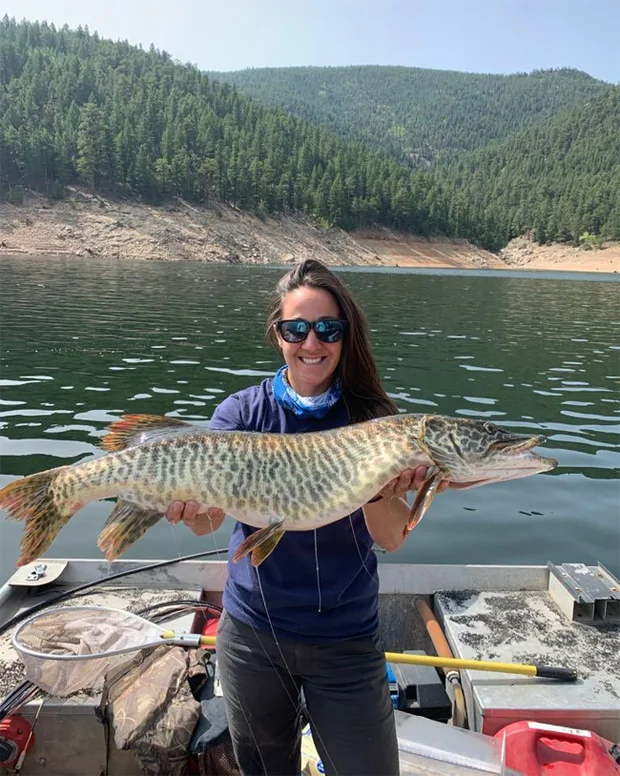
Tiger muskies live in cool freshwater lakes, reservoirs, and slow rivers, primarily across the northern United States and Canada. They favor shallow, weedy areas with dense aquatic vegetation and submerged timber, which provide ambush cover. As a cool-water species, they are most associated with northern lakes and are stocked, not naturally native, in warmer regions.
Understanding tiger muskie habitat is about understanding an ambush predator that relies on cover and cool, productive water.
The West Virginia DNR describes tiger musky as stocked into slower-moving habitats like lakes, where they seek shallow habitats such as dense aquatic vegetation beds and submerged timber that attract forage fish and allow ambush predation. As vegetation dies back after the growing season, the fish often move to woody cover or deeper water to keep feeding.
Temperature shapes their range. Research summarized by the Washington Department of Fish and Wildlife and others shows tiger muskies typically inhabit shallow weedy bays near the tops of weed beds during the warmer months. As a common northern lake fish, the tiger muskie is built for the cooler, vegetated waters of the northern tier and mountain reservoirs.
This is an important point for Florida readers: the tiger muskie is not a native Florida species. It is a cool-water northern fish, and Florida’s warm climate is outside its comfortable range.
What Do Tiger Muskies Eat?
Tiger muskies are apex ambush predators that eat mainly fish. Their diet includes soft-rayed species like suckers and minnows, along with amphibians, small waterfowl, and occasionally small mammals. They wait motionless near vegetation and strike fast-moving prey. Because they swallow prey whole, the size of their mouth limits the size of fish they can eat.
The question of what do tiger muskies eat matters for anyone thinking about predator-prey balance in a lake.
The West Virginia DNR reports that tiger musky generally feed on fish, amphibians, waterfowl, and small terrestrial mammals, and notes they are sometimes introduced as apex predators for “top-down biological control” of overly abundant or stunted fish populations.
There is a natural limit on what they consume. Michigan Sea Grant explains that because tiger muskies cannot bite chunks out of prey, they must swallow fish whole, a constraint biologists call “gape limitation.” The depth of a prey fish’s body can literally save it from being eaten.
Importantly, research cited by the Minnesota DNR found that muskies do not eat all the fish in a lake and do not adversely impact gamefish populations, with studies showing pike and largemouth bass consumed more food than muskies. This counters a common fear among lake users.
Stock Your Northern Pond with Tiger Muskie
Pond Guru can help keep your pond stocked and maintain a healthy ecosystem
Why Are Tiger Muskies Stocked? The Role in Pond Fish Stocking
Tiger muskies are stocked because they are sterile, fast-growing apex predators whose numbers can be controlled precisely. They provide a trophy sport fishery without the risk of overpopulating a lake, and they can help control overabundant or stunted prey fish. Because they cannot reproduce, managers can adjust their population simply by adjusting stocking.
The role of the tiger muskie in pond fish stocking and lake management is rooted entirely in its sterility, which turns a powerful predator into a manageable one.
Michigan Sea Grant explains that in small lakes, tiger muskies are a better choice than northern pike, which could reproduce and develop a stunted, overcrowded population. Because tiger muskies are sterile, it is relatively easy to remove them from a lake over time through harvest and by stopping stocking.
They also reach catchable size quickly. The Wikipedia summary of tiger muskellunge research notes that in one study, tiger muskies grew 1.5 times as fast as muskellunge, and that they tolerate higher temperatures better than their parent species, reaching legal size sooner and making them more useful for stocking.
Stocking decisions, however, depend heavily on having the right conditions: cool enough water, adequate forage fish, and suitable habitat. This is where professional guidance matters. A lake specialist can evaluate whether a water body can support a given species before any fish are introduced. Pond Guru’s pond fish stocking services and broader wildlife management programs begin with assessing whether the water can sustain the fish.
What Is Tiger Muskie Fishing Like?
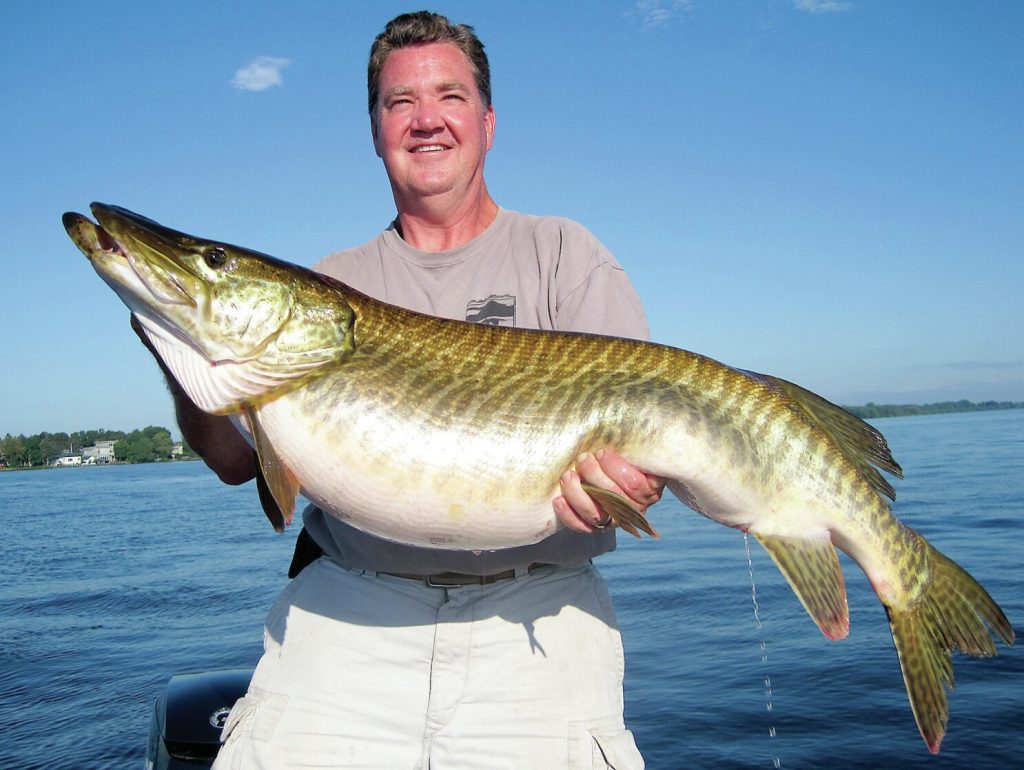
Tiger muskie fishing is known for being challenging and rewarding. Tiger muskies are nicknamed the “fish of 10,000 casts” because their low numbers make them hard to catch, not because they are especially wary. Anglers target them in warm months around weed beds using large lures, sturdy tackle, and careful catch-and-release handling to protect these trophy fish.
For sport, tiger muskie fishing has a near-legendary reputation, and the difficulty is part of the appeal.
The Minnesota DNR clarifies a common myth: muskies are hard to catch because of their low numbers in a lake, not because of any special craftiness. With few fish spread across a large water body, encounters are simply rare.
When it comes to catching tiger muskie, state fisheries guidance offers consistent advice:
- Timing and location: Target shallow, weedy bays during warmer months. The New Jersey DEP notes tigers patrol weed edges and hold under canopies of submerged vegetation.
- Lures: Bucktail spinners, crankbaits, jerkbaits, and large plugs are standard, though tigers often take somewhat smaller lures than true muskellunge.
- Tackle: The Washington Department of Fish and Wildlife recommends a sturdy medium-heavy rod, 20 to 30 pound line, and a wire or fluorocarbon leader to handle a large, sharp-toothed fish.
- Handling: Use a large knotless net and long pliers, and return the fish to the water quickly. These trophy fish are typically managed with high minimum sizes and low bag limits.
Tiger muskie fishing rewards patience. Many anglers fish several days for a single strike, which is exactly what makes landing one memorable.
Can Tiger Muskies Live in Florida Ponds and Lakes?
Tiger muskies are cool-water northern fish and are not suited to Florida’s warm climate. They thrive in the cooler lakes and reservoirs of the northern United States, Canada, and mountain regions. Florida’s water temperatures generally exceed their preferred range, so they are not a practical stocking choice for Florida ponds and lakes.
For Florida readers wondering whether the tiger muskie could work in a local pond, the short answer is that climate makes it impractical.
Research summarized in the tiger muskellunge literature found the highest growth and feeding efficiency at water temperatures of roughly 68 to 75 degrees Fahrenheit, with growth slowing above that range and stress increasing. Florida ponds routinely run much warmer, especially through the long summer.
That does not mean Florida lakes lack management options. Plenty of warm-water species suit Florida ponds, and the right choice depends on the goals for the water body, the existing fish community, and water quality. Selecting and stocking fish that match local conditions is a core part of sound lake management, and it starts with an assessment rather than a guess.
Talk to a Pond Guru Lake Expert About Your Water
Whether you are managing a northern trophy fishery or a warm Florida community pond, healthy fish populations depend on healthy water. Temperature, oxygen, forage availability, vegetation, and water quality all determine which species can thrive and how well any stocking program performs.
Pond Guru works with homeowners, HOA boards, and property managers to evaluate water conditions and build management plans suited to each property. Services include water quality testing, habitat and vegetation management, aeration, and species-appropriate fish stocking.
Because the right approach depends on your specific water body, the process begins with an evaluation. To discuss your lake or pond, speak with a Pond Guru lake expert about water quality testing and a management plan built around your goals.
Frequently Asked Questions
A tiger muskie is a sterile hybrid fish created by crossing a true muskellunge with a northern pike, both members of the pike family. It cannot reproduce, grows quickly thanks to hybrid vigor, and is widely stocked as a trophy sport fish and for predator control in cool-water lakes and reservoirs.
Both spellings are correct and refer to the same fish. State agencies use both, with some preferring "musky" and others "muskie." The formal common name is "tiger muskellunge." The name reflects the bold, tiger-like vertical bars along the fish's body.
Look at the pattern and tail. A tiger muskie has dark vertical bars and spots on a light background, while a northern pike has light horizontal spots on a dark background, essentially the reverse. Both have rounded tail lobes, unlike the sharply pointed tail of a true muskellunge.
Tiger muskies are ambush predators that eat mainly fish, including suckers and minnows, plus amphibians, small waterfowl, and occasionally small mammals. They swallow prey whole, so the size of their mouth limits prey size. Studies show they do not wipe out other gamefish populations in a lake.
Because tiger muskies are sterile, their numbers are easy to control. They cannot overpopulate a lake the way reproducing pike can, they grow fast and reach catchable size quickly, and managers can adjust the population simply by changing stocking rates or allowing harvest.
Generally no. Tiger muskies are cool-water fish that thrive at roughly 68 to 75 degrees Fahrenheit and are native to northern lakes and reservoirs. Florida's warm water temperatures fall outside their preferred range, making them impractical for Florida ponds. Warm-water species are better suited to Florida waters.
Ready to Schedule a Visit ?
Have questions about your pond or lake? Our experts are ready to help you take the next step.
Latest Article
Popular Post

Why Keeping Culverts Clear of Debris Matters for Stormwater Systems
Table of Contents A culvert is one of those…
Table of Contents
If you fish or live near a northern lake, you may have heard anglers talk about the tiger muskie in hushed, reverent tones. It is one of freshwater’s most striking predators and one of the most useful fish in a lake manager’s toolkit, yet it is widely misunderstood.
This guide explains what a tiger muskie is, where it lives, what it eats, how to tell it apart from its parent species, and why it plays a valuable role in managed ponds and lakes.
A tiger muskie is a sterile hybrid fish produced by crossing a true muskellunge with a northern pike. It is a member of the pike family, prized as a hard-fighting sport fish, and stocked in many lakes because, being unable to reproduce, its population can be controlled precisely while it grows quickly to a large size.
Key Takeaways
- A tiger muskie is a hybrid of a true muskellunge and a northern pike, two members of the pike (Esox) family.
- It is sterile and cannot reproduce, which makes its numbers easy to control through stocking.
- It grows fast. Thanks to “hybrid vigor,” it often grows faster than either parent species.
- It is an ambush predator that hunts fish from cover in weedy, vegetated water.
- It is a cool-water northern fish, not native to Florida, and is stocked for sport and predator control in many states.
What Exactly Is a Tiger Muskie?
A tiger muskie is the hybrid offspring of a true muskellunge (Esox masquinongy) and a northern pike (Esox lucius), two predatory members of the pike family. It is almost always sterile, meaning it cannot reproduce. Most tiger muskies are produced in hatcheries for stocking, though rare natural crosses occur where both parent species spawn together.
The defining feature of the tiger muskie fish is its hybrid nature. It carries traits from both parents and, like many hybrids, often outperforms them in growth and hardiness.
According to the West Virginia Division of Natural Resources, the tiger musky is a sterile hybrid that cannot reproduce, either naturally or through hatchery efforts, and producing one requires a synthetic cross between a true northern pike and a true muskie. Because it spends no energy on spawning, it tends to grow very quickly compared to its parent species, a phenomenon known as hybrid vigor.
The Minnesota DNR describes the tiger muskie as a sterile hybrid of the northern pike and the muskie that is stocked in several heavily fished lakes. That sterility is the single most important thing to understand about the fish, because it is the reason managers like it.
Is It Spelled Tiger Muskie or Tiger Musky?
Both spellings are correct. “Tiger muskie” and “tiger musky” refer to the exact same fish, and state agencies use both. The name comes from the bold, tiger-like vertical bars along the body. You may also see the full name “tiger muskellunge.” All three terms describe the same sterile pike-muskellunge hybrid.
The spelling variation between tiger musky and tiger muskie causes a lot of confusion, but there is no difference in meaning.
Different states simply favor different spellings. West Virginia and New Jersey wildlife agencies tend to write “musky,” while Minnesota and Washington use “muskie.” The formal common name is “tiger muskellunge,” which both shorter spellings abbreviate.
Whichever spelling you encounter, the fish is identical: a striped, sterile hybrid of the pike family.
How Do You Identify a Tiger Muskie?
You can identify a tiger muskie by its color pattern and tail. It has dark, irregular vertical bars and spots on a light olive-to-gray background, the reverse of a northern pike’s light spots on a dark body. Its tail fins are rounded like a pike’s, rather than sharply pointed like a true muskellunge’s. It has a duckbill-shaped snout.
Learning to identify the tiger muskie comes down to a few reliable features that separate it from its two parent species.
Here is what to look for, drawn from state fisheries guidance:
- Pattern: The Washington Department of Fish and Wildlife notes tiger muskies show dark spots (as juveniles) or vertical stripes and bars on a light background, while northern pike have light horizontal spots on a dark background. The color scheme is essentially reversed.
- Tail shape: The Iowa DNR explains a true muskie’s tail splits to two sharp points, while pike and tiger muskies have rounded tail lobes.
- Body shape: Long and cylindrical, with dorsal and ventral fins set far back near the tail and a compressed, duckbill-shaped snout.
- Markings: The New Jersey DEP describes irregular narrow vertical dark markings that merge onto the back in an interlocking pattern, which distinguishes the tiger from the true-strain muskellunge.
Because a heavily barred true muskie can resemble a tiger, examining several features together gives the most confident identification.
Where Do Tiger Muskies Live? Understanding Tiger Muskie Habitat
Tiger muskies live in cool freshwater lakes, reservoirs, and slow rivers, primarily across the northern United States and Canada. They favor shallow, weedy areas with dense aquatic vegetation and submerged timber, which provide ambush cover. As a cool-water species, they are most associated with northern lakes and are stocked, not naturally native, in warmer regions.
Understanding tiger muskie habitat is about understanding an ambush predator that relies on cover and cool, productive water.
The West Virginia DNR describes tiger musky as stocked into slower-moving habitats like lakes, where they seek shallow habitats such as dense aquatic vegetation beds and submerged timber that attract forage fish and allow ambush predation. As vegetation dies back after the growing season, the fish often move to woody cover or deeper water to keep feeding.
Temperature shapes their range. Research summarized by the Washington Department of Fish and Wildlife and others shows tiger muskies typically inhabit shallow weedy bays near the tops of weed beds during the warmer months. As a common northern lake fish, the tiger muskie is built for the cooler, vegetated waters of the northern tier and mountain reservoirs.
This is an important point for Florida readers: the tiger muskie is not a native Florida species. It is a cool-water northern fish, and Florida’s warm climate is outside its comfortable range.
What Do Tiger Muskies Eat?
Tiger muskies are apex ambush predators that eat mainly fish. Their diet includes soft-rayed species like suckers and minnows, along with amphibians, small waterfowl, and occasionally small mammals. They wait motionless near vegetation and strike fast-moving prey. Because they swallow prey whole, the size of their mouth limits the size of fish they can eat.
The question of what do tiger muskies eat matters for anyone thinking about predator-prey balance in a lake.
The West Virginia DNR reports that tiger musky generally feed on fish, amphibians, waterfowl, and small terrestrial mammals, and notes they are sometimes introduced as apex predators for “top-down biological control” of overly abundant or stunted fish populations.
There is a natural limit on what they consume. Michigan Sea Grant explains that because tiger muskies cannot bite chunks out of prey, they must swallow fish whole, a constraint biologists call “gape limitation.” The depth of a prey fish’s body can literally save it from being eaten.
Importantly, research cited by the Minnesota DNR found that muskies do not eat all the fish in a lake and do not adversely impact gamefish populations, with studies showing pike and largemouth bass consumed more food than muskies. This counters a common fear among lake users.
Stock Your Northern Pond with Tiger Muskie
Pond Guru can help keep your pond stocked and maintain a healthy ecosystem
Why Are Tiger Muskies Stocked? The Role in Pond Fish Stocking
Tiger muskies are stocked because they are sterile, fast-growing apex predators whose numbers can be controlled precisely. They provide a trophy sport fishery without the risk of overpopulating a lake, and they can help control overabundant or stunted prey fish. Because they cannot reproduce, managers can adjust their population simply by adjusting stocking.
The role of the tiger muskie in pond fish stocking and lake management is rooted entirely in its sterility, which turns a powerful predator into a manageable one.
Michigan Sea Grant explains that in small lakes, tiger muskies are a better choice than northern pike, which could reproduce and develop a stunted, overcrowded population. Because tiger muskies are sterile, it is relatively easy to remove them from a lake over time through harvest and by stopping stocking.
They also reach catchable size quickly. The Wikipedia summary of tiger muskellunge research notes that in one study, tiger muskies grew 1.5 times as fast as muskellunge, and that they tolerate higher temperatures better than their parent species, reaching legal size sooner and making them more useful for stocking.
Stocking decisions, however, depend heavily on having the right conditions: cool enough water, adequate forage fish, and suitable habitat. This is where professional guidance matters. A lake specialist can evaluate whether a water body can support a given species before any fish are introduced. Pond Guru’s pond fish stocking services and broader wildlife management programs begin with assessing whether the water can sustain the fish.
What Is Tiger Muskie Fishing Like?
Tiger muskie fishing is known for being challenging and rewarding. Tiger muskies are nicknamed the “fish of 10,000 casts” because their low numbers make them hard to catch, not because they are especially wary. Anglers target them in warm months around weed beds using large lures, sturdy tackle, and careful catch-and-release handling to protect these trophy fish.
For sport, tiger muskie fishing has a near-legendary reputation, and the difficulty is part of the appeal.
The Minnesota DNR clarifies a common myth: muskies are hard to catch because of their low numbers in a lake, not because of any special craftiness. With few fish spread across a large water body, encounters are simply rare.
When it comes to catching tiger muskie, state fisheries guidance offers consistent advice:
- Timing and location: Target shallow, weedy bays during warmer months. The New Jersey DEP notes tigers patrol weed edges and hold under canopies of submerged vegetation.
- Lures: Bucktail spinners, crankbaits, jerkbaits, and large plugs are standard, though tigers often take somewhat smaller lures than true muskellunge.
- Tackle: The Washington Department of Fish and Wildlife recommends a sturdy medium-heavy rod, 20 to 30 pound line, and a wire or fluorocarbon leader to handle a large, sharp-toothed fish.
- Handling: Use a large knotless net and long pliers, and return the fish to the water quickly. These trophy fish are typically managed with high minimum sizes and low bag limits.
Tiger muskie fishing rewards patience. Many anglers fish several days for a single strike, which is exactly what makes landing one memorable.
Can Tiger Muskies Live in Florida Ponds and Lakes?
Tiger muskies are cool-water northern fish and are not suited to Florida’s warm climate. They thrive in the cooler lakes and reservoirs of the northern United States, Canada, and mountain regions. Florida’s water temperatures generally exceed their preferred range, so they are not a practical stocking choice for Florida ponds and lakes.
For Florida readers wondering whether the tiger muskie could work in a local pond, the short answer is that climate makes it impractical.
Research summarized in the tiger muskellunge literature found the highest growth and feeding efficiency at water temperatures of roughly 68 to 75 degrees Fahrenheit, with growth slowing above that range and stress increasing. Florida ponds routinely run much warmer, especially through the long summer.
That does not mean Florida lakes lack management options. Plenty of warm-water species suit Florida ponds, and the right choice depends on the goals for the water body, the existing fish community, and water quality. Selecting and stocking fish that match local conditions is a core part of sound lake management, and it starts with an assessment rather than a guess.
Talk to a Pond Guru Lake Expert About Your Water
Whether you are managing a northern trophy fishery or a warm Florida community pond, healthy fish populations depend on healthy water. Temperature, oxygen, forage availability, vegetation, and water quality all determine which species can thrive and how well any stocking program performs.
Pond Guru works with homeowners, HOA boards, and property managers to evaluate water conditions and build management plans suited to each property. Services include water quality testing, habitat and vegetation management, aeration, and species-appropriate fish stocking.
Because the right approach depends on your specific water body, the process begins with an evaluation. To discuss your lake or pond, speak with a Pond Guru lake expert about water quality testing and a management plan built around your goals.
Frequently Asked Questions
A tiger muskie is a sterile hybrid fish created by crossing a true muskellunge with a northern pike, both members of the pike family. It cannot reproduce, grows quickly thanks to hybrid vigor, and is widely stocked as a trophy sport fish and for predator control in cool-water lakes and reservoirs.
Both spellings are correct and refer to the same fish. State agencies use both, with some preferring "musky" and others "muskie." The formal common name is "tiger muskellunge." The name reflects the bold, tiger-like vertical bars along the fish's body.
Look at the pattern and tail. A tiger muskie has dark vertical bars and spots on a light background, while a northern pike has light horizontal spots on a dark background, essentially the reverse. Both have rounded tail lobes, unlike the sharply pointed tail of a true muskellunge.
Tiger muskies are ambush predators that eat mainly fish, including suckers and minnows, plus amphibians, small waterfowl, and occasionally small mammals. They swallow prey whole, so the size of their mouth limits prey size. Studies show they do not wipe out other gamefish populations in a lake.
Because tiger muskies are sterile, their numbers are easy to control. They cannot overpopulate a lake the way reproducing pike can, they grow fast and reach catchable size quickly, and managers can adjust the population simply by changing stocking rates or allowing harvest.
Generally no. Tiger muskies are cool-water fish that thrive at roughly 68 to 75 degrees Fahrenheit and are native to northern lakes and reservoirs. Florida's warm water temperatures fall outside their preferred range, making them impractical for Florida ponds. Warm-water species are better suited to Florida waters.
Ready to Schedule a Visit ?
Have questions about your pond or lake? Our experts are ready to help you take the next step.
Latest Article
Popular Post
Why Keeping Culverts Clear of Debris Matters for Stormwater Systems
Table of Contents A culvert is one of those…