

Planktonic Algae: What Causes Green Pond Water and How to Fix It
Planktonic Algae: What Causes Green Pond Water and How to Fix It
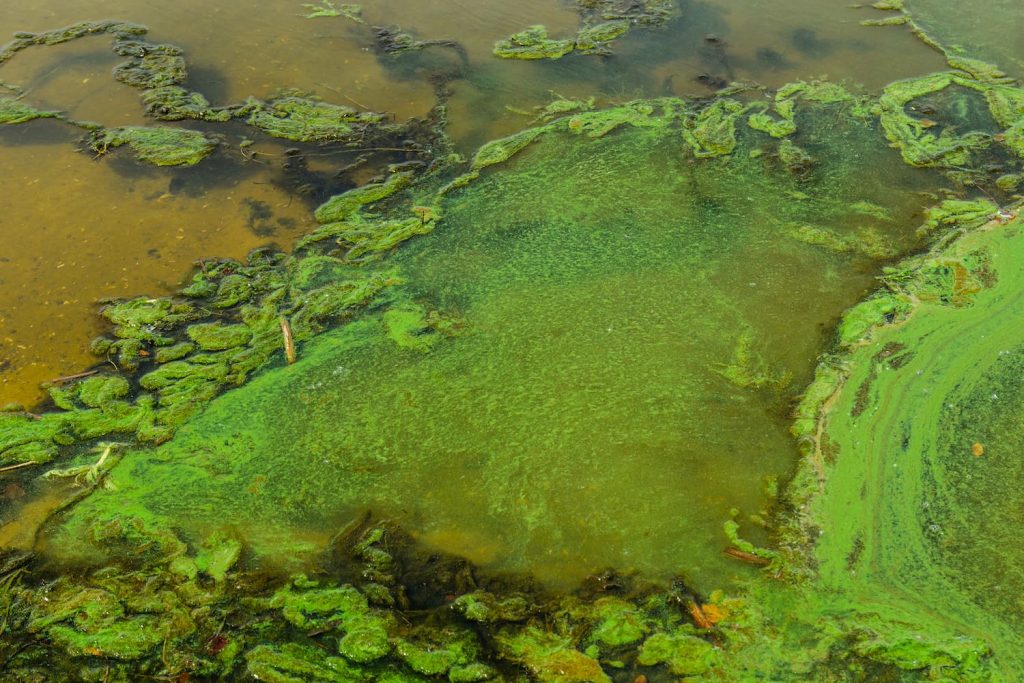
Table of Contents
If your pond has turned a cloudy green, almost like pea soup, you are looking at planktonic algae. It is the single most common pond water problem, and while a mild amount is completely normal and even beneficial, a heavy bloom can turn an attractive amenity into an eyesore and, in severe cases, threaten the fish living in it.
The good news is that green water is a solvable and preventable problem once you understand what is actually driving it. This guide explains what planktonic algae is, what causes the bloom, whether it harms fish, and how to both clear green pond water and keep it from coming back.
Planktonic algae are microscopic, single-celled algae that float freely throughout the water column, turning pond water green, cloudy, or pea-soup colored. Blooms are fueled by excess nutrients, mainly phosphorus and nitrogen, combined with sunlight and warm water. Some planktonic algae is normal and beneficial, but heavy blooms signal a nutrient imbalance.
Key Takeaways
- Planktonic algae is the cause of green pond water. These are microscopic, free-floating single-celled algae suspended throughout the water.
- Nutrients plus sunlight drive the bloom. Excess phosphorus and nitrogen, warm water, and sun are the fuel.
- A little is healthy. Planktonic algae form the base of the pond food web. Only heavy blooms are a problem.
- It cannot be removed by hand. Unlike stringy filamentous algae, you cannot physically pull out planktonic algae. The whole water column is affected.
- Lasting control means managing nutrients, not just repeatedly treating the symptom.
What Is Planktonic Algae?
Planktonic algae are microscopic, single-celled algae that float freely and are suspended throughout a pond’s water column. In large numbers they tint the water green, and sometimes yellow, brown, or blue-green. They are the most common type of pond algae and the direct cause of what most people call green water or pea-soup water.
Understanding what these algae are explains why they behave the way they do. Because each organism is microscopic and suspended in the water itself, the water column is the problem, not a surface or a structure.
According to Penn State Extension, planktonic algae are the foundation of the pond food chain and some level is essential, but large blooms grow in response to excessive nutrients in the water. Missouri Department of Conservation guidance adds that when these single-celled plants become extremely abundant or “bloom,” they turn the pond water green.
This is fundamentally different from the stringy algae many people also deal with, a distinction covered in the next section. The key point is that planktonic algae is a whole-water-column phenomenon, which is exactly why it colors the water rather than forming mats you can grab.

Planktonic vs Filamentous Algae: What Is the Difference?
Planktonic algae are microscopic and free-floating, turning the water green and cloudy. Filamentous algae, also called string algae or pond scum, form visible hair-like threads and mats on the surface, rocks, and structures. The distinction matters because the two types require different management approaches.
Telling these apart is the first step to treating either one correctly, because a solution for one does little for the other.
Appearance: Planktonic is green, cloudy water. Filamentous forms green threads, mats, and scum.
Location: Planktonic is suspended throughout the water. Filamentous grows on the surface, rocks, liner, and structures.
Also called: Planktonic is green water or pea soup. Filamentous is string algae, hair algae, or pond scum.
Can you remove it by hand? Planktonic, no. Filamentous, yes, it can be raked or pulled.
Primary control: Planktonic needs nutrient and sunlight management. Filamentous needs manual removal plus nutrient control.
Common examples: Planktonic includes various single-celled green algae. Filamentous includes Spirogyra, Cladophora, and Pithophora.
As pond management resources explain, manual removal suits filamentous algae because you can physically pull the strands out, whereas planktonic blooms respond to aeration and nutrient control because there is nothing to grab. Both types, however, share the same root cause: excess nutrients.
Many ponds have both at once, which is why an accurate identification, sometimes best done by a professional, guides the right combination of treatments.
What Causes Planktonic Algae Blooms in Ponds?

Planktonic algae blooms are caused by excess nutrients, primarily phosphorus and nitrogen, combined with sunlight and warm water. These nutrients typically enter a pond through fertilizer runoff, fish waste, decaying organic matter, and grass clippings. When nutrients are abundant, algae multiply rapidly into a visible bloom.
The formula is simple: nutrients plus sunlight plus warmth equals algae growth. Of these, nutrients are the factor you can most realistically control.
Per Penn State Extension, large planktonic blooms grow in response to excessive nutrients from sources like lawns, crop fields, septic systems, and golf courses, and unless the underlying nutrient causes are addressed, ponds face a perpetual need to control blooms each summer.
The most common nutrient sources for a community or backyard pond:
- Fertilizer runoff from surrounding lawns and landscaping, the most common source in developed areas.
- Fish waste, especially in overstocked ponds or heavily fed koi ponds.
- Decaying organic matter, including leaves, grass clippings, and bottom muck.
- Stormwater runoff carrying nutrients from streets and hard surfaces.
That last point about bottom muck matters more than most people realize. Decomposing organic matter on the pond bottom continuously releases phosphorus and nitrogen back into the water, which is why ponds treated for algae repeatedly, with no lasting result, often have an accumulated muck layer feeding the problem from below.
Is Green Pond Water Bad for Fish?
Mild green water is usually not harmful to fish and can even provide food and shade. The real danger comes from heavy blooms, which can crash oxygen levels. At night algae consume oxygen instead of producing it, and when a large bloom suddenly dies, decomposition can deplete oxygen enough to cause a fish kill.
This is the question most pond owners actually worry about, and the honest answer is that the algae itself is rarely the direct threat. The oxygen swings are.
During the day, algae photosynthesize and produce oxygen. At night, they consume it. A dense bloom can drive dissolved oxygen dangerously low in the early morning hours, which is when fish kills most often occur. The greater danger is a sudden die-off: when a heavy bloom collapses, whether naturally or after a hasty algaecide treatment, the bacteria decomposing all that dead algae consume large amounts of oxygen and can suffocate the fish.
This is precisely why aggressive chemical treatment of a heavy bloom can backfire. Killing a large amount of algae all at once is one of the most common causes of a treatment-induced fish kill. Slower, nutrient-based approaches and aeration are safer for exactly this reason, which is covered next.
Treat Planktonic Algae The Right Way
Don’t let your lake get out of control. Manage algae properly with Pond Guru.
How Do You Clear Green Pond Water?
Clearing green pond water involves a combination of approaches: aeration to boost oxygen and circulation, beneficial bacteria to consume excess nutrients, pond dye to limit sunlight, and, for smaller ponds, UV clarifiers or filtration. For heavy blooms, professional treatment paired with aeration reduces the risk of an oxygen crash.
There is no single magic fix, and the right combination depends on the pond’s size and severity. Here are the main tools and how each works.
- Aeration. Adding oxygen and circulation reduces stagnation, supports the beneficial bacteria that compete with algae, and lowers fish-kill risk. It is one of the most effective long-term measures for planktonic algae.
- Beneficial bacteria. These consume the excess nutrients that algae feed on, reducing the fuel supply over time. They work gradually rather than instantly.
- Pond dye. Non-toxic dye limits sunlight penetration, slowing algae growth. It is more of a preventive and supportive tool than an emergency fix for an existing heavy bloom.
- UV clarifiers and filtration. For smaller ponds and koi ponds, ultraviolet clarifiers kill planktonic algae as water passes through, clearing green water cleanly without chemicals. These are impractical for large ponds.
- Algaecides. Provide fast knockdown but must be used carefully, ideally professionally applied and paired with aeration, because a rapid die-off can crash oxygen. They treat the symptom, not the cause.
The most important principle is that fast fixes address the symptom while nutrient management addresses the cause. A pond treated only with algaecide will bloom again. Comprehensive pond water quality testing identifies the nutrient drivers so treatment can target the actual problem, and ongoing lake and pond management combines these tools into a program rather than a one-time reaction.

How Do You Prevent Planktonic Algae Long Term?
Preventing planktonic algae means controlling the nutrients that feed it: limit fertilizer near the water, establish native shoreline plants to filter runoff, aerate to prevent stagnation, reduce organic debris and bottom muck, and avoid overfeeding fish. Prevention through nutrient management is far more effective and economical than repeated treatment.
Because blooms are driven by nutrients and sunlight, lasting prevention focuses on limiting the nutrient supply. This is where the problem is genuinely solvable rather than perpetually managed.
Effective long-term measures:
- Reduce nutrient inputs. Keep lawn fertilizer away from the water’s edge, and follow proper rates and timing. This is the single most impactful step.
- Establish shoreline vegetation. A native plant buffer and littoral zone intercept and filter nutrients before they reach the water. This is a core benefit of littoral zone management and shoreline buffer plantings.
- Aerate consistently. Good circulation and oxygen support beneficial bacteria and discourage the stagnant conditions algae prefer.
- Manage organic matter. Remove leaves and debris, and address accumulated bottom muck, which is a hidden nutrient reservoir.
- Do not overstock or overfeed fish. Fish waste and uneaten food are direct nutrient sources.
- Manage runoff. Redirect nutrient-rich stormwater away from the pond where possible.
The through-line across every prevention method is nutrient control. As Penn State Extension notes, failing to address the underlying nutrient causes means a perpetual need to fight blooms every summer. Getting ahead of the nutrients is what breaks that cycle.
Schedule a Site Visit With Pond Guru
Green water is a symptom, and treating it without understanding the cause leads to the frustrating cycle of blooms that keep returning every summer. The lasting solution starts with identifying the nutrient sources feeding the algae, then applying the right combination of aeration, biological, and shoreline measures.
Pond Guru works with HOA boards, property managers, and homeowners across Florida to test water quality, treat algae safely, manage nutrients and shorelines, and build maintenance programs that keep water clear over time rather than reactively.
Because every pond’s nutrient sources and severity are different, the process starts with an on-site evaluation and testing. To get a clear diagnosis and plan, schedule a site visit with Pond Guru and a specialist will assess your pond and recommend the right approach.

Frequently Asked Questions
Planktonic algae are microscopic, single-celled algae that float freely throughout a pond's water column. In large numbers they turn the water green, cloudy, or pea-soup colored. They are the most common type of pond algae and the direct cause of green water. A small amount is normal and beneficial to the pond ecosystem.
Green pond water is caused by a bloom of planktonic algae, fueled by excess nutrients like phosphorus and nitrogen combined with sunlight and warm water. Nutrients typically come from fertilizer runoff, fish waste, and decaying organic matter. The green color means the algae have multiplied rapidly throughout the water.
Mild green water is usually not harmful and can provide food and shade. The danger comes from heavy blooms that crash oxygen levels, especially at night or when a large bloom suddenly dies and decomposes. These oxygen swings, not the algae itself, are what typically cause fish kills.
For quick clearing, UV clarifiers work well on smaller ponds, and professionally applied algaecides can knock down a bloom, though they must be paired with aeration to avoid an oxygen crash. Fast fixes treat the symptom, so combine them with nutrient management and aeration to prevent the bloom from returning.
Planktonic algae are microscopic and float throughout the water, turning it green. String algae, or filamentous algae, form visible hair-like threads and mats you can physically pull out. They look completely different and are managed differently, though both are ultimately fueled by the same excess nutrients in the water.
Ready to Schedule a Visit ?
Have questions about your pond or lake? Our experts are ready to help you take the next step.
Latest Article
Popular Post

Why Keeping Culverts Clear of Debris Matters for Stormwater Systems
Table of Contents A culvert is one of those…
Table of Contents
If your pond has turned a cloudy green, almost like pea soup, you are looking at planktonic algae. It is the single most common pond water problem, and while a mild amount is completely normal and even beneficial, a heavy bloom can turn an attractive amenity into an eyesore and, in severe cases, threaten the fish living in it.
The good news is that green water is a solvable and preventable problem once you understand what is actually driving it. This guide explains what planktonic algae is, what causes the bloom, whether it harms fish, and how to both clear green pond water and keep it from coming back.
Planktonic algae are microscopic, single-celled algae that float freely throughout the water column, turning pond water green, cloudy, or pea-soup colored. Blooms are fueled by excess nutrients, mainly phosphorus and nitrogen, combined with sunlight and warm water. Some planktonic algae is normal and beneficial, but heavy blooms signal a nutrient imbalance.
Key Takeaways
- Planktonic algae is the cause of green pond water. These are microscopic, free-floating single-celled algae suspended throughout the water.
- Nutrients plus sunlight drive the bloom. Excess phosphorus and nitrogen, warm water, and sun are the fuel.
- A little is healthy. Planktonic algae form the base of the pond food web. Only heavy blooms are a problem.
- It cannot be removed by hand. Unlike stringy filamentous algae, you cannot physically pull out planktonic algae. The whole water column is affected.
- Lasting control means managing nutrients, not just repeatedly treating the symptom.
What Is Planktonic Algae?
Planktonic algae are microscopic, single-celled algae that float freely and are suspended throughout a pond’s water column. In large numbers they tint the water green, and sometimes yellow, brown, or blue-green. They are the most common type of pond algae and the direct cause of what most people call green water or pea-soup water.
Understanding what these algae are explains why they behave the way they do. Because each organism is microscopic and suspended in the water itself, the water column is the problem, not a surface or a structure.
According to Penn State Extension, planktonic algae are the foundation of the pond food chain and some level is essential, but large blooms grow in response to excessive nutrients in the water. Missouri Department of Conservation guidance adds that when these single-celled plants become extremely abundant or “bloom,” they turn the pond water green.
This is fundamentally different from the stringy algae many people also deal with, a distinction covered in the next section. The key point is that planktonic algae is a whole-water-column phenomenon, which is exactly why it colors the water rather than forming mats you can grab.
Planktonic vs Filamentous Algae: What Is the Difference?
Planktonic algae are microscopic and free-floating, turning the water green and cloudy. Filamentous algae, also called string algae or pond scum, form visible hair-like threads and mats on the surface, rocks, and structures. The distinction matters because the two types require different management approaches.
Telling these apart is the first step to treating either one correctly, because a solution for one does little for the other.
Appearance: Planktonic is green, cloudy water. Filamentous forms green threads, mats, and scum.
Location: Planktonic is suspended throughout the water. Filamentous grows on the surface, rocks, liner, and structures.
Also called: Planktonic is green water or pea soup. Filamentous is string algae, hair algae, or pond scum.
Can you remove it by hand? Planktonic, no. Filamentous, yes, it can be raked or pulled.
Primary control: Planktonic needs nutrient and sunlight management. Filamentous needs manual removal plus nutrient control.
Common examples: Planktonic includes various single-celled green algae. Filamentous includes Spirogyra, Cladophora, and Pithophora.
As pond management resources explain, manual removal suits filamentous algae because you can physically pull the strands out, whereas planktonic blooms respond to aeration and nutrient control because there is nothing to grab. Both types, however, share the same root cause: excess nutrients.
Many ponds have both at once, which is why an accurate identification, sometimes best done by a professional, guides the right combination of treatments.
What Causes Planktonic Algae Blooms in Ponds?

Planktonic algae blooms are caused by excess nutrients, primarily phosphorus and nitrogen, combined with sunlight and warm water. These nutrients typically enter a pond through fertilizer runoff, fish waste, decaying organic matter, and grass clippings. When nutrients are abundant, algae multiply rapidly into a visible bloom.
The formula is simple: nutrients plus sunlight plus warmth equals algae growth. Of these, nutrients are the factor you can most realistically control.
Per Penn State Extension, large planktonic blooms grow in response to excessive nutrients from sources like lawns, crop fields, septic systems, and golf courses, and unless the underlying nutrient causes are addressed, ponds face a perpetual need to control blooms each summer.
The most common nutrient sources for a community or backyard pond:
- Fertilizer runoff from surrounding lawns and landscaping, the most common source in developed areas.
- Fish waste, especially in overstocked ponds or heavily fed koi ponds.
- Decaying organic matter, including leaves, grass clippings, and bottom muck.
- Stormwater runoff carrying nutrients from streets and hard surfaces.
That last point about bottom muck matters more than most people realize. Decomposing organic matter on the pond bottom continuously releases phosphorus and nitrogen back into the water, which is why ponds treated for algae repeatedly, with no lasting result, often have an accumulated muck layer feeding the problem from below.
Is Green Pond Water Bad for Fish?
Mild green water is usually not harmful to fish and can even provide food and shade. The real danger comes from heavy blooms, which can crash oxygen levels. At night algae consume oxygen instead of producing it, and when a large bloom suddenly dies, decomposition can deplete oxygen enough to cause a fish kill.
This is the question most pond owners actually worry about, and the honest answer is that the algae itself is rarely the direct threat. The oxygen swings are.
During the day, algae photosynthesize and produce oxygen. At night, they consume it. A dense bloom can drive dissolved oxygen dangerously low in the early morning hours, which is when fish kills most often occur. The greater danger is a sudden die-off: when a heavy bloom collapses, whether naturally or after a hasty algaecide treatment, the bacteria decomposing all that dead algae consume large amounts of oxygen and can suffocate the fish.
This is precisely why aggressive chemical treatment of a heavy bloom can backfire. Killing a large amount of algae all at once is one of the most common causes of a treatment-induced fish kill. Slower, nutrient-based approaches and aeration are safer for exactly this reason, which is covered next.
Treat Planktonic Algae The Right Way
Don’t let your lake get out of control. Manage algae properly with Pond Guru.
How Do You Clear Green Pond Water?
Clearing green pond water involves a combination of approaches: aeration to boost oxygen and circulation, beneficial bacteria to consume excess nutrients, pond dye to limit sunlight, and, for smaller ponds, UV clarifiers or filtration. For heavy blooms, professional treatment paired with aeration reduces the risk of an oxygen crash.
There is no single magic fix, and the right combination depends on the pond’s size and severity. Here are the main tools and how each works.
- Aeration. Adding oxygen and circulation reduces stagnation, supports the beneficial bacteria that compete with algae, and lowers fish-kill risk. It is one of the most effective long-term measures for planktonic algae.
- Beneficial bacteria. These consume the excess nutrients that algae feed on, reducing the fuel supply over time. They work gradually rather than instantly.
- Pond dye. Non-toxic dye limits sunlight penetration, slowing algae growth. It is more of a preventive and supportive tool than an emergency fix for an existing heavy bloom.
- UV clarifiers and filtration. For smaller ponds and koi ponds, ultraviolet clarifiers kill planktonic algae as water passes through, clearing green water cleanly without chemicals. These are impractical for large ponds.
- Algaecides. Provide fast knockdown but must be used carefully, ideally professionally applied and paired with aeration, because a rapid die-off can crash oxygen. They treat the symptom, not the cause.
The most important principle is that fast fixes address the symptom while nutrient management addresses the cause. A pond treated only with algaecide will bloom again. Comprehensive pond water quality testing identifies the nutrient drivers so treatment can target the actual problem, and ongoing lake and pond management combines these tools into a program rather than a one-time reaction.
How Do You Prevent Planktonic Algae Long Term?
Preventing planktonic algae means controlling the nutrients that feed it: limit fertilizer near the water, establish native shoreline plants to filter runoff, aerate to prevent stagnation, reduce organic debris and bottom muck, and avoid overfeeding fish. Prevention through nutrient management is far more effective and economical than repeated treatment.
Because blooms are driven by nutrients and sunlight, lasting prevention focuses on limiting the nutrient supply. This is where the problem is genuinely solvable rather than perpetually managed.
Effective long-term measures:
- Reduce nutrient inputs. Keep lawn fertilizer away from the water’s edge, and follow proper rates and timing. This is the single most impactful step.
- Establish shoreline vegetation. A native plant buffer and littoral zone intercept and filter nutrients before they reach the water. This is a core benefit of littoral zone management and shoreline buffer plantings.
- Aerate consistently. Good circulation and oxygen support beneficial bacteria and discourage the stagnant conditions algae prefer.
- Manage organic matter. Remove leaves and debris, and address accumulated bottom muck, which is a hidden nutrient reservoir.
- Do not overstock or overfeed fish. Fish waste and uneaten food are direct nutrient sources.
- Manage runoff. Redirect nutrient-rich stormwater away from the pond where possible.
The through-line across every prevention method is nutrient control. As Penn State Extension notes, failing to address the underlying nutrient causes means a perpetual need to fight blooms every summer. Getting ahead of the nutrients is what breaks that cycle.
Schedule a Site Visit With Pond Guru

Green water is a symptom, and treating it without understanding the cause leads to the frustrating cycle of blooms that keep returning every summer. The lasting solution starts with identifying the nutrient sources feeding the algae, then applying the right combination of aeration, biological, and shoreline measures.
Pond Guru works with HOA boards, property managers, and homeowners across Florida to test water quality, treat algae safely, manage nutrients and shorelines, and build maintenance programs that keep water clear over time rather than reactively.
Because every pond’s nutrient sources and severity are different, the process starts with an on-site evaluation and testing. To get a clear diagnosis and plan, schedule a site visit with Pond Guru and a specialist will assess your pond and recommend the right approach.
Frequently Asked Questions
Planktonic algae are microscopic, single-celled algae that float freely throughout a pond's water column. In large numbers they turn the water green, cloudy, or pea-soup colored. They are the most common type of pond algae and the direct cause of green water. A small amount is normal and beneficial to the pond ecosystem.
Green pond water is caused by a bloom of planktonic algae, fueled by excess nutrients like phosphorus and nitrogen combined with sunlight and warm water. Nutrients typically come from fertilizer runoff, fish waste, and decaying organic matter. The green color means the algae have multiplied rapidly throughout the water.
Mild green water is usually not harmful and can provide food and shade. The danger comes from heavy blooms that crash oxygen levels, especially at night or when a large bloom suddenly dies and decomposes. These oxygen swings, not the algae itself, are what typically cause fish kills.
For quick clearing, UV clarifiers work well on smaller ponds, and professionally applied algaecides can knock down a bloom, though they must be paired with aeration to avoid an oxygen crash. Fast fixes treat the symptom, so combine them with nutrient management and aeration to prevent the bloom from returning.
Planktonic algae are microscopic and float throughout the water, turning it green. String algae, or filamentous algae, form visible hair-like threads and mats you can physically pull out. They look completely different and are managed differently, though both are ultimately fueled by the same excess nutrients in the water.
Ready to Schedule a Visit ?
Have questions about your pond or lake? Our experts are ready to help you take the next step.
Latest Article
Popular Post
Why Keeping Culverts Clear of Debris Matters for Stormwater Systems
Table of Contents A culvert is one of those…