

How Pet Waste Affects Water Quality in HOA Lakes
How Pet Waste Affects Water Quality in HOA Lakes
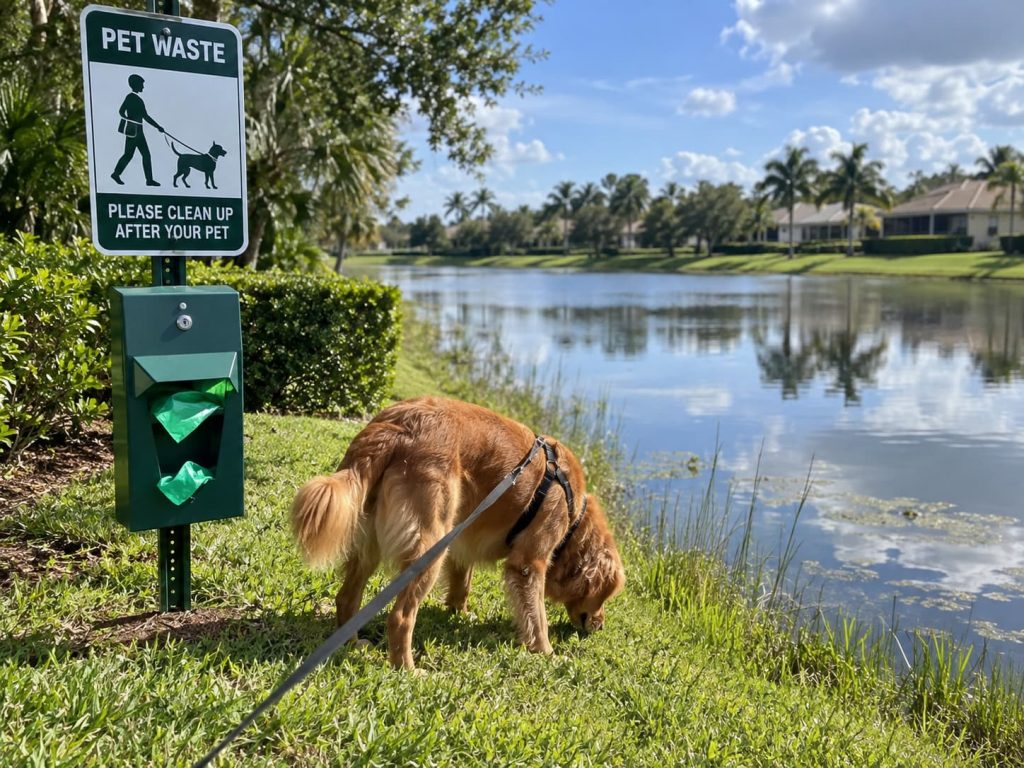
Table of Contents
It is easy to dismiss a little dog waste left on the grass as harmless, or even to assume it acts like fertilizer. The reality is the opposite. Pet waste is officially classified as a pollutant, and in a community with a lake, the waste left behind by residents’ dogs is one of the most direct and controllable contributors to algae blooms, murky water, and unhealthy conditions. The good news for HOA boards is that because it is so controllable, it is also one of the easiest problems to reduce.
This guide explains how pet waste affects HOA lake water quality, what is actually in it, how it travels from the grass to the water, why it fuels algae and bacteria problems, and what a community can do about it.
Pet waste harms HOA lake water quality because it contains high levels of nitrogen, phosphorus, and harmful bacteria. When rain washes it into the lake through stormwater runoff, the nutrients fuel algae blooms and deplete oxygen, while the bacteria create health risks. It is a significant but preventable source of nutrient pollution.
Key Takeaways
- Pet waste is a pollutant, not fertilizer. The EPA classifies it as a source of water pollution.
- It is loaded with nutrients, nitrogen and phosphorus, that fuel algae blooms and deplete oxygen.
- It carries harmful bacteria, with a single gram containing an estimated 23 million fecal coliform bacteria.
- Stormwater carries it to the lake, washing waste off lawns and sidewalks straight into the water untreated.
- It is highly controllable, making pet waste one of the easiest nutrient sources for a community to reduce.
Is Pet Waste Really Bad for a Lake?
Yes. Pet waste is genuinely bad for a lake and is officially classified as a pollutant. It contains excess nutrients and harmful bacteria that degrade water quality when it washes into a waterbody. Far from acting as a harmless fertilizer, it contributes to algae blooms, oxygen depletion, and health risks, making it a real and recognized source of water pollution.
Correcting the “it’s just fertilizer” misconception is the essential starting point, because that belief is exactly why the problem persists.
Many people are surprised to learn that pet waste is considered a source of water pollution, since some assume it breaks down harmlessly like a fertilizer. The reality is different. As reflected in USDA guidance, dog waste contains nitrogen and phosphorus that can deplete the oxygen fish need and encourage harmful algae growth, and it is a significant source of pathogens like fecal coliform bacteria. The EPA classifies pet waste as a pollutant in the broader category of nonpoint source pollution.
Why the fertilizer comparison fails:
- Wild animals versus pets. Wild animals eat resources from the local ecosystem, but dogs eat nutrient-rich commercial food, so their waste is unusually high in nutrients that overload a waterbody.
- Too much of a good thing. The nitrogen and phosphorus that make fertilizer useful in measured amounts become pollutants when delivered in excess directly to water.
- The pathogen problem. Unlike fertilizer, pet waste also carries disease-causing bacteria and parasites.
So while the instinct to treat pet waste as natural and harmless is understandable, the science is clear that it is a genuine pollutant, and a community lake is exactly the kind of waterbody it harms.
What Is Actually in Pet Waste?
Pet waste contains three main things that harm water: excess nutrients (nitrogen and phosphorus), harmful pathogens (bacteria, viruses, and parasites), and organic matter that consumes oxygen as it decomposes. A single gram of dog waste can contain an estimated 23 million fecal coliform bacteria, including E. coli, making it both a nutrient and a health concern.
Breaking down the actual contents shows why pet waste is a double threat to both water quality and health.
The harmful components:
- Nitrogen and phosphorus. These are the same nutrients that fuel algae blooms. Because dog food is nutrient-dense, dog waste is high in both, and a single pile keeps releasing them every time it rains until it is washed away.
- Fecal coliform bacteria. A single gram of dog waste can contain an estimated 23 million fecal coliform bacteria, including E. coli and Salmonella, which pose real health risks.
- Parasites and pathogens. Dog waste can carry Giardia, roundworms, and other pathogens transmissible to people and other animals.
- Organic matter and ammonia. As the waste decomposes in water, it consumes oxygen and can release ammonia, both of which stress or kill fish.
The scale adds up quickly in a community. A 50-pound dog produces roughly 200 pounds of waste per year, and a neighborhood with many dogs generates a substantial load. Even if only a fraction of owners fail to pick up, the cumulative nutrient and bacteria contribution to a community lake is significant.
Educate Your Residents About Pet Waste
As property managers and HOA board members, its important to educate your residents on the risk of pet waste to lake water quality.
How Does Pet Waste Get Into the Lake?

Pet waste gets into a lake through stormwater runoff. When rain or irrigation flows across lawns, sidewalks, and streets, it picks up waste left on the ground and carries it into storm drains and drainage systems that flow, untreated, directly into the community lake. This is the same path that carries fertilizer and other nutrient pollution.
Understanding the runoff pathway is key, because it explains why waste left far from the water still ends up in it.
The journey from grass to lake is direct:
- Waste is left on the ground, on a lawn, sidewalk, common area, or near the shoreline.
- Rain or irrigation washes over it, dissolving and carrying its nutrients and bacteria.
- Runoff enters the stormwater system, flowing into storm drains, ditches, and swales.
- The stormwater discharges into the lake, untreated, since stormwater systems generally carry runoff directly to waterbodies rather than to treatment.
This is the crucial point many residents miss: stormwater is not treated the way household wastewater is. Runoff flows straight into the community lake, so anything it picks up along the way, including pet waste, ends up in the water. Waste does not even need to be near the shoreline, since runoff travels across the whole drainage area. This is the same nutrient-runoff pathway that makes shoreline buffers and littoral plantings and good stormwater pond maintenance so important.
How Does Pet Waste Cause Algae and Water Problems?
Pet waste causes algae and water problems because the nitrogen and phosphorus it adds act as fertilizer for algae. These nutrients trigger rapid algae growth, and when the algae later die and decompose, the process consumes oxygen, which can lead to fish kills. The bacteria in the waste also make water unsafe for contact.
Connecting pet waste to the visible lake problems residents complain about makes the impact concrete.
The chain of effects mirrors nutrient pollution generally:
- Nutrients feed algae. The nitrogen and phosphorus from pet waste fuel algae and aquatic weed growth, the same way excess fertilizer does.
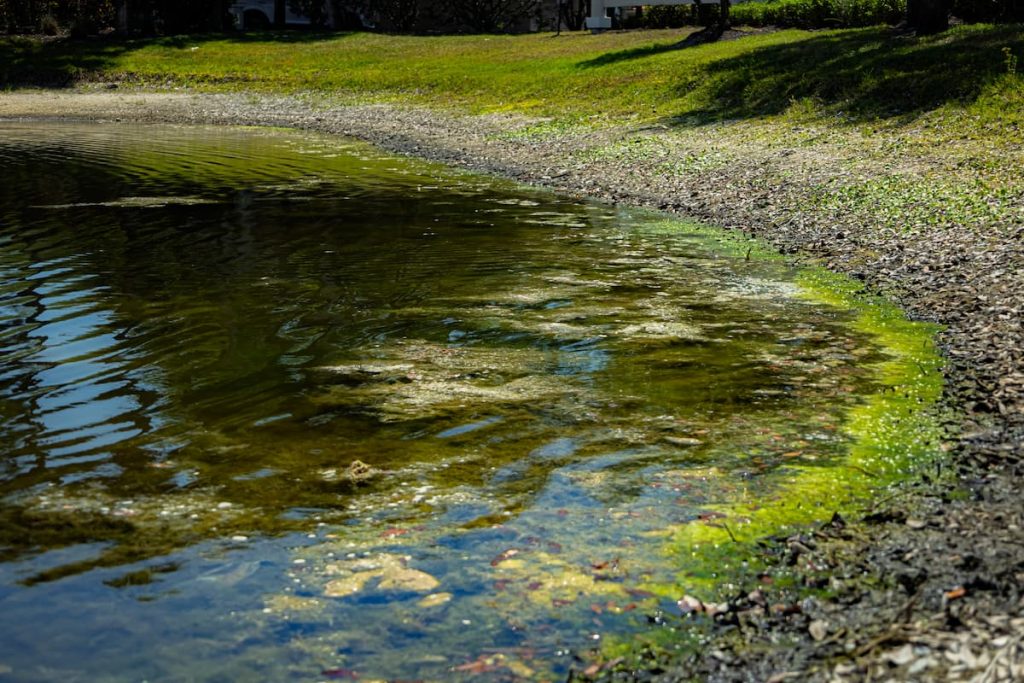
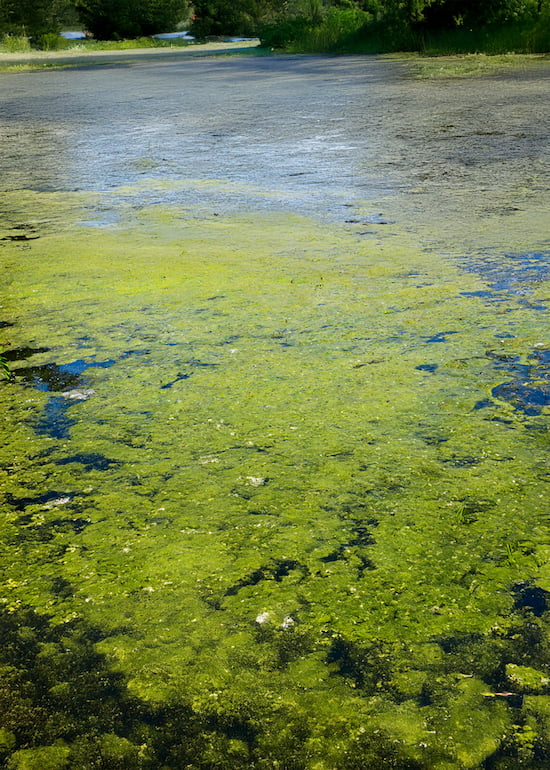
- Algae blooms form. With extra nutrients, algae can bloom rapidly, turning water green and cloudy and making it unattractive for recreation.
- Oxygen crashes. When a bloom dies and decomposes, bacteria consume large amounts of oxygen, which can suffocate fish. Ammonia from the decomposing waste adds further stress.
- Bacteria create health risks. The fecal bacteria can make water unsafe for swimming and contact, a concern for both people and pets.
The result is that a community lake receiving significant pet waste tends toward exactly the problems boards most want to avoid: recurring algae, murky green water, odor, fish kills, and potential health advisories. Because pet waste is one identifiable and controllable contributor to the nutrient load, addressing it is a meaningful part of the broader nutrient management that keeps a lake healthy, which also depends on water quality monitoring and algae control.

What Can an HOA Do About Pet Waste?
An HOA can reduce pet waste pollution by installing pet waste stations, setting and enforcing a clear pickup policy, educating residents about the water quality connection, and maintaining shoreline buffers that filter runoff. Because pet waste is such a controllable pollutant, these straightforward steps can meaningfully reduce the nutrient load reaching the lake.
This is the empowering part for a board: unlike many pollution sources, pet waste is genuinely within a community’s control.
Effective measures for a community:
- Install pet waste stations. Convenient stations with bags and disposal bins throughout the community, especially near the lake and common walking areas, dramatically increase pickup rates. Pet waste stations are a proven tool for protecting water quality.
- Set a clear policy. An enforceable pickup policy in the community rules establishes the expectation and gives the board a basis to address chronic offenders.
- Educate residents. Many residents simply do not know pet waste harms the lake. Explaining the water quality connection, that runoff carries it untreated straight into the lake they enjoy, motivates behavior far better than rules alone.
- Emphasize timing. Encourage residents to pick up promptly and especially before rain, since that is when uncollected waste washes into the system.
- Maintain shoreline buffers. Vegetated littoral buffers help filter nutrients from runoff before they reach the water, providing a backstop.
The message that resonates most is ownership: pet waste is one of the few lake pollutants that individual residents can directly prevent with a simple habit. A community that combines convenient stations, a clear policy, and genuine education about the water connection can substantially cut this nutrient source, supporting the overall health of the lake alongside professional management.
Schedule a Site Visit With Pond Guru
Pet waste is a small, everyday thing that adds up to a real water quality problem in a community lake, and it is one of the most controllable nutrient sources a community has. Reducing it through stations, policy, and education is a genuine part of managing a lake’s nutrient load, working alongside the shoreline, water quality, and algae management that keep a waterbody healthy.
Pond Guru works with HOA boards and property managers across Florida to manage nutrients, maintain shorelines, monitor water quality, and address the algae problems that nutrient pollution causes, helping communities protect their lakes from every controllable source.
Because every lake and community is different, the process starts with an on-site evaluation of the lake’s condition and nutrient sources. To protect your community’s lake, schedule a site visit with Pond Guru and a specialist will assess conditions and recommend a plan.
Frequently Asked Questions
Yes. Dog waste is officially classified as a pollutant by the EPA. It contains excess nitrogen and phosphorus that fuel algae blooms and deplete oxygen, along with harmful bacteria and parasites. When it washes into waterways through stormwater runoff, it degrades water quality and creates health risks, so it is a genuine environmental concern.
Yes, through stormwater runoff. When rain or irrigation flows across lawns and sidewalks, it picks up pet waste and carries it into storm drains and drainage systems that flow directly, and untreated, into the community lake. Waste does not need to be near the shoreline, since runoff travels across the entire drainage area.
Dogs eat nutrient-rich commercial food, so their waste contains unusually high levels of nitrogen and phosphorus compared to wild animals that consume resources from the local ecosystem. Dogs are also concentrated in high numbers in neighborhoods, so the cumulative nutrient and bacteria load on a community lake is far greater than from dispersed wildlife.
A single gram of dog waste can contain an estimated 23 million fecal coliform bacteria, and a 50-pound dog produces roughly 200 pounds of waste a year. In a neighborhood with many dogs, even partial non-compliance with pickup adds a significant load of nutrients and bacteria to a community lake through runoff.
Install convenient pet waste stations with bags and bins, set and enforce a clear pickup policy, and educate residents about how runoff carries waste into the lake. Encourage prompt pickup, especially before rain, and maintain vegetated shoreline buffers that filter runoff. Pet waste is highly controllable, so these steps meaningfully reduce the nutrient load.
Ready to Schedule a Visit ?
Have questions about your pond or lake? Our experts are ready to help you take the next step.
Latest Article
Popular Post

Why Keeping Culverts Clear of Debris Matters for Stormwater Systems
Table of Contents A culvert is one of those…
Table of Contents
It is easy to dismiss a little dog waste left on the grass as harmless, or even to assume it acts like fertilizer. The reality is the opposite. Pet waste is officially classified as a pollutant, and in a community with a lake, the waste left behind by residents’ dogs is one of the most direct and controllable contributors to algae blooms, murky water, and unhealthy conditions. The good news for HOA boards is that because it is so controllable, it is also one of the easiest problems to reduce.
This guide explains how pet waste affects HOA lake water quality, what is actually in it, how it travels from the grass to the water, why it fuels algae and bacteria problems, and what a community can do about it.
Pet waste harms HOA lake water quality because it contains high levels of nitrogen, phosphorus, and harmful bacteria. When rain washes it into the lake through stormwater runoff, the nutrients fuel algae blooms and deplete oxygen, while the bacteria create health risks. It is a significant but preventable source of nutrient pollution.
Key Takeaways
- Pet waste is a pollutant, not fertilizer. The EPA classifies it as a source of water pollution.
- It is loaded with nutrients, nitrogen and phosphorus, that fuel algae blooms and deplete oxygen.
- It carries harmful bacteria, with a single gram containing an estimated 23 million fecal coliform bacteria.
- Stormwater carries it to the lake, washing waste off lawns and sidewalks straight into the water untreated.
- It is highly controllable, making pet waste one of the easiest nutrient sources for a community to reduce.
Is Pet Waste Really Bad for a Lake?
Yes. Pet waste is genuinely bad for a lake and is officially classified as a pollutant. It contains excess nutrients and harmful bacteria that degrade water quality when it washes into a waterbody. Far from acting as a harmless fertilizer, it contributes to algae blooms, oxygen depletion, and health risks, making it a real and recognized source of water pollution.
Correcting the “it’s just fertilizer” misconception is the essential starting point, because that belief is exactly why the problem persists.
Many people are surprised to learn that pet waste is considered a source of water pollution, since some assume it breaks down harmlessly like a fertilizer. The reality is different. As reflected in USDA guidance, dog waste contains nitrogen and phosphorus that can deplete the oxygen fish need and encourage harmful algae growth, and it is a significant source of pathogens like fecal coliform bacteria. The EPA classifies pet waste as a pollutant in the broader category of nonpoint source pollution.
Why the fertilizer comparison fails:
- Wild animals versus pets. Wild animals eat resources from the local ecosystem, but dogs eat nutrient-rich commercial food, so their waste is unusually high in nutrients that overload a waterbody.
- Too much of a good thing. The nitrogen and phosphorus that make fertilizer useful in measured amounts become pollutants when delivered in excess directly to water.
- The pathogen problem. Unlike fertilizer, pet waste also carries disease-causing bacteria and parasites.
So while the instinct to treat pet waste as natural and harmless is understandable, the science is clear that it is a genuine pollutant, and a community lake is exactly the kind of waterbody it harms.
What Is Actually in Pet Waste?
Pet waste contains three main things that harm water: excess nutrients (nitrogen and phosphorus), harmful pathogens (bacteria, viruses, and parasites), and organic matter that consumes oxygen as it decomposes. A single gram of dog waste can contain an estimated 23 million fecal coliform bacteria, including E. coli, making it both a nutrient and a health concern.
Breaking down the actual contents shows why pet waste is a double threat to both water quality and health.
The harmful components:
- Nitrogen and phosphorus. These are the same nutrients that fuel algae blooms. Because dog food is nutrient-dense, dog waste is high in both, and a single pile keeps releasing them every time it rains until it is washed away.
- Fecal coliform bacteria. A single gram of dog waste can contain an estimated 23 million fecal coliform bacteria, including E. coli and Salmonella, which pose real health risks.
- Parasites and pathogens. Dog waste can carry Giardia, roundworms, and other pathogens transmissible to people and other animals.
- Organic matter and ammonia. As the waste decomposes in water, it consumes oxygen and can release ammonia, both of which stress or kill fish.
The scale adds up quickly in a community. A 50-pound dog produces roughly 200 pounds of waste per year, and a neighborhood with many dogs generates a substantial load. Even if only a fraction of owners fail to pick up, the cumulative nutrient and bacteria contribution to a community lake is significant.
Educate Your Residents About Pet Waste
As property managers and HOA board members, its important to educate your residents on the risk of pet waste to lake water quality.
How Does Pet Waste Get Into the Lake?

Pet waste gets into a lake through stormwater runoff. When rain or irrigation flows across lawns, sidewalks, and streets, it picks up waste left on the ground and carries it into storm drains and drainage systems that flow, untreated, directly into the community lake. This is the same path that carries fertilizer and other nutrient pollution.
Understanding the runoff pathway is key, because it explains why waste left far from the water still ends up in it.
The journey from grass to lake is direct:
- Waste is left on the ground, on a lawn, sidewalk, common area, or near the shoreline.
- Rain or irrigation washes over it, dissolving and carrying its nutrients and bacteria.
- Runoff enters the stormwater system, flowing into storm drains, ditches, and swales.
- The stormwater discharges into the lake, untreated, since stormwater systems generally carry runoff directly to waterbodies rather than to treatment.
This is the crucial point many residents miss: stormwater is not treated the way household wastewater is. Runoff flows straight into the community lake, so anything it picks up along the way, including pet waste, ends up in the water. Waste does not even need to be near the shoreline, since runoff travels across the whole drainage area. This is the same nutrient-runoff pathway that makes shoreline buffers and littoral plantings and good stormwater pond maintenance so important.
How Does Pet Waste Cause Algae and Water Problems?
Pet waste causes algae and water problems because the nitrogen and phosphorus it adds act as fertilizer for algae. These nutrients trigger rapid algae growth, and when the algae later die and decompose, the process consumes oxygen, which can lead to fish kills. The bacteria in the waste also make water unsafe for contact.
Connecting pet waste to the visible lake problems residents complain about makes the impact concrete.
The chain of effects mirrors nutrient pollution generally:
- Nutrients feed algae. The nitrogen and phosphorus from pet waste fuel algae and aquatic weed growth, the same way excess fertilizer does.
- Algae blooms form. With extra nutrients, algae can bloom rapidly, turning water green and cloudy and making it unattractive for recreation.
- Oxygen crashes. When a bloom dies and decomposes, bacteria consume large amounts of oxygen, which can suffocate fish. Ammonia from the decomposing waste adds further stress.
- Bacteria create health risks. The fecal bacteria can make water unsafe for swimming and contact, a concern for both people and pets.
The result is that a community lake receiving significant pet waste tends toward exactly the problems boards most want to avoid: recurring algae, murky green water, odor, fish kills, and potential health advisories. Because pet waste is one identifiable and controllable contributor to the nutrient load, addressing it is a meaningful part of the broader nutrient management that keeps a lake healthy, which also depends on water quality monitoring and algae control.
What Can an HOA Do About Pet Waste?
An HOA can reduce pet waste pollution by installing pet waste stations, setting and enforcing a clear pickup policy, educating residents about the water quality connection, and maintaining shoreline buffers that filter runoff. Because pet waste is such a controllable pollutant, these straightforward steps can meaningfully reduce the nutrient load reaching the lake.
This is the empowering part for a board: unlike many pollution sources, pet waste is genuinely within a community’s control.
Effective measures for a community:
- Install pet waste stations. Convenient stations with bags and disposal bins throughout the community, especially near the lake and common walking areas, dramatically increase pickup rates. Pet waste stations are a proven tool for protecting water quality.
- Set a clear policy. An enforceable pickup policy in the community rules establishes the expectation and gives the board a basis to address chronic offenders.
- Educate residents. Many residents simply do not know pet waste harms the lake. Explaining the water quality connection, that runoff carries it untreated straight into the lake they enjoy, motivates behavior far better than rules alone.
- Emphasize timing. Encourage residents to pick up promptly and especially before rain, since that is when uncollected waste washes into the system.
- Maintain shoreline buffers. Vegetated littoral buffers help filter nutrients from runoff before they reach the water, providing a backstop.
The message that resonates most is ownership: pet waste is one of the few lake pollutants that individual residents can directly prevent with a simple habit. A community that combines convenient stations, a clear policy, and genuine education about the water connection can substantially cut this nutrient source, supporting the overall health of the lake alongside professional management.
Schedule a Site Visit With Pond Guru
Pet waste is a small, everyday thing that adds up to a real water quality problem in a community lake, and it is one of the most controllable nutrient sources a community has. Reducing it through stations, policy, and education is a genuine part of managing a lake’s nutrient load, working alongside the shoreline, water quality, and algae management that keep a waterbody healthy.
Pond Guru works with HOA boards and property managers across Florida to manage nutrients, maintain shorelines, monitor water quality, and address the algae problems that nutrient pollution causes, helping communities protect their lakes from every controllable source.
Because every lake and community is different, the process starts with an on-site evaluation of the lake’s condition and nutrient sources. To protect your community’s lake, schedule a site visit with Pond Guru and a specialist will assess conditions and recommend a plan.
Frequently Asked Questions
Yes. Dog waste is officially classified as a pollutant by the EPA. It contains excess nitrogen and phosphorus that fuel algae blooms and deplete oxygen, along with harmful bacteria and parasites. When it washes into waterways through stormwater runoff, it degrades water quality and creates health risks, so it is a genuine environmental concern.
Yes, through stormwater runoff. When rain or irrigation flows across lawns and sidewalks, it picks up pet waste and carries it into storm drains and drainage systems that flow directly, and untreated, into the community lake. Waste does not need to be near the shoreline, since runoff travels across the entire drainage area.
Dogs eat nutrient-rich commercial food, so their waste contains unusually high levels of nitrogen and phosphorus compared to wild animals that consume resources from the local ecosystem. Dogs are also concentrated in high numbers in neighborhoods, so the cumulative nutrient and bacteria load on a community lake is far greater than from dispersed wildlife.
A single gram of dog waste can contain an estimated 23 million fecal coliform bacteria, and a 50-pound dog produces roughly 200 pounds of waste a year. In a neighborhood with many dogs, even partial non-compliance with pickup adds a significant load of nutrients and bacteria to a community lake through runoff.
Install convenient pet waste stations with bags and bins, set and enforce a clear pickup policy, and educate residents about how runoff carries waste into the lake. Encourage prompt pickup, especially before rain, and maintain vegetated shoreline buffers that filter runoff. Pet waste is highly controllable, so these steps meaningfully reduce the nutrient load.
Ready to Schedule a Visit ?
Have questions about your pond or lake? Our experts are ready to help you take the next step.
Latest Article
Popular Post
Why Keeping Culverts Clear of Debris Matters for Stormwater Systems
Table of Contents A culvert is one of those…