

Apple Snails in Florida: Native vs Invasive Guide
Apple Snails in Florida: Native vs Invasive Guide
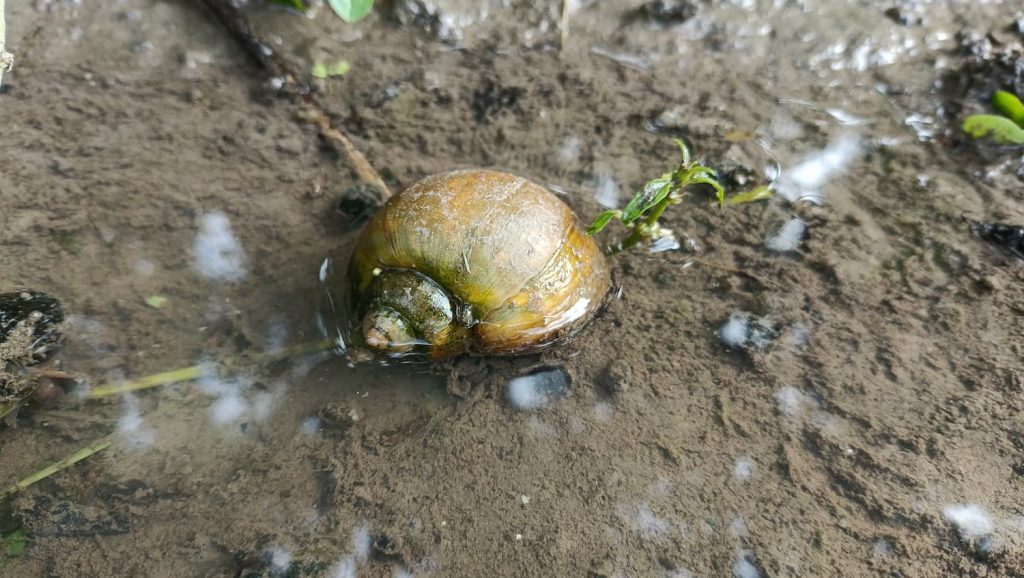
Table of Contents
If you have spotted clusters of bright pink eggs stuck to plant stems, docks, or seawalls just above your pond’s waterline, you have encountered an apple snail, and specifically an invasive one. Florida is home to both a beloved native apple snail and several introduced species that cause real ecological harm. Telling them apart matters, because one is a protected keystone species and the others are invaders you may need to control.
This guide explains the difference between Florida’s native apple snail and the invasive island apple snail, how to identify each by its eggs and shell, why the distinction matters for wildlife like the endangered snail kite, and what to do if you find invasive pink egg masses.
Florida has one native apple snail, the Florida apple snail (Pomacea paludosa), and several invasive species, most commonly the island apple snail (Pomacea maculata). The easiest way to tell them apart is by their eggs: native snails lay smaller clutches of pea-sized, pale white to pink eggs, while invasive snails lay large masses of bright bubblegum-pink eggs above the waterline.
Key Takeaways
- Florida has one native apple snail (Pomacea paludosa) and four introduced exotic species, the most common being the island apple snail.
- Egg color is the fastest tell. Bright bubblegum-pink egg masses above the water indicate an invasive species; pale white to peachy eggs indicate the native.
- The native snail is a keystone species, the main food of the endangered Everglade snail kite and the limpkin.
- Invasive apple snails overgraze vegetation, reproduce far faster, and can damage aquatic habitats and even crops.
- Bright pink egg masses can be removed, but the native snail and its eggs should be protected.
How Many Apple Snail Species Are in Florida?
Florida has five apple snail species in the genus Pomacea: one native and four introduced exotics. The native is the Florida apple snail. The four non-native species, all originally from South America, are the island apple snail, channeled apple snail, spike-topped apple snail, and titan apple snail. The island apple snail is the most widespread invasive.
Knowing there is only one native species makes identification simpler: if it is not the Florida apple snail, it is one of the invaders.
According to the Florida Fish and Wildlife Conservation Commission, Florida is home to several Pomacea apple snails, with only one native species, the Florida apple snail, and four exotics native to South America. As of 2013, exotic populations were established in at least 29 watersheds across 38 of Florida’s 67 counties, and the channeled apple snail is listed among 100 of the world’s worst invasive species.
The five species:
- Florida apple snail (Pomacea paludosa): The only native, and the largest native freshwater snail in North America.
- Island apple snail (Pomacea maculata): The most common and widespread invasive, originally from South America.
- Channeled apple snail (Pomacea canaliculata): One of the world’s worst invasives, present in limited areas.
- Spike-topped apple snail (Pomacea diffusa): An introduced species.
- Titan apple snail (Pomacea haustrum): Introduced, recorded mainly in the Miami area.
Most non-native apple snails likely entered Florida through the aquarium trade, where they are sold as “mystery snails,” then were released into the wild.

How Do You Tell Native and Invasive Apple Snails Apart?
The most reliable way is by their eggs. The native Florida apple snail lays smaller clutches of large, pea-sized, pale white to peachy eggs. Invasive island apple snails lay large masses of hundreds of tiny, bright bubblegum-pink eggs, usually well above the waterline. Shell size also helps: invasive snails typically grow larger than the native.
Egg masses are actually seen more often than the snails themselves, which makes them the practical identification tool.
Feature | Native Florida apple snail | Invasive island apple snail |
|---|---|---|
Species | Pomacea paludosa | Pomacea maculata |
Egg color | Pale white to peachy pink | Bright bubblegum pink |
Egg size | Larger, pea-sized | Tiny, tomato-seed-sized |
Eggs per clutch | Roughly 20 to 80 | Hundreds, often 500+ |
Egg location | At or near the waterline | Well above the waterline |
Shell size | Up to about 2 to 3 inches | Larger, up to about 5 inches |
Status | Native, beneficial | Invasive, harmful |
As the Florida Museum and FWC-affiliated sources describe, the native snail produces fewer, larger eggs, while the invasive island apple snail lays enormous clutches of small, vivid pink eggs. The color contrast is striking enough that a bright bubblegum-pink mass is essentially a positive identification of an invasive.
One caution: shell color and size overlap between species and can be hard to judge, so the eggs are the far more reliable field marker.
Get Rid of Invasive Apple Snails
Invasive snails are a huge burden to the native ecosystem. Work with Pond Guru to target invasive species!
Why Does the Native Florida Apple Snail Matter?

The native Florida apple snail is a keystone species and the primary food source for the endangered Everglade snail kite, as well as the limpkin. These birds are specialized snail predators, and the health of their populations is tied directly to native apple snail abundance. Protecting the native snail helps protect the wildlife that depends on it.
This is the ecological heart of the issue and the reason identification matters beyond curiosity.
The Florida apple snail is the largest native freshwater snail in North America and a cornerstone of wetland food webs. As documented by UF-affiliated and state park sources, limpkins and snail kites are specialized predators of apple snails, and protecting Florida apple snails protects the animals that rely on them for food.
The Everglade snail kite is especially significant:
- It is a federally endangered bird whose diet is almost entirely apple snails.
- It hovers and grabs snails with its feet, never using its bill, and its sharply curved beak is adapted specifically for extracting snails from their shells.
- Its population dynamics track snail abundance, so apple snail health has direct conservation implications.
There is a genuinely interesting wrinkle here. In some areas, the invasive island apple snail has partly supported snail kite and limpkin populations by providing abundant food. But the invasive eggs and largest adults are often too big for the birds to handle efficiently, and the ecological trade-offs of the invasion remain complex and generally harmful overall.
Why Are Invasive Apple Snails a Problem?
Invasive apple snails are a problem because they reproduce far faster than native snails, overgraze aquatic vegetation to the point of habitat collapse, and can damage crops and clog systems. A single invasive female can produce thousands of offspring per year, letting populations explode and outcompete the native snail.
The scale of their reproduction is what makes them so damaging so quickly.
Invasive apple snails, particularly the island and channeled species, cause several kinds of harm:
- Explosive reproduction. Invasive females can lay clutches of hundreds of eggs every couple of weeks, producing over a thousand offspring a year under good conditions.
- Overgrazing. They can strip aquatic vegetation so aggressively that they push a habitat toward collapse, removing the plants that fish, birds, and other wildlife depend on.
- Outcompeting the native. They feed and reproduce faster than the slower-growing Florida apple snail, crowding it out.
- Crop and infrastructure damage. In some regions, invasive apple snails damage rice and other crops and foul water systems.
Because they spread so readily and are difficult to eradicate once established, prevention and early removal matter. This is exactly why the bright pink egg masses should not be ignored.

What Should You Do About Invasive Apple Snail Eggs?
If you find the bright bubblegum-pink egg masses of invasive apple snails above the waterline, you can remove and destroy them by scraping them into a sealed bag and disposing of them in the trash. Never knock them into the water, since that can help them hatch. Leave pale native egg clutches alone, and never release aquarium snails into the wild.
Careful removal of invasive eggs is a small action that genuinely helps, but it must be done correctly.
Guidance for handling invasive apple snail eggs:
- Confirm it is invasive first. Bright bubblegum-pink masses above the water are invasive. Pale white to peachy eggs are the protected native and should be left alone.
- Scrape and seal. Remove bright pink masses into a sealed bag and dispose of them in the trash.
- Do not knock eggs into the water. Dropping them into the water can actually help them survive and hatch, making the problem worse.
- Never release aquarium snails. FWC recommends that captive snails never be released into the wild, since this is how the invasion started.
- Consider a permit note. Importing or transporting island apple snails requires a USDA permit, reflecting how seriously they are regulated.
For a community pond with a significant invasive apple snail population, egg removal alone will not solve it. A broader management approach, ideally with professional guidance, addresses both the snails and the conditions that let them thrive.
Schedule a Site Visit With Pond Guru
Apple snails are a small but telling example of how much is happening in a Florida pond, and of why identification matters. A protected native keystone species and a damaging invader can look similar at a glance, yet call for opposite responses. Knowing which you have, and managing invasives appropriately, supports both your pond and the wildlife around it.
Pond Guru works with HOA boards, property managers, and homeowners across Florida to manage aquatic vegetation, support healthy native wildlife, control invasive species, and keep community ponds balanced and healthy.
Because every pond is different, the process starts with an on-site evaluation. To understand what is living in your water and how to manage it, schedule a site visit with Pond Guru and a specialist will assess conditions and recommend a plan.

Frequently Asked Questions
Check the eggs. Florida's native apple snail lays smaller clutches of large, pea-sized, pale white to peachy eggs. The invasive island apple snail lays large masses of hundreds of tiny, bright bubblegum-pink eggs above the waterline. A vivid pink egg mass is essentially a positive identification of an invasive species.
They are the eggs of an invasive apple snail, most likely the island apple snail. These bubblegum-pink clutches are laid above the waterline on plant stems, docks, culverts, and seawalls. They can be removed by scraping them into a sealed bag and placing it in the trash, but never knock them into the water.
The native Florida apple snail is not a game species, and it is ecologically protected in the sense that it is a vital keystone species and the main food of the endangered Everglade snail kite. It should not be removed or destroyed. Only the invasive apple snails and their bright pink eggs should be controlled.
Invasive apple snails reproduce far faster than the native species and can overgraze aquatic vegetation severely enough to damage or collapse a habitat. A single female can produce over a thousand offspring a year. They outcompete the native snail and can harm crops and water systems, making them a serious ecological problem.
Yes. If you confirm the eggs are the bright bubblegum-pink masses of an invasive species, scrape them into a sealed bag and dispose of them in the trash. Do not knock them into the water, which can help them hatch. Leave pale native egg clutches alone, and never release aquarium snails into ponds.
Ready to Schedule a Visit ?
Have questions about your pond or lake? Our experts are ready to help you take the next step.
Latest Article
Popular Post

What Is Pond Scum? Causes and How to Clear It
Table of Contents That green, stringy, sometimes slimy layer…
Table of Contents
If you have spotted clusters of bright pink eggs stuck to plant stems, docks, or seawalls just above your pond’s waterline, you have encountered an apple snail, and specifically an invasive one. Florida is home to both a beloved native apple snail and several introduced species that cause real ecological harm. Telling them apart matters, because one is a protected keystone species and the others are invaders you may need to control.
This guide explains the difference between Florida’s native apple snail and the invasive island apple snail, how to identify each by its eggs and shell, why the distinction matters for wildlife like the endangered snail kite, and what to do if you find invasive pink egg masses.
Florida has one native apple snail, the Florida apple snail (Pomacea paludosa), and several invasive species, most commonly the island apple snail (Pomacea maculata). The easiest way to tell them apart is by their eggs: native snails lay smaller clutches of pea-sized, pale white to pink eggs, while invasive snails lay large masses of bright bubblegum-pink eggs above the waterline.
Key Takeaways
- Florida has one native apple snail (Pomacea paludosa) and four introduced exotic species, the most common being the island apple snail.
- Egg color is the fastest tell. Bright bubblegum-pink egg masses above the water indicate an invasive species; pale white to peachy eggs indicate the native.
- The native snail is a keystone species, the main food of the endangered Everglade snail kite and the limpkin.
- Invasive apple snails overgraze vegetation, reproduce far faster, and can damage aquatic habitats and even crops.
- Bright pink egg masses can be removed, but the native snail and its eggs should be protected.
How Many Apple Snail Species Are in Florida?
Florida has five apple snail species in the genus Pomacea: one native and four introduced exotics. The native is the Florida apple snail. The four non-native species, all originally from South America, are the island apple snail, channeled apple snail, spike-topped apple snail, and titan apple snail. The island apple snail is the most widespread invasive.
Knowing there is only one native species makes identification simpler: if it is not the Florida apple snail, it is one of the invaders.
According to the Florida Fish and Wildlife Conservation Commission, Florida is home to several Pomacea apple snails, with only one native species, the Florida apple snail, and four exotics native to South America. As of 2013, exotic populations were established in at least 29 watersheds across 38 of Florida’s 67 counties, and the channeled apple snail is listed among 100 of the world’s worst invasive species.
The five species:
- Florida apple snail (Pomacea paludosa): The only native, and the largest native freshwater snail in North America.
- Island apple snail (Pomacea maculata): The most common and widespread invasive, originally from South America.
- Channeled apple snail (Pomacea canaliculata): One of the world’s worst invasives, present in limited areas.
- Spike-topped apple snail (Pomacea diffusa): An introduced species.
- Titan apple snail (Pomacea haustrum): Introduced, recorded mainly in the Miami area.
Most non-native apple snails likely entered Florida through the aquarium trade, where they are sold as “mystery snails,” then were released into the wild.
How Do You Tell Native and Invasive Apple Snails Apart?
The most reliable way is by their eggs. The native Florida apple snail lays smaller clutches of large, pea-sized, pale white to peachy eggs. Invasive island apple snails lay large masses of hundreds of tiny, bright bubblegum-pink eggs, usually well above the waterline. Shell size also helps: invasive snails typically grow larger than the native.
Egg masses are actually seen more often than the snails themselves, which makes them the practical identification tool.
Species: Native is Pomacea paludosa. Invasive is Pomacea maculata.
Egg color: Native eggs are pale white to peachy pink. Invasive eggs are bright bubblegum pink.
Egg size: Native eggs are larger, pea-sized. Invasive eggs are tiny, tomato-seed-sized.
Eggs per clutch: Native lays roughly 20 to 80. Invasive lays hundreds, often 500 or more.
Egg location: Native eggs are at or near the waterline. Invasive eggs are well above the waterline.
Shell size: Native grows up to about 2 to 3 inches. Invasive grows larger, up to about 5 inches.
Status: Native is beneficial. Invasive is harmful.
As the Florida Museum and FWC-affiliated sources describe, the native snail produces fewer, larger eggs, while the invasive island apple snail lays enormous clutches of small, vivid pink eggs. The color contrast is striking enough that a bright bubblegum-pink mass is essentially a positive identification of an invasive.
One caution: shell color and size overlap between species and can be hard to judge, so the eggs are the far more reliable field marker.
Get Rid of Invasive Apple Snails
Invasive snails are a huge burden to the native ecosystem. Work with Pond Guru to target invasive species!
Why Does the Native Florida Apple Snail Matter?

The native Florida apple snail is a keystone species and the primary food source for the endangered Everglade snail kite, as well as the limpkin. These birds are specialized snail predators, and the health of their populations is tied directly to native apple snail abundance. Protecting the native snail helps protect the wildlife that depends on it.
This is the ecological heart of the issue and the reason identification matters beyond curiosity.
The Florida apple snail is the largest native freshwater snail in North America and a cornerstone of wetland food webs. As documented by UF-affiliated and state park sources, limpkins and snail kites are specialized predators of apple snails, and protecting Florida apple snails protects the animals that rely on them for food.
The Everglade snail kite is especially significant:
- It is a federally endangered bird whose diet is almost entirely apple snails.
- It hovers and grabs snails with its feet, never using its bill, and its sharply curved beak is adapted specifically for extracting snails from their shells.
- Its population dynamics track snail abundance, so apple snail health has direct conservation implications.
There is a genuinely interesting wrinkle here. In some areas, the invasive island apple snail has partly supported snail kite and limpkin populations by providing abundant food. But the invasive eggs and largest adults are often too big for the birds to handle efficiently, and the ecological trade-offs of the invasion remain complex and generally harmful overall.
Why Are Invasive Apple Snails a Problem?
Invasive apple snails are a problem because they reproduce far faster than native snails, overgraze aquatic vegetation to the point of habitat collapse, and can damage crops and clog systems. A single invasive female can produce thousands of offspring per year, letting populations explode and outcompete the native snail.
The scale of their reproduction is what makes them so damaging so quickly.
Invasive apple snails, particularly the island and channeled species, cause several kinds of harm:
- Explosive reproduction. Invasive females can lay clutches of hundreds of eggs every couple of weeks, producing over a thousand offspring a year under good conditions.
- Overgrazing. They can strip aquatic vegetation so aggressively that they push a habitat toward collapse, removing the plants that fish, birds, and other wildlife depend on.
- Outcompeting the native. They feed and reproduce faster than the slower-growing Florida apple snail, crowding it out.
- Crop and infrastructure damage. In some regions, invasive apple snails damage rice and other crops and foul water systems.
Because they spread so readily and are difficult to eradicate once established, prevention and early removal matter. This is exactly why the bright pink egg masses should not be ignored.
What Should You Do About Invasive Apple Snail Eggs?
If you find the bright bubblegum-pink egg masses of invasive apple snails above the waterline, you can remove and destroy them by scraping them into a sealed bag and disposing of them in the trash. Never knock them into the water, since that can help them hatch. Leave pale native egg clutches alone, and never release aquarium snails into the wild.
Careful removal of invasive eggs is a small action that genuinely helps, but it must be done correctly.
Guidance for handling invasive apple snail eggs:
- Confirm it is invasive first. Bright bubblegum-pink masses above the water are invasive. Pale white to peachy eggs are the protected native and should be left alone.
- Scrape and seal. Remove bright pink masses into a sealed bag and dispose of them in the trash.
- Do not knock eggs into the water. Dropping them into the water can actually help them survive and hatch, making the problem worse.
- Never release aquarium snails. FWC recommends that captive snails never be released into the wild, since this is how the invasion started.
- Consider a permit note. Importing or transporting island apple snails requires a USDA permit, reflecting how seriously they are regulated.
For a community pond with a significant invasive apple snail population, egg removal alone will not solve it. A broader management approach, ideally with professional guidance, addresses both the snails and the conditions that let them thrive.
Schedule a Site Visit With Pond Guru

Apple snails are a small but telling example of how much is happening in a Florida pond, and of why identification matters. A protected native keystone species and a damaging invader can look similar at a glance, yet call for opposite responses. Knowing which you have, and managing invasives appropriately, supports both your pond and the wildlife around it.
Pond Guru works with HOA boards, property managers, and homeowners across Florida to manage aquatic vegetation, support healthy native wildlife, control invasive species, and keep community ponds balanced and healthy.
Because every pond is different, the process starts with an on-site evaluation. To understand what is living in your water and how to manage it, schedule a site visit with Pond Guru and a specialist will assess conditions and recommend a plan.
Frequently Asked Questions
Check the eggs. Florida's native apple snail lays smaller clutches of large, pea-sized, pale white to peachy eggs. The invasive island apple snail lays large masses of hundreds of tiny, bright bubblegum-pink eggs above the waterline. A vivid pink egg mass is essentially a positive identification of an invasive species.
They are the eggs of an invasive apple snail, most likely the island apple snail. These bubblegum-pink clutches are laid above the waterline on plant stems, docks, culverts, and seawalls. They can be removed by scraping them into a sealed bag and placing it in the trash, but never knock them into the water.
The native Florida apple snail is not a game species, and it is ecologically protected in the sense that it is a vital keystone species and the main food of the endangered Everglade snail kite. It should not be removed or destroyed. Only the invasive apple snails and their bright pink eggs should be controlled.
Invasive apple snails reproduce far faster than the native species and can overgraze aquatic vegetation severely enough to damage or collapse a habitat. A single female can produce over a thousand offspring a year. They outcompete the native snail and can harm crops and water systems, making them a serious ecological problem.
Yes. If you confirm the eggs are the bright bubblegum-pink masses of an invasive species, scrape them into a sealed bag and dispose of them in the trash. Do not knock them into the water, which can help them hatch. Leave pale native egg clutches alone, and never release aquarium snails into ponds.
Ready to Schedule a Visit ?
Have questions about your pond or lake? Our experts are ready to help you take the next step.
Latest Article
Popular Post
What Is Pond Scum? Causes and How to Clear It
Table of Contents That green, stringy, sometimes slimy layer…