

Are Muskrats Dangerous | Lake Shoreline Damage
Are Muskrats Dangerous | Lake Shoreline Damage
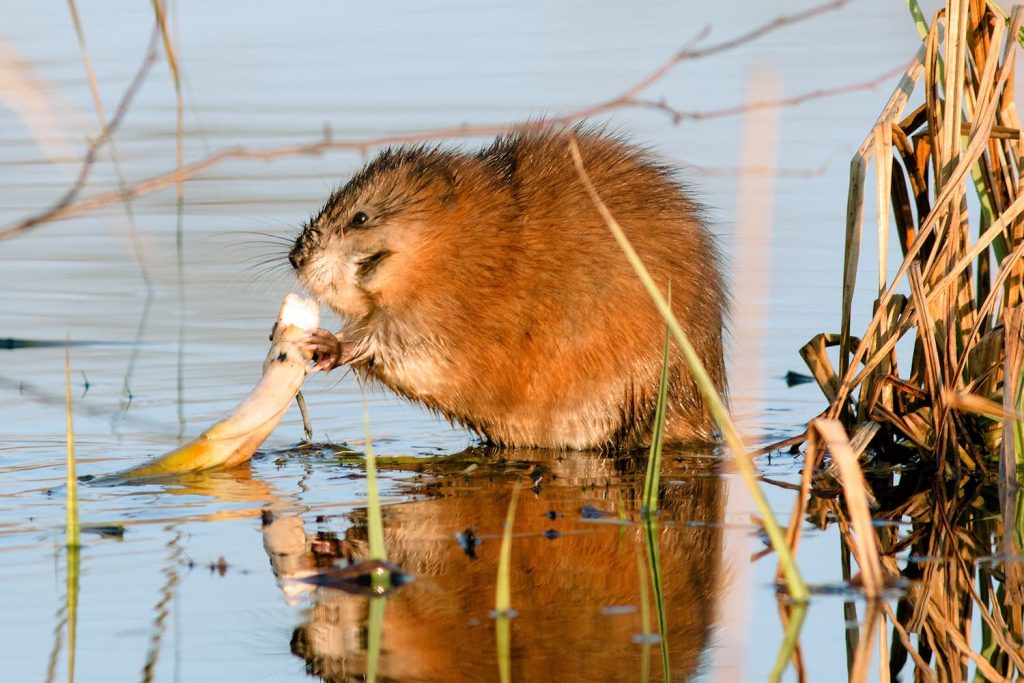
Muskrats are common around ponds, lakes, and marshy shorelines. From a distance, they can look harmless. The real issue is not usually direct aggression. It is the damage they cause when they tunnel into pond banks and weaken the shoreline over time.
For private homeowners, HOA boards, golf course superintendents, and property managers, muskrat activity can lead to erosion, unstable footing, collapsed edges, and repeated repairs. In a managed pond, that kind of shoreline damage can spread quickly if it is ignored.
This guide explains what muskrats are, how to identify them, why they damage pond banks, and how Pond Guru can help evaluate the shoreline conditions that allow the problem to continue.
What Muskrats Are
Muskrats are semi aquatic rodents that live around freshwater ponds, lakes, canals, marshes, and slow moving waterways. They spend much of their time close to the shoreline, where they feed on vegetation and dig burrows into soft banks.
When pond owners ask whether muskrats are dangerous, the biggest concern is usually structural damage. A muskrat can hollow out the shoreline from the inside, creating weak sections that may not be obvious until the bank starts to sink or collapse.
Common problems linked to muskrat activity include:
- bank tunneling
- shoreline erosion
- soft ground near the water
- slumping soil
- repeated damage in the same area
- weakened pond edges around managed properties
In that sense, muskrats can absolutely become dangerous to the shoreline itself.
What a Muskrat Looks Like
A clear identification helps owners respond faster. For anyone trying to confirm what a muskrat looks like, the body shape and tail are usually the easiest clues.
A muskrat typically has:
- medium brown fur
- a compact body
- a narrow face
- small ears
- a long, thin muskrat tail
- partially webbed back feet
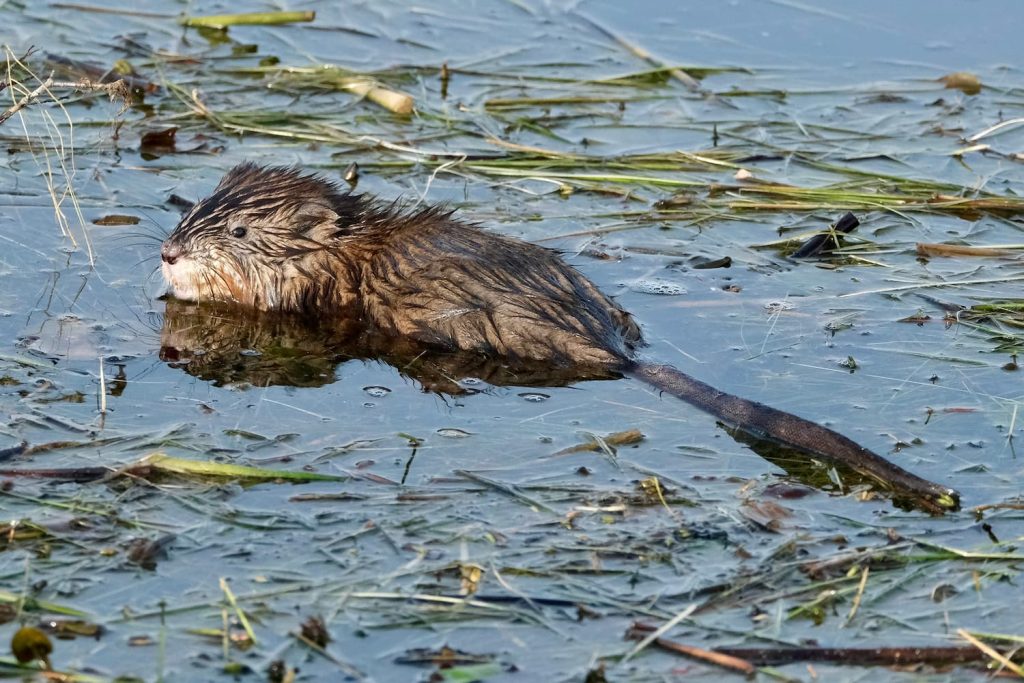
Muskrat size is larger than a rat but much smaller than a beaver. In the water, they usually ride low and move with a steady, direct swimming motion.
When comparing muskrat images, muskrat pictures, or a picture of muskrat online, the tail is one of the most useful features to notice. A muskrat tail is narrow, mostly hairless, and flattened from side to side. It does not look wide and paddle shaped like a beaver tail.
Muskrat vs Rat
The muskrat vs rat comparison comes up often because both animals can appear suddenly near water and disappear just as fast. Even so, they behave very differently around a pond.
A muskrat is strongly tied to aquatic habitat. It swims well, feeds on shoreline vegetation, and digs into pond banks. A rat is more commonly associated with drains, structures, dry land travel, and urban hiding places.
A muskrat is more likely to be seen:
- swimming along the shoreline
- entering holes near the waterline
- moving through cattails or emergent plants
- feeding near wetland cover
A rat is less likely to create the kind of repeated burrow damage seen in pond embankments.
Muskrats are also confused with other pond wildlife. In general comparisons like otters vs beavers, muskrats are smaller than both and far more associated with narrow bank burrows than lodges, dams, or active predatory swimming behavior.
Why Shoreline Damage Happens
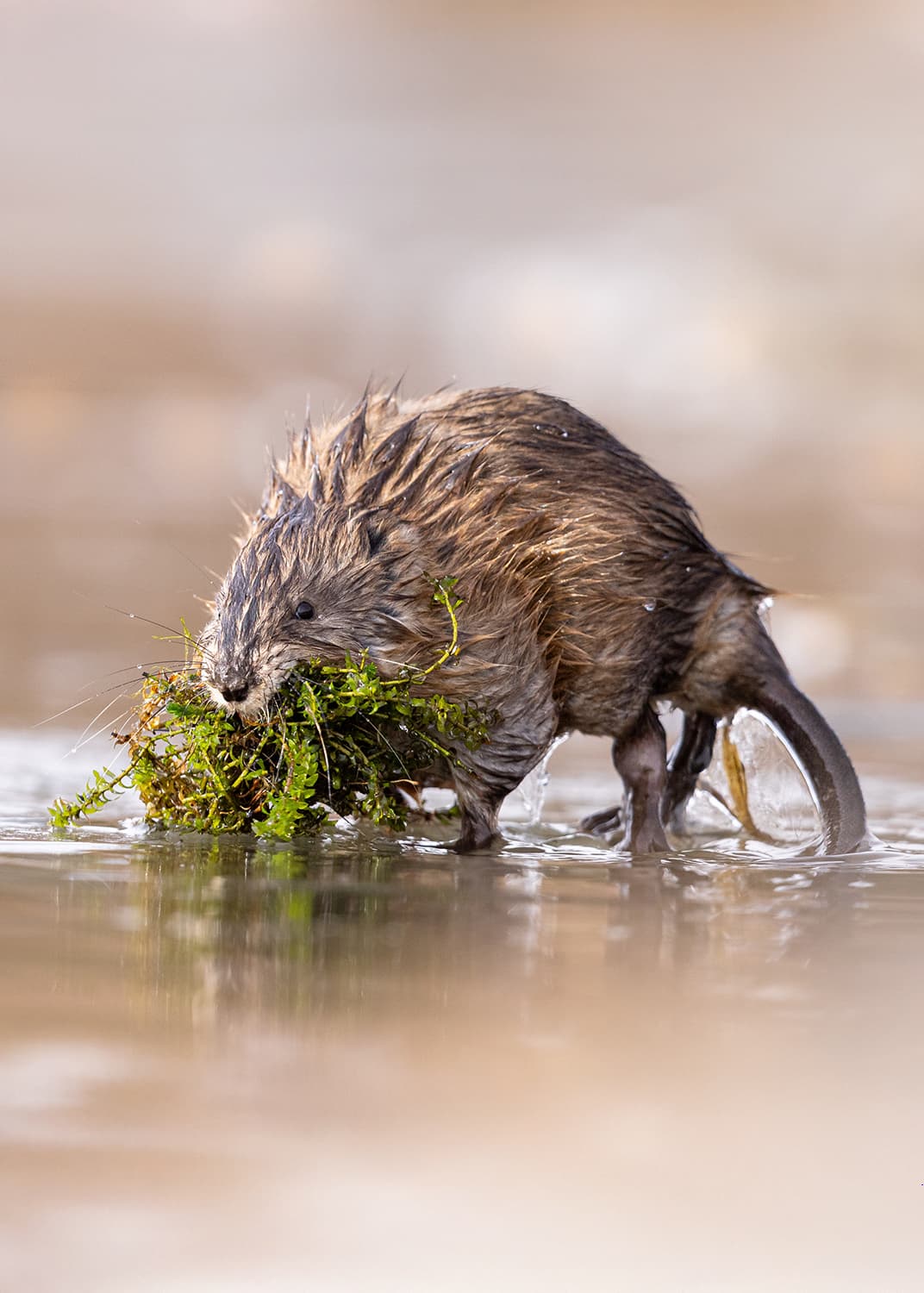
Muskrats damage shorelines because they dig into the bank to create shelter. These burrows often start near the waterline and extend back into the embankment. Over time, the soil above those tunnels can weaken, shift, and collapse.
This is where the real danger begins for managed ponds.
A muskrat damaged shoreline often develops:
- hidden hollow areas
- unstable footing near the edge
- erosion that keeps returning
- slumping sections of bank
- muddy collapse zones
- loss of clean shoreline definition
For residential ponds, that can create safety and maintenance concerns. For HOA lakes and golf course ponds, it can damage the appearance of the shoreline and turn a small wildlife issue into a recurring structural problem.
Muskrat Signs Around the Pond
Muskrat activity usually leaves visible signs once you know what to look for.
The most common indicators include:
- round holes near the waterline
- worn slides into the pond
- disturbed or chewed shoreline plants
- sections of soft ground
- recurring erosion in the same spot
- bank edges that look undercut or unstable
A single visible hole may not be the full problem. In many cases, the visible entrance connects to a larger tunnel system inside the bank.
That is why surface appearance alone can be misleading. A shoreline may still look intact from a distance while the inside is already compromised.
Manage Your Pond's Wildlife
Muskrats are part of a pond ecosystem that if left unbalanced can lead to significant damage to your pond. Work with Pond Guru today to manage aquatic habitats the right way.
Why Certain Ponds Attract Them
Muskrats are more likely to settle into ponds that offer food, cover, and soft banks that are easy to tunnel.
They are especially attracted to:
- shallow vegetated edges
- cattails and emergent plants
- soft shoreline soils
- quiet water with little disturbance
- easy access to aquatic food sources
- pond edges with little reinforcement
A shoreline with dense plant growth and weak soil structure can become an ideal muskrat site. That is one reason the problem tends to repeat. If the habitat stays the same, the damage often returns.
How to Get Rid of Muskrats
How to get rid of muskrats depends on the severity of the problem and the condition of the shoreline. In most cases, the best solution is not a single product or one quick response. It is a combination of identification, habitat correction, and professional action where needed.
A practical control plan may include:
- locating active burrows
- reducing heavy shoreline cover in problem zones
- repairing weakened banks
- reinforcing soft edges
- limiting ideal burrowing habitat
- working with licensed wildlife control when removal is necessary
Removal alone is usually not enough. If the shoreline remains soft, overgrown, and easy to burrow into, another muskrat can move in and repeat the cycle.
Long term control works best when the animal issue and the shoreline issue are addressed together.
Pond Guru and Muskrat Management
Pond Guru helps pond owners and property managers determine whether muskrats are creating a simple nuisance issue or a larger shoreline stability problem.
A site visit can help assess:
- active muskrat damage
- weak or collapsing banks
- erosion around the waterline
- vegetation conditions attracting repeat activity
- whether shoreline repair is needed
- how to reduce the chance of future burrowing
This kind of evaluation helps owners move from guesswork to a more practical plan for repair and prevention.
Frequently Asked Questions
Muskrats usually avoid people, so direct conflict is not the main concern. The greater risk is the damage they cause to pond banks. Their burrows can weaken the shoreline, create unstable footing, and lead to collapse or erosion near the water’s edge.
A muskrat is a medium sized brown aquatic rodent with a compact body, small ears, and a long thin tail. It often swims low in the water and slips into holes near the shoreline. Its tail is one of the easiest ways to identify it because it is narrow and flattened rather than broad like a beaver tail.
A muskrat is more aquatic, larger, and more closely tied to shoreline burrows and wetland vegetation. A rat is more commonly associated with structures, drains, and dry land activity. If the animal is repeatedly seen swimming near bank holes or moving through shoreline plants, it is more likely to be a muskrat.
The most effective approach usually includes identifying active burrows, reducing attractive habitat, reinforcing damaged banks, and using licensed wildlife control if removal is needed. The shoreline itself also has to be corrected, or the problem can return.
Pond Guru can inspect the pond edge, identify signs of muskrat burrowing, evaluate shoreline stability, and recommend practical next steps for repair and protection. A site visit helps determine whether the issue is minor activity or a larger bank failure risk.
Ready to Schedule a Visit ?
Have questions about your pond or lake? Our experts are ready to help you take the next step.
Latest Article
Popular Post

Common Pond Ducks in Florida: An Identification Guide
Table of Contents If you manage or live near…
Muskrats are common around ponds, lakes, and marshy shorelines. From a distance, they can look harmless. The real issue is not usually direct aggression. It is the damage they cause when they tunnel into pond banks and weaken the shoreline over time.
For private homeowners, HOA boards, golf course superintendents, and property managers, muskrat activity can lead to erosion, unstable footing, collapsed edges, and repeated repairs. In a managed pond, that kind of shoreline damage can spread quickly if it is ignored.
This guide explains what muskrats are, how to identify them, why they damage pond banks, and how Pond Guru can help evaluate the shoreline conditions that allow the problem to continue.
What Muskrats Are
Muskrats are semi aquatic rodents that live around freshwater ponds, lakes, canals, marshes, and slow moving waterways. They spend much of their time close to the shoreline, where they feed on vegetation and dig burrows into soft banks.
When pond owners ask whether muskrats are dangerous, the biggest concern is usually structural damage. A muskrat can hollow out the shoreline from the inside, creating weak sections that may not be obvious until the bank starts to sink or collapse.
Common problems linked to muskrat activity include:
- bank tunneling
- shoreline erosion
- soft ground near the water
- slumping soil
- repeated damage in the same area
- weakened pond edges around managed properties
In that sense, muskrats can absolutely become dangerous to the shoreline itself.
What a Muskrat Looks Like
A clear identification helps owners respond faster. For anyone trying to confirm what a muskrat looks like, the body shape and tail are usually the easiest clues.
A muskrat typically has:
- medium brown fur
- a compact body
- a narrow face
- small ears
- a long, thin muskrat tail
- partially webbed back feet
Muskrat size is larger than a rat but much smaller than a beaver. In the water, they usually ride low and move with a steady, direct swimming motion.
When comparing muskrat images, muskrat pictures, or a picture of muskrat online, the tail is one of the most useful features to notice. A muskrat tail is narrow, mostly hairless, and flattened from side to side. It does not look wide and paddle shaped like a beaver tail.
Muskrat vs Rat
The muskrat vs rat comparison comes up often because both animals can appear suddenly near water and disappear just as fast. Even so, they behave very differently around a pond.
A muskrat is strongly tied to aquatic habitat. It swims well, feeds on shoreline vegetation, and digs into pond banks. A rat is more commonly associated with drains, structures, dry land travel, and urban hiding places.
A muskrat is more likely to be seen:
- swimming along the shoreline
- entering holes near the waterline
- moving through cattails or emergent plants
- feeding near wetland cover
A rat is less likely to create the kind of repeated burrow damage seen in pond embankments.
Muskrats are also confused with other pond wildlife. In general comparisons like otters vs beavers, muskrats are smaller than both and far more associated with narrow bank burrows than lodges, dams, or active predatory swimming behavior.
Why Shoreline Damage Happens
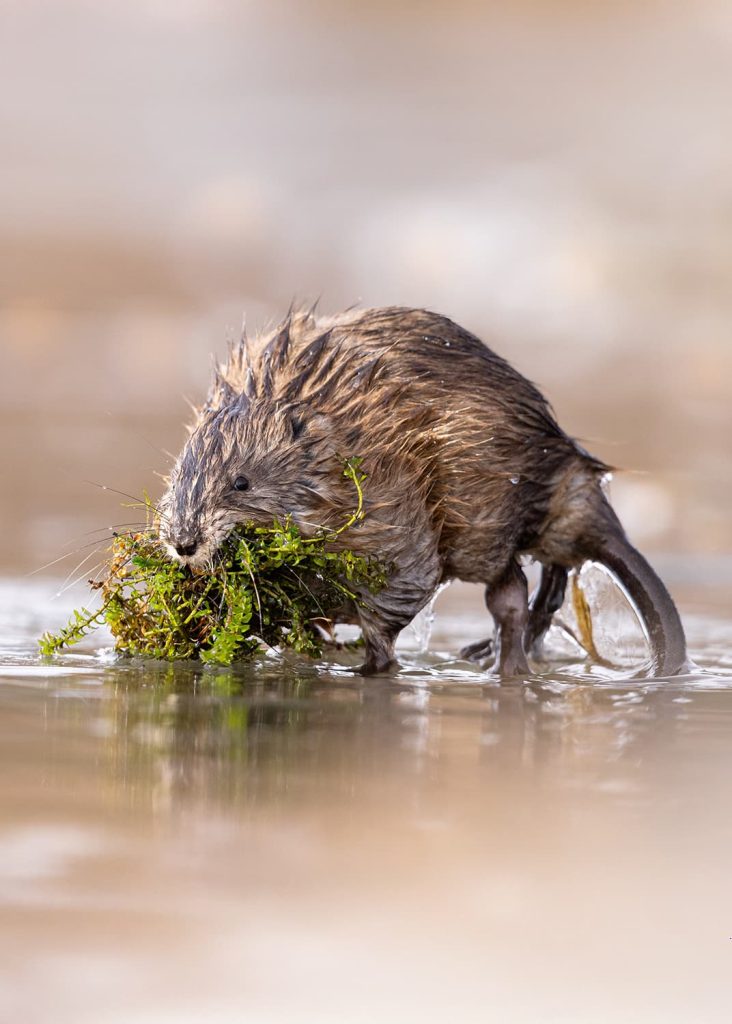
Muskrats damage shorelines because they dig into the bank to create shelter. These burrows often start near the waterline and extend back into the embankment. Over time, the soil above those tunnels can weaken, shift, and collapse.
This is where the real danger begins for managed ponds.
A muskrat damaged shoreline often develops:
- hidden hollow areas
- unstable footing near the edge
- erosion that keeps returning
- slumping sections of bank
- muddy collapse zones
- loss of clean shoreline definition
For residential ponds, that can create safety and maintenance concerns. For HOA lakes and golf course ponds, it can damage the appearance of the shoreline and turn a small wildlife issue into a recurring structural problem.
Muskrat Signs Around the Pond
Muskrat activity usually leaves visible signs once you know what to look for.
The most common indicators include:
- round holes near the waterline
- worn slides into the pond
- disturbed or chewed shoreline plants
- sections of soft ground
- recurring erosion in the same spot
- bank edges that look undercut or unstable
A single visible hole may not be the full problem. In many cases, the visible entrance connects to a larger tunnel system inside the bank.
That is why surface appearance alone can be misleading. A shoreline may still look intact from a distance while the inside is already compromised.
Manage Your Pond's Wildlife
Muskrats are part of a pond ecosystem that if left unbalanced can lead to significant damage to your pond. Work with Pond Guru today to manage aquatic habitats the right way.
Why Certain Ponds Attract Them
Muskrats are more likely to settle into ponds that offer food, cover, and soft banks that are easy to tunnel.
They are especially attracted to:
- shallow vegetated edges
- cattails and emergent plants
- soft shoreline soils
- quiet water with little disturbance
- easy access to aquatic food sources
- pond edges with little reinforcement
A shoreline with dense plant growth and weak soil structure can become an ideal muskrat site. That is one reason the problem tends to repeat. If the habitat stays the same, the damage often returns.
How to Get Rid of Muskrats
How to get rid of muskrats depends on the severity of the problem and the condition of the shoreline. In most cases, the best solution is not a single product or one quick response. It is a combination of identification, habitat correction, and professional action where needed.
A practical control plan may include:
- locating active burrows
- reducing heavy shoreline cover in problem zones
- repairing weakened banks
- reinforcing soft edges
- limiting ideal burrowing habitat
- working with licensed wildlife control when removal is necessary
Removal alone is usually not enough. If the shoreline remains soft, overgrown, and easy to burrow into, another muskrat can move in and repeat the cycle.
Long term control works best when the animal issue and the shoreline issue are addressed together.
Pond Guru and Muskrat Management
Pond Guru helps pond owners and property managers determine whether muskrats are creating a simple nuisance issue or a larger shoreline stability problem.
A site visit can help assess:
- active muskrat damage
- weak or collapsing banks
- erosion around the waterline
- vegetation conditions attracting repeat activity
- whether shoreline repair is needed
- how to reduce the chance of future burrowing
This kind of evaluation helps owners move from guesswork to a more practical plan for repair and prevention.
Frequently Asked Questions
Muskrats usually avoid people, so direct conflict is not the main concern. The greater risk is the damage they cause to pond banks. Their burrows can weaken the shoreline, create unstable footing, and lead to collapse or erosion near the water’s edge.
A muskrat is a medium sized brown aquatic rodent with a compact body, small ears, and a long thin tail. It often swims low in the water and slips into holes near the shoreline. Its tail is one of the easiest ways to identify it because it is narrow and flattened rather than broad like a beaver tail.
A muskrat is more aquatic, larger, and more closely tied to shoreline burrows and wetland vegetation. A rat is more commonly associated with structures, drains, and dry land activity. If the animal is repeatedly seen swimming near bank holes or moving through shoreline plants, it is more likely to be a muskrat.
The most effective approach usually includes identifying active burrows, reducing attractive habitat, reinforcing damaged banks, and using licensed wildlife control if removal is needed. The shoreline itself also has to be corrected, or the problem can return.
Pond Guru can inspect the pond edge, identify signs of muskrat burrowing, evaluate shoreline stability, and recommend practical next steps for repair and protection. A site visit helps determine whether the issue is minor activity or a larger bank failure risk.
Ready to Schedule a Visit ?
Have questions about your pond or lake? Our experts are ready to help you take the next step.
Latest Article
Popular Post
Common Pond Ducks in Florida: An Identification Guide
Table of Contents If you manage or live near…