

What Is a Swamp Chicken? The Common Gallinule
What Is a Swamp Chicken? The Common Gallinule
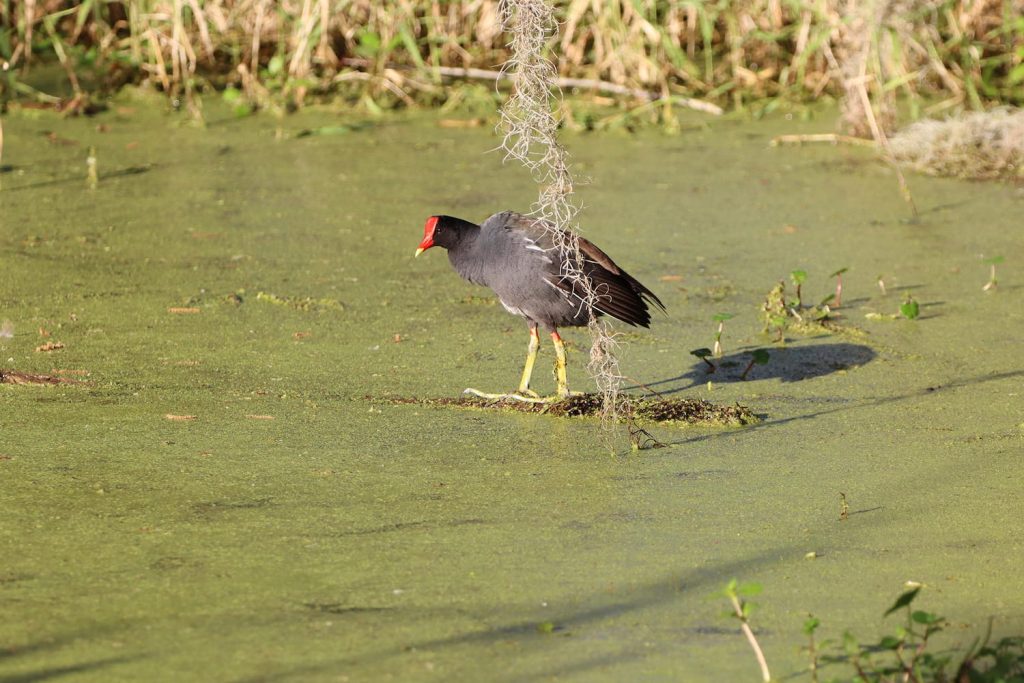
The nickname swamp chicken usually refers to the common gallinule, a wetland bird often seen around ponds, marshes, and shallow vegetated shorelines. It is dark bodied, has a red bill shield, and uses its long toes to move easily across floating plants and muddy edges.
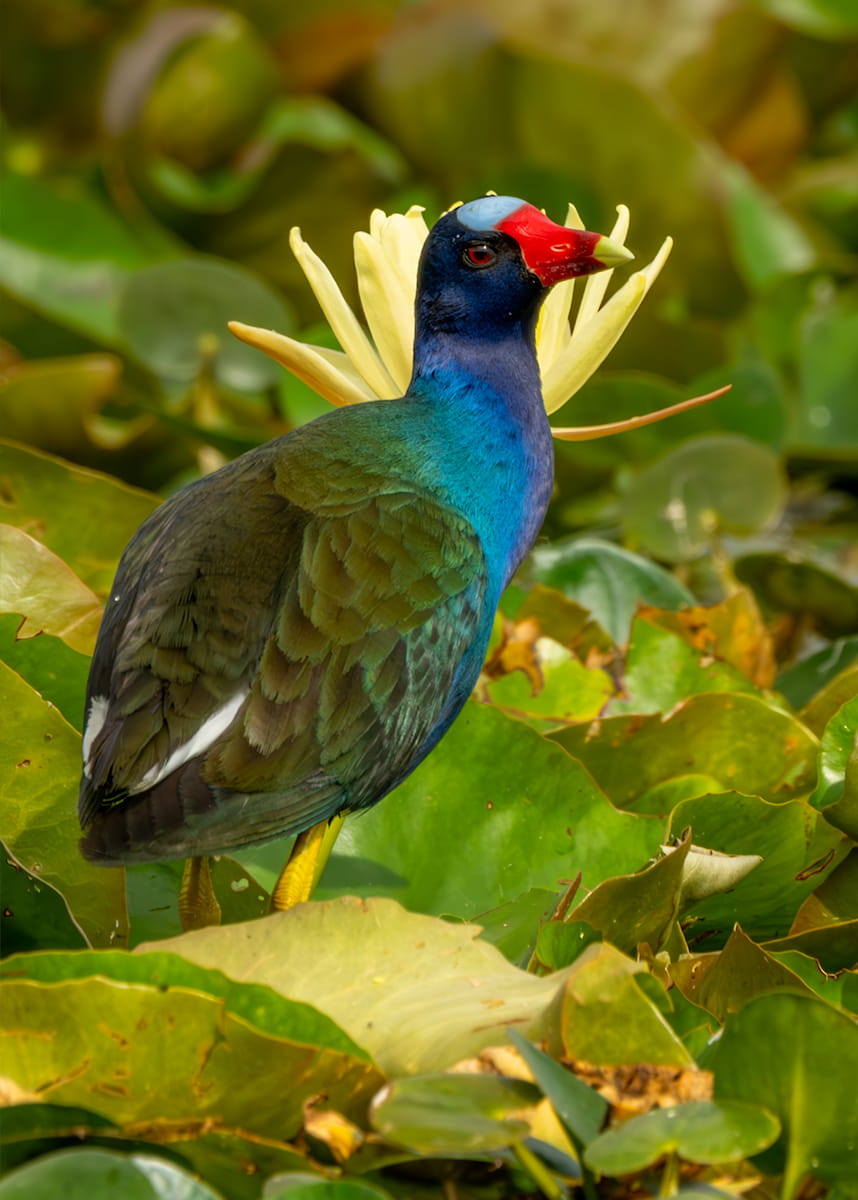
The purple gallinule is a close relative, but it is a different bird. It is also one of the most recognizable purple birds found in freshwater wetland habitat. Its brighter plumage makes it stand out much more than the common gallinule.
For private homeowners, HOA boards, golf course managers, and property managers, these birds matter because they are tied closely to pond vegetation. In most cases, they are not the cause of a problem. They are a sign of the kind of shoreline habitat your pond already has.
This guide explains the difference between the common gallinule and the purple gallinule bird, what their presence may reveal about your pond, and how Pond Guru can help evaluate whether those conditions support or interfere with your pond goals.
Swamp Chicken vs Purple Gallinule
The most important distinction is simple.
A swamp chicken is usually the common gallinule. A purple gallinule is a related but separate species.
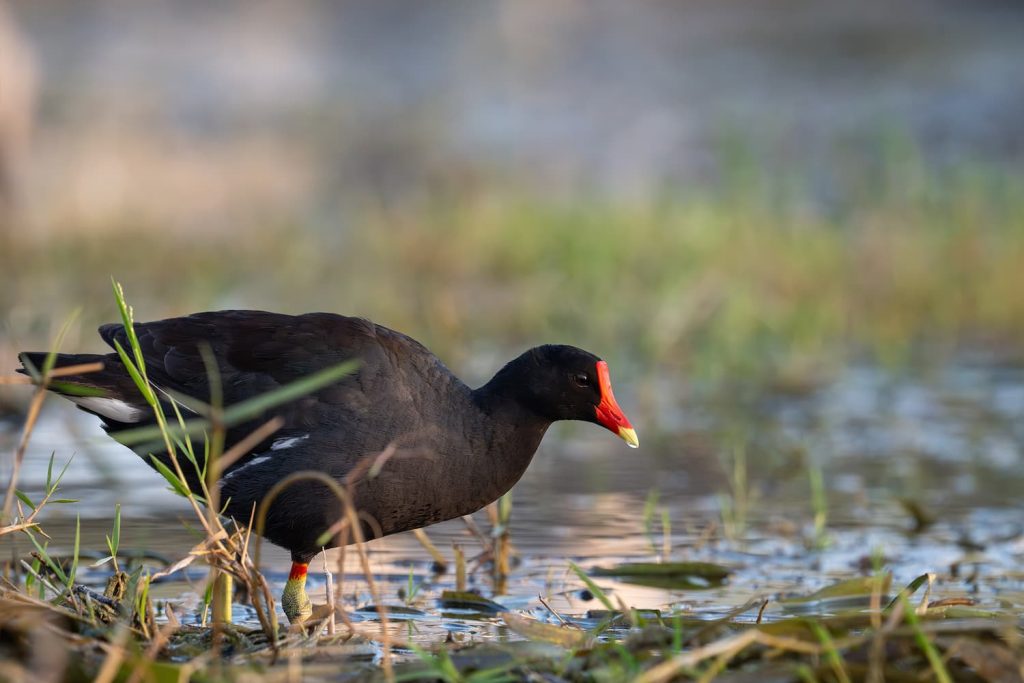
The common gallinule is easier to describe as a dark marsh bird with a red facial shield and a white stripe along its side. The American purple gallinule is much more colorful, with blue, green, violet, and yellow tones.
Key differences include:
- Common gallinule
- Dark gray body
- Red shield above the bill
- White side stripe
- Purple gallinule
- Brighter blue, green, and purple coloration
- Yellow legs
- More vivid overall appearance
Both birds belong to the same family, and both are strongly associated with wetland edges.
Purple Gallinule Colors
Among birds that are purple, the purple gallinule is one of the most striking. It is one of the few birds with purple tones that truly looks vivid in person.
Its appearance often includes:
- blue and violet body tones
- green across the wings and back
- bright facial coloring
- yellow legs and feet
This is one reason the purple gallinule stands out so quickly around ponds with floating vegetation. It does not blend into the shoreline the way the common gallinule often does.
Swamp Chicken Pond Habitat
Both gallinules favor similar habitats. A pond that attracts them usually has a mix of open water and protected edge cover.
Typical conditions include:
- floating vegetation
- emergent shoreline plants
- shallow water
- soft wetland margins
- sheltered feeding areas
If a bird gallinule species is using your pond regularly, that usually means the shoreline has enough plant structure to support wetland birds.
That can be beneficial or problematic depending on the purpose of the pond.
A naturalized pond may benefit from that habitat value. A stormwater pond, HOA lake, or golf course water feature may need a cleaner edge and more open water.
What Gallinules Indicate
Gallinules are usually better understood as indicators than as nuisances.
They do not typically create the same issues associated with geese, such as:
- heavy turf damage
- open lawn grazing
- constant shoreline trampling
- large droppings loads on managed grass
Instead, their presence often points to shoreline conditions such as:
- expanding floating plants
- increasing emergent vegetation
- shallow edge habitat
- wetland style cover
- reduced open water near the bank
That is why a pond with gallinules is not automatically a pond with a bird problem. More often, it is a pond with a vegetation pattern worth evaluating.
When Gallinules Matter
Gallinules matter most when their presence reflects a broader shift in pond condition.
That may include:
- floating vegetation becoming too dominant
- shallow margins widening
- shoreline cover becoming too dense
- water circulation being reduced near the edge
- the pond looking more marsh like than intended
For some properties, those changes are acceptable or even desirable. For others, they signal that vegetation management needs to be adjusted.
The birds themselves are usually not driving the change. They are responding to habitat that already exists.
Learn More About Supporting Your Pond's Wildlife
Schedule a site visit with Pond Guru to establish a balanced ecosystem in your pond
Pond Goals for Swamp Chickens
The same habitat can mean very different things depending on the property.
In wildlife focused ponds
Gallinules may be a positive sign. They suggest habitat diversity, plant cover, and usable wetland edge conditions.
In highly managed ponds
They may indicate that the pond edge is becoming too vegetated, too shallow, or too visually dense for the intended use.
This is especially relevant in:
- HOA lakes
- golf course ponds
- decorative entry ponds
- stormwater retention features
- private ponds with a strong aesthetic goal
In those settings, the issue is usually not the gallinule. The issue is whether the shoreline still matches the pond’s purpose.
Pond Guru Lake Management
Pond Guru can help determine whether the shoreline and vegetation conditions attracting common gallinules or purple gallinule activity are working for your property or against it.
A site visit can help assess:
- floating vegetation coverage
- emergent plant density
- shallow edge expansion
- open water loss
- circulation concerns
- whether shoreline conditions align with your pond goals
This makes it easier to tell the difference between a healthy habitat feature and a shoreline that is drifting into overgrowth.
Frequently Asked Questions
A swamp chicken is a common nickname for the common gallinule. It is a dark wetland bird with a red bill shield, long toes, and a strong preference for marshy pond edges and floating vegetation.
No. The purple gallinule and the common gallinule are related, but they are different species. The purple gallinule is much more colorful, while the common gallinule has a darker body and simpler markings.
Usually not in a direct way. They do not typically cause the same turf and shoreline damage associated with geese. Their presence is more often a sign of available plant cover, shallow water, and wetland edge habitat.
A purple gallinule bird is most likely to use a pond with floating plants, protected shallow water, and emergent vegetation. These birds are closely tied to wetland style cover and are often found where lilies or similar plants are present.
Pond Guru can evaluate whether the vegetation and shoreline conditions attracting gallinules support your goals or create management concerns. A site visit helps determine whether the pond edge should remain natural, be thinned, or be managed more actively.
Ready to Schedule a Visit ?
Have questions about your pond or lake? Our experts are ready to help you take the next step.
Latest Article
Popular Post

What Is Pond Scum? Causes and How to Clear It
Table of Contents That green, stringy, sometimes slimy layer…
The nickname swamp chicken usually refers to the common gallinule, a wetland bird often seen around ponds, marshes, and shallow vegetated shorelines. It is dark bodied, has a red bill shield, and uses its long toes to move easily across floating plants and muddy edges.
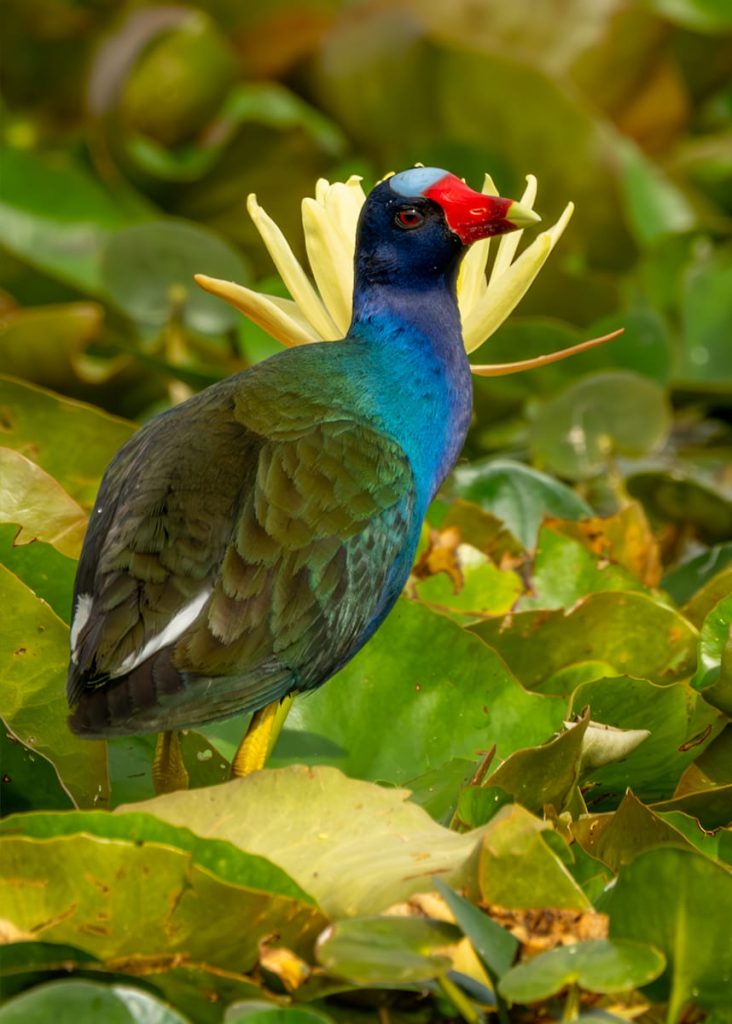
The purple gallinule is a close relative, but it is a different bird. It is also one of the most recognizable purple birds found in freshwater wetland habitat. Its brighter plumage makes it stand out much more than the common gallinule.
For private homeowners, HOA boards, golf course managers, and property managers, these birds matter because they are tied closely to pond vegetation. In most cases, they are not the cause of a problem. They are a sign of the kind of shoreline habitat your pond already has.
This guide explains the difference between the common gallinule and the purple gallinule bird, what their presence may reveal about your pond, and how Pond Guru can help evaluate whether those conditions support or interfere with your pond goals.
Swamp Chicken vs Purple Gallinule
The most important distinction is simple.
A swamp chicken is usually the common gallinule. A purple gallinule is a related but separate species.
The common gallinule is easier to describe as a dark marsh bird with a red facial shield and a white stripe along its side. The American purple gallinule is much more colorful, with blue, green, violet, and yellow tones.
Key differences include:
- Common gallinule
- Dark gray body
- Red shield above the bill
- White side stripe
- Purple gallinule
- Brighter blue, green, and purple coloration
- Yellow legs
- More vivid overall appearance
Both birds belong to the same family, and both are strongly associated with wetland edges.
Purple Gallinule Colors
Among birds that are purple, the purple gallinule is one of the most striking. It is one of the few birds with purple tones that truly looks vivid in person.
Its appearance often includes:
- blue and violet body tones
- green across the wings and back
- bright facial coloring
- yellow legs and feet
This is one reason the purple gallinule stands out so quickly around ponds with floating vegetation. It does not blend into the shoreline the way the common gallinule often does.
Swamp Chicken Pond Habitat
Both gallinules favor similar habitats. A pond that attracts them usually has a mix of open water and protected edge cover.
Typical conditions include:
- floating vegetation
- emergent shoreline plants
- shallow water
- soft wetland margins
- sheltered feeding areas
If a bird gallinule species is using your pond regularly, that usually means the shoreline has enough plant structure to support wetland birds.
That can be beneficial or problematic depending on the purpose of the pond.
A naturalized pond may benefit from that habitat value. A stormwater pond, HOA lake, or golf course water feature may need a cleaner edge and more open water.
What Gallinules Indicate
Gallinules are usually better understood as indicators than as nuisances.
They do not typically create the same issues associated with geese, such as:
- heavy turf damage
- open lawn grazing
- constant shoreline trampling
- large droppings loads on managed grass
Instead, their presence often points to shoreline conditions such as:
- expanding floating plants
- increasing emergent vegetation
- shallow edge habitat
- wetland style cover
- reduced open water near the bank
That is why a pond with gallinules is not automatically a pond with a bird problem. More often, it is a pond with a vegetation pattern worth evaluating.
When Gallinules Matter
Gallinules matter most when their presence reflects a broader shift in pond condition.
That may include:
- floating vegetation becoming too dominant
- shallow margins widening
- shoreline cover becoming too dense
- water circulation being reduced near the edge
- the pond looking more marsh like than intended
For some properties, those changes are acceptable or even desirable. For others, they signal that vegetation management needs to be adjusted.
The birds themselves are usually not driving the change. They are responding to habitat that already exists.
Learn More About Supporting Your Pond's Wildlife
Schedule a site visit with Pond Guru to establish a balanced ecosystem in your pond
Pond Goals for Swamp Chickens
The same habitat can mean very different things depending on the property.
In wildlife focused ponds
Gallinules may be a positive sign. They suggest habitat diversity, plant cover, and usable wetland edge conditions.
In highly managed ponds
They may indicate that the pond edge is becoming too vegetated, too shallow, or too visually dense for the intended use.
This is especially relevant in:
- HOA lakes
- golf course ponds
- decorative entry ponds
- stormwater retention features
- private ponds with a strong aesthetic goal
In those settings, the issue is usually not the gallinule. The issue is whether the shoreline still matches the pond’s purpose.
Pond Guru Lake Management
Pond Guru can help determine whether the shoreline and vegetation conditions attracting common gallinules or purple gallinule activity are working for your property or against it.
A site visit can help assess:
- floating vegetation coverage
- emergent plant density
- shallow edge expansion
- open water loss
- circulation concerns
- whether shoreline conditions align with your pond goals
This makes it easier to tell the difference between a healthy habitat feature and a shoreline that is drifting into overgrowth.
Frequently Asked Questions
A swamp chicken is a common nickname for the common gallinule. It is a dark wetland bird with a red bill shield, long toes, and a strong preference for marshy pond edges and floating vegetation.
No. The purple gallinule and the common gallinule are related, but they are different species. The purple gallinule is much more colorful, while the common gallinule has a darker body and simpler markings.
Usually not in a direct way. They do not typically cause the same turf and shoreline damage associated with geese. Their presence is more often a sign of available plant cover, shallow water, and wetland edge habitat.
A purple gallinule bird is most likely to use a pond with floating plants, protected shallow water, and emergent vegetation. These birds are closely tied to wetland style cover and are often found where lilies or similar plants are present.
Pond Guru can evaluate whether the vegetation and shoreline conditions attracting gallinules support your goals or create management concerns. A site visit helps determine whether the pond edge should remain natural, be thinned, or be managed more actively.
Ready to Schedule a Visit ?
Have questions about your pond or lake? Our experts are ready to help you take the next step.
Latest Article
Popular Post
What Is Pond Scum? Causes and How to Clear It
Table of Contents That green, stringy, sometimes slimy layer…