

What Do Grass Carp Eat? A Guide for Pond and Lake Weed Control
What Do Grass Carp Eat? A Guide for Pond and Lake Weed Control

If you’re struggling with aquatic weeds in your pond or lake, you may have heard about grass carp as a biological solution. But what do grass carp eat, and are they the right fit for your body of water?
In this expert guide, we’ll cover exactly what grass carp consume, how they compare to other species like the common carp, where they’re legal, how long they live, and how they fit into a broader lake algae control strategy. For property managers, HOAs, golf course superintendents, and private landowners, this information is essential, and Pond Guru is here to help.
What Do Grass Carp Eat in a Pond?
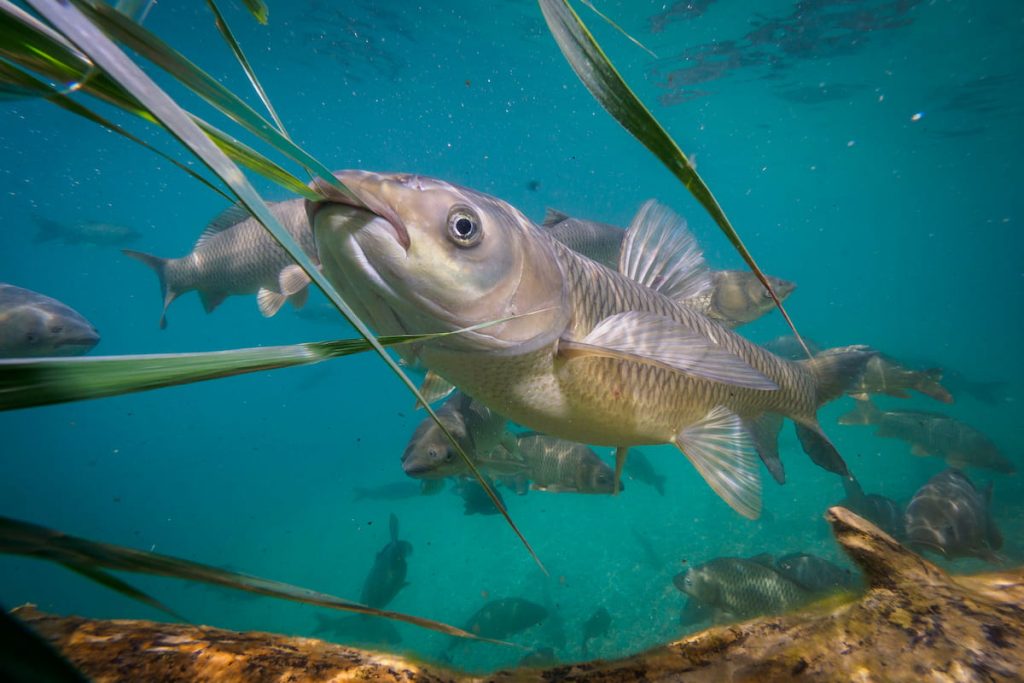
Grass carp, also known as white amur, are herbivorous fish primarily used to control aquatic vegetation. Their diet consists of soft-bodied, submerged plants. They are highly effective at consuming certain types of aquatic weeds but are not a cure-all for algae issues.
Grass carp prefer to eat:
- Hydrilla
- Coontail
- Duckweed
- Elodea
- Pondweed
- Naiad
- Water milfoil
They may nibble on filamentous algae, but they don’t consume it in significant quantities. However, by eating large amounts of aquatic vegetation that contribute nutrients to the water, grass carp can indirectly help reduce algae blooms over time.
Grass Carp vs Common Carp: Understanding the Difference
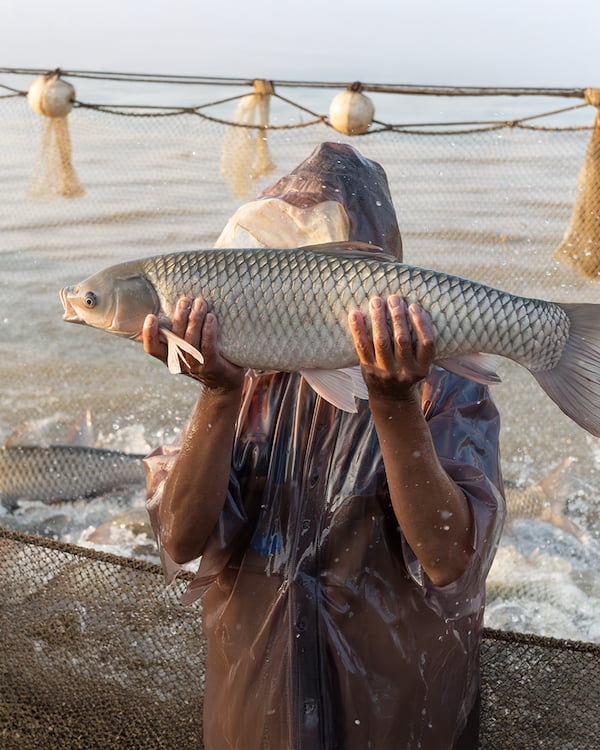
While they may look similar, grass carp and common carp behave very differently, especially in the context of pond management.
Grass carp are plant eaters that feed on aquatic vegetation, while common carp are bottom feeders that stir up mud and debris. This behavior by common carp increases water turbidity and can damage aquatic plant life, making water clarity worse over time.
In contrast, grass carp are peaceful and do not root around in the sediment. This makes them a much better fit for pond fish stocking when aquatic weed removal and water clarity are priorities.
Why Use Grass Carp for Ponds?
Adding grass carp for ponds is a natural and long-lasting method of controlling aquatic plant growth. A few fish per acre can drastically reduce problem vegetation within one season, and their effectiveness continues for years.
Key benefits include:
- Long-term vegetation control
- Safe for swimmers, pets, and irrigation systems
- Reduces need for chemical herbicides
- Supports healthier pond ecosystems
- Low maintenance once stocked
Grass carp offer a sustainable, cost-effective alternative to repeated chemical treatments, especially when managed correctly.
Stock Your Pond the Right Way
Speak with a pond expert at Pond Guru to help find the right fish for your pond
Which States Allow Grass Carp?
Regulations vary across the United States, and it’s important to ask which states allow grass carp before stocking your pond.
Most states permit the use of triploid grass carp, which are genetically sterilized and cannot reproduce. This ensures that grass carp do not spread uncontrollably in natural waterways. However, stocking them typically requires a permit, site inspection, or fencing depending on your local laws.
Some states with restrictions or permit requirements include:
- Florida
- Texas
- Georgia
- South Carolina
- North Carolina
- Missouri
How Grass Carp Help with Lake Algae Control
Although they are not primary algae feeders, grass carp can still play a valuable role in lake algae control. By clearing dense vegetation, they reduce nutrient buildup from decomposing plant matter, which can otherwise fuel algae growth.
This indirect approach works best when grass carp are part of a holistic strategy that includes:
- Water quality testing
- Nutrient reduction
- Mechanical harvesting (when needed)
- Aeration systems
- Strategic pond fish stocking
Pond Guru specializes in custom weed and algae control plans that integrate grass carp with other tools for maximum effectiveness.
When to Consider Pond Fish Stocking with Grass Carp
Not every pond is the right fit for grass carp. Ideal conditions include:
- Ponds larger than half an acre
- High levels of submersed vegetation
- Safe perimeter to prevent fish escape
- Approved stocking permits in your state
If your pond meets these criteria, pond fish stocking with grass carp may be the most efficient path toward a cleaner, clearer waterbody. But it’s not a one-size-fits-all solution. That’s why Pond Guru conducts on-site evaluations to determine if grass eating carp are appropriate; and what other lake management strategies might be needed.
Partner with Pond Guru for Grass Carp Management
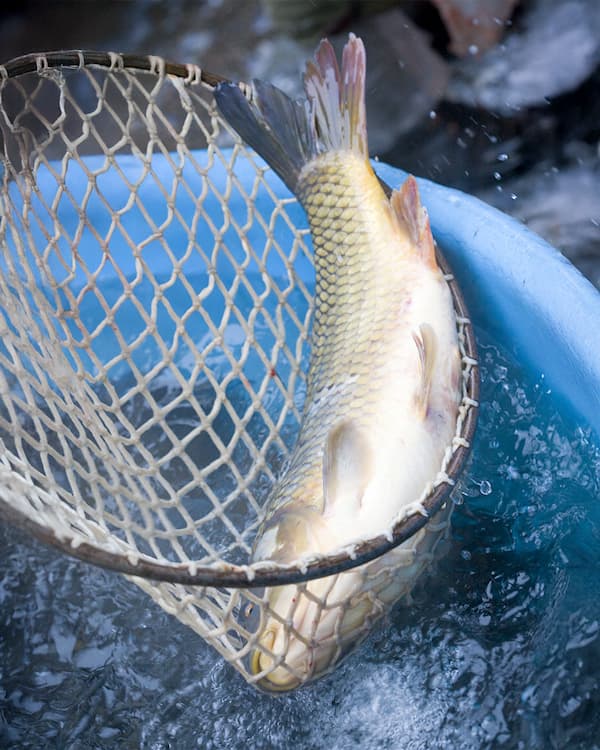
Choosing the right biological control method takes expertise. At Pond Guru, we help clients assess, stock, and manage grass carp for ponds legally and effectively.
We offer:
- On-site vegetation surveys
- Permit guidance and application support
- Customized stocking plans
- Water quality testing
- Long-term lake and pond management services
If you’re struggling with aquatic weeds or want to reduce algae naturally, schedule a consultation with Pond Guru to learn how white amur can help transform your waterbody.
Frequently Asked Questions
Grass carp feed primarily on submerged aquatic vegetation like hydrilla, coontail, duckweed, and pondweed. They eat little algae directly but help reduce conditions that support algae growth.
They typically live 7 to 10 years in ponds, with the most active feeding years occurring between ages 2 and 6.
Triploid grass carp are legal in most states but usually require a permit. Check with your fish and wildlife agency or contact Pond Guru for assistance.
Unlike common carp, which disturb sediment and increase turbidity, grass carp feed on plants and improve water clarity without disrupting the pond bottom.
Yes, indirectly. By removing vegetation that decays and releases nutrients, grass carp help reduce algae blooms as part of an integrated pond management plan.
Ready to Schedule a Visit ?
Have questions about your pond or lake? Our experts are ready to help you take the next step.
Latest Article
Popular Post

Pennywort: From Lawn Weed to Pond Invader
Table of Contents Most Floridians know pennywort as dollarweed,…
If you’re struggling with aquatic weeds in your pond or lake, you may have heard about grass carp as a biological solution. But what do grass carp eat, and are they the right fit for your body of water?
In this expert guide, we’ll cover exactly what grass carp consume, how they compare to other species like the common carp, where they’re legal, how long they live, and how they fit into a broader lake algae control strategy. For property managers, HOAs, golf course superintendents, and private landowners, this information is essential, and Pond Guru is here to help.
What Do Grass Carp Eat in a Pond?
Grass carp, also known as white amur, are herbivorous fish primarily used to control aquatic vegetation. Their diet consists of soft-bodied, submerged plants. They are highly effective at consuming certain types of aquatic weeds but are not a cure-all for algae issues.
Grass carp prefer to eat:
- Hydrilla
- Coontail
- Duckweed
- Elodea
- Pondweed
- Naiad
- Water milfoil
They may nibble on filamentous algae, but they don’t consume it in significant quantities. However, by eating large amounts of aquatic vegetation that contribute nutrients to the water, grass carp can indirectly help reduce algae blooms over time.
Grass Carp vs Common Carp: Understanding the Difference
While they may look similar, grass carp and common carp behave very differently, especially in the context of pond management.
Grass carp are plant eaters that feed on aquatic vegetation, while common carp are bottom feeders that stir up mud and debris. This behavior by common carp increases water turbidity and can damage aquatic plant life, making water clarity worse over time.
In contrast, grass carp are peaceful and do not root around in the sediment. This makes them a much better fit for pond fish stocking when aquatic weed removal and water clarity are priorities.
Why Use Grass Carp for Ponds?
Adding grass carp for ponds is a natural and long-lasting method of controlling aquatic plant growth. A few fish per acre can drastically reduce problem vegetation within one season, and their effectiveness continues for years.
Key benefits include:
- Long-term vegetation control
- Safe for swimmers, pets, and irrigation systems
- Reduces need for chemical herbicides
- Supports healthier pond ecosystems
- Low maintenance once stocked
Grass carp offer a sustainable, cost-effective alternative to repeated chemical treatments, especially when managed correctly.
Stock Your Pond the Right Way
Speak with a pond expert at Pond Guru to help find the right fish for your pond
Which States Allow Grass Carp?
Regulations vary across the United States, and it’s important to ask which states allow grass carp before stocking your pond.
Most states permit the use of triploid grass carp, which are genetically sterilized and cannot reproduce. This ensures that grass carp do not spread uncontrollably in natural waterways. However, stocking them typically requires a permit, site inspection, or fencing depending on your local laws.
Some states with restrictions or permit requirements include:
- Florida
- Texas
- Georgia
- South Carolina
- North Carolina
- Missouri
How Grass Carp Help with Lake Algae Control
Although they are not primary algae feeders, grass carp can still play a valuable role in lake algae control. By clearing dense vegetation, they reduce nutrient buildup from decomposing plant matter, which can otherwise fuel algae growth.
This indirect approach works best when grass carp are part of a holistic strategy that includes:
- Water quality testing
- Nutrient reduction
- Mechanical harvesting (when needed)
- Aeration systems
- Strategic pond fish stocking
Pond Guru specializes in custom weed and algae control plans that integrate grass carp with other tools for maximum effectiveness.
When to Consider Pond Fish Stocking with Grass Carp
Not every pond is the right fit for grass carp. Ideal conditions include:
- Ponds larger than half an acre
- High levels of submersed vegetation
- Safe perimeter to prevent fish escape
- Approved stocking permits in your state
If your pond meets these criteria, pond fish stocking with grass carp may be the most efficient path toward a cleaner, clearer waterbody. But it’s not a one-size-fits-all solution. That’s why Pond Guru conducts on-site evaluations to determine if grass eating carp are appropriate; and what other lake management strategies might be needed.
Partner with Pond Guru for Grass Carp Management
Choosing the right biological control method takes expertise. At Pond Guru, we help clients assess, stock, and manage grass carp for ponds legally and effectively.
We offer:
- On-site vegetation surveys
- Permit guidance and application support
- Customized stocking plans
- Water quality testing
- Long-term lake and pond management services
If you’re struggling with aquatic weeds or want to reduce algae naturally, schedule a consultation with Pond Guru to learn how white amur can help transform your waterbody.
Frequently Asked Questions
Grass carp feed primarily on submerged aquatic vegetation like hydrilla, coontail, duckweed, and pondweed. They eat little algae directly but help reduce conditions that support algae growth.
They typically live 7 to 10 years in ponds, with the most active feeding years occurring between ages 2 and 6.
Triploid grass carp are legal in most states but usually require a permit. Check with your fish and wildlife agency or contact Pond Guru for assistance.
Unlike common carp, which disturb sediment and increase turbidity, grass carp feed on plants and improve water clarity without disrupting the pond bottom.
Yes, indirectly. By removing vegetation that decays and releases nutrients, grass carp help reduce algae blooms as part of an integrated pond management plan.
Ready to Schedule a Visit ?
Have questions about your pond or lake? Our experts are ready to help you take the next step.
Latest Article
Popular Post
Pennywort: From Lawn Weed to Pond Invader
Table of Contents Most Floridians know pennywort as dollarweed,…