

8 Common Plants From Oceans
8 Common Plants From Oceans
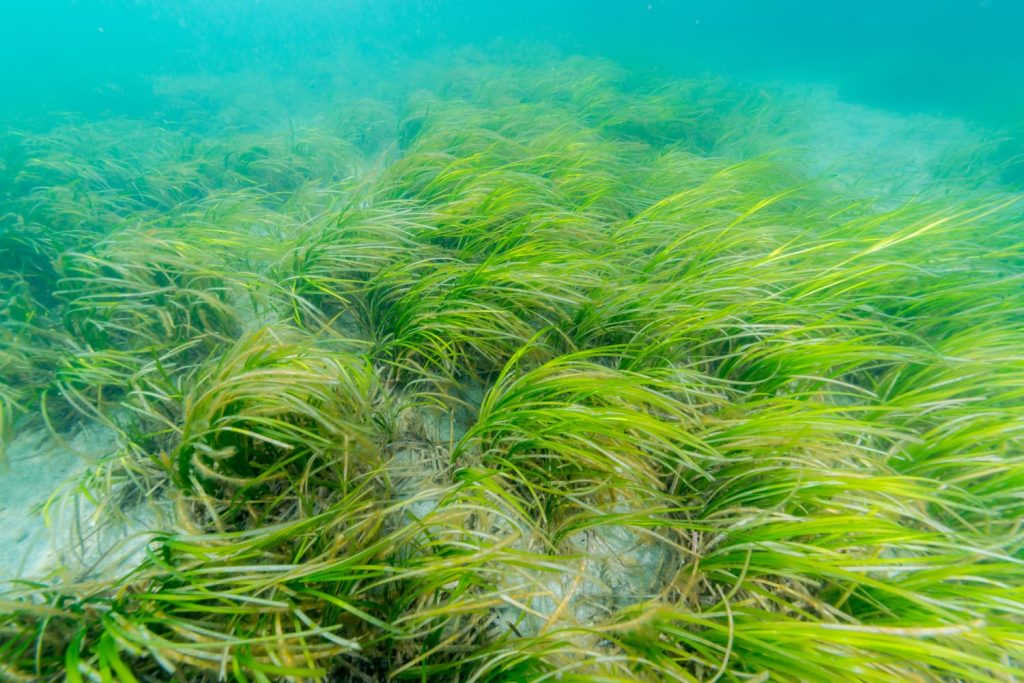
If you own property along a bay, canal, estuary, or open ocean shoreline, you’ve probably noticed that the plant life along your waterfront is anything but simple. Some days the water is clear and you can see ribbons of grass swaying just below the surface. Other days, your shore is buried under brown, smelly seaweed that arrived overnight.
Knowing what you’re looking at matters. Some of the most common plants from ocean environments are legally protected and play an important role in your shoreline’s stability. Others are nuisance saltwater weeds that need to be managed before they damage your property or your enjoyment of it.
This guide walks through eight of the types of sea plants you’re most likely to encounter, what they do, and when you might need help from a professional like Pond Guru.
What Are Marine Plants? Understanding Underwater Aquatic Plants
Before we get to the list, a quick definition helps. Marine plants are organisms that live and grow in saltwater or brackish environments. The category includes true flowering plants like seagrasses and mangroves, along with the many algae species commonly grouped together as “seaweed.”
The NOAA Office of National Marine Sanctuaries explains that true seagrasses are flowering plants with roots, leaves, flowers, and seeds, while seaweeds are algae without those structures. Both groups are often lumped together as underwater aquatic plants or underwater plants, but they behave very differently along your shoreline.
A few quick traits to keep in mind:
- True marine plants have roots and need to anchor in sediment.
- Algae like sargassum and sea lettuce float or attach loosely and can drift in on tides and winds.
- Some plants tolerate both fresh and salt water, while others are strict specialists.
With that foundation, here are the eight you should know.
1. Turtle Grass: The Most Common Seagrass in Florida
Turtle grass (Thalassia testudinum) is the seagrass most people think of first. The Florida Department of Environmental Protection notes that it has the deepest root structure of any Florida seagrass, with broad, ribbon-like blades that form thick underwater meadows.
You’ll find it in warm, shallow coastal waters across Florida, the Caribbean, and the Gulf. Turtle grass meadows feed manatees, green sea turtles, and juvenile fish like snapper and grouper. If you can see a healthy patch of it off your seawall, that’s a good sign for water quality.
2. Manatee Grass: Another Foundational Marine Plant
Manatee grass (Syringodium filiforme) is easy to spot because its leaves are cylindrical, almost like green spaghetti, rather than the flat blades of turtle grass. According to Florida DEP, manatee grass is usually found in mixed seagrass beds or in smaller, dense patches of its own.
It’s one of the most important underwater aquatic plants for grazers and a key food source in estuaries like the Indian River Lagoon. Like all Florida seagrasses, it is protected, and damaging it (for example, with prop scars from a boat) can carry penalties.
3. Shoal Grass: The Pioneer Seagrass
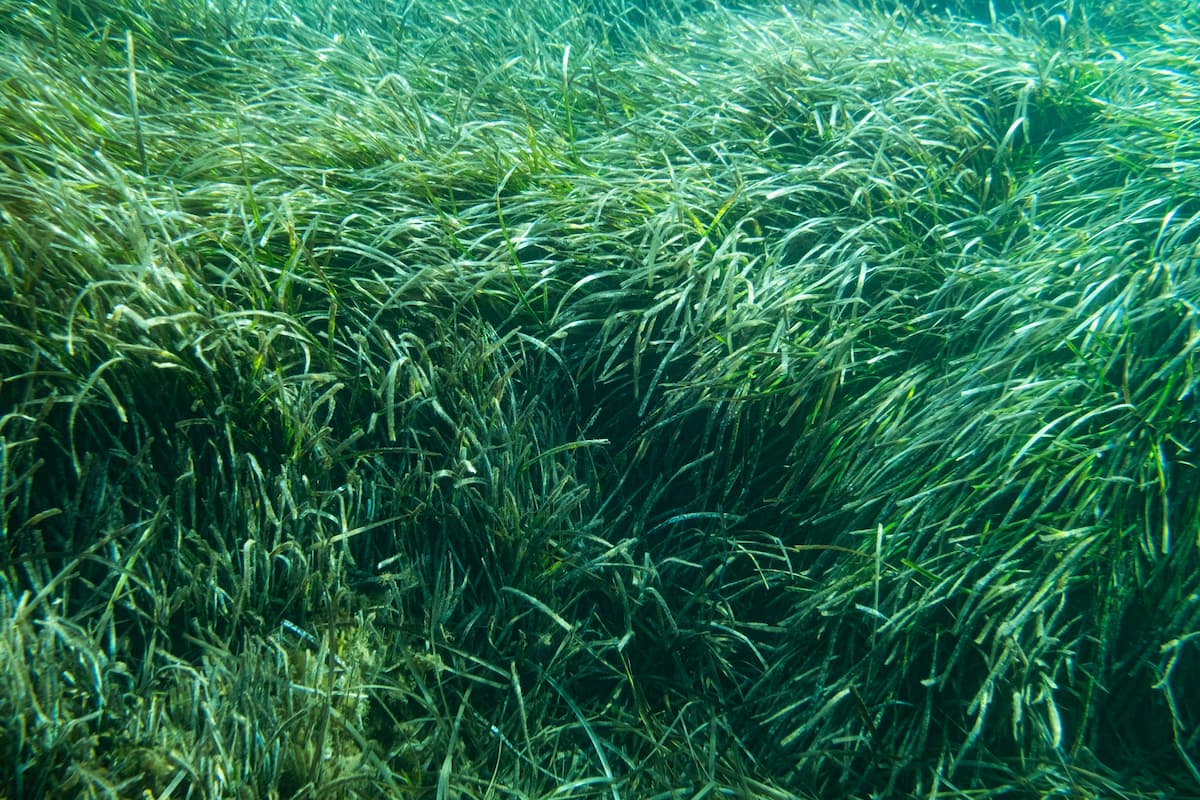
Shoal grass (Halodule wrightii) is often the first seagrass to colonize disturbed or newly available areas, which is why it’s called a pioneer species. The National Park Service identifies it as one of the dominant seagrasses in places like the Mississippi Sound and along Florida’s coast.
Its blades are narrow and flat, and it tolerates a wider range of conditions than most other seagrasses, including shallower water and bigger swings in salinity. For shoreline property owners, shoal grass is often the first underwater plant to reappear after a storm event or dredging project.
4. Widgeon Grass: Plants That Live in Lakes and Oceans
Widgeon grass (Ruppia maritima) is special because it bridges two worlds. Florida DEP describes it as a species that grows in both fresh and salt water, and it’s widely distributed in Florida’s estuaries, especially in lower-salinity inlets along the east coast.
That makes widgeon grass one of the most well-known plants that live in lakes and oceans, or at least in the brackish zones where the two mix. If you have a canal property where rainfall and tide together change the water chemistry daily, widgeon grass is one of the species most likely to thrive.
It’s also a major food source for waterfowl, which is how it got its name.
Remove Invasive Ocean Weeds
Pond Guru has the equipment to safely remove nuisance saltwater weeds without harming the environment.Call us now to schedule!
5. Sargassum: The Most Common Saltwater Weed on Florida Shorelines
Now we get into the saltwater weeds that most shoreline property owners actually call about. Sargassum is a floating brown algae, often called seaweed, that washes ashore in massive mats. The Florida Fish and Wildlife Conservation Commission notes that sargassum has been a recurring inundation problem since 2011, with large blooms moving into the Caribbean, the Gulf, and along Florida beaches.
On the open ocean, sargassum is genuinely useful. It provides habitat for juvenile fish, sea turtles, and invertebrates. The problem starts when it piles up on your shoreline or in your canal. Decomposing sargassum:
- Releases hydrogen sulfide gas that smells like rotten eggs and can irritate eyes, nose, and throat
- Attracts flies and other pests
- Can trap and harm wildlife as it rots
- Becomes a real eyesore and a hit to property value
This is why sargassum removal is one of the most common services requested by waterfront homeowners and HOAs during the warmer months.

6. Sea Lettuce (Ulva): A Bright Green Nuisance Algae
Sea lettuce (Ulva species) is a leafy green marine algae that looks a lot like lettuce leaves floating in the water. It often forms bright green sheets and can wash up on shorelines in nuisance amounts when nutrient levels are high.
The Buzzards Bay National Estuary Program describes Ulva lactuca as a common drift species that washes ashore in eutrophic embayments overloaded with nitrogen. In other words, when stormwater and fertilizer runoff push nutrient levels up, sea lettuce can bloom in quantities that rot, smell, and choke shorelines.
For homeowners on enclosed canals and bays, sea lettuce is a sign that water quality, especially nitrogen levels, deserves attention.
7. Mangroves: Florida's Protected Shoreline Trees
Mangroves are technically trees rather than underwater plants, but they are arguably the most important salt-tolerant plants on a Florida shoreline. The Florida Department of Environmental Protection identifies three native species: red mangrove (Rhizophora mangle), black mangrove (Avicennia germinans), and white mangrove (Laguncularia racemosa).
Each has a distinctive look:
- Red mangroves sit closest to the water with their famous tangled prop roots.
- Black mangroves grow slightly upland and send up vertical pencil-like roots called pneumatophores that stick up through the mud.
- White mangroves grow farthest upland, with no visible aerial roots and two small glands at the base of each leaf.
Here’s the critical point for property owners. Florida regulates mangrove trimming and removal under the Mangrove Trimming and Preservation Act. In most cases, it is illegal to remove mangroves from your shoreline without a permit. If you’re frustrated by mangroves blocking your view, the right move is to consult a professional rather than risk a state violation.
8. Smooth Cordgrass and Black Needlerush: The Salt Marsh Backbone
Along low-energy shorelines, especially in Florida’s Big Bend and along Atlantic coast lagoons, the dominant vegetation is salt marsh grass. UF/IFAS reports that more than half of Florida’s salt marshes are dominated by black needlerush, with smooth cordgrass (Spartina alterniflora) forming the lower-elevation fringe along tidal creeks.
These grasses do real work for waterfront property owners:
- Their dense root mats trap sediment and stabilize the shoreline against erosion.
- They buffer wave energy during storms and king tides.
- They provide nursery habitat for the juvenile fish, crabs, and shrimp that fuel local fisheries.
If your shoreline has natural salt marsh fringe, that’s an asset, not a problem. The right management strategy preserves it while keeping invasive species out.
Marine Plants vs. Saltwater Weeds: What's the Difference?
After reading through this list, you might be wondering how to tell the helpful marine plants apart from the saltwater weeds you want gone. The short answer is that the line is more about quantity, location, and legal status than about the species itself.
A few general rules:
- Native, rooted plants like seagrasses and mangroves are usually protected and beneficial. Leave them in place and consult a pro before any removal.
- Drift algae like sargassum and sea lettuce are not protected and can be removed from your shoreline, especially once they’ve washed up and started to decompose.
- Salt marsh grasses like cordgrass and needlerush are valuable shoreline stabilizers and generally should be preserved.
The trouble is that all of these plants can show up on the same property in the same week. That’s why a proper site visit makes such a difference.
Sargassum Removal and Shoreline Cleanup
Of all the types of sea plants that wash onto residential shorelines, sargassum is the one that drives the most frustration. The good news is that, once it’s on the beach or seawall, removal is generally allowed and is often the right call to protect health, property value, and quality of life.
Effective sargassum removal typically involves:
- Timely collection before the mat starts to decompose and release hydrogen sulfide
- Methods that minimize sand loss and disturbance to nesting sea turtles where applicable
- Proper disposal or composting based on local rules
- Follow-up management as new sargassum tides arrive throughout the season

Some Florida coastal municipalities have permit conditions on how and when sargassum can be removed mechanically, especially during sea turtle nesting season (typically March through October). A knowledgeable contractor can help you stay compliant while still keeping your shoreline clear.
Aquatic Weed Removal With Pond Guru
Sargassum is only part of the picture. Many coastal property owners also deal with aquatic weed removal challenges that go beyond a single seaweed event, including persistent algae mats in canals, invasive species near docks, and nuisance vegetation around seawalls.
Pond Guru offers professional aquatic weed removal and shoreline care designed for saltwater, brackish, and freshwater environments. Every property is different, so the best plans start with an in-person assessment of:
- The species present along your shoreline and dock
- Water chemistry and any contributing nutrient sources
- Erosion patterns and the condition of existing native vegetation
- Local rules around protected species like mangroves and seagrasses
From there, Pond Guru can build a plan that handles the saltwater weeds you want gone while protecting the beneficial marine plants that are working for you.
Schedule a Site Visit With Pond Guru
If you’re staring at a shoreline of sargassum, sea lettuce, or a mix of plants you can’t quite identify, the smartest first step is a professional site visit. Pond Guru can help you understand what’s growing on your waterfront, what to leave alone, and what to remove so your property stays beautiful and compliant.
Contact Pond Guru to schedule your site visit and find out how the right combination of sargassum removal, aquatic weed removal, and ongoing shoreline care can protect your investment for years to come.
Frequently Asked Questions
The most common include seagrasses like turtle grass, manatee grass, and shoal grass, along with sargassum, sea lettuce, mangroves, and salt marsh grasses like smooth cordgrass and black needlerush.
Marine plants is a broad term for any plant that grows in salt or brackish water. Saltwater weeds is a more informal term for nuisance species, especially fast-growing algae like sargassum and sea lettuce that can pile up on shorelines.
In most cases, no, not without a permit. Florida regulates mangrove trimming and alteration under state law. Always consult a qualified professional before touching mangrove vegetation.
Yes. Widgeon grass is a well-known example. It tolerates both fresh and salt water and is commonly found in brackish estuaries and lower-salinity coastal ponds.
Pond Guru specializes in shoreline assessment, sargassum removal, and aquatic weed removal for waterfront homeowners, HOAs, and commercial properties. Schedule a site visit to get a plan built around your shoreline.
Ready to Schedule a Visit ?
Have questions about your pond or lake? Our experts are ready to help you take the next step.
Latest Article
Popular Post

Why Keeping Culverts Clear of Debris Matters for Stormwater Systems
Table of Contents A culvert is one of those…
If you own property along a bay, canal, estuary, or open ocean shoreline, you’ve probably noticed that the plant life along your waterfront is anything but simple. Some days the water is clear and you can see ribbons of grass swaying just below the surface. Other days, your shore is buried under brown, smelly seaweed that arrived overnight.
Knowing what you’re looking at matters. Some of the most common plants from ocean environments are legally protected and play an important role in your shoreline’s stability. Others are nuisance saltwater weeds that need to be managed before they damage your property or your enjoyment of it.
This guide walks through eight of the types of sea plants you’re most likely to encounter, what they do, and when you might need help from a professional like Pond Guru.
What Are Marine Plants? Understanding Underwater Aquatic Plants
Before we get to the list, a quick definition helps. Marine plants are organisms that live and grow in saltwater or brackish environments. The category includes true flowering plants like seagrasses and mangroves, along with the many algae species commonly grouped together as “seaweed.”
The NOAA Office of National Marine Sanctuaries explains that true seagrasses are flowering plants with roots, leaves, flowers, and seeds, while seaweeds are algae without those structures. Both groups are often lumped together as underwater aquatic plants or underwater plants, but they behave very differently along your shoreline.
A few quick traits to keep in mind:
- True marine plants have roots and need to anchor in sediment.
- Algae like sargassum and sea lettuce float or attach loosely and can drift in on tides and winds.
- Some plants tolerate both fresh and salt water, while others are strict specialists.
With that foundation, here are the eight you should know.
1. Turtle Grass: The Most Common Seagrass in Florida
Turtle grass (Thalassia testudinum) is the seagrass most people think of first. The Florida Department of Environmental Protection notes that it has the deepest root structure of any Florida seagrass, with broad, ribbon-like blades that form thick underwater meadows.
You’ll find it in warm, shallow coastal waters across Florida, the Caribbean, and the Gulf. Turtle grass meadows feed manatees, green sea turtles, and juvenile fish like snapper and grouper. If you can see a healthy patch of it off your seawall, that’s a good sign for water quality.
2. Manatee Grass: Another Foundational Marine Plant
Manatee grass (Syringodium filiforme) is easy to spot because its leaves are cylindrical, almost like green spaghetti, rather than the flat blades of turtle grass. According to Florida DEP, manatee grass is usually found in mixed seagrass beds or in smaller, dense patches of its own.
It’s one of the most important underwater aquatic plants for grazers and a key food source in estuaries like the Indian River Lagoon. Like all Florida seagrasses, it is protected, and damaging it (for example, with prop scars from a boat) can carry penalties.
3. Shoal Grass: The Pioneer Seagrass

Shoal grass (Halodule wrightii) is often the first seagrass to colonize disturbed or newly available areas, which is why it’s called a pioneer species. The National Park Service identifies it as one of the dominant seagrasses in places like the Mississippi Sound and along Florida’s coast.
Its blades are narrow and flat, and it tolerates a wider range of conditions than most other seagrasses, including shallower water and bigger swings in salinity. For shoreline property owners, shoal grass is often the first underwater plant to reappear after a storm event or dredging project.
4. Widgeon Grass: Plants That Live in Lakes and Oceans
Widgeon grass (Ruppia maritima) is special because it bridges two worlds. Florida DEP describes it as a species that grows in both fresh and salt water, and it’s widely distributed in Florida’s estuaries, especially in lower-salinity inlets along the east coast.
That makes widgeon grass one of the most well-known plants that live in lakes and oceans, or at least in the brackish zones where the two mix. If you have a canal property where rainfall and tide together change the water chemistry daily, widgeon grass is one of the species most likely to thrive.
It’s also a major food source for waterfowl, which is how it got its name.
Remove Invasive Ocean Weeds
Pond Guru has the equipment to safely remove nuisance saltwater weeds without harming the environment.Call us now to schedule!
5. Sargassum: The Most Common Saltwater Weed on Florida Shorelines
Now we get into the saltwater weeds that most shoreline property owners actually call about. Sargassum is a floating brown algae, often called seaweed, that washes ashore in massive mats. The Florida Fish and Wildlife Conservation Commission notes that sargassum has been a recurring inundation problem since 2011, with large blooms moving into the Caribbean, the Gulf, and along Florida beaches.
On the open ocean, sargassum is genuinely useful. It provides habitat for juvenile fish, sea turtles, and invertebrates. The problem starts when it piles up on your shoreline or in your canal. Decomposing sargassum:
- Releases hydrogen sulfide gas that smells like rotten eggs and can irritate eyes, nose, and throat
- Attracts flies and other pests
- Can trap and harm wildlife as it rots
- Becomes a real eyesore and a hit to property value
This is why sargassum removal is one of the most common services requested by waterfront homeowners and HOAs during the warmer months.
6. Sea Lettuce (Ulva): A Bright Green Nuisance Algae
Sea lettuce (Ulva species) is a leafy green marine algae that looks a lot like lettuce leaves floating in the water. It often forms bright green sheets and can wash up on shorelines in nuisance amounts when nutrient levels are high.
The Buzzards Bay National Estuary Program describes Ulva lactuca as a common drift species that washes ashore in eutrophic embayments overloaded with nitrogen. In other words, when stormwater and fertilizer runoff push nutrient levels up, sea lettuce can bloom in quantities that rot, smell, and choke shorelines.
For homeowners on enclosed canals and bays, sea lettuce is a sign that water quality, especially nitrogen levels, deserves attention.
7. Mangroves: Florida's Protected Shoreline Trees
Mangroves are technically trees rather than underwater plants, but they are arguably the most important salt-tolerant plants on a Florida shoreline. The Florida Department of Environmental Protection identifies three native species: red mangrove (Rhizophora mangle), black mangrove (Avicennia germinans), and white mangrove (Laguncularia racemosa).
Each has a distinctive look:
- Red mangroves sit closest to the water with their famous tangled prop roots.
- Black mangroves grow slightly upland and send up vertical pencil-like roots called pneumatophores that stick up through the mud.
- White mangroves grow farthest upland, with no visible aerial roots and two small glands at the base of each leaf.
Here’s the critical point for property owners. Florida regulates mangrove trimming and removal under the Mangrove Trimming and Preservation Act. In most cases, it is illegal to remove mangroves from your shoreline without a permit. If you’re frustrated by mangroves blocking your view, the right move is to consult a professional rather than risk a state violation.
8. Smooth Cordgrass and Black Needlerush: The Salt Marsh Backbone
Along low-energy shorelines, especially in Florida’s Big Bend and along Atlantic coast lagoons, the dominant vegetation is salt marsh grass. UF/IFAS reports that more than half of Florida’s salt marshes are dominated by black needlerush, with smooth cordgrass (Spartina alterniflora) forming the lower-elevation fringe along tidal creeks.
These grasses do real work for waterfront property owners:
- Their dense root mats trap sediment and stabilize the shoreline against erosion.
- They buffer wave energy during storms and king tides.
- They provide nursery habitat for the juvenile fish, crabs, and shrimp that fuel local fisheries.
If your shoreline has natural salt marsh fringe, that’s an asset, not a problem. The right management strategy preserves it while keeping invasive species out.
Marine Plants vs. Saltwater Weeds: What's the Difference?
After reading through this list, you might be wondering how to tell the helpful marine plants apart from the saltwater weeds you want gone. The short answer is that the line is more about quantity, location, and legal status than about the species itself.
A few general rules:
- Native, rooted plants like seagrasses and mangroves are usually protected and beneficial. Leave them in place and consult a pro before any removal.
- Drift algae like sargassum and sea lettuce are not protected and can be removed from your shoreline, especially once they’ve washed up and started to decompose.
- Salt marsh grasses like cordgrass and needlerush are valuable shoreline stabilizers and generally should be preserved.
The trouble is that all of these plants can show up on the same property in the same week. That’s why a proper site visit makes such a difference.

Sargassum Removal and Shoreline Cleanup
Of all the types of sea plants that wash onto residential shorelines, sargassum is the one that drives the most frustration. The good news is that, once it’s on the beach or seawall, removal is generally allowed and is often the right call to protect health, property value, and quality of life.
Effective sargassum removal typically involves:
- Timely collection before the mat starts to decompose and release hydrogen sulfide
- Methods that minimize sand loss and disturbance to nesting sea turtles where applicable
- Proper disposal or composting based on local rules
- Follow-up management as new sargassum tides arrive throughout the season
Some Florida coastal municipalities have permit conditions on how and when sargassum can be removed mechanically, especially during sea turtle nesting season (typically March through October). A knowledgeable contractor can help you stay compliant while still keeping your shoreline clear.
Aquatic Weed Removal With Pond Guru
Sargassum is only part of the picture. Many coastal property owners also deal with aquatic weed removal challenges that go beyond a single seaweed event, including persistent algae mats in canals, invasive species near docks, and nuisance vegetation around seawalls.
Pond Guru offers professional aquatic weed removal and shoreline care designed for saltwater, brackish, and freshwater environments. Every property is different, so the best plans start with an in-person assessment of:
- The species present along your shoreline and dock
- Water chemistry and any contributing nutrient sources
- Erosion patterns and the condition of existing native vegetation
- Local rules around protected species like mangroves and seagrasses
From there, Pond Guru can build a plan that handles the saltwater weeds you want gone while protecting the beneficial marine plants that are working for you.
Schedule a Site Visit With Pond Guru
If you’re staring at a shoreline of sargassum, sea lettuce, or a mix of plants you can’t quite identify, the smartest first step is a professional site visit. Pond Guru can help you understand what’s growing on your waterfront, what to leave alone, and what to remove so your property stays beautiful and compliant.
Contact Pond Guru to schedule your site visit and find out how the right combination of sargassum removal, aquatic weed removal, and ongoing shoreline care can protect your investment for years to come.
Frequently Asked Questions
The most common include seagrasses like turtle grass, manatee grass, and shoal grass, along with sargassum, sea lettuce, mangroves, and salt marsh grasses like smooth cordgrass and black needlerush.
Marine plants is a broad term for any plant that grows in salt or brackish water. Saltwater weeds is a more informal term for nuisance species, especially fast-growing algae like sargassum and sea lettuce that can pile up on shorelines.
In most cases, no, not without a permit. Florida regulates mangrove trimming and alteration under state law. Always consult a qualified professional before touching mangrove vegetation.
Yes. Widgeon grass is a well-known example. It tolerates both fresh and salt water and is commonly found in brackish estuaries and lower-salinity coastal ponds.
Pond Guru specializes in shoreline assessment, sargassum removal, and aquatic weed removal for waterfront homeowners, HOAs, and commercial properties. Schedule a site visit to get a plan built around your shoreline.
Ready to Schedule a Visit ?
Have questions about your pond or lake? Our experts are ready to help you take the next step.
Latest Article
Popular Post
Why Keeping Culverts Clear of Debris Matters for Stormwater Systems
Table of Contents A culvert is one of those…