

Is Golden Canna a Beneficial Plant for Florida Lake Health?
Is Golden Canna a Beneficial Plant for Florida Lake Health?
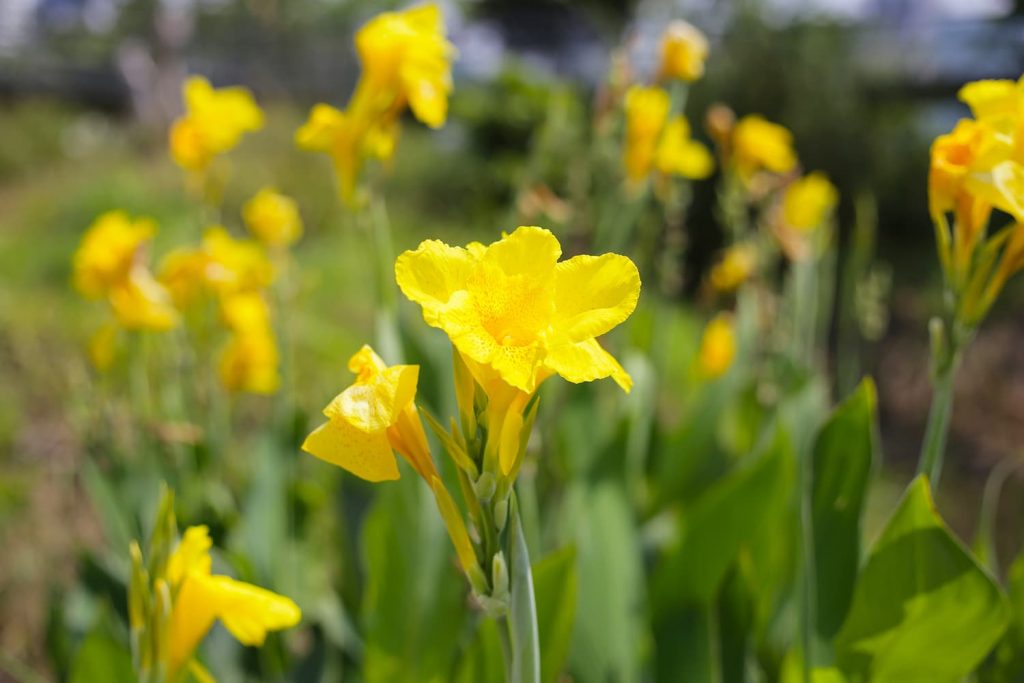
Table of Contents
If you manage or live beside a Florida lake or pond, you have likely seen tall stalks of bright yellow flowers standing along the water’s edge. That plant is often golden canna, a native wetland species that does far more than look attractive. It plays a real role in shoreline stability and water quality.
This guide explains what golden canna is, how to identify it, whether it is native to Florida, and the specific benefits it offers for lake and pond health.
Golden canna (Canna flaccida) is a native Florida wetland perennial with bright yellow flowers, prized for shoreline plantings because it stabilizes banks, filters nutrients like nitrogen and phosphorus from the water, and provides habitat for pollinators and wildlife. It grows along the edges of lakes, ponds, and marshes throughout most of the state.
Key Takeaways
- Golden canna (Canna flaccida) is a Florida native wetland perennial found in most of the state’s 67 counties.
- It is easy to identify by its large, bright yellow flowers up to 3 inches across and broad oblong leaves.
- It improves water quality by taking up nitrogen and phosphorus, the nutrients that fuel algae blooms.
- It stabilizes shorelines with a robust rhizome root system that holds soil against erosion.
- It supports wildlife, serving as a host plant for butterflies and a nectar source for bees and pollinators.
What Is Golden Canna?
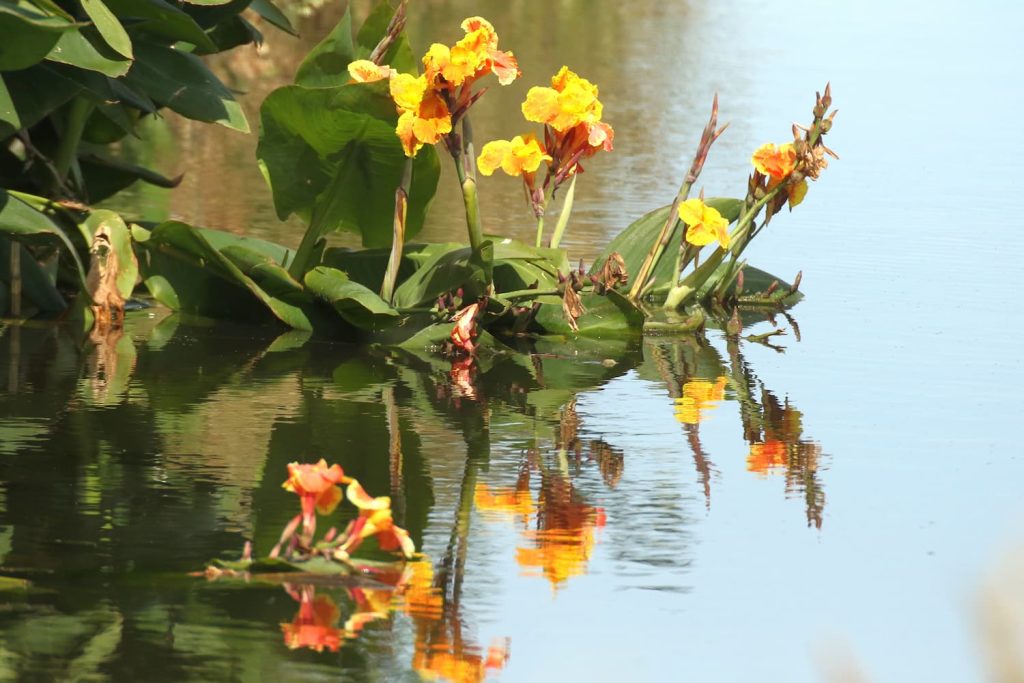
Golden canna (Canna flaccida) is a native herbaceous perennial wetland plant that grows along the edges of Florida’s lakes, ponds, marshes, and savannahs. It produces large, showy yellow flowers and broad oblong leaves, typically reaching about 4 feet tall. It is an emergent aquatic plant that thrives in damp soil and shallow water.
Understanding what is golden canna starts with its identity as a wetland species adapted to wet feet. Unlike landscape plants that need well-drained soil, golden canna is built for the saturated ground at a water’s edge.
According to UF/IFAS Extension, golden canna is an emergent plant that only needs to have damp soil and usually grows up to 4 feet tall, though some reports suggest it can reach up to 9 feet. Its leaves grow up to 2 feet long and 6 inches wide, with feather-like venation.
The plant grows from thick underground structures called rhizomes, which store energy and help it survive tough conditions. Those same rhizomes are why it establishes so well along shorelines.
Is Golden Canna Native to Florida?
Yes, golden canna is native to Florida. It occurs naturally throughout most of the state and is found in nearly all of Florida’s 67 counties, growing in freshwater marshes, swamps, and along pond and lake margins. Native populations also extend into other southeastern states, as far north as South Carolina and as far west as Texas and Louisiana.
The question of whether is golden canna native to florida has a clear answer rooted in botanical records. It is a genuine Florida native, not an introduced ornamental.
The UF/IFAS Center for Aquatic and Invasive Plants confirms golden canna is a large, showy, native aquatic plant that grows in small stands at the edges of marshes, ponds, and lakes, occurring throughout Florida except the northwestern part of the state.
Its native status matters for lake management. Native plants are adapted to local conditions, support local wildlife, and do not carry the ecological risks of invasive species. That makes golden canna a responsible choice for shoreline and littoral zone plantings.
Why Is Golden Canna Called Bandanna of the Everglades?
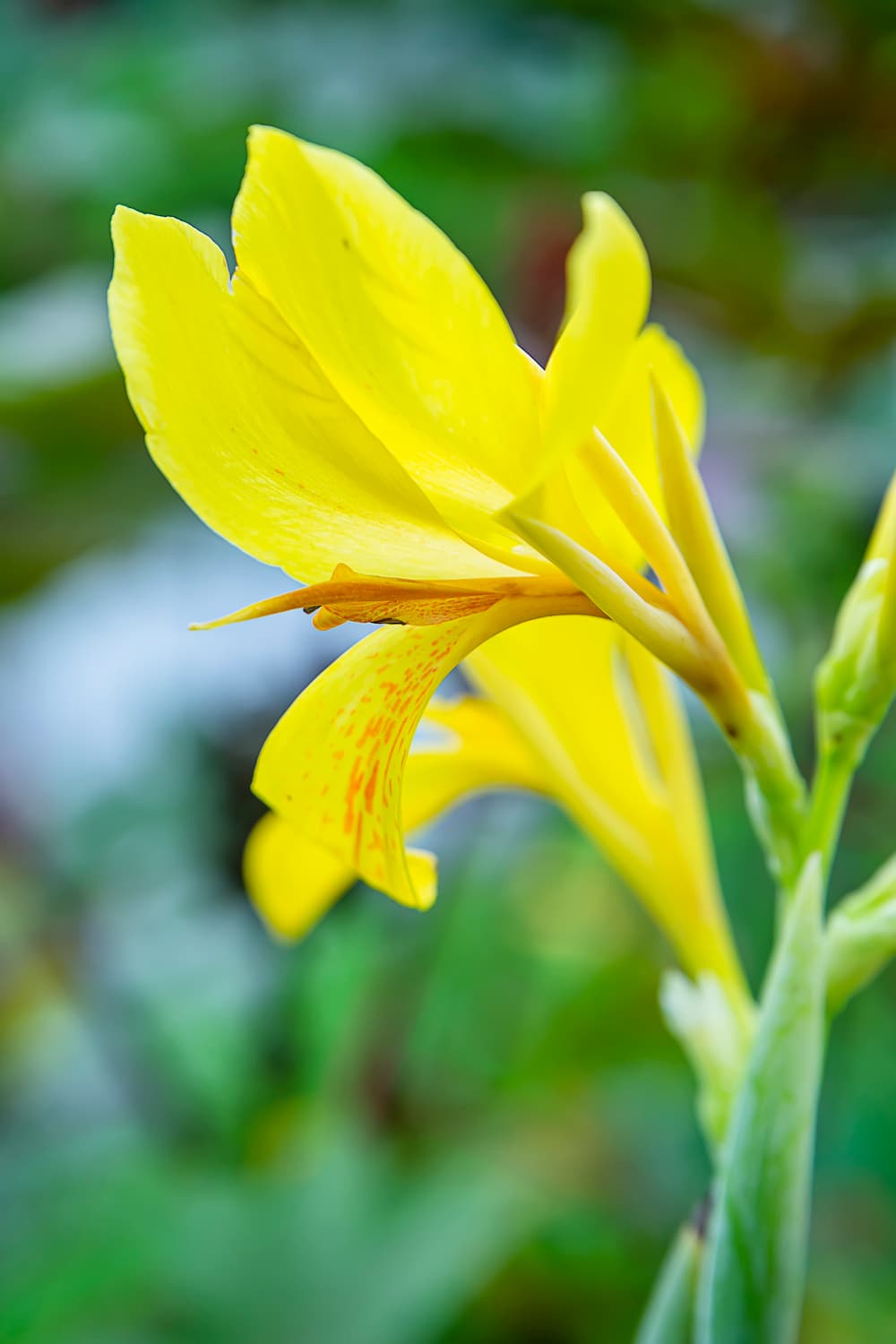
Golden canna is nicknamed “bandanna of the Everglades” because of its bright, showy yellow blooms that stand out vividly in wetland landscapes like the Everglades. The name reflects both its eye-catching color and its strong association with Florida’s freshwater marshes, where it grows naturally along edges and in shallow water.
The folk name bandanna of the everglades captures how striking this plant is in its native habitat, where its flowers punctuate the green of the marsh.
The Florida Wildflower Foundation notes that Canna flaccida, also known as golden canna or yellow canna, is a robust aquatic wildflower with large, showy, orchid-like blooms, and that it is the only Canna species able to grow in partially inundated conditions.
That last detail is important. While there are about 20 Canna species in the Americas, golden canna is uniquely suited to the standing water of a lake or pond edge, which is exactly why it appears in wetland restoration and shoreline projects.
How Do You Identify Golden Canna (Yellow Canna Lily)?
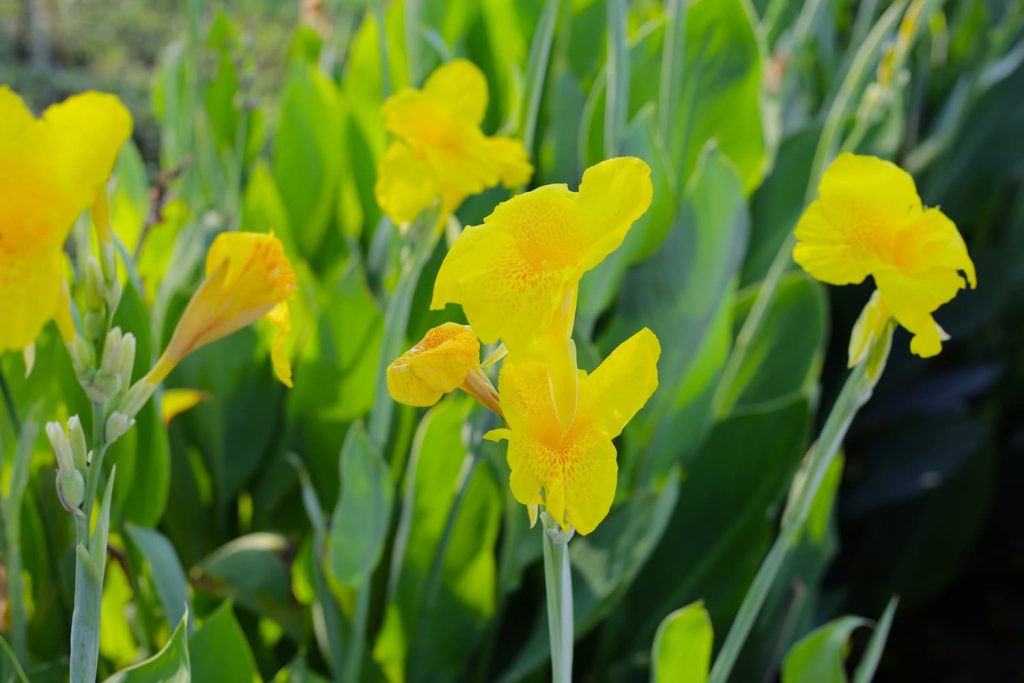
You can identify golden canna by its large, bright yellow flowers up to 3 inches across, growing in clusters atop tall stalks. Its leaves are broad and oblong, up to 2 feet long and 6 inches wide, arranged in a spiral around the stem with feather-like veins. The plant grows in damp soil or shallow water.
Learning to identify the yellow canna lily is straightforward because few wetland plants share its combination of bold flower and broad leaf.
Key identification features, drawn from UF/IFAS descriptions:
- Flowers: Bright yellow, up to 3 inches across, in terminal clusters at the top of long stalks. Interestingly, the showy parts are actually enlarged stamens rather than true petals.
- Leaves: Large, oblong to elliptic, up to 2 feet long and 6 inches wide, tapering to a point, with many lateral veins angling upward.
- Arrangement: Leaves attach in a spiral along the stem, each base wrapping around the stalk.
- Height: Typically 3 to 5 feet tall.
- Habit: Grows in small stands at the water’s edge in damp or shallow conditions.
Because the bright yellow blooms and tropical foliage are so distinctive, golden canna, sometimes called yellow canna, is one of the easier native shoreline plants for a property owner to recognize.
Plant Golden Canna In Your Pond
Pond Guru can help design your shoreline and add beneficial plants like golden canna
What Are the Benefits of Golden Canna for Lake Health?
Golden canna benefits lake health in three main ways: it filters excess nutrients like nitrogen and phosphorus from the water, it stabilizes shorelines with its rhizome root system to reduce erosion, and it provides habitat and food for pollinators and wildlife. These functions make it a valuable plant for littoral zones and shoreline restoration.
The benefits of golden canna for lake health are what elevate it from a pretty flower to a functional management tool. Each benefit addresses a common challenge in Florida ponds.
Nutrient filtration. This is golden canna’s standout ecological role. The UF/IFAS Extension reports that cannas have potential as phytoremediation agents to remove nitrogen and phosphorus from water. In one study, a canna removed more nitrogen and phosphorus from water than five other plants tested in a floating wetland system. Since those nutrients fuel algae blooms, plants that absorb them help keep water clearer.
Shoreline stabilization. Golden canna’s robust rhizomes and root mass bind soil along the bank, reducing the erosion that plagues bare shorelines.
Wildlife habitat. The plant supports biodiversity at the water’s edge, which we explore in the next section.
A professional littoral zone management program often incorporates golden canna alongside other natives precisely because it combines these water-quality and erosion-control benefits in a single attractive plant.
How Does Golden Canna Support Wildlife and Pollinators?
Golden canna supports wildlife by serving as a larval host plant for the Brazilian skipper butterfly and providing nectar that attracts bees and butterflies. Its leaves offer shelter for insects like dragonfly larvae, and the plant contributes to the biodiversity of a healthy lake or pond shoreline ecosystem.
Beyond water quality, the wildlife value of golden canna makes it a contributor to a balanced shoreline ecosystem.
The Florida Wildflower Foundation explains that golden canna is the larval host for the Brazilian (or canna) skipper, which rolls the leaf into a tube around its body for protection. Dragonfly larvae have also been observed hiding in the leaves, and bees and butterflies are drawn to the flower’s nectar.
This habitat role matters more than it might seem. A shoreline planted with diverse natives like golden canna supports the insects, birds, and aquatic life that keep a pond ecosystem in balance, which in turn supports the natural processes that maintain water quality.
Where and How Should Golden Canna Be Planted?
Golden canna should be planted along the damp margins and shallow water of a lake or pond’s littoral zone, in full sun to partial shade. It is propagated by dividing its rhizomes or by seed, and establishes quickly in moist soil. Proper placement in the right water depth is key to healthy growth and effective shoreline benefits.
Knowing where and how to plant golden canna ensures it delivers its shoreline and water-quality benefits rather than struggling in the wrong spot.
Placement guidance based on the plant’s natural habitat:
- Location: The damp shoreline band and shallow water edge, known as the littoral zone.
- Light: Full sun to partial shade, matching its wetland origins.
- Soil and water: Moist to inundated soils; it tolerates standing water at the edge but needs consistent dampness.
- Propagation: UF/IFAS notes golden canna is easily propagated by rhizome division, usually producing four or five new shoots per growing season, and can be planted directly in shallow water at a pond’s edge.
Because correct depth and placement determine whether a planting thrives, shoreline projects benefit from professional design. Pond Guru’s vegetation management and native planting services match species like golden canna to the right zones for long-term success.
Is Golden Canna Ever a Maintenance Concern?
Golden canna is generally low-maintenance and beneficial, but it can spread through suckering rhizomes and may need occasional management to keep stands tidy along a shoreline. Removing spent blooms and dividing crowded clumps maintains a neat appearance. It is a native species, not an invasive one, so it does not pose the ecological risks of aggressive non-natives.
Even beneficial plants need some upkeep, and golden canna is no exception, though its needs are modest.
The Florida Wildflower Foundation notes the plant tends to spread quickly by suckering, thanks to its robust tuberous rhizome that helps it survive drought and freezing. In a managed shoreline, that vigor is mostly an asset, but it can mean periodic thinning to keep stands within bounds.
Routine care is simple: removing spent blooms and staking where needed maintains appearance, and dividing crowded clumps keeps growth healthy. As a native, golden canna integrates into an ecosystem rather than overwhelming it, which is a key distinction from invasive shoreline plants that require aggressive control.
Add Golden Canna to Your Shoreline With Pond Guru
Golden canna brings together the qualities that make a shoreline plant valuable: it is native, attractive, good for water quality, and protective against erosion. For HOA boards, property managers, and homeowners, it is a practical choice for enhancing both the beauty and the function of a lake or pond edge.
Pond Guru helps Florida communities and property owners design and install native littoral plantings, including golden canna and other beneficial species suited to each shoreline’s conditions.
Because the right plant placement depends on water depth, sunlight, and existing conditions, the process begins with an evaluation. To enhance your shoreline, schedule a site visit with Pond Guru for golden canna and other native planting services. A specialist will assess your lake and recommend a planting plan built around your property’s needs.
Frequently Asked Questions
Golden canna (Canna flaccida) is a native Florida wetland perennial with bright yellow flowers and broad oblong leaves. It grows along the edges of lakes, ponds, and marshes, typically reaching 3 to 5 feet tall. It is valued for filtering nutrients from water and stabilizing shorelines.
Yes. Golden canna is native to Florida and grows naturally in most of the state's 67 counties, in freshwater marshes, swamps, and along pond and lake margins. Its native range also extends into other southeastern states, reaching as far north as South Carolina and west to Texas.
The nickname comes from its bright, showy yellow blooms that stand out in wetland landscapes like the Everglades. The name reflects both the plant's vivid color and its strong natural association with Florida's freshwater marshes, where it commonly grows along edges and in shallow water.
Golden canna improves lake health by absorbing excess nitrogen and phosphorus that would otherwise fuel algae blooms, stabilizing shorelines with its rhizome roots to reduce erosion, and providing habitat and nectar for pollinators and wildlife. These combined functions make it valuable for littoral zone and shoreline plantings.
No. Golden canna is a Florida native, not an invasive species. While it can spread through suckering rhizomes and may need occasional thinning to stay tidy, it integrates into the local ecosystem and supports native wildlife rather than displacing it the way aggressive non-native plants do.
Golden canna grows best in the littoral zone, the damp shoreline band and shallow water edge, in full sun to partial shade. It needs consistently moist to inundated soil. Correct water depth and placement are important, so professional planting design helps ensure healthy establishment and effective shoreline benefits.
Ready to Schedule a Visit ?
Have questions about your pond or lake? Our experts are ready to help you take the next step.
Latest Article
Popular Post

Pond Smelling Like Rotten Eggs? Foul Smelling Pond Water
Table of Contents That unmistakable rotten-egg, sulfur smell drifting…
Table of Contents
If you manage or live beside a Florida lake or pond, you have likely seen tall stalks of bright yellow flowers standing along the water’s edge. That plant is often golden canna, a native wetland species that does far more than look attractive. It plays a real role in shoreline stability and water quality.
This guide explains what golden canna is, how to identify it, whether it is native to Florida, and the specific benefits it offers for lake and pond health.
Golden canna (Canna flaccida) is a native Florida wetland perennial with bright yellow flowers, prized for shoreline plantings because it stabilizes banks, filters nutrients like nitrogen and phosphorus from the water, and provides habitat for pollinators and wildlife. It grows along the edges of lakes, ponds, and marshes throughout most of the state.
Key Takeaways
- Golden canna (Canna flaccida) is a Florida native wetland perennial found in most of the state’s 67 counties.
- It is easy to identify by its large, bright yellow flowers up to 3 inches across and broad oblong leaves.
- It improves water quality by taking up nitrogen and phosphorus, the nutrients that fuel algae blooms.
- It stabilizes shorelines with a robust rhizome root system that holds soil against erosion.
- It supports wildlife, serving as a host plant for butterflies and a nectar source for bees and pollinators.
What Is Golden Canna?
Golden canna (Canna flaccida) is a native herbaceous perennial wetland plant that grows along the edges of Florida’s lakes, ponds, marshes, and savannahs. It produces large, showy yellow flowers and broad oblong leaves, typically reaching about 4 feet tall. It is an emergent aquatic plant that thrives in damp soil and shallow water.
Understanding what is golden canna starts with its identity as a wetland species adapted to wet feet. Unlike landscape plants that need well-drained soil, golden canna is built for the saturated ground at a water’s edge.
According to UF/IFAS Extension, golden canna is an emergent plant that only needs to have damp soil and usually grows up to 4 feet tall, though some reports suggest it can reach up to 9 feet. Its leaves grow up to 2 feet long and 6 inches wide, with feather-like venation.
The plant grows from thick underground structures called rhizomes, which store energy and help it survive tough conditions. Those same rhizomes are why it establishes so well along shorelines.
Is Golden Canna Native to Florida?
Yes, golden canna is native to Florida. It occurs naturally throughout most of the state and is found in nearly all of Florida’s 67 counties, growing in freshwater marshes, swamps, and along pond and lake margins. Native populations also extend into other southeastern states, as far north as South Carolina and as far west as Texas and Louisiana.
The question of whether is golden canna native to florida has a clear answer rooted in botanical records. It is a genuine Florida native, not an introduced ornamental.
The UF/IFAS Center for Aquatic and Invasive Plants confirms golden canna is a large, showy, native aquatic plant that grows in small stands at the edges of marshes, ponds, and lakes, occurring throughout Florida except the northwestern part of the state.
Its native status matters for lake management. Native plants are adapted to local conditions, support local wildlife, and do not carry the ecological risks of invasive species. That makes golden canna a responsible choice for shoreline and littoral zone plantings.
Why Is Golden Canna Called Bandanna of the Everglades?
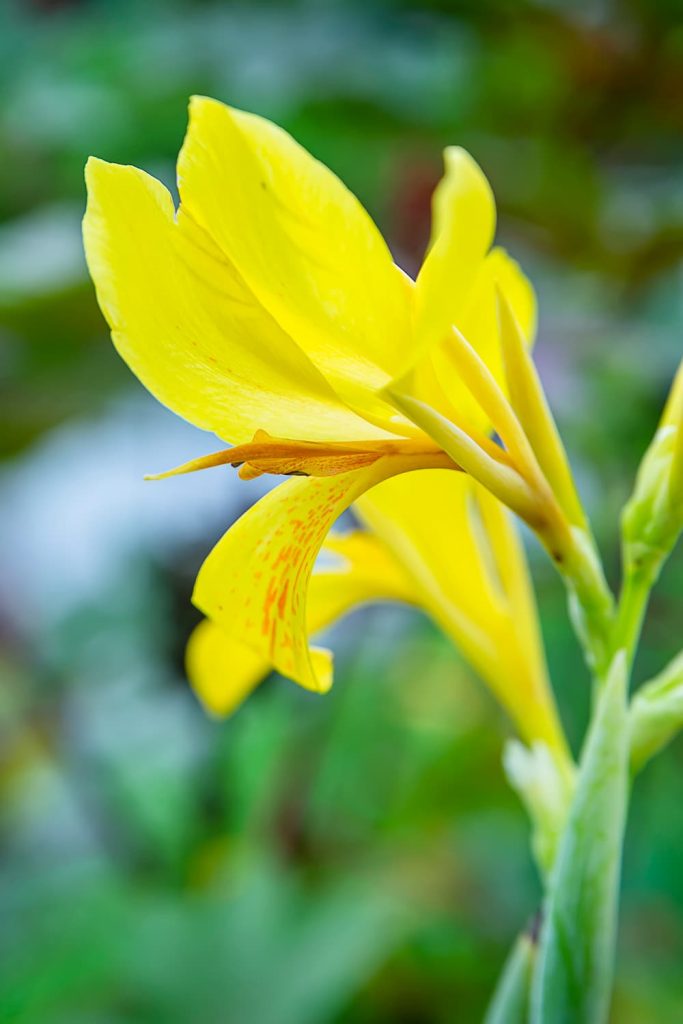
Golden canna is nicknamed “bandanna of the Everglades” because of its bright, showy yellow blooms that stand out vividly in wetland landscapes like the Everglades. The name reflects both its eye-catching color and its strong association with Florida’s freshwater marshes, where it grows naturally along edges and in shallow water.
The folk name bandanna of the everglades captures how striking this plant is in its native habitat, where its flowers punctuate the green of the marsh.
The Florida Wildflower Foundation notes that Canna flaccida, also known as golden canna or yellow canna, is a robust aquatic wildflower with large, showy, orchid-like blooms, and that it is the only Canna species able to grow in partially inundated conditions.
That last detail is important. While there are about 20 Canna species in the Americas, golden canna is uniquely suited to the standing water of a lake or pond edge, which is exactly why it appears in wetland restoration and shoreline projects.
How Do You Identify Golden Canna (Yellow Canna Lily)?
You can identify golden canna by its large, bright yellow flowers up to 3 inches across, growing in clusters atop tall stalks. Its leaves are broad and oblong, up to 2 feet long and 6 inches wide, arranged in a spiral around the stem with feather-like veins. The plant grows in damp soil or shallow water.
Learning to identify the yellow canna lily is straightforward because few wetland plants share its combination of bold flower and broad leaf.
Key identification features, drawn from UF/IFAS descriptions:
- Flowers: Bright yellow, up to 3 inches across, in terminal clusters at the top of long stalks. Interestingly, the showy parts are actually enlarged stamens rather than true petals.
- Leaves: Large, oblong to elliptic, up to 2 feet long and 6 inches wide, tapering to a point, with many lateral veins angling upward.
- Arrangement: Leaves attach in a spiral along the stem, each base wrapping around the stalk.
- Height: Typically 3 to 5 feet tall.
- Habit: Grows in small stands at the water’s edge in damp or shallow conditions.
Because the bright yellow blooms and tropical foliage are so distinctive, golden canna, sometimes called yellow canna, is one of the easier native shoreline plants for a property owner to recognize.
Plant Golden Canna In Your Pond
Pond Guru can help design your shoreline and add beneficial plants like golden canna
What Are the Benefits of Golden Canna for Lake Health?
Golden canna benefits lake health in three main ways: it filters excess nutrients like nitrogen and phosphorus from the water, it stabilizes shorelines with its rhizome root system to reduce erosion, and it provides habitat and food for pollinators and wildlife. These functions make it a valuable plant for littoral zones and shoreline restoration.
The benefits of golden canna for lake health are what elevate it from a pretty flower to a functional management tool. Each benefit addresses a common challenge in Florida ponds.
Nutrient filtration. This is golden canna’s standout ecological role. The UF/IFAS Extension reports that cannas have potential as phytoremediation agents to remove nitrogen and phosphorus from water. In one study, a canna removed more nitrogen and phosphorus from water than five other plants tested in a floating wetland system. Since those nutrients fuel algae blooms, plants that absorb them help keep water clearer.
Shoreline stabilization. Golden canna’s robust rhizomes and root mass bind soil along the bank, reducing the erosion that plagues bare shorelines.
Wildlife habitat. The plant supports biodiversity at the water’s edge, which we explore in the next section.
A professional littoral zone management program often incorporates golden canna alongside other natives precisely because it combines these water-quality and erosion-control benefits in a single attractive plant.
How Does Golden Canna Support Wildlife and Pollinators?
Golden canna supports wildlife by serving as a larval host plant for the Brazilian skipper butterfly and providing nectar that attracts bees and butterflies. Its leaves offer shelter for insects like dragonfly larvae, and the plant contributes to the biodiversity of a healthy lake or pond shoreline ecosystem.
Beyond water quality, the wildlife value of golden canna makes it a contributor to a balanced shoreline ecosystem.
The Florida Wildflower Foundation explains that golden canna is the larval host for the Brazilian (or canna) skipper, which rolls the leaf into a tube around its body for protection. Dragonfly larvae have also been observed hiding in the leaves, and bees and butterflies are drawn to the flower’s nectar.
This habitat role matters more than it might seem. A shoreline planted with diverse natives like golden canna supports the insects, birds, and aquatic life that keep a pond ecosystem in balance, which in turn supports the natural processes that maintain water quality.
Where and How Should Golden Canna Be Planted?
Golden canna should be planted along the damp margins and shallow water of a lake or pond’s littoral zone, in full sun to partial shade. It is propagated by dividing its rhizomes or by seed, and establishes quickly in moist soil. Proper placement in the right water depth is key to healthy growth and effective shoreline benefits.
Knowing where and how to plant golden canna ensures it delivers its shoreline and water-quality benefits rather than struggling in the wrong spot.
Placement guidance based on the plant’s natural habitat:
- Location: The damp shoreline band and shallow water edge, known as the littoral zone.
- Light: Full sun to partial shade, matching its wetland origins.
- Soil and water: Moist to inundated soils; it tolerates standing water at the edge but needs consistent dampness.
- Propagation: UF/IFAS notes golden canna is easily propagated by rhizome division, usually producing four or five new shoots per growing season, and can be planted directly in shallow water at a pond’s edge.
Because correct depth and placement determine whether a planting thrives, shoreline projects benefit from professional design. Pond Guru’s vegetation management and native planting services match species like golden canna to the right zones for long-term success.
Is Golden Canna Ever a Maintenance Concern?
Golden canna is generally low-maintenance and beneficial, but it can spread through suckering rhizomes and may need occasional management to keep stands tidy along a shoreline. Removing spent blooms and dividing crowded clumps maintains a neat appearance. It is a native species, not an invasive one, so it does not pose the ecological risks of aggressive non-natives.
Even beneficial plants need some upkeep, and golden canna is no exception, though its needs are modest.
The Florida Wildflower Foundation notes the plant tends to spread quickly by suckering, thanks to its robust tuberous rhizome that helps it survive drought and freezing. In a managed shoreline, that vigor is mostly an asset, but it can mean periodic thinning to keep stands within bounds.
Routine care is simple: removing spent blooms and staking where needed maintains appearance, and dividing crowded clumps keeps growth healthy. As a native, golden canna integrates into an ecosystem rather than overwhelming it, which is a key distinction from invasive shoreline plants that require aggressive control.
Add Golden Canna to Your Shoreline With Pond Guru
Golden canna brings together the qualities that make a shoreline plant valuable: it is native, attractive, good for water quality, and protective against erosion. For HOA boards, property managers, and homeowners, it is a practical choice for enhancing both the beauty and the function of a lake or pond edge.
Pond Guru helps Florida communities and property owners design and install native littoral plantings, including golden canna and other beneficial species suited to each shoreline’s conditions.
Because the right plant placement depends on water depth, sunlight, and existing conditions, the process begins with an evaluation. To enhance your shoreline, schedule a site visit with Pond Guru for golden canna and other native planting services. A specialist will assess your lake and recommend a planting plan built around your property’s needs.
Frequently Asked Questions
Golden canna (Canna flaccida) is a native Florida wetland perennial with bright yellow flowers and broad oblong leaves. It grows along the edges of lakes, ponds, and marshes, typically reaching 3 to 5 feet tall. It is valued for filtering nutrients from water and stabilizing shorelines.
Yes. Golden canna is native to Florida and grows naturally in most of the state's 67 counties, in freshwater marshes, swamps, and along pond and lake margins. Its native range also extends into other southeastern states, reaching as far north as South Carolina and west to Texas.
The nickname comes from its bright, showy yellow blooms that stand out in wetland landscapes like the Everglades. The name reflects both the plant's vivid color and its strong natural association with Florida's freshwater marshes, where it commonly grows along edges and in shallow water.
Golden canna improves lake health by absorbing excess nitrogen and phosphorus that would otherwise fuel algae blooms, stabilizing shorelines with its rhizome roots to reduce erosion, and providing habitat and nectar for pollinators and wildlife. These combined functions make it valuable for littoral zone and shoreline plantings.
No. Golden canna is a Florida native, not an invasive species. While it can spread through suckering rhizomes and may need occasional thinning to stay tidy, it integrates into the local ecosystem and supports native wildlife rather than displacing it the way aggressive non-native plants do.
Golden canna grows best in the littoral zone, the damp shoreline band and shallow water edge, in full sun to partial shade. It needs consistently moist to inundated soil. Correct water depth and placement are important, so professional planting design helps ensure healthy establishment and effective shoreline benefits.
Ready to Schedule a Visit ?
Have questions about your pond or lake? Our experts are ready to help you take the next step.
Latest Article
Popular Post
Pond Smelling Like Rotten Eggs? Foul Smelling Pond Water
Table of Contents That unmistakable rotten-egg, sulfur smell drifting…