

Floating Fountain Maintenance: Schedule and Common Failure Points
Floating Fountain Maintenance: Schedule and Common Failure Points
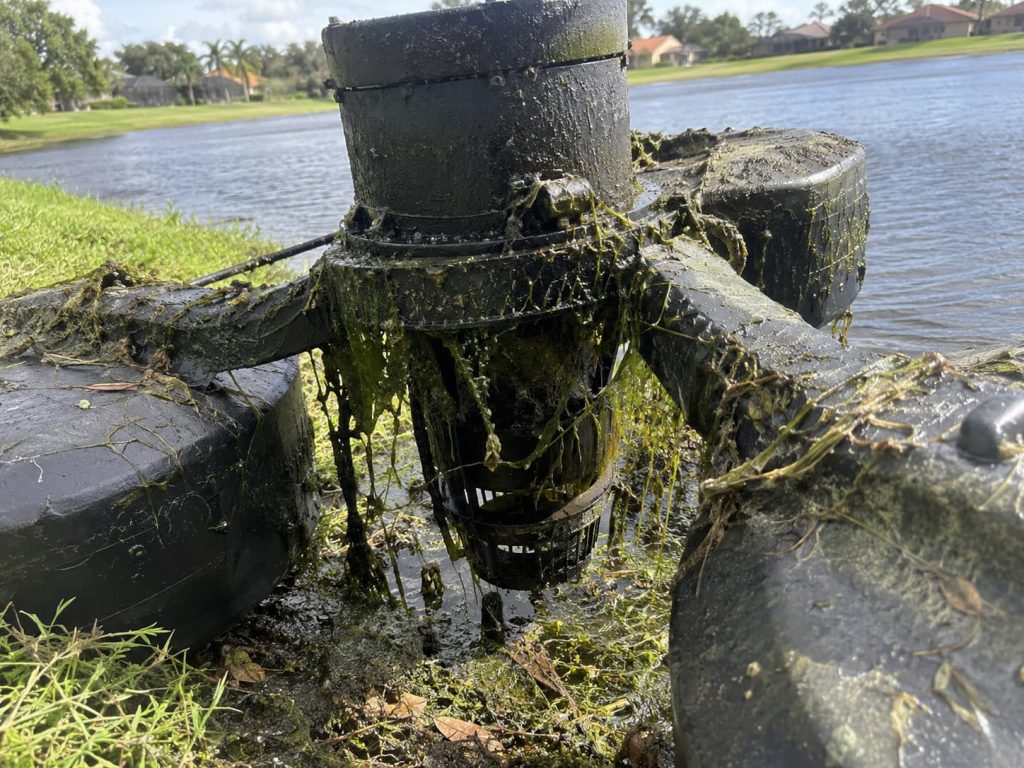
Table of Contents
A floating fountain is a working machine sitting in water around the clock, and like any machine, it lasts far longer with regular maintenance than without it. The difference is stark: a well-maintained fountain runs reliably for many years, while a neglected one fails in predictable, often expensive ways. For an HOA or property manager, understanding the maintenance schedule and the common failure points turns an unpredictable repair expense into a manageable, planned one.
This guide lays out a floating fountain maintenance schedule, explains the most common failure points and why they happen, covers the critical role of seasonal service, and shows how proactive care protects your investment.
A floating fountain needs regular maintenance to prevent failure: clean the intake screen and nozzles monthly, inspect electrical components and the pump periodically, and perform an oil and seals service every two to three years. The most common failure points are clogged intakes, worn pump seals, electrical faults, and debris damage, most of which routine maintenance prevents.
Key Takeaways
- Fountains fail in predictable ways, so most failures are preventable with routine maintenance.
- Clogged intake screens are the most frequent issue, forcing the pump to work harder and overheat.
- The pump seal is the most critical failure point, since a failed seal lets water into the motor and turns a cheap fix into a costly one.
- An oil and seals service every 2 to 3 years is essential for oil-cooled floating fountains.
- Regular maintenance dramatically extends fountain life and prevents expensive emergency repairs.
Why Does a Floating Fountain Need Regular Maintenance?
A floating fountain needs regular maintenance because it operates continuously while submerged in water full of debris, algae, and organic matter. Without upkeep, intake screens clog, seals wear, and electrical components degrade, leading to reduced performance and eventual failure. Routine maintenance prevents the predictable problems that otherwise shorten a fountain’s life.
Understanding that a fountain is a hardworking pump in a harsh environment explains why maintenance is not optional.
A floating fountain works by pulling water in through an intake screen below the float, pushing it through a pump, and spraying it out through a nozzle above. Because the whole system sits in the water, it is constantly exposed to the things that cause wear:
- Debris like leaves, twigs, grass clippings, and fishing line that clog intakes and nozzles.
- Organic matter and biofilm that build up on components.
- Water that constantly tests every seal and electrical connection.
- Sediment that can be pulled into the pump and damage the impeller.
As one lake management provider puts it, fountains fail predictably: pump seals wear out, nozzles clog with biofilm and debris, float intakes get blocked, light housings flood, breakers trip, and bearings seize on units run too long without service. The reassuring flip side is that because these failures are predictable, they are also largely preventable. That is the entire purpose of a maintenance schedule.

What Is a Floating Fountain Maintenance Schedule?
A floating fountain maintenance schedule includes cleaning the intake screen and nozzles monthly, inspecting electrical components and the pump regularly, performing seasonal inspection and commissioning, and completing an oil and seals service every two to three years. Following this schedule prevents most fountain failures and extends the equipment’s lifespan significantly.
A clear schedule turns fountain care from guesswork into a routine, and the intervals are well established across the industry.
Interval | Maintenance task |
|---|---|
Monthly | Clean intake screen and spray nozzles of debris |
Monthly | Inspect for reduced spray height or pattern changes |
Seasonally | Inspect electrical components, cord, and GFCI |
Seasonally | Check pump, impeller, and float condition |
Every 2-3 years | Oil and seals change on oil-cooled motors |
As needed | Clear debris after storms and mowing |
The monthly intake cleaning is the single most important recurring task, because a clogged screen is both the most common problem and the one that causes secondary damage by making the pump strain and overheat. On heavily wooded properties or after storms and mowing, debris accumulates faster, so more frequent screen cleaning may be needed.
The oil and seals service is the maintenance step owners most often skip and most regret skipping. For floating fountains with oil-cooled motors, this service, which replaces worn seals, changes the oil, and inspects internal components to prevent water intrusion, should happen every two to three years depending on the unit size. Skipping it is the most common path to a failed seal and a flooded motor.
What Are the Most Common Fountain Failure Points?
The most common floating fountain failure points are clogged intake screens and nozzles, worn pump seals that let water into the motor, electrical faults that trip the GFCI, capacitor failures, and cable damage from wildlife or abrasion. Most of these develop gradually and are preventable or catchable through routine maintenance.
Knowing the failure points, and which are most serious, helps prioritize maintenance and diagnose problems.
Failure point | Cause | Prevention |
|---|---|---|
Clogged intake or nozzle | Leaves, debris, biofilm buildup | Monthly screen and nozzle cleaning |
Worn pump seal | Age, skipped oil and seals service | Oil and seals change every 2-3 years |
Electrical fault, GFCI trips | Moisture or cord damage | Seasonal electrical inspection |
Failed capacitor | Age, electrical stress | Inspection; pump hums but does not spin |
Cable damage | Wildlife chewing, abrasion on float | Inspect cable routing and condition |
Bearing seizure | Running without winter service too long | Seasonal service and winterization |
A few of these deserve emphasis. The pump seal is the single most consequential failure point, because when a seal fails, water gets into the motor and what could have been an inexpensive seal replacement becomes a full pump or motor replacement costing many times more. This is precisely why the oil and seals service matters so much.
The clogged intake is the most frequent problem, and importantly, many owners misread it as a failing pump. In reality the weak point is usually the clogged screen, not the motor, and a clogged screen makes the pump work harder, generating heat and stress that can eventually cause real damage. A humming pump that moves no water often points to a jammed impeller or a failed capacitor rather than a dead motor.
Your Fountains Need Maintenance
Protect your investments by working with Pond Guru to maintain your floating fountains the right way.
Why Is Seasonal and Winter Service So Important?

Seasonal service is important because it catches wear before it causes failure and prepares the fountain for changing conditions. In climates with freezing winters, pulling the fountain out for the cold months prevents ice damage. Even in warm climates like Florida, seasonal inspection and cleaning keep the fountain running reliably and extend its life.
Seasonal service is where many of the predictable failures are caught early, making it a cornerstone of fountain care.
The value of seasonal service includes:
- Catching wear early. A seasonal inspection finds worn seals, frayed cords, and developing problems before they cause a failure.
- Cleaning accumulated buildup. Removing biofilm, debris, and sediment that have built up over months restores performance.
- Electrical safety checks. Inspecting the cord, connections, and GFCI protects both the equipment and people.
- Commissioning. Confirming the spray pattern, height, and operation are correct after service.
In cold climates, winterization is the single largest determinant of fountain longevity, since most floating fountains are not built to run in standing ice, and ice expansion damages floats, pump components, and electrical seals. In Florida, hard freezes are rare, so fountains typically run year-round, which makes the ongoing monthly and seasonal maintenance even more important since the equipment never gets a rest period. Either way, a scheduled seasonal service is what keeps a fountain reliable over the long term.
How Does Maintenance Protect Your Investment?
Maintenance protects your investment because a floating fountain is expensive to replace, and most failures that lead to replacement are preventable. Routine cleaning, inspection, and seals service cost a fraction of a new pump or fountain, and they extend the equipment’s life dramatically. Proactive maintenance is far cheaper than reactive repair.
Framing maintenance as investment protection makes the financial logic clear for any board or property manager.
The economics strongly favor maintenance:
- A cheap fix versus an expensive one. Catching a worn seal during service is inexpensive, while a seal that fails and floods the motor turns into a major repair or replacement.
- Preventing secondary damage. A clogged intake left unaddressed makes the pump overheat and strain, causing damage that a simple cleaning would have prevented.
- Extending equipment life. Regular maintenance extends fountain life dramatically, delaying the large expense of replacement.
- Avoiding downtime. A maintained fountain keeps running, so the aeration and appearance benefits the community paid for stay in service.
There is also a performance dimension. A fountain is not only an amenity but often an aeration tool, so when it fails, the pond loses both its visual centerpiece and part of its oxygenation and circulation. Keeping it running protects the water quality benefits too, which ties fountain maintenance to the broader health of the pond through aeration and circulation.
Schedule a Site Visit With Pond Guru
A floating fountain is a significant investment that rewards regular care and punishes neglect in predictable, expensive ways. A simple maintenance schedule, monthly cleaning, seasonal inspection, and a seals service every few years, prevents the large majority of failures and keeps the fountain running for years longer than it otherwise would.
Pond Guru works with HOA boards and property managers across Florida to install, maintain, and service floating fountains and aeration systems, handling the routine cleaning, inspection, and seals service that keep equipment running and protect the investment.
Because every fountain and pond is different, the process starts with an on-site evaluation of your equipment and its condition. To keep your fountain running reliably and avoid preventable failures, schedule a site visit with Pond Guru and a specialist will assess your system and recommend a maintenance plan.

Frequently Asked Questions
Clean the intake screen and nozzles monthly, inspect electrical components and the pump seasonally, and perform an oil and seals service every two to three years on oil-cooled motors. On wooded properties or after storms, intake cleaning may be needed more often. This schedule prevents the large majority of fountain failures.
The most common problem is a clogged intake screen, caused by leaves, debris, and biofilm. Many owners mistake this for a failing pump, but the screen is usually the weak point, not the motor. A clogged screen makes the pump work harder and overheat, so regular cleaning is the most important maintenance task.
Common causes include a tripped GFCI or breaker, a clogged intake or nozzle, a jammed impeller, a failed capacitor, or a worn seal that let water into the motor. If the pump hums but does not spray, it often points to a failed capacitor or jammed impeller. A seal failure that floods the motor is the most serious cause.
It is a maintenance service for floating fountains with oil-cooled motors that replaces worn seals, changes the motor oil, and inspects internal components to prevent water intrusion. Performed every two to three years, it is the key step for preventing the seal failures that let water into the motor and cause expensive damage.
Florida rarely sees the hard freezes that require pulling a fountain out for winter, so fountains typically run year-round. However, because the equipment never gets a rest period, ongoing monthly and seasonal maintenance becomes even more important. Regular cleaning, inspection, and the periodic seals service keep a year-round fountain reliable.
Ready to Schedule a Visit ?
Have questions about your pond or lake? Our experts are ready to help you take the next step.
Latest Article
Popular Post

Pennywort: From Lawn Weed to Pond Invader
Table of Contents Most Floridians know pennywort as dollarweed,…
Table of Contents
A floating fountain is a working machine sitting in water around the clock, and like any machine, it lasts far longer with regular maintenance than without it. The difference is stark: a well-maintained fountain runs reliably for many years, while a neglected one fails in predictable, often expensive ways. For an HOA or property manager, understanding the maintenance schedule and the common failure points turns an unpredictable repair expense into a manageable, planned one.
This guide lays out a floating fountain maintenance schedule, explains the most common failure points and why they happen, covers the critical role of seasonal service, and shows how proactive care protects your investment.
A floating fountain needs regular maintenance to prevent failure: clean the intake screen and nozzles monthly, inspect electrical components and the pump periodically, and perform an oil and seals service every two to three years. The most common failure points are clogged intakes, worn pump seals, electrical faults, and debris damage, most of which routine maintenance prevents.
Key Takeaways
- Fountains fail in predictable ways, so most failures are preventable with routine maintenance.
- Clogged intake screens are the most frequent issue, forcing the pump to work harder and overheat.
- The pump seal is the most critical failure point, since a failed seal lets water into the motor and turns a cheap fix into a costly one.
- An oil and seals service every 2 to 3 years is essential for oil-cooled floating fountains.
- Regular maintenance dramatically extends fountain life and prevents expensive emergency repairs.
Why Does a Floating Fountain Need Regular Maintenance?
A floating fountain needs regular maintenance because it operates continuously while submerged in water full of debris, algae, and organic matter. Without upkeep, intake screens clog, seals wear, and electrical components degrade, leading to reduced performance and eventual failure. Routine maintenance prevents the predictable problems that otherwise shorten a fountain’s life.
Understanding that a fountain is a hardworking pump in a harsh environment explains why maintenance is not optional.
A floating fountain works by pulling water in through an intake screen below the float, pushing it through a pump, and spraying it out through a nozzle above. Because the whole system sits in the water, it is constantly exposed to the things that cause wear:
- Debris like leaves, twigs, grass clippings, and fishing line that clog intakes and nozzles.
- Organic matter and biofilm that build up on components.
- Water that constantly tests every seal and electrical connection.
- Sediment that can be pulled into the pump and damage the impeller.
As one lake management provider puts it, fountains fail predictably: pump seals wear out, nozzles clog with biofilm and debris, float intakes get blocked, light housings flood, breakers trip, and bearings seize on units run too long without service. The reassuring flip side is that because these failures are predictable, they are also largely preventable. That is the entire purpose of a maintenance schedule.
What Is a Floating Fountain Maintenance Schedule?
A floating fountain maintenance schedule includes cleaning the intake screen and nozzles monthly, inspecting electrical components and the pump regularly, performing seasonal inspection and commissioning, and completing an oil and seals service every two to three years. Following this schedule prevents most fountain failures and extends the equipment’s lifespan significantly.
A clear schedule turns fountain care from guesswork into a routine, and the intervals are well established across the industry.
Interval | Maintenance task |
|---|---|
Monthly | Clean intake screen and spray nozzles of debris |
Monthly | Inspect for reduced spray height or pattern changes |
Seasonally | Inspect electrical components, cord, and GFCI |
Seasonally | Check pump, impeller, and float condition |
Every 2-3 years | Oil and seals change on oil-cooled motors |
As needed | Clear debris after storms and mowing |
The monthly intake cleaning is the single most important recurring task, because a clogged screen is both the most common problem and the one that causes secondary damage by making the pump strain and overheat. On heavily wooded properties or after storms and mowing, debris accumulates faster, so more frequent screen cleaning may be needed.
The oil and seals service is the maintenance step owners most often skip and most regret skipping. For floating fountains with oil-cooled motors, this service, which replaces worn seals, changes the oil, and inspects internal components to prevent water intrusion, should happen every two to three years depending on the unit size. Skipping it is the most common path to a failed seal and a flooded motor.
What Are the Most Common Fountain Failure Points?
The most common floating fountain failure points are clogged intake screens and nozzles, worn pump seals that let water into the motor, electrical faults that trip the GFCI, capacitor failures, and cable damage from wildlife or abrasion. Most of these develop gradually and are preventable or catchable through routine maintenance.
Knowing the failure points, and which are most serious, helps prioritize maintenance and diagnose problems.
Clogged intake or nozzle: Caused by leaves, debris, and biofilm buildup. Prevented by monthly screen and nozzle cleaning.
Worn pump seal: Caused by age and skipped oil and seals service. Prevented by an oil and seals change every 2 to 3 years.
Electrical fault (GFCI trips): Caused by moisture or cord damage. Prevented by seasonal electrical inspection.
Failed capacitor: Caused by age and electrical stress. The sign is a pump that hums but does not spin.
Cable damage: Caused by wildlife chewing or abrasion on the float. Prevented by inspecting cable routing and condition.
Bearing seizure: Caused by running without service too long. Prevented by seasonal service and winterization.
A few of these deserve emphasis. The pump seal is the single most consequential failure point, because when a seal fails, water gets into the motor and what could have been an inexpensive seal replacement becomes a full pump or motor replacement costing many times more. This is precisely why the oil and seals service matters so much.
The clogged intake is the most frequent problem, and importantly, many owners misread it as a failing pump. In reality the weak point is usually the clogged screen, not the motor, and a clogged screen makes the pump work harder, generating heat and stress that can eventually cause real damage. A humming pump that moves no water often points to a jammed impeller or a failed capacitor rather than a dead motor.
Your Fountains Need Maintenance
Protect your investments by working with Pond Guru to maintain your floating fountains the right way.
Why Is Seasonal and Winter Service So Important?

Seasonal service is important because it catches wear before it causes failure and prepares the fountain for changing conditions. In climates with freezing winters, pulling the fountain out for the cold months prevents ice damage. Even in warm climates like Florida, seasonal inspection and cleaning keep the fountain running reliably and extend its life.
Seasonal service is where many of the predictable failures are caught early, making it a cornerstone of fountain care.
The value of seasonal service includes:
- Catching wear early. A seasonal inspection finds worn seals, frayed cords, and developing problems before they cause a failure.
- Cleaning accumulated buildup. Removing biofilm, debris, and sediment that have built up over months restores performance.
- Electrical safety checks. Inspecting the cord, connections, and GFCI protects both the equipment and people.
- Commissioning. Confirming the spray pattern, height, and operation are correct after service.
In cold climates, winterization is the single largest determinant of fountain longevity, since most floating fountains are not built to run in standing ice, and ice expansion damages floats, pump components, and electrical seals. In Florida, hard freezes are rare, so fountains typically run year-round, which makes the ongoing monthly and seasonal maintenance even more important since the equipment never gets a rest period. Either way, a scheduled seasonal service is what keeps a fountain reliable over the long term.
How Does Maintenance Protect Your Investment?
Maintenance protects your investment because a floating fountain is expensive to replace, and most failures that lead to replacement are preventable. Routine cleaning, inspection, and seals service cost a fraction of a new pump or fountain, and they extend the equipment’s life dramatically. Proactive maintenance is far cheaper than reactive repair.
Framing maintenance as investment protection makes the financial logic clear for any board or property manager.
The economics strongly favor maintenance:
- A cheap fix versus an expensive one. Catching a worn seal during service is inexpensive, while a seal that fails and floods the motor turns into a major repair or replacement.
- Preventing secondary damage. A clogged intake left unaddressed makes the pump overheat and strain, causing damage that a simple cleaning would have prevented.
- Extending equipment life. Regular maintenance extends fountain life dramatically, delaying the large expense of replacement.
- Avoiding downtime. A maintained fountain keeps running, so the aeration and appearance benefits the community paid for stay in service.
There is also a performance dimension. A fountain is not only an amenity but often an aeration tool, so when it fails, the pond loses both its visual centerpiece and part of its oxygenation and circulation. Keeping it running protects the water quality benefits too, which ties fountain maintenance to the broader health of the pond through aeration and circulation.
Schedule a Site Visit With Pond Guru

A floating fountain is a significant investment that rewards regular care and punishes neglect in predictable, expensive ways. A simple maintenance schedule, monthly cleaning, seasonal inspection, and a seals service every few years, prevents the large majority of failures and keeps the fountain running for years longer than it otherwise would.
Pond Guru works with HOA boards and property managers across Florida to install, maintain, and service floating fountains and aeration systems, handling the routine cleaning, inspection, and seals service that keep equipment running and protect the investment.
Because every fountain and pond is different, the process starts with an on-site evaluation of your equipment and its condition. To keep your fountain running reliably and avoid preventable failures, schedule a site visit with Pond Guru and a specialist will assess your system and recommend a maintenance plan.
Frequently Asked Questions
Clean the intake screen and nozzles monthly, inspect electrical components and the pump seasonally, and perform an oil and seals service every two to three years on oil-cooled motors. On wooded properties or after storms, intake cleaning may be needed more often. This schedule prevents the large majority of fountain failures.
The most common problem is a clogged intake screen, caused by leaves, debris, and biofilm. Many owners mistake this for a failing pump, but the screen is usually the weak point, not the motor. A clogged screen makes the pump work harder and overheat, so regular cleaning is the most important maintenance task.
Common causes include a tripped GFCI or breaker, a clogged intake or nozzle, a jammed impeller, a failed capacitor, or a worn seal that let water into the motor. If the pump hums but does not spray, it often points to a failed capacitor or jammed impeller. A seal failure that floods the motor is the most serious cause.
It is a maintenance service for floating fountains with oil-cooled motors that replaces worn seals, changes the motor oil, and inspects internal components to prevent water intrusion. Performed every two to three years, it is the key step for preventing the seal failures that let water into the motor and cause expensive damage.
Florida rarely sees the hard freezes that require pulling a fountain out for winter, so fountains typically run year-round. However, because the equipment never gets a rest period, ongoing monthly and seasonal maintenance becomes even more important. Regular cleaning, inspection, and the periodic seals service keep a year-round fountain reliable.
Ready to Schedule a Visit ?
Have questions about your pond or lake? Our experts are ready to help you take the next step.
Latest Article
Popular Post
Pennywort: From Lawn Weed to Pond Invader
Table of Contents Most Floridians know pennywort as dollarweed,…