

Solar Pond Aerators: Do They Work in Florida?
Solar Pond Aerators: Do They Work in Florida?

Table of Contents
Aeration is one of the best things you can do for a pond, but running power to a remote waterbody can be expensive or impossible. That is where solar pond aerators come in, using the sun to drive the same oxygen and circulation benefits without a trench or an electric bill. In a state as sunny as Florida, they are an appealing option, but they come with trade-offs worth understanding before you install one.
This guide explains how solar pond aerators work, whether they perform well in Florida, the difference between direct and battery systems, their pros and cons, and where they fit best.
Yes, solar pond aerators work in Florida, where abundant sunshine makes solar aeration practical. A solar pond aerator uses solar panels to power an air pump or aerator, adding oxygen and circulation without grid electricity. Direct systems run only in sunlight, while battery-backed systems store power to run at night or on cloudy days.
Key Takeaways
- Solar pond aerators use the sun to power aeration, avoiding the need for grid electricity and trenching.
- They work well in sunny Florida, where abundant sunshine suits solar power.
- There are two main types: direct systems that run only in sunlight, and battery-backed systems that store power.
- The big advantage is location, making aeration possible for remote ponds far from an electrical source.
- The main limitation is timing, since direct systems stop at night unless a battery bank is included.
How Does a Solar Pond Aerator Work?
A solar pond aerator uses solar panels to convert sunlight into electricity that powers an air compressor or aerator. In a diffused system, the compressor pushes air through tubing to diffusers on the pond bottom, releasing bubbles that oxygenate and circulate the water. It delivers the same benefits as electric aeration, powered by the sun.
The core function is identical to conventional aeration; only the power source changes.
According to aeration industry guidance, a solar pond aeration system works like a standard system but draws its power from solar panels instead of the grid. The typical setup includes:
- Solar panels. Convert sunlight into electricity to run the system.
- An air compressor or pump. Powered by the panels, it pushes air into the pond.
- Diffusers or an aerator. Bottom diffusers release fine bubbles that rise, mixing the water and adding oxygen, or a surface unit agitates the water.
- Optional battery bank. Stores solar energy so the system can run when the sun is not shining.
The oxygen and circulation this provides deliver the familiar benefits of aeration: healthier fish, reduced algae and muck, and less stagnation. Solar simply makes those benefits available where running power is impractical. It complements the full range of pond aeration and fountain options, including solar aeration systems.

Do Solar Pond Aerators Work Well in Florida?
Yes, solar pond aerators work well in Florida because the state’s abundant year-round sunshine is ideal for solar power. Florida’s climate provides the consistent sunlight solar aeration depends on, making it one of the better regions in the country for these systems. The main consideration is planning for cloudy periods and nighttime operation.
Florida’s sunshine is genuinely one of the strongest arguments for solar aeration here.
Why Florida suits solar aeration:
- Abundant sunshine. Florida’s high number of sunny days provides the solar energy these systems need.
- Year-round operation. The mild climate means solar aeration can run productively all year, matching the year-round growing season that keeps Florida ponds active.
- Remote waterbodies. Many Florida ponds, especially on large properties, golf courses, and preserves, sit far from electrical hookups, exactly where solar shines.
The considerations that remain are about timing rather than feasibility. Even in sunny Florida, a direct solar system stops when the sun goes down, and demand for oxygen in a pond is often highest overnight and in warm weather. Cloudy stretches and summer storms also reduce output temporarily. These are the reasons the choice between a direct and a battery-backed system matters, covered next.
Get Aeration Without Direct Power
Aeration is crucial for the health of your pond. Don’t let power availability be a limiting factor, and call Pond Guru for a solar aerator quote!
What Is the Difference Between Direct and Battery Solar Aerators?
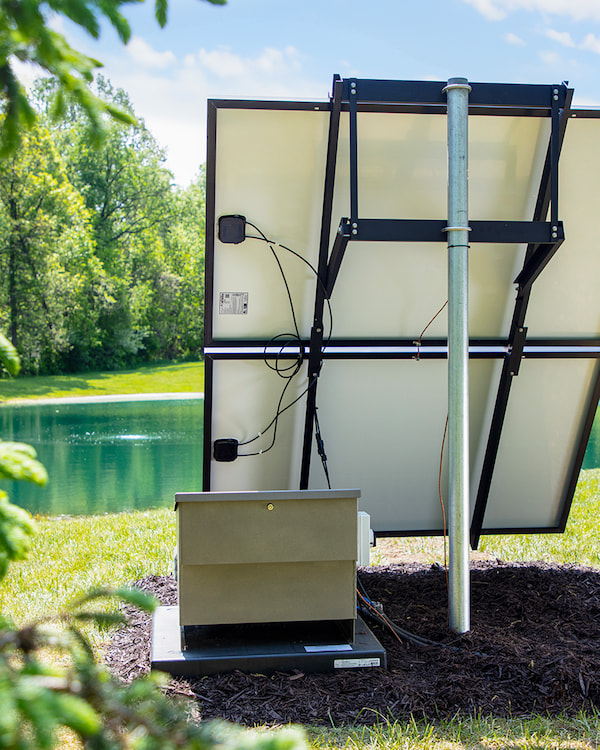
The difference is when they run. A direct solar aerator operates only while the sun is shining, since it runs straight off the panels. A battery-backed solar aerator stores solar energy in batteries, allowing it to keep running at night and during cloudy periods. Battery systems cost more but provide continuous aeration.
Choosing between them is the central decision in solar aeration, because it determines whether the pond gets oxygen around the clock.
Feature | Direct solar | Battery-backed solar |
|---|---|---|
Runs at night | No | Yes |
Runs on cloudy days | Reduced or no | Yes, from stored power |
Upfront cost | Lower | Higher |
Continuous aeration | No | Yes |
Best for | Daytime supplemental aeration | Ponds needing steady oxygen |
A direct system is simpler and less expensive, running the aerator during daylight hours. This can be enough for supplemental circulation, but it leaves the pond without aeration overnight, which matters because dissolved oxygen naturally drops at night when plants and algae consume oxygen instead of producing it.
A battery-backed system stores solar energy during the day and runs the aerator through the night and during cloudy weather, providing the continuous aeration that best protects fish and water quality. It costs more upfront but delivers the steady oxygen that a pond often needs most when the sun is down. The right choice depends on the pond, its fish load, and its goals.
What Are the Pros and Cons of Solar Pond Aerators?
Solar pond aerators offer major advantages in remote locations, no electric bills, and clean operation, but they also have drawbacks, including higher upfront cost, dependence on sunlight, and capacity limits. They are an excellent fit for ponds without power access, while grid-powered aeration may suit ponds where electricity is readily available.
Weighing the trade-offs helps determine whether solar is the right choice for a given pond.
Pros:
- No grid power needed. Ideal for remote ponds far from an electrical source, avoiding costly trenching and wiring.
- No electricity cost. Once installed, the sun runs it, eliminating ongoing power bills.
- Clean and quiet. Solar operation produces no emissions and little noise.
- Well suited to Florida. The state’s sunshine makes solar a practical power source.
Cons:
- Higher upfront cost. Especially with a battery bank, initial cost is higher than a comparable electric unit.
- Sunlight dependent. Direct systems stop at night, and output drops on cloudy days.
- Capacity limits. Solar systems may aerate smaller areas or volumes than large grid-powered systems.
- Battery maintenance. Battery-backed systems add components that need eventual replacement.
The bottom line is that solar aeration excels where running power is impractical and is a strong fit for Florida’s climate, while the choice of system and its sizing should match the specific pond. A professional assessment ensures the aeration actually meets the pond’s oxygen needs.

When Should You Choose Solar Aeration?
Choose solar aeration when a pond is far from grid power, when you want to avoid trenching and electric bills, or when clean, off-grid operation is a priority. For ponds with easy access to electricity, grid-powered aeration may be simpler and offer more capacity. The pond’s location, size, and oxygen needs guide the decision.
Matching the power source to the situation is what makes aeration both effective and economical.
Solar aeration is often the right choice when:
- The pond is remote. No nearby electrical source, making trenching costly or impossible.
- Avoiding electric costs matters. Off-grid operation eliminates ongoing power bills.
- Clean operation is valued. No emissions and quiet running suit sensitive or natural settings.
Grid-powered aeration may be preferable when:
- Power is readily available. An existing electrical source nearby makes conventional aeration simple.
- Maximum capacity is needed. Large or heavily stocked waterbodies may need the steady, high output that grid power provides.
Often the best result comes from matching the system, whether solar or electric, direct or battery, to the pond’s real oxygen demand and layout. Because under-sized aeration fails to deliver the benefits, professional assessment and lake and pond management ensure the system fits the waterbody.
Schedule a Site Visit With Pond Guru
Solar pond aerators bring the well-known benefits of aeration to ponds where running power would be costly or impossible, and Florida’s abundant sunshine makes them a genuinely practical option. The keys are choosing between a direct and a battery-backed system and sizing it to the pond’s real oxygen needs, so the aeration actually delivers.
Pond Guru works with HOA boards, property managers, and homeowners across Florida to install and maintain aeration and fountain systems, including solar options, matched to each pond’s location and needs.
Because the right aeration depends on the pond’s size, layout, and access to power, the process starts with an on-site evaluation. To find out whether solar aeration fits your pond, schedule a site visit with Pond Guru and a specialist will assess conditions and recommend a plan.

Frequently Asked Questions
Yes. Solar pond aerators use solar panels to power an air pump or aerator, delivering the same oxygen and circulation benefits as electric aeration without grid power. They work especially well in sunny climates like Florida. Direct systems run only in sunlight, while battery-backed systems store power to run at night and on cloudy days.
Only if they have a battery bank. A direct solar aerator runs straight off the panels, so it stops when the sun goes down. A battery-backed system stores solar energy during the day and runs the aerator through the night and during cloudy periods, providing the continuous aeration that best protects fish and water quality.
Yes. Florida's abundant year-round sunshine makes it one of the better regions for solar aeration. The mild climate allows productive operation all year, and solar is ideal for the many Florida ponds that sit far from electrical hookups. Planning for nighttime and cloudy-day operation with a battery system addresses the main limitation.
It depends on the system's capacity, which varies by model and whether it uses surface or diffused bottom aeration. Solar systems may aerate smaller areas than large grid-powered units, so sizing to the specific pond is important. A professional assessment matches the system's output to the pond's volume and oxygen demand.
For remote ponds without easy power access, solar aeration is often well worth it, since it avoids costly trenching and eliminates ongoing electric bills. Upfront cost is higher, especially with batteries, but operating cost is minimal. For ponds with readily available electricity, grid-powered aeration may be simpler and more economical.
Ready to Schedule a Visit ?
Have questions about your pond or lake? Our experts are ready to help you take the next step.
Latest Article
Popular Post

Solar Pond Aerators: Do They Work in Florida?
Table of Contents Aeration is one of the best…
Table of Contents
Aeration is one of the best things you can do for a pond, but running power to a remote waterbody can be expensive or impossible. That is where solar pond aerators come in, using the sun to drive the same oxygen and circulation benefits without a trench or an electric bill. In a state as sunny as Florida, they are an appealing option, but they come with trade-offs worth understanding before you install one.
This guide explains how solar pond aerators work, whether they perform well in Florida, the difference between direct and battery systems, their pros and cons, and where they fit best.
Yes, solar pond aerators work in Florida, where abundant sunshine makes solar aeration practical. A solar pond aerator uses solar panels to power an air pump or aerator, adding oxygen and circulation without grid electricity. Direct systems run only in sunlight, while battery-backed systems store power to run at night or on cloudy days.
Key Takeaways
- Solar pond aerators use the sun to power aeration, avoiding the need for grid electricity and trenching.
- They work well in sunny Florida, where abundant sunshine suits solar power.
- There are two main types: direct systems that run only in sunlight, and battery-backed systems that store power.
- The big advantage is location, making aeration possible for remote ponds far from an electrical source.
- The main limitation is timing, since direct systems stop at night unless a battery bank is included.
How Does a Solar Pond Aerator Work?
A solar pond aerator uses solar panels to convert sunlight into electricity that powers an air compressor or aerator. In a diffused system, the compressor pushes air through tubing to diffusers on the pond bottom, releasing bubbles that oxygenate and circulate the water. It delivers the same benefits as electric aeration, powered by the sun.
The core function is identical to conventional aeration; only the power source changes.
According to aeration industry guidance, a solar pond aeration system works like a standard system but draws its power from solar panels instead of the grid. The typical setup includes:
- Solar panels. Convert sunlight into electricity to run the system.
- An air compressor or pump. Powered by the panels, it pushes air into the pond.
- Diffusers or an aerator. Bottom diffusers release fine bubbles that rise, mixing the water and adding oxygen, or a surface unit agitates the water.
- Optional battery bank. Stores solar energy so the system can run when the sun is not shining.
The oxygen and circulation this provides deliver the familiar benefits of aeration: healthier fish, reduced algae and muck, and less stagnation. Solar simply makes those benefits available where running power is impractical. It complements the full range of pond aeration and fountain options, including solar aeration systems.
Do Solar Pond Aerators Work Well in Florida?
Yes, solar pond aerators work well in Florida because the state’s abundant year-round sunshine is ideal for solar power. Florida’s climate provides the consistent sunlight solar aeration depends on, making it one of the better regions in the country for these systems. The main consideration is planning for cloudy periods and nighttime operation.
Florida’s sunshine is genuinely one of the strongest arguments for solar aeration here.
Why Florida suits solar aeration:
- Abundant sunshine. Florida’s high number of sunny days provides the solar energy these systems need.
- Year-round operation. The mild climate means solar aeration can run productively all year, matching the year-round growing season that keeps Florida ponds active.
- Remote waterbodies. Many Florida ponds, especially on large properties, golf courses, and preserves, sit far from electrical hookups, exactly where solar shines.
The considerations that remain are about timing rather than feasibility. Even in sunny Florida, a direct solar system stops when the sun goes down, and demand for oxygen in a pond is often highest overnight and in warm weather. Cloudy stretches and summer storms also reduce output temporarily. These are the reasons the choice between a direct and a battery-backed system matters, covered next.
Get Aeration Without Direct Power
Aeration is crucial for the health of your pond. Don’t let power availability be a limiting factor, and call Pond Guru for a solar aerator quote!
What Is the Difference Between Direct and Battery Solar Aerators?
The difference is when they run. A direct solar aerator operates only while the sun is shining, since it runs straight off the panels. A battery-backed solar aerator stores solar energy in batteries, allowing it to keep running at night and during cloudy periods. Battery systems cost more but provide continuous aeration.
Choosing between them is the central decision in solar aeration, because it determines whether the pond gets oxygen around the clock.
Feature | Direct solar | Battery-backed solar |
|---|---|---|
Runs at night | No | Yes |
Runs on cloudy days | Reduced or no | Yes, from stored power |
Upfront cost | Lower | Higher |
Continuous aeration | No | Yes |
Best for | Daytime supplemental aeration | Ponds needing steady oxygen |
A direct system is simpler and less expensive, running the aerator during daylight hours. This can be enough for supplemental circulation, but it leaves the pond without aeration overnight, which matters because dissolved oxygen naturally drops at night when plants and algae consume oxygen instead of producing it.
A battery-backed system stores solar energy during the day and runs the aerator through the night and during cloudy weather, providing the continuous aeration that best protects fish and water quality. It costs more upfront but delivers the steady oxygen that a pond often needs most when the sun is down. The right choice depends on the pond, its fish load, and its goals.
What Are the Pros and Cons of Solar Pond Aerators?
Solar pond aerators offer major advantages in remote locations, no electric bills, and clean operation, but they also have drawbacks, including higher upfront cost, dependence on sunlight, and capacity limits. They are an excellent fit for ponds without power access, while grid-powered aeration may suit ponds where electricity is readily available.
Weighing the trade-offs helps determine whether solar is the right choice for a given pond.
Pros:
- No grid power needed. Ideal for remote ponds far from an electrical source, avoiding costly trenching and wiring.
- No electricity cost. Once installed, the sun runs it, eliminating ongoing power bills.
- Clean and quiet. Solar operation produces no emissions and little noise.
- Well suited to Florida. The state’s sunshine makes solar a practical power source.
Cons:
- Higher upfront cost. Especially with a battery bank, initial cost is higher than a comparable electric unit.
- Sunlight dependent. Direct systems stop at night, and output drops on cloudy days.
- Capacity limits. Solar systems may aerate smaller areas or volumes than large grid-powered systems.
- Battery maintenance. Battery-backed systems add components that need eventual replacement.
The bottom line is that solar aeration excels where running power is impractical and is a strong fit for Florida’s climate, while the choice of system and its sizing should match the specific pond. A professional assessment ensures the aeration actually meets the pond’s oxygen needs.
When Should You Choose Solar Aeration?
Choose solar aeration when a pond is far from grid power, when you want to avoid trenching and electric bills, or when clean, off-grid operation is a priority. For ponds with easy access to electricity, grid-powered aeration may be simpler and offer more capacity. The pond’s location, size, and oxygen needs guide the decision.
Matching the power source to the situation is what makes aeration both effective and economical.
Solar aeration is often the right choice when:
- The pond is remote. No nearby electrical source, making trenching costly or impossible.
- Avoiding electric costs matters. Off-grid operation eliminates ongoing power bills.
- Clean operation is valued. No emissions and quiet running suit sensitive or natural settings.
Grid-powered aeration may be preferable when:
- Power is readily available. An existing electrical source nearby makes conventional aeration simple.
- Maximum capacity is needed. Large or heavily stocked waterbodies may need the steady, high output that grid power provides.
Often the best result comes from matching the system, whether solar or electric, direct or battery, to the pond’s real oxygen demand and layout. Because under-sized aeration fails to deliver the benefits, professional assessment and lake and pond management ensure the system fits the waterbody.
Schedule a Site Visit With Pond Guru

Solar pond aerators bring the well-known benefits of aeration to ponds where running power would be costly or impossible, and Florida’s abundant sunshine makes them a genuinely practical option. The keys are choosing between a direct and a battery-backed system and sizing it to the pond’s real oxygen needs, so the aeration actually delivers.
Pond Guru works with HOA boards, property managers, and homeowners across Florida to install and maintain aeration and fountain systems, including solar options, matched to each pond’s location and needs.
Because the right aeration depends on the pond’s size, layout, and access to power, the process starts with an on-site evaluation. To find out whether solar aeration fits your pond, schedule a site visit with Pond Guru and a specialist will assess conditions and recommend a plan.
Frequently Asked Questions
Yes. Solar pond aerators use solar panels to power an air pump or aerator, delivering the same oxygen and circulation benefits as electric aeration without grid power. They work especially well in sunny climates like Florida. Direct systems run only in sunlight, while battery-backed systems store power to run at night and on cloudy days.
Only if they have a battery bank. A direct solar aerator runs straight off the panels, so it stops when the sun goes down. A battery-backed system stores solar energy during the day and runs the aerator through the night and during cloudy periods, providing the continuous aeration that best protects fish and water quality.
Yes. Florida's abundant year-round sunshine makes it one of the better regions for solar aeration. The mild climate allows productive operation all year, and solar is ideal for the many Florida ponds that sit far from electrical hookups. Planning for nighttime and cloudy-day operation with a battery system addresses the main limitation.
It depends on the system's capacity, which varies by model and whether it uses surface or diffused bottom aeration. Solar systems may aerate smaller areas than large grid-powered units, so sizing to the specific pond is important. A professional assessment matches the system's output to the pond's volume and oxygen demand.
For remote ponds without easy power access, solar aeration is often well worth it, since it avoids costly trenching and eliminates ongoing electric bills. Upfront cost is higher, especially with batteries, but operating cost is minimal. For ponds with readily available electricity, grid-powered aeration may be simpler and more economical.
Ready to Schedule a Visit ?
Have questions about your pond or lake? Our experts are ready to help you take the next step.
Latest Article
Popular Post
Solar Pond Aerators: Do They Work in Florida?
Table of Contents Aeration is one of the best…