

Top 5 Common Large Pond Frog Types in Florida
Top 5 Common Large Pond Frog Types in Florida
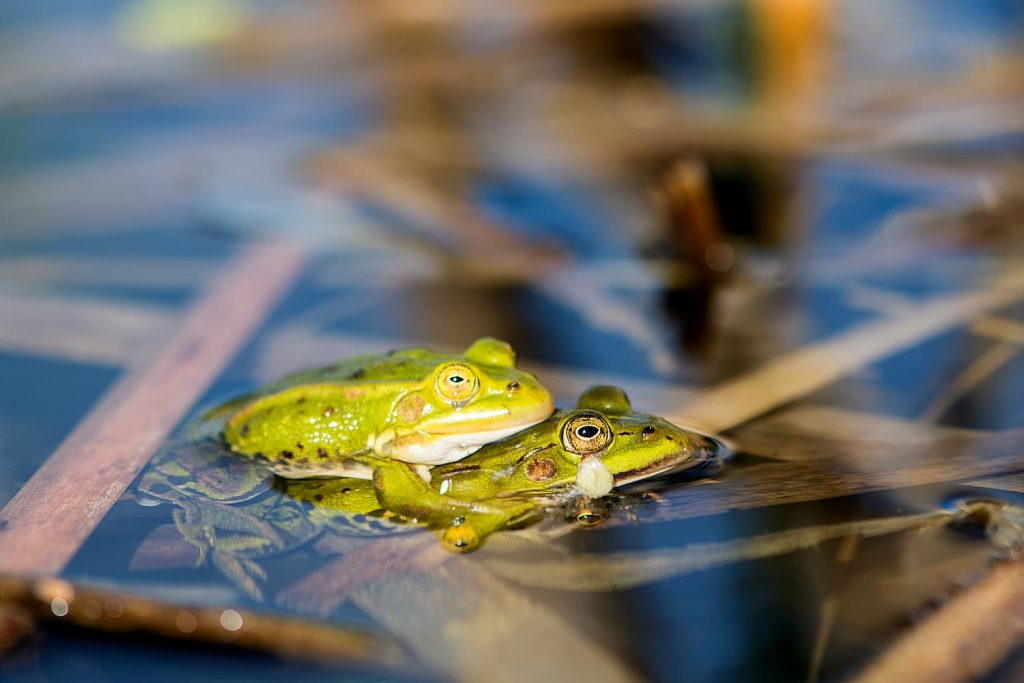
Florida ponds attract a wide range of frogs, but only a handful are large enough to become regular, noticeable wildlife around the shoreline. These are the frogs most owners hear calling at night, see resting at the water’s edge, or spot slipping back into the pond when someone walks up too quickly. Florida species lists and regional frog call guides consistently include bullfrogs, pig frogs, river frogs, southern leopard frogs, and barking treefrogs among the larger freshwater frogs pond owners are most likely to encounter.
For private homeowners, HOA boards, golf course superintendents, and property managers, learning these large pond frog types is useful for more than identification. Larger frogs can indicate healthy shoreline habitat, but they can also affect fish fry, insect pressure, and pond edge balance. This guide focuses on the five large frog types most commonly noticed around Florida ponds and what their presence may mean for the water.
The Top 5 Pond Frogs
1. American bullfrog
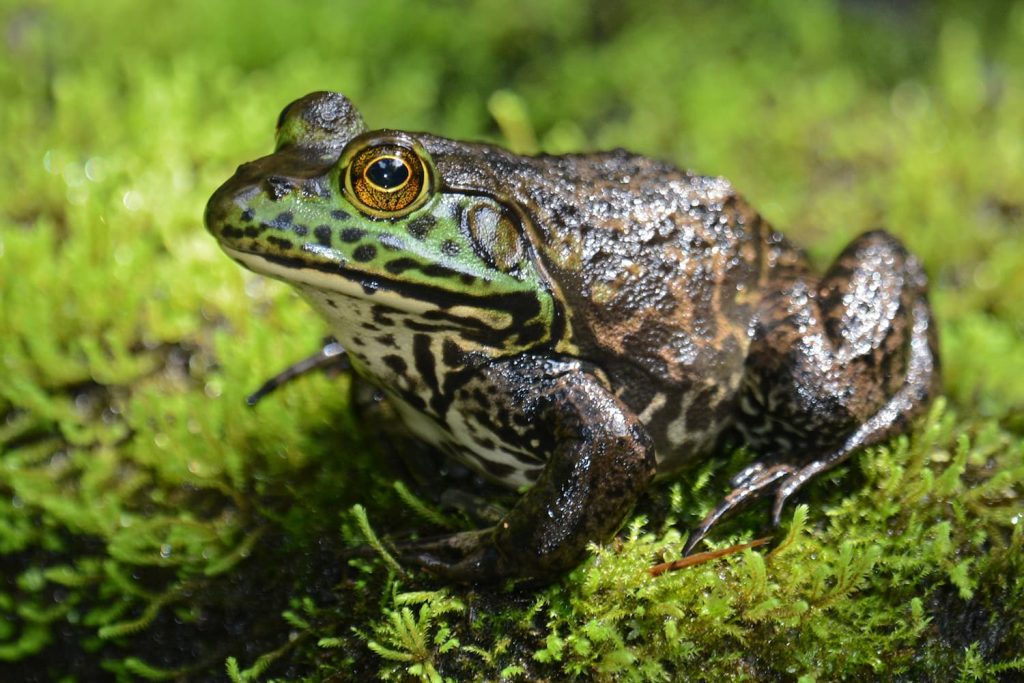
The American bullfrog is the largest common pond frog in Florida. Regional Florida frog guides describe it as the state’s largest frog, reaching about 8 inches in large adults and favoring permanent bodies of water such as ponds, lakes, wetlands, and slow edges. When owners talk about the biggest bull frog on the shoreline, this is usually the species they mean.
Bullfrogs are heavy bodied, usually olive to greenish brown, and strongly tied to deeper, more permanent water. Their size alone makes them one of the most visible large pond frog types in the state. They are also one of the frogs most likely to be heard before they are seen.
2. Pig frog
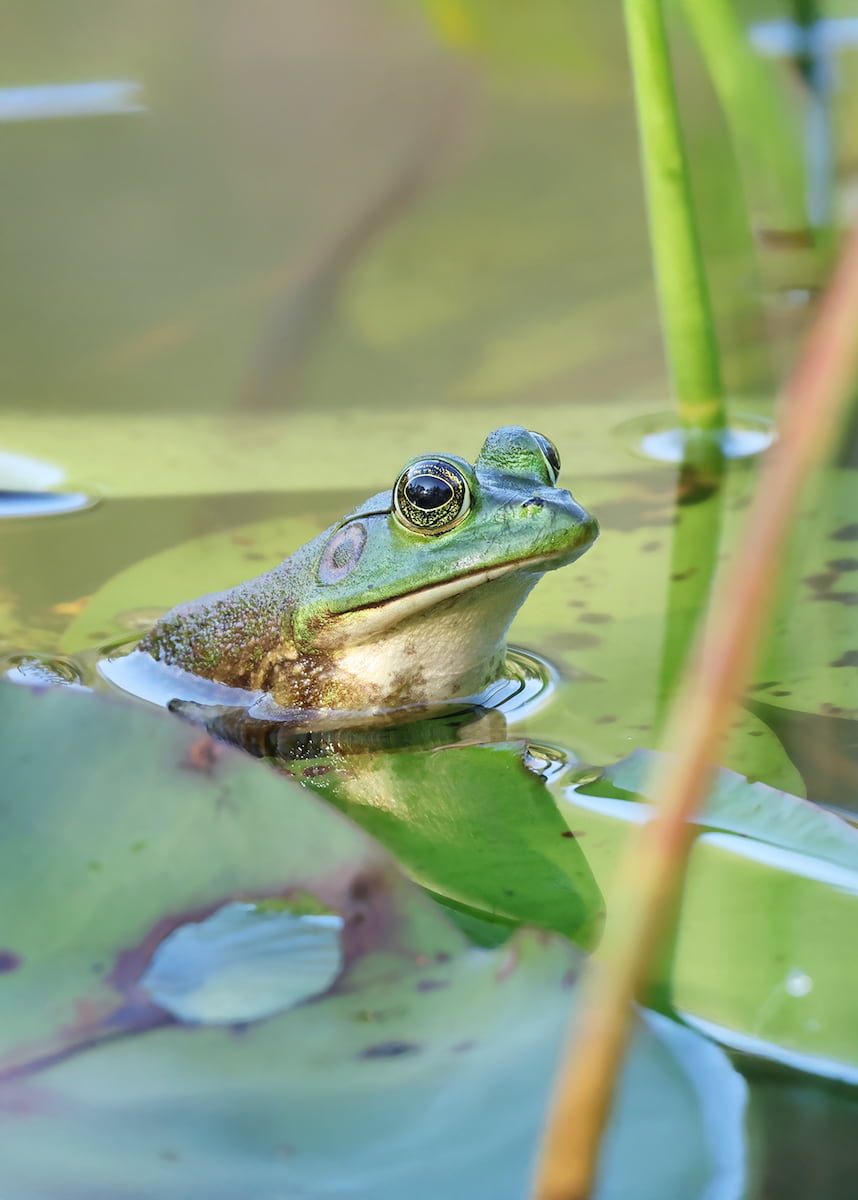
Pig frogs are another large, highly aquatic Florida species. Regional frog call materials describe them as frogs of standing water, marshes, ponds, lakes, and swamps, usually under 6 inches but still large enough to stand out around vegetated shorelines.
They are often confused with bullfrogs because both stay close to water, both can grow fairly large, and both are common around Florida ponds. Pig frogs are especially associated with quiet water and heavier shoreline vegetation.
3. River frog
The river frog is one of the more impressive large frogs in Florida, even though it is not always seen as often as it is heard. Florida Museum species lists include it among the state’s true frogs, and field references place it among the larger freshwater frogs found near slow rivers, swamps, and pond-like wetland edges.
River frogs tend to be darker and more patterned than pig frogs or bullfrogs. In a pond setting, they are often connected with heavier cover, deeper edge habitat, and quieter shoreline zones.
4. Southern leopard frog
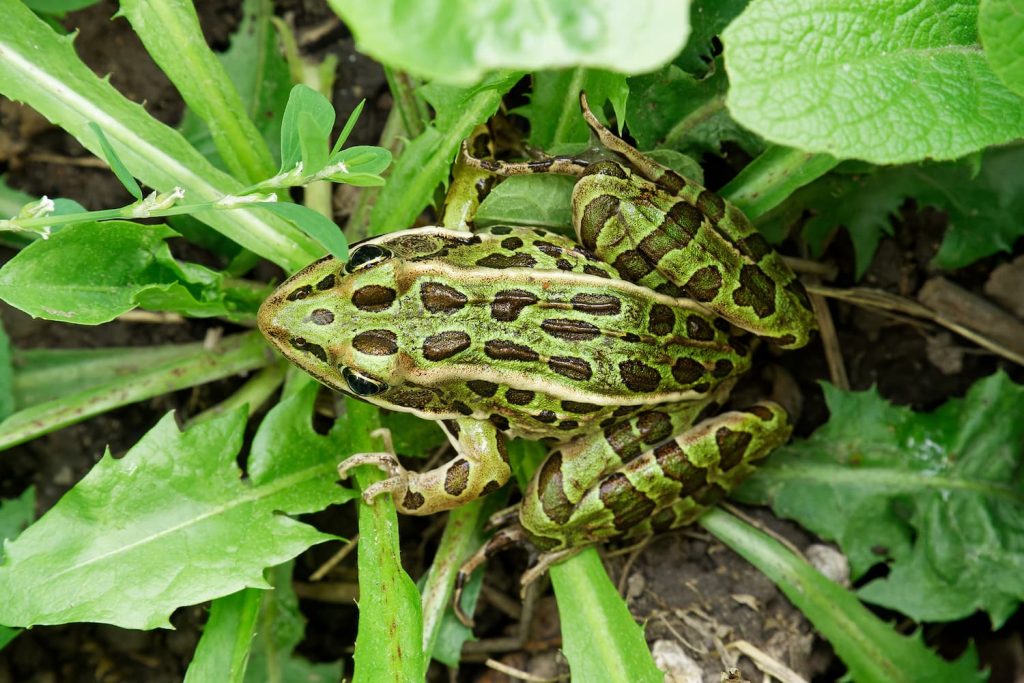
The southern leopard frog is one of the most adaptable frogs around developed Florida water. Florida Museum notes that it uses shallow freshwater habitat and can also thrive in canals, ditches, and man-made ponds, which makes it one of the most familiar large or medium-large frogs around neighborhoods and managed properties.
It is smaller than a bullfrog or pig frog, but still large enough to be one of the most noticeable frogs along a pond edge. Its spotted pattern also makes it one of the easier species to identify, especially for owners trying to distinguish a common frog from a larger bullfrog.
5. Barking tree frog
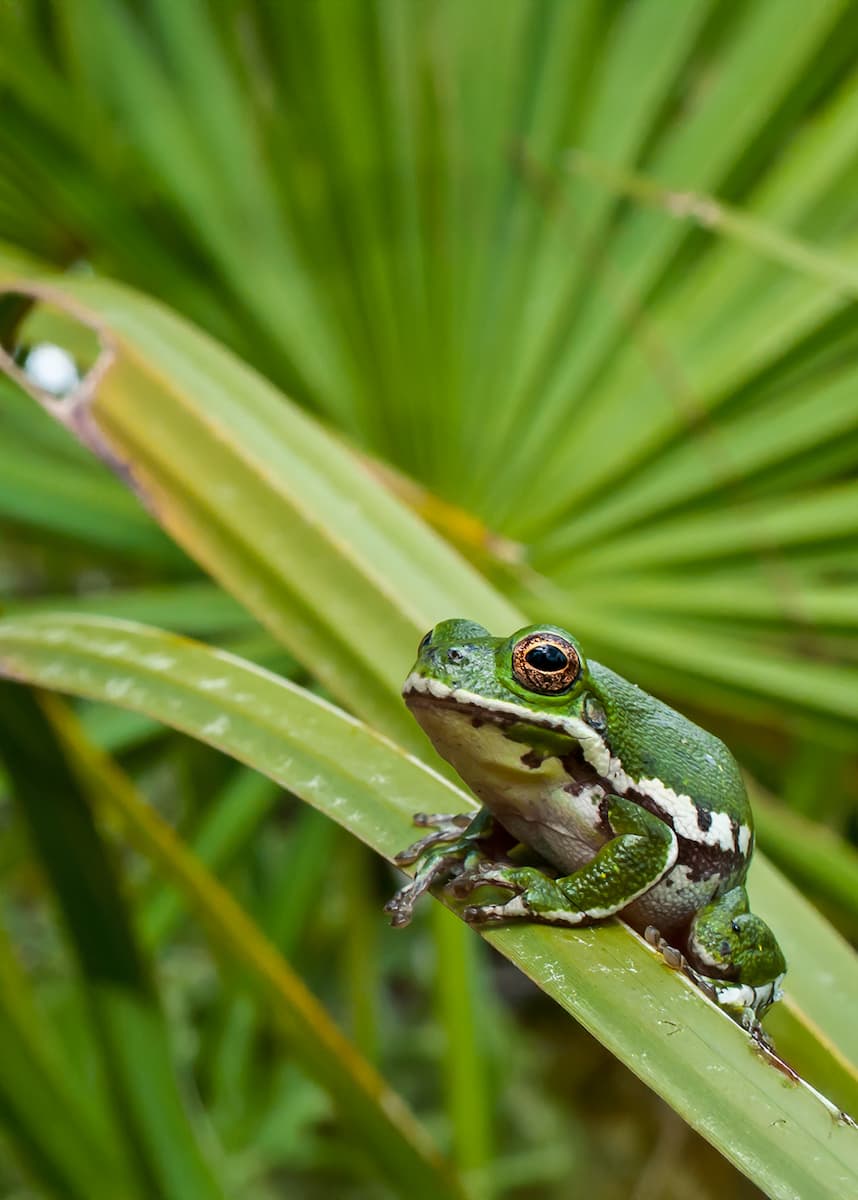
The barking treefrog completes the list because it is the largest native treefrog in Florida. Florida Museum describes it as a plump species with a loud barking call, found in much of the state near swampy woods, pinelands, and breeding water.
It is not as tied to open water as bullfrogs or pig frogs, but it is still one of the larger frogs pond owners hear around wet pond margins and nearby vegetation. For properties with heavy shoreline planting or wooded pond edges, it is often part of the same nighttime frog activity.
Size and Color of Pond Frogs in Florida
These large pond frog types vary in both body shape and frog colors, which helps with field identification.
A quick visual breakdown helps:
- bullfrogs are usually olive, greenish brown, or darker brown
- pig frogs are often olive to brown and strongly aquatic
- river frogs tend to show heavier mottling and darker patterning
- southern leopard frogs have distinct spots and lighter ridges
- barking treefrogs can vary from green to brown or gray, depending on light and background
These color shifts are one reason frogs near ponds are often misidentified. A quick look at body size, pattern, and habitat usually gives a clearer answer than color alone.
Balance Your Pond's Ecosystem
Having a healthy ecosystem of insects, frogs, fish, and other species is crucial to maintaining balance in your pond.
Tadpoles and Diet
Bullfrogs matter in ponds not only because adults are large, but because bullfrog tadpoles, an American bullfrog tadpole, or a large bullfrog tadpole can remain in the pond for an extended period before transforming. Virginia wildlife guidance notes that bullfrog tadpoles may remain in that stage for up to two years or more, which helps explain why some pond owners notice unusually large tadpoles long before they notice adult frogs.
Diet also matters in pond management. Large frogs are opportunistic predators. Bullfrogs can eat insects, smaller frogs, and fish small enough to swallow, which is why the question of whether frogs eat fish matters most with larger species. Treefrogs are much more insect focused, so what do tree frogs eat is a different answer entirely. They usually target beetles and other small insects rather than fish. By contrast, phrases like what do poison dart frogs eat and what do dart frogs eat relate to tropical amphibians kept in very different environments and are not relevant to large Florida pond frogs.
What Frogs Mean for a Pond
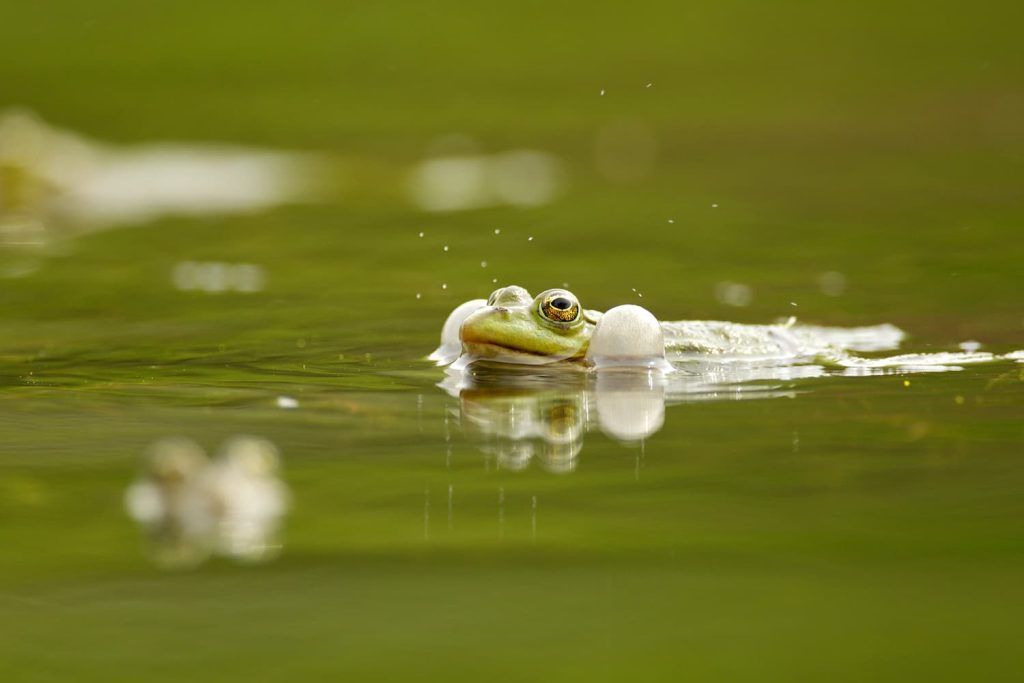
Large frogs are not automatically a pond problem. In many cases, they are a sign that the shoreline offers the cover, moisture, and insect activity frogs need. Their presence may indicate shallow breeding water, vegetated margins, and lower shoreline disturbance.
That said, not every frog-rich pond is ideal for every property goal. Heavy bullfrog presence may matter more in ornamental or fish-focused ponds where fry survival is important. A pond with dense frog activity can also suggest shoreline vegetation is getting thick enough to support larger amphibian populations. For some owners that is a positive wildlife signal. For others it may mean the edge is drifting away from the intended appearance or fish management plan.
What They Are Not
A few frog topics sound similar but do not belong in a Florida pond article. Desert frogs and frog desert habitats refer to very different amphibians in dry environments. Those frogs are not part of the pond-edge species most owners see in Florida. The same goes for tropical dart frogs. Florida pond management is much more concerned with bullfrogs, pig frogs, river frogs, leopard frogs, and large treefrogs than with exotic pet-trade species.
How Pond Guru Helps
Pond Guru helps owners evaluate frog activity as part of the larger pond picture. A site visit can help assess:
- shallow breeding zones
- shoreline vegetation density
- fish fry vulnerability in ornamental or stocked ponds
- habitat balance between wildlife value and maintenance needs
- whether frog activity reflects a healthy pond edge or an overgrown shoreline
That kind of review helps separate normal wildlife presence from a pond edge that is becoming too dense, too shallow, or too favorable for larger predators.
Frequently Asked Questions
The American bullfrog is generally the largest common frog found around Florida ponds and lakes. Regional frog guides describe it as Florida’s largest frog, with large adults reaching about 8 inches.
Bullfrog tadpoles are much larger than many other pond tadpoles and may remain in the tadpole stage for up to two years or more. That is why a very large tadpole in a Florida pond is often a bullfrog tadpole.
Some do. Large bullfrogs can eat fish small enough to swallow, especially fry or small ornamental fish. Many smaller frogs are much more insect focused.
Large Florida treefrogs such as the barking treefrog mainly eat insects. They are much less likely than bullfrogs to matter for fish populations.
Pond Guru can evaluate the shoreline, shallow breeding zones, vegetation density, and fish nursery areas to determine whether frog activity is simply part of a healthy pond or a sign that the pond edge should be managed differently.
Ready to Schedule a Visit ?
Have questions about your pond or lake? Our experts are ready to help you take the next step.
Latest Article
Popular Post

Saltwater Intrusion in Florida Community Lakes: Causes and Testing
Table of Contents A community lake that has looked…
Florida ponds attract a wide range of frogs, but only a handful are large enough to become regular, noticeable wildlife around the shoreline. These are the frogs most owners hear calling at night, see resting at the water’s edge, or spot slipping back into the pond when someone walks up too quickly. Florida species lists and regional frog call guides consistently include bullfrogs, pig frogs, river frogs, southern leopard frogs, and barking treefrogs among the larger freshwater frogs pond owners are most likely to encounter.
For private homeowners, HOA boards, golf course superintendents, and property managers, learning these large pond frog types is useful for more than identification. Larger frogs can indicate healthy shoreline habitat, but they can also affect fish fry, insect pressure, and pond edge balance. This guide focuses on the five large frog types most commonly noticed around Florida ponds and what their presence may mean for the water.
The Top 5 Pond Frogs
1. American bullfrog
The American bullfrog is the largest common pond frog in Florida. Regional Florida frog guides describe it as the state’s largest frog, reaching about 8 inches in large adults and favoring permanent bodies of water such as ponds, lakes, wetlands, and slow edges. When owners talk about the biggest bull frog on the shoreline, this is usually the species they mean.
Bullfrogs are heavy bodied, usually olive to greenish brown, and strongly tied to deeper, more permanent water. Their size alone makes them one of the most visible large pond frog types in the state. They are also one of the frogs most likely to be heard before they are seen.
2. Pig frog
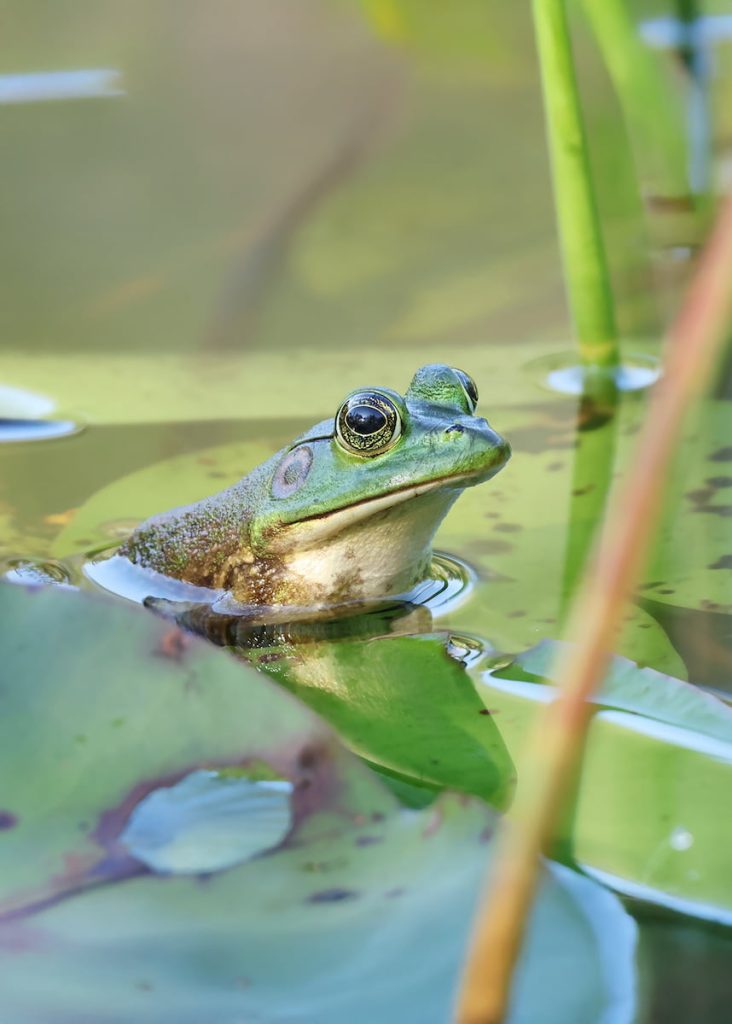
Pig frogs are another large, highly aquatic Florida species. Regional frog call materials describe them as frogs of standing water, marshes, ponds, lakes, and swamps, usually under 6 inches but still large enough to stand out around vegetated shorelines.
They are often confused with bullfrogs because both stay close to water, both can grow fairly large, and both are common around Florida ponds. Pig frogs are especially associated with quiet water and heavier shoreline vegetation.
3. River frog
The river frog is one of the more impressive large frogs in Florida, even though it is not always seen as often as it is heard. Florida Museum species lists include it among the state’s true frogs, and field references place it among the larger freshwater frogs found near slow rivers, swamps, and pond-like wetland edges.
River frogs tend to be darker and more patterned than pig frogs or bullfrogs. In a pond setting, they are often connected with heavier cover, deeper edge habitat, and quieter shoreline zones.
4. Southern leopard frog
The southern leopard frog is one of the most adaptable frogs around developed Florida water. Florida Museum notes that it uses shallow freshwater habitat and can also thrive in canals, ditches, and man-made ponds, which makes it one of the most familiar large or medium-large frogs around neighborhoods and managed properties.
It is smaller than a bullfrog or pig frog, but still large enough to be one of the most noticeable frogs along a pond edge. Its spotted pattern also makes it one of the easier species to identify, especially for owners trying to distinguish a common frog from a larger bullfrog.
5. Barking tree frog
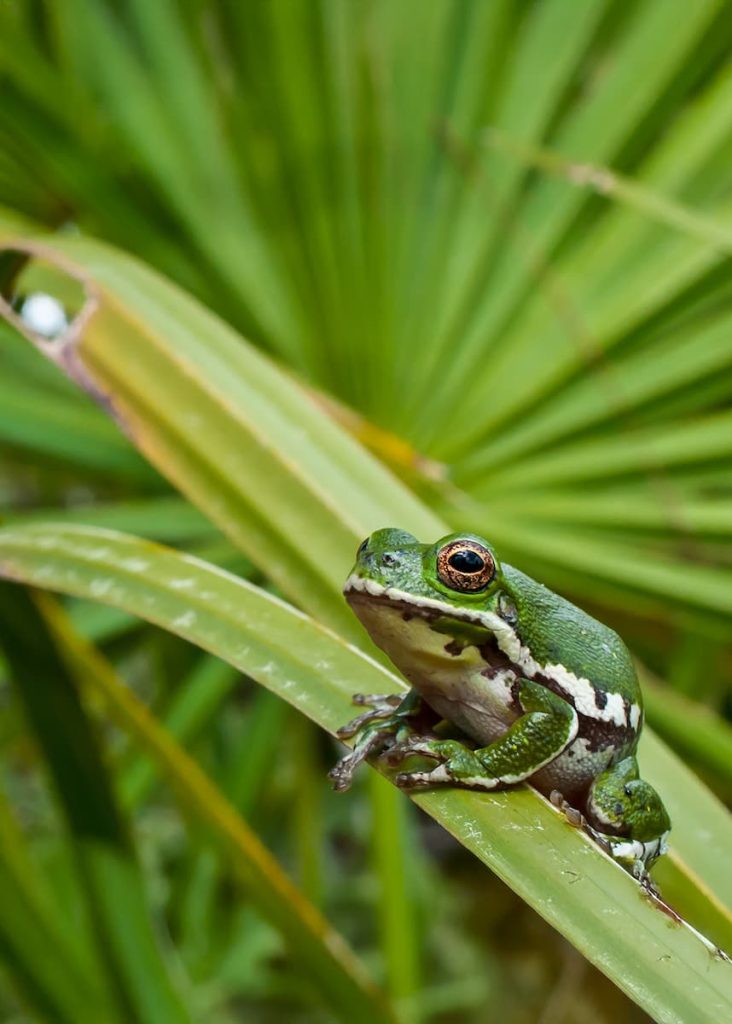
The barking treefrog completes the list because it is the largest native treefrog in Florida. Florida Museum describes it as a plump species with a loud barking call, found in much of the state near swampy woods, pinelands, and breeding water.
It is not as tied to open water as bullfrogs or pig frogs, but it is still one of the larger frogs pond owners hear around wet pond margins and nearby vegetation. For properties with heavy shoreline planting or wooded pond edges, it is often part of the same nighttime frog activity.
Size and Color of Pond Frogs in Florida
These large pond frog types vary in both body shape and frog colors, which helps with field identification.
A quick visual breakdown helps:
- bullfrogs are usually olive, greenish brown, or darker brown
- pig frogs are often olive to brown and strongly aquatic
- river frogs tend to show heavier mottling and darker patterning
- southern leopard frogs have distinct spots and lighter ridges
- barking treefrogs can vary from green to brown or gray, depending on light and background
These color shifts are one reason frogs near ponds are often misidentified. A quick look at body size, pattern, and habitat usually gives a clearer answer than color alone.
Balance Your Pond's Ecosystem
Having a healthy ecosystem of insects, frogs, fish, and other species is crucial to maintaining balance in your pond.
Tadpoles and Diet
Bullfrogs matter in ponds not only because adults are large, but because bullfrog tadpoles, an American bullfrog tadpole, or a large bullfrog tadpole can remain in the pond for an extended period before transforming. Virginia wildlife guidance notes that bullfrog tadpoles may remain in that stage for up to two years or more, which helps explain why some pond owners notice unusually large tadpoles long before they notice adult frogs.
Diet also matters in pond management. Large frogs are opportunistic predators. Bullfrogs can eat insects, smaller frogs, and fish small enough to swallow, which is why the question of whether frogs eat fish matters most with larger species. Treefrogs are much more insect focused, so what do tree frogs eat is a different answer entirely. They usually target beetles and other small insects rather than fish. By contrast, phrases like what do poison dart frogs eat and what do dart frogs eat relate to tropical amphibians kept in very different environments and are not relevant to large Florida pond frogs.
What Frogs Mean for a Pond
Large frogs are not automatically a pond problem. In many cases, they are a sign that the shoreline offers the cover, moisture, and insect activity frogs need. Their presence may indicate shallow breeding water, vegetated margins, and lower shoreline disturbance.
That said, not every frog-rich pond is ideal for every property goal. Heavy bullfrog presence may matter more in ornamental or fish-focused ponds where fry survival is important. A pond with dense frog activity can also suggest shoreline vegetation is getting thick enough to support larger amphibian populations. For some owners that is a positive wildlife signal. For others it may mean the edge is drifting away from the intended appearance or fish management plan.
What They Are Not
A few frog topics sound similar but do not belong in a Florida pond article. Desert frogs and frog desert habitats refer to very different amphibians in dry environments. Those frogs are not part of the pond-edge species most owners see in Florida. The same goes for tropical dart frogs. Florida pond management is much more concerned with bullfrogs, pig frogs, river frogs, leopard frogs, and large treefrogs than with exotic pet-trade species.
How Pond Guru Helps
Pond Guru helps owners evaluate frog activity as part of the larger pond picture. A site visit can help assess:
- shallow breeding zones
- shoreline vegetation density
- fish fry vulnerability in ornamental or stocked ponds
- habitat balance between wildlife value and maintenance needs
- whether frog activity reflects a healthy pond edge or an overgrown shoreline
That kind of review helps separate normal wildlife presence from a pond edge that is becoming too dense, too shallow, or too favorable for larger predators.
Frequently Asked Questions
The American bullfrog is generally the largest common frog found around Florida ponds and lakes. Regional frog guides describe it as Florida’s largest frog, with large adults reaching about 8 inches.
Bullfrog tadpoles are much larger than many other pond tadpoles and may remain in the tadpole stage for up to two years or more. That is why a very large tadpole in a Florida pond is often a bullfrog tadpole.
Some do. Large bullfrogs can eat fish small enough to swallow, especially fry or small ornamental fish. Many smaller frogs are much more insect focused.
Large Florida treefrogs such as the barking treefrog mainly eat insects. They are much less likely than bullfrogs to matter for fish populations.
Pond Guru can evaluate the shoreline, shallow breeding zones, vegetation density, and fish nursery areas to determine whether frog activity is simply part of a healthy pond or a sign that the pond edge should be managed differently.
Ready to Schedule a Visit ?
Have questions about your pond or lake? Our experts are ready to help you take the next step.
Latest Article
Popular Post
Saltwater Intrusion in Florida Community Lakes: Causes and Testing
Table of Contents A community lake that has looked…